Aquatic Core Training for Chronic Low Back Pain: Methods for Activating Spinal Stabilizer Muscles in Water
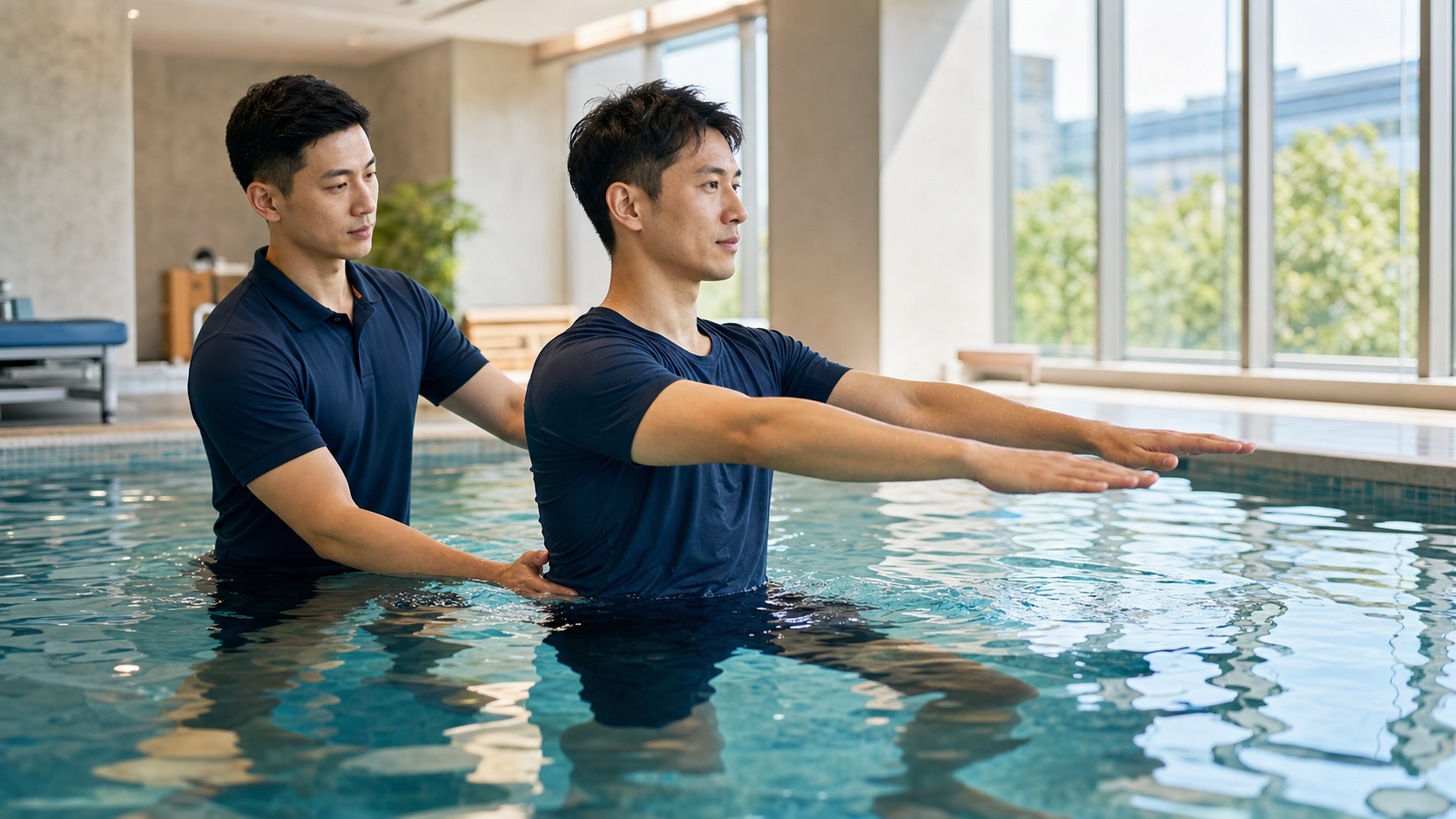
Introduction
The lifetime prevalence of low back pain among Taiwanese adults is as high as 70–80%, and chronic low back pain (lasting more than 12 weeks) is a major cause of work absenteeism and reduced quality of life. Physical therapy is the cornerstone of conservative treatment for chronic low back pain, and in recent years, aquatic core stabilization training has gained increasing attention from rehabilitation physicians and physical therapists in Taiwan, because the unique physical properties of water can activate the deep spinal stabilizer muscles in distinctive ways.
Unique Advantages of the Aquatic Environment for Spinal Stabilization Training
1. Water’s Instability Forces Activation of Deep Muscles
The water surface and currents create a continuous, multi-directional unstable environment, forcing the body’s deep stabilizer muscles (transversus abdominis, multifidus, pelvic floor muscles, and diaphragm) to continuously make fine adjustments to maintain a neutral spine. This “passive sustained activation” is a unique advantage of aquatic training.
2. Buoyancy Reduces Spinal Loading and Protects the Spine
During acute episodes of low back pain, excessive intervertebral disc pressure is one of the primary sources of pain. In chest-deep water, axial spinal loading is reduced to 20–30% of that on land, allowing patients to perform core training movements in a nearly pain-free state.
3. Water Resistance Enhances Training Effectiveness
The viscous resistance of water (equal in all directions) ensures that movements are slow and controlled, preventing compensatory movements and making training of the target muscle groups more precise.
Key Stabilizer Muscles in Chronic Low Back Pain
- Transversus abdominis (TVA): The deepest abdominal muscle; its contraction creates intra-abdominal pressure (IAP) to stabilize the lumbar spine
- Multifidus: Short, deep muscles distributed along the spine that directly stabilize intervertebral displacement
- Pelvic floor muscles: Contract synergistically with the transversus abdominis, forming the “floor” of the core stabilization system
- Diaphragm: The “roof” of core stability; breathing control is closely linked to core stabilization
Research shows that patients with chronic low back pain exhibit significant “activation delay” in these four muscle groups—that is, the deep muscles fail to pre-activate in time before movement begins, resulting in insufficient spinal protection.
Aquatic Core Training Exercise Design
| Exercise Name | Water Depth | Target Muscles | Sets × Reps |
|---|---|---|---|
| Aquatic “neutral spine” standing hold | Waist-deep | Multifidus, transversus abdominis | Hold 3 minutes × 2 sets |
| Aquatic single-leg stance | Waist-deep | Core overall, pelvic stabilizers | 30 seconds per side × 3 sets |
| Aquatic bird-dog (quadruped, opposite arm and leg raise) | Chest-deep (kneeling) | Multifidus, gluteus medius | 10 reps × 3 sets |
| Aquatic plank (hands on a float board, body horizontal) | Chest-deep | Transversus abdominis, diaphragm | Hold 20–30 seconds × 3 sets |
| Aquatic side bridge (side-lying horizontal, hand on pool wall) | Chest-deep | Quadratus lumborum, obliques | 15–20 seconds per side × 3 sets |
| Aquatic squat (weight on heels, maintaining neutral spine) | Waist-deep | Transversus abdominis, glutes, quadriceps | 15 reps × 3 sets |
Breathing technique—the key to core training:
Before each movement, perform “abdominal activation”: gently draw in the abdomen (without holding your breath), feeling the waist circumference slightly narrow. This movement preferentially activates the transversus abdominis, providing spinal protection for the subsequent movement.
Aquatic Therapy Resources for Chronic Low Back Pain in Taiwan
- Physical Therapy Association of Taiwan-certified aquatic physical therapists (ATRI or Halliwick certified) can provide individualized aquatic core training
- Occupational Disease Prevention Centers (one each in Taipei, Taichung, and Kaohsiung): Patients with occupational low back pain can receive free consultations on exercise rehabilitation programs
- NHI-covered physical therapy: In outpatient physical therapy sessions, therapists can guide land-based equivalent exercises for aquatic training (e.g., to be performed at home), supplemented by independent pool practice
Practical Recommendations
- Aquatic training is not recommended during acute low back pain episodes (pain score ≥ 7/10); prioritize rest and pain management first, and begin only after pain drops below 4/10.
- Among swimming strokes, the frog kick in breaststroke places greater extension stress on the lumbar spine; patients with low back pain should initially favor freestyle kicking or backstroke.
- Maintaining water temperature at 32–35°C enhances muscle relaxation and supports the effectiveness of deep stabilizer muscle activation training.
- After each training session, perform 5 minutes of Cat-Cow stretches on land to consolidate the improvements in spinal mobility gained from aquatic training.
- After 8–12 weeks of continuous training, a follow-up reassessment (e.g., Oswestry Disability Index) is recommended to quantify the degree of functional improvement.
Conclusion
Aquatic core training provides a “low-pain, high-efficiency” therapeutic environment for patients with chronic low back pain. The physical properties of water precisely address the core requirements of deep spinal stabilizer muscle training: decompression protects the spine, instability forces deep muscle activation, and resistance ensures movement quality. As the aquatic rehabilitation expertise of Taiwanese physical therapists continues to improve, patients with chronic low back pain have more opportunities, under the guidance of their medical team, to rediscover spinal strength and stability in the water.
Related Reading
- The Effects of Swimming on Chronic Back Pain and Precautions
- Swimming for Chronic Back Pain Relief: An Aquatic Approach to Spinal Decompression and Core Strengthening
- The Effects of the Dead Bug Exercise on Low Back Pain
- Core Training for Swimming: The Direct Impact of Land-Based Core Strengthening on Aquatic Streamlining
一日北高/長距離團騎 常見問題補充篇 / 組團或跟團的眉角 / 壯車友容易被瘦車友慢性拉爆 / 原來屁股痛可能是這個原因...? / 風場配速法 / 公路車 / CT Yeh
2 年前
[教學] Premiere 影片 手震 修正 教學 防抖 單眼 影像 GoPro 穩定 Video Stabilization
8 年前
CT暗黑廚房) 車友必備 宇宙無敵鮮蚵湯 幫助訓練恢復 天然食補 好市多 超肥鮮蚵 破PR
7 年前
一日北高常見問題大集合 | 攻略 | 路線 | 訓練 | 補給 | 自行車 單車 | 一日雙城 | 雙塔 | TWB北高360 | 屁股痛
6 年前
4K單車實境) 嘉義 梅山36灣 訓練台 爬坡 輕鬆騎
6 年前
一起升級!海鷗盃LSD團練...JJSC Zone2招待 騎到手抖 / 公路車 / CT Yeh
2 天前
Never Stop 西進武嶺 前後雙機 完整全程錄影 訓練台 實境
8 年前
西進武嶺 免費訓練分析服務 Intervals | 練不夠還是練過頭?你哪一種類型選手?AI模型告訴你! | 備戰神器 | 公路車 訓練 | CT Yeh
4 年前