Runner's Immune System Maintenance: Vitamin C, D, and Zinc Supplementation After Heavy Training
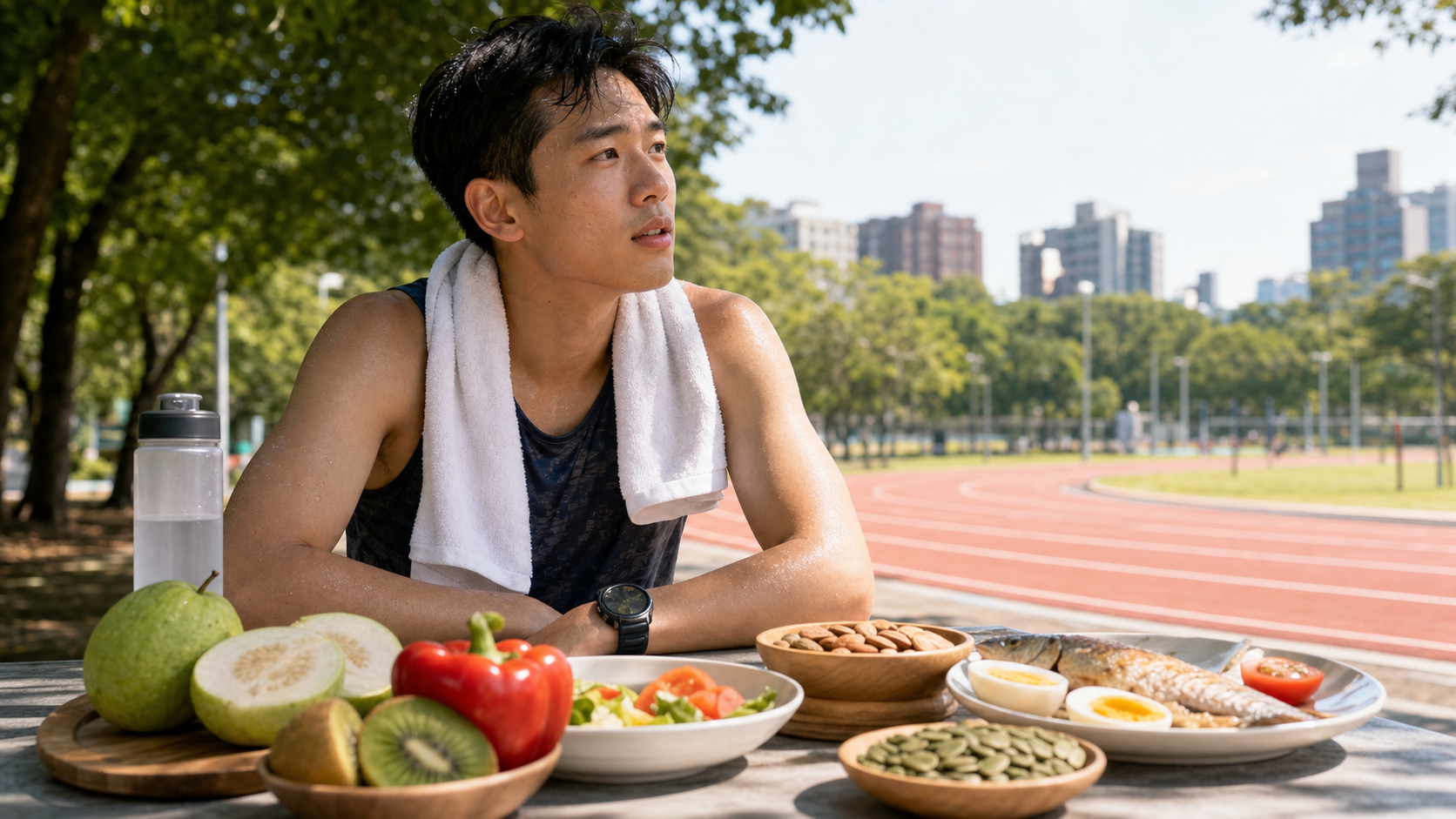
Introduction
“Catching a cold the week before a race” is the most dreaded nightmare for runners. After heavy training, the body’s immune system actually enters a brief period of suppression—sports science calls this the “Open Window” period—which lasts 3–72 hours, during which the risk of upper respiratory tract infections is 2–6 times higher than usual. Vitamin C, D, and zinc are the three immune micronutrients with the strongest scientific support. This article will help runners establish a daily supplementation strategy so that training gains are not interrupted by a cold.
The Immune Physiology of the Open Window Period
The Impact of Heavy Training on Immunity
| Training Volume | Immune Status | Description |
|---|---|---|
| Light to moderate (<60km/week) | Enhanced immunity | Moderate exercise boosts NK cell and T cell activity |
| Heavy training (60–90km/week) | Open window period | Immune cell counts drop for hours after training |
| Extreme training (>90km/week) | Chronic immune suppression | Accumulated fatigue leads to sustained immune function decline |
Trigger Mechanisms
- Elevated cortisol: After high-intensity long runs, cortisol rises sharply, suppressing the proliferation of NK (natural killer) cells and T lymphocytes
- Glutamine depletion: The primary fuel for immune cells; blood levels drop by 20–40% after heavy training
- Oxidative stress: Large amounts of free radicals damage the DNA and cell membranes of immune cells
- Decreased mucosal IgA secretion: The first line of defense in the mouth and nasal cavity (secretory immunoglobulin A) declines after heavy training
The Immune Role of Vitamin C
Scientific Evidence
- Vitamin C is a potent antioxidant that scavenges free radicals generated by exercise
- Promotes chemotaxis of white blood cells (neutrophils, lymphocytes)
- Studies show: athletes supplementing 200–1000mg of vitamin C daily can reduce cold incidence by approximately 50% (compared to only 8% in the general population)
High-Vitamin C Foods in Taiwan
| Food | Vitamin C (mg/100g) | Daily Target Amount |
|---|---|---|
| Red bell pepper | 190mg | Half a pepper reaches the target |
| Kiwi | 93mg | 2 pieces |
| Guava (white flesh) | 228mg | Taiwan’s most powerful vitamin C fruit |
| Tomato | 19mg | Requires multiple pieces |
| Broccoli | 51mg | Supplement the day after training |
Recommended intake for runners: 250–500mg per day (prioritize food sources; supplement only if dietary intake is insufficient)
Precautions for Vitamin C Supplementation
- Single doses exceeding 1000mg provide no additional benefit and may cause gastrointestinal discomfort
- Prioritize food sources—100g of Taiwanese guava reaches the daily recommended amount, offering the best value
- Taking it once before and once after a long run is more effective than concentrating supplementation at a single time point
The Immunomodulatory Role of Vitamin D
The Vitamin D Dilemma for Taiwanese Runners
The role of vitamin D in regulating the immune system (including modulating T cell responses and the synthesis of the antimicrobial peptide Cathelicidin) is well supported by research. However, Taiwanese runners face a paradox: although Taiwan has abundant sunshine:
- Most runners habitually use sun protection (sunscreen or arm sleeves), which blocks vitamin D synthesis in the skin
- They run only after long hours of indoor work (running after sunset cannot synthesize vitamin D)
- Taiwanese studies show that approximately 60–70% of Taiwanese adults have vitamin D insufficiency (<20 ng/mL)
Food Sources of Vitamin D
| Food | Vitamin D (IU/100g) |
|---|---|
| Salmon (farmed) | 350–450 IU |
| Mackerel | 300 IU |
| Egg yolk | 40 IU/egg |
| Shiitake mushrooms (sun-dried) | 400–800 IU |
| Black fungus (sun-dried) | 200 IU |
Recommended intake for runners: Target serum 25(OH)D >40 ng/mL; if dietary intake is insufficient, supplement with 2000–4000 IU of vitamin D3 daily (available at Taiwanese pharmacies)
The Immune-Supporting Role of Zinc
Mechanisms
- Zinc is a cofactor for 300+ enzymes, including those involved in DNA repair and cell division
- Maintains normal thymus function (the site of T cell maturation)
- Studies show: runners lose zinc significantly through sweat, with sweat containing 0.5–1.4mg of zinc per hour
Zinc Content in Taiwanese Foods
| Food | Zinc (mg/100g) | Notes |
|---|---|---|
| Oysters | 16mg | Abundant along Taiwan’s coast; the #1 zinc supplement |
| Beef shank | 5mg | A daily red meat option |
| Pumpkin seeds | 7mg | A good plant-based zinc source |
| Cashews | 5.6mg | A convenient zinc-rich snack |
| Black soybeans | 3.8mg | A traditional Taiwanese ingredient |
Recommended intake for runners: Men 15–20mg/day, women 12–15mg/day (upper limit during high training volume)
Immune-Protective Meal Plan for Heavy Training Weeks
During intensive training weeks with weekly mileage exceeding 60km, special attention to these three micronutrients is needed:
| Meal | Food | Immune Components |
|---|---|---|
| Breakfast | 1/4 guava + 2 boiled eggs | Vitamin C + zinc + protein |
| Lunch | Salmon rice + tomato egg drop soup | Vitamin D + vitamin C |
| Afternoon snack | 30g cashews | Zinc |
| Dinner | Beef stir-fried with broccoli + black fungus | Zinc + vitamin C + vitamin D |
| Before bed | 1 kiwi | Vitamin C |
Practical Recommendations
- Include vitamin C in your refueling within 30 minutes after training (drink tomato-based soup or eat a kiwi)
- During intensive training periods, get sun exposure 3 times per week (before 10 a.m. or after 3 p.m., 15–20 minutes each time, without sunscreen)
- Taiwanese guava is the most affordable and cost-effective vitamin C food, available year-round
- The 2 weeks before a race are the most critical period for immune protection—extra careful supplementation is needed during this time
- Sleep is the most powerful immune recovery tool; 7–9 hours of sleep per night is more effective than any supplement
Conclusion
Vitamin C, D, and zinc are the three pillars of a runner’s immune defense. Taiwanese local foods such as guava, oysters, salmon, and black fungus each provide excellent sources of these three micronutrients. By building conscious immune-supporting eating habits during heavy training periods, you can ensure your body not only performs at its best on race day, but also recovers quickly after every training session, allowing for continuous progress.
Related Reading
- Dietary Intervention During the Post-Run Immune Window: Vitamin C, D, and Zinc Doses Within 72 Hours
- The Immune Window After Running: Why You’re Prone to Colds After High-Intensity Exercise
- Exercise-Induced Immune Suppression: Why Heavy Training Makes You Susceptible to Colds
- The Immune Window After Training: Quantifying the Risk of Upper Respiratory Infections After Intense Exercise
一日北高/長距離團騎 常見問題補充篇 / 組團或跟團的眉角 / 壯車友容易被瘦車友慢性拉爆 / 原來屁股痛可能是這個原因...? / 風場配速法 / 公路車 / CT Yeh
2 年前
西進武嶺 免費訓練分析服務 Intervals | 練不夠還是練過頭?你哪一種類型選手?AI模型告訴你! | 備戰神器 | 公路車 訓練 | CT Yeh
4 年前
FTL 與 SYB 車隊專訪 西進武嶺 實用攻略分享! 2小時 如何練?!你不知道的眉角!新手準備武嶺必看 EP1 | 實力派女車友 | 精華版 | 公路車 | CTYeh
4 年前
CT暗黑廚房) 車友必備 宇宙無敵鮮蚵湯 幫助訓練恢復 天然食補 好市多 超肥鮮蚵 破PR
7 年前
Garmin Edge 1040 重大韌體更新!! / 1050功能全下放!? / 坡度反應變快了嗎?/ 快速對比實測 / 公路車 / CT Yeh
1 年前
一日北高前的高裝檢 | 北高 360 | 挑戰11小時的裝備 | 一日雙塔 | 補給
6 年前
西進武嶺 自製新版AI配速表產生器 x 賽前攻略 抱佛腳! 沒有功率計也可以產生配速表嗎?有什麼其他眉角賽前要注意的呢? | 西進武嶺 / 東進武嶺 KOM 攻略 | 公路車 | CT Yeh
4 年前
摔車後補裝備: 好市多新款單車安全帽& Specialized Romin 北高整路屁股都不痛的坐墊 | 一千元居然有MIPS | CT Yeh | 公路車
4 年前