Introduction
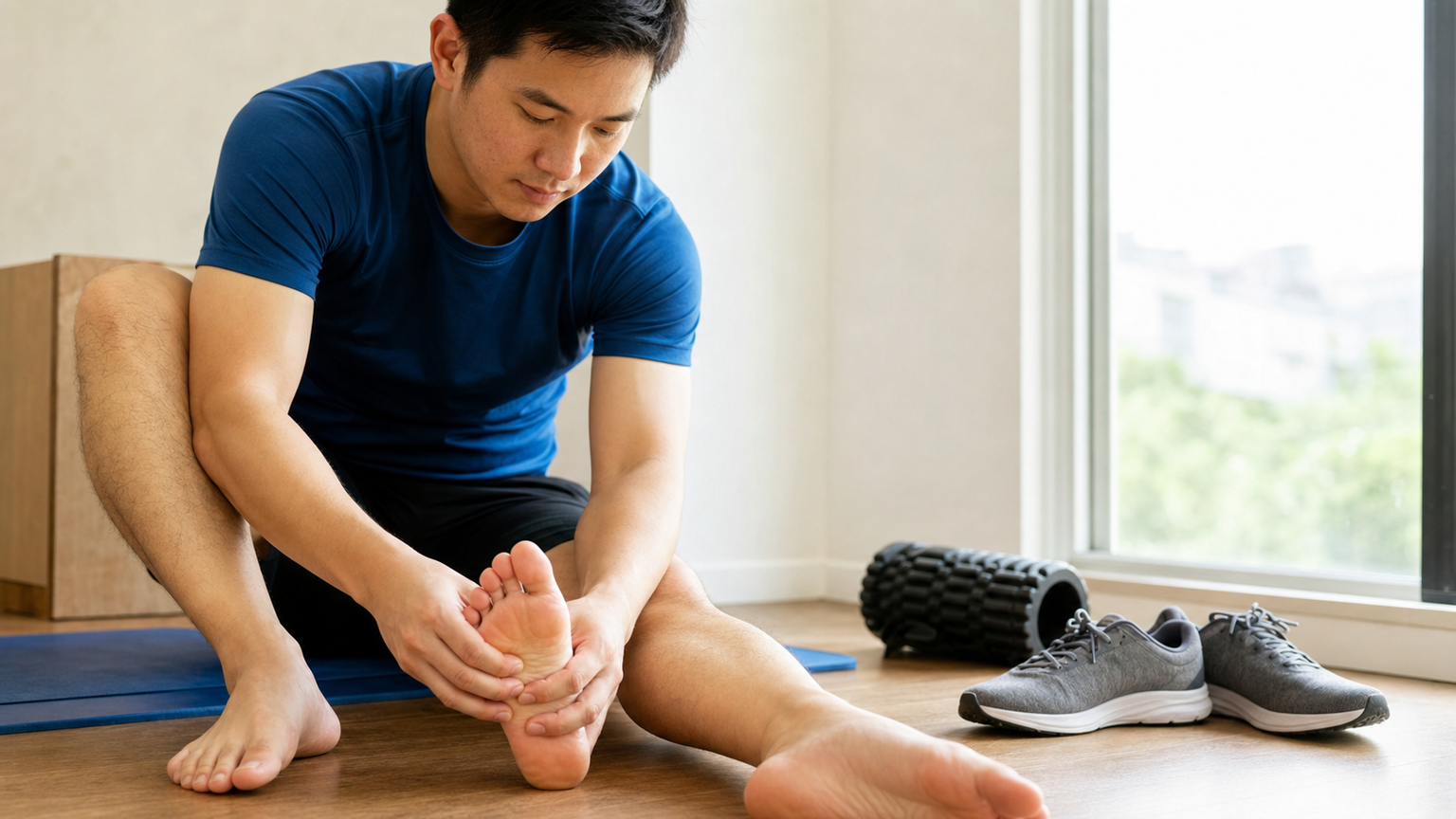
“Every morning when I get up, the moment my foot hits the ground, the pain makes me want to cry.” — This is the experience of countless Taiwanese runners describing plantar fasciitis in clinics or runner communities. The pain is typically concentrated on the inner side of the heel, improving slightly after activity, but worsening again after long-distance training. Plantar fasciitis is estimated to account for 10% of all running injuries, making it one of the most common foot problems among runners.
Anatomy and Function of the Plantar Fascia
The plantar fascia is a thick, fan-shaped band of fibrous tissue that extends from the heel bone (calcaneus) to the base of the five toes. Functioning like a bowstring, it supports the arch, absorbs impact upon landing, and stores elastic energy during push-off. With every running step, the plantar fascia must withstand tension equivalent to approximately 2–3 times body weight. The cumulative micro-tears and incomplete repair over time result in chronic inflammation.
Analysis of Common Causes
Training Factors
- Sudden increase in mileage: During preparation for the Taipei Marathon, many runners rapidly ramp up their weekly mileage from 40km to 70km in a short period
- Excessively hard surfaces: Prolonged training on Taiwan’s urban sidewalks or concrete floors
- Wearing inappropriate shoes: New training shoes that haven’t been broken in yet, or shoes lacking arch support in the sole
- Increased speed work: Interval runs and hill repeats alter the loading patterns on the fascia
Physiological Factors
| Risk Factor | Description |
|---|---|
| High arches or flat feet | Abnormal arch shape causes uneven stress distribution on the fascia |
| Tight calf muscles | Overly tight gastrocnemius and soleus muscles pull on the Achilles tendon and plantar fascia |
| Overweight (BMI > 30) | Every extra kilogram of body weight directly increases the load on the feet |
| Limited ankle dorsiflexion | Dorsiflexion of < 10 degrees causes gait compensation, increasing fascial tension |
| Age (40–60 years) | Decreased tissue elasticity and slower repair rates |
Confirming the Diagnosis
Plantar fasciitis can usually be diagnosed through symptom description and physical examination, without the immediate need for X-rays or ultrasound. Typical symptoms include:
- Sharp, intense pain on the first step in the morning or after standing up from prolonged sitting (post-static dyskinesia pain)
- A distinct point of tenderness on the inner heel (anterior calcaneal edge)
- Pain that worsens after prolonged walking or running
- Positive “Windlass Test”: passive dorsiflexion of the big toe while lying down elicits heel pain
If the pain persists for more than 6 weeks, or if there is significant nighttime resting pain or noticeable swelling, it is recommended to visit an orthopedist or sports medicine specialist for ultrasound or MRI evaluation to rule out a calcaneal stress fracture.
Systematic Recovery Plan
Acute Phase Management (Weeks 1–3)
- Reduce volume but don’t stop training: Switch to swimming or cycling to avoid impact on the heel
- Ice therapy: 3 times daily, 15 minutes each session; a frozen water bottle can be rolled under the foot
- Night Splint: Keep the ankle in 5–10 degrees of dorsiflexion during sleep to reduce morning pain
- Self-massage of the plantar fascia: While seated, place a tennis ball under the foot and slowly roll it using body weight for 2–3 minutes
Strengthening Phase Training (Weeks 4–8)
The core of rehabilitation is to improve the load-bearing capacity of the plantar fascia and Achilles tendon, rather than simply resting:
- Towel toe curls: Seated, repeatedly use your toes to gather a towel from the floor to train the intrinsic foot muscles, 3 sets × 15 reps
- Single-leg calf raises (eccentric + concentric): Stand on the edge of a step, slowly lower the heel below the step surface, then rise up onto the toes, 15 reps per set, 3 sets daily
- Soleus stretch: Perform a bent-knee wall stretch, distinct from a standing calf stretch, targeting the deeper soleus muscle
- Arch strengthening: Short Foot Exercise, attempt to “shorten” the foot without curling the toes to build the arch
Return-to-Running Readiness Assessment (After Week 8)
Before returning to running, confirm the following criteria:
- Morning pain index < 2/10, with no worsening for 2 consecutive weeks
- Able to complete 25 consecutive single-leg calf raises without pain
- Single-leg balance > 30 seconds
- Able to walk at a normal pace for 30 minutes without discomfort
Practical Advice for Prevention and Long-Term Management
- Invest in insoles: Custom orthotics or commercially available arch-support insoles provide significant benefits for runners with flat feet or high arches
- Rotate running shoes: Keep two different pairs of running shoes and alternate between them, allowing the midsole more than 24 hours to recover its rebound
- Warm up calves before running: Especially before morning training, replace heading straight out the door with 3 minutes of calf foam rolling plus foot massage
- Manage body weight: For runners weighing > 75kg, every 1kg of weight loss can reduce the cumulative pressure on the feet by approximately 2–3 times the number of steps
- Choose training surfaces carefully: Riverside parks in Taiwan’s cities and counties often feature PU rubber tracks, which can serve as an alternative to concrete surfaces
Conclusion
The recovery period for plantar fasciitis is longer than most runners expect, typically requiring 3–6 months for complete healing. The key is not to rush back to running — many people immediately resume heavy training as soon as the pain slightly subsides, only to experience repeated flare-ups and fall into a vicious cycle of chronicity. Patiently executing a strengthening plan and gradually increasing mileage is the correct path to restoring the health of your plantar fascia.
Related Reading
- Prevention and Treatment of Plantar Fasciitis: A Complete Analysis of Runners’ Foot Pain
- The Complete Guide to Plantar Fasciitis: Treatment Strategies and Training Adjustments for Runners’ Most Common Foot Injury
- Plantar Fasciitis in Runners: A Complete Guide to Causes, Treatment, and Prevention
- Runner’s Therapy for Plantar Fasciitis: An 8-Week Conservative Treatment Plan for Morning Heel Pain
一日北高常見問題大集合 | 攻略 | 路線 | 訓練 | 補給 | 自行車 單車 | 一日雙城 | 雙塔 | TWB北高360 | 屁股痛
6 年前
單車 一日北高 ( 雙城 ) 肥宅雙人瘋狂行 紀錄片 REACTO
10 年前
Never Stop 西進武嶺 前後雙機 完整全程錄影 訓練台 實境
8 年前
一日北高/長距離團騎 常見問題補充篇 / 組團或跟團的眉角 / 壯車友容易被瘦車友慢性拉爆 / 原來屁股痛可能是這個原因...? / 風場配速法 / 公路車 / CT Yeh
2 年前
摔車後補裝備: 好市多新款單車安全帽& Specialized Romin 北高整路屁股都不痛的坐墊 | 一千元居然有MIPS | CT Yeh | 公路車
4 年前
高雄綠園道鐵路自行車道 / 外地人能輕鬆駕馭 還是整路崩潰? / 2025 全線開通 春節實地探索一次!(附GPS連結)/ 公路車 / CT Yeh
1 年前
iPhone內建一秒變長腿🤣 車友必備#cycling
2 年前
[教學] Premiere 影片 手震 修正 教學 防抖 單眼 影像 GoPro 穩定 Video Stabilization
8 年前