Introduction
Traditional sports nutrition advice advocates maintaining a high carbohydrate intake every day to ensure muscle energy supply. However, modern sports nutrition increasingly emphasizes the concept of “Carbohydrate Periodization”: flexibly adjusting carbohydrate intake based on daily training volume and intensity, rather than keeping it constant. This strategy not only enhances training adaptation but also helps swimmers optimize body composition without sacrificing training quality.
What is Carbohydrate Periodization?
The core logic of carbohydrate periodization is straightforward:
- High training volume days: Muscles need large amounts of glycogen as fuel, so higher carbohydrate intake should be consumed
- Low training volume or rest days: Muscle fuel demands decrease, and reducing carbohydrate intake can prevent excess calories from being stored as fat
- Strategic low-carb days: Deliberately reducing carbohydrates on low-intensity training days can stimulate the expression of fat oxidation enzymes, improving long-term aerobic metabolic capacity
This strategy is not a “low-carb diet” but rather “smart carbohydrate allocation”—fully replenishing when needed and moderately restricting when not.
Carbohydrate Intake Recommendations: Training Days vs. Rest Days
| Day Type | Training Characteristics | Recommended Carbohydrate Intake (g/kg body weight) | Example (60kg Athlete) |
|---|---|---|---|
| High-intensity training day | Intervals, speed work, 2 sessions | 6–8 g/kg | 360–480g |
| Moderate-intensity training day | Steady aerobic pace 3000–4000m | 4–6 g/kg | 240–360g |
| Low-intensity training day | Technique sessions, easy swim 2000m | 3–4 g/kg | 180–240g |
| Complete rest day | No training | 2–3 g/kg | 120–180g |
High/Low Carb Switching Strategies in Taiwanese Cuisine
Taiwanese food culture is centered around white rice. To implement carbohydrate periodization within Taiwanese meals, the following adjustments can be made:
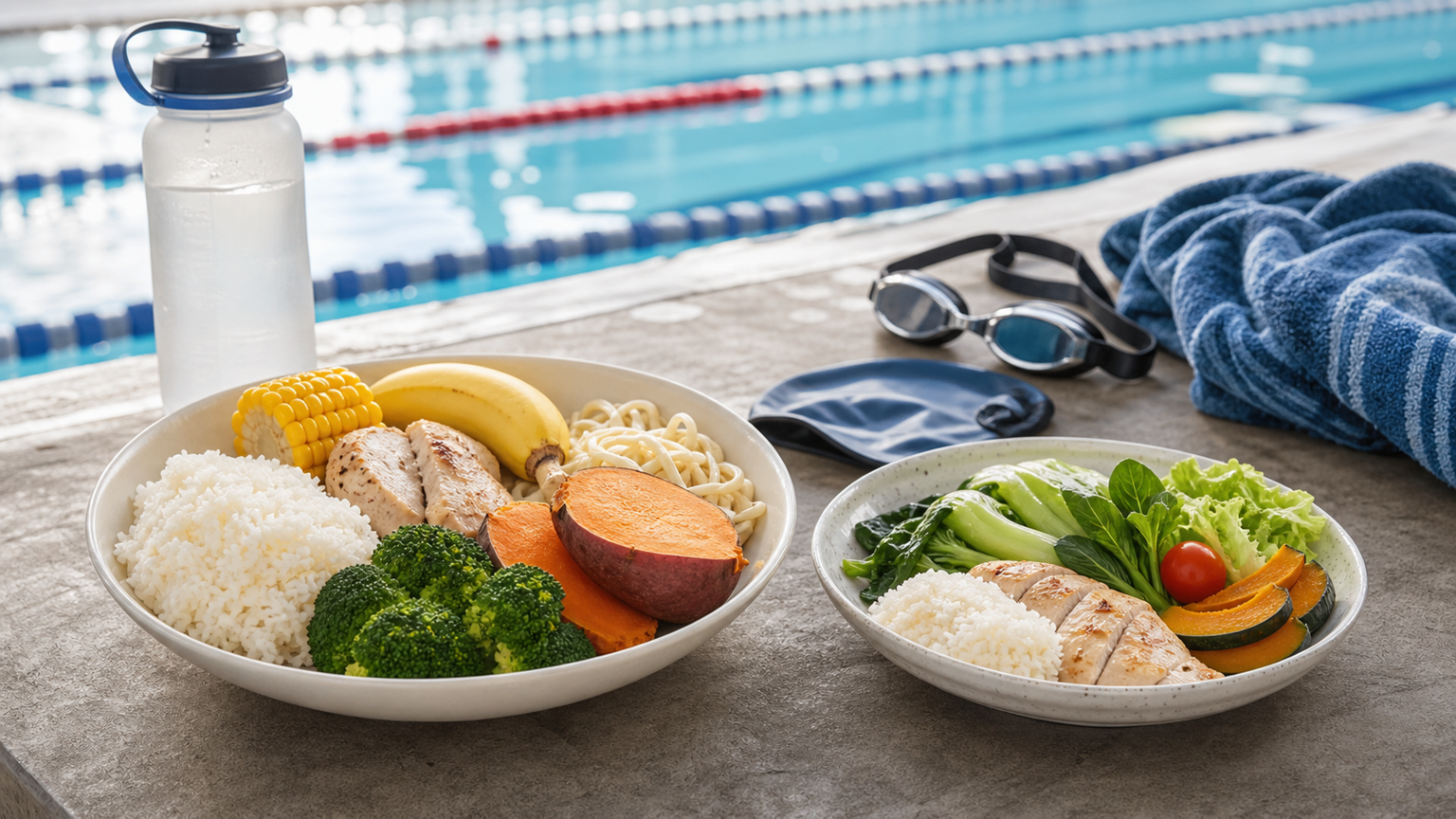
High-carb days (training days):
- Consume normal portions of white rice at all three meals (approximately 50–60g of carbs per bowl)
- Add root vegetables such as sweet potatoes, taro, and corn
- Include noodles (yangchun noodles, udon) as pre- and post-training supplements
- Choose high-sugar fruits such as bananas, grapes, and lychees
Low-carb days (rest days):
- Halve the white rice portion, filling up with plenty of vegetables and protein
- Replace part of the staple food with broccoli, napa cabbage, and water spinach
- Choose low-sugar fruits such as berries and guava
- Avoid sugary drinks, desserts, and refined starches
Example of Carbohydrate Allocation in a Weekly Training Plan
Using a typical training week for a Taiwanese high school or college swim team as an example:
- Monday: High intensity (2 sessions morning/evening, 4000m+) → High-carb day
- Tuesday: Moderate intensity (afternoon 3000m) → Moderate-carb day
- Wednesday: Technique session (2000m) → Low-carb day
- Thursday: High-intensity intervals → High-carb day
- Friday: Easy aerobic swim (2500m) → Moderate-carb day
- Saturday: Long distance (5000m+) → High-carb day
- Sunday: Complete rest → Low-carb day
Precautions and Common Mistakes
- Do not use a low-carb strategy the day before high-intensity training: Ensure adequate glycogen stores before training
- Use caution with adolescent athletes: Energy demands are high during growth periods, and extremely low-carb days may affect development
- Low-carb days do not equal low-calorie days: Maintain total calorie intake with protein and healthy fats to avoid excessive dieting
- Individual differences are significant: Some athletes are more sensitive to low-carb training; performance and recovery should be monitored and adjusted accordingly
Practical Recommendations
- Keep a daily log of training intensity and dietary carbohydrate intake to identify your personal optimal periodization pattern
- Breakfast on low-carb days can still include a small amount of carbohydrates (e.g., 1 slice of whole wheat toast) to maintain basic brain function
- Prepare low-carb day meals in advance (e.g., broccoli scrambled eggs, tofu soup) to avoid impulsive high-carb food choices
- Discuss the periodization plan with your coach or nutritionist to ensure it is synchronized with the training plan
Conclusion
Carbohydrate periodization is a nutritional strategy that requires discipline and observation. It is not suitable for beginners new to structured training, but for competitive swimmers with a training foundation, it is an effective tool for improving body composition and training efficiency. Within Taiwanese food culture, flexibly adjusting the proportions of white rice, noodles, and root vegetables allows you to practice carbohydrate periodization without departing from daily eating habits—ensuring every gram of carbohydrate is put to optimal use.
Related Reading
- Dietary Periodization During Run Training: Differences Between High-Volume and Taper Weeks
- The Complete Guide to Carbohydrate Periodization: Aligning Carbs with Training Demands, Benefits, Scheduling, and Red Lines to Never Cross
- Dietary Strategies for Swimmers: Carbohydrate Timing
- Periodized Nutrition: An Advanced Strategy for Perfectly Syncing Diet with Training Plans
靠單車減肥35公斤 心得分享與整理
7 年前
CT暗黑廚房) 車友必備 宇宙無敵鮮蚵湯 幫助訓練恢復 天然食補 好市多 超肥鮮蚵 破PR
7 年前
西進武嶺 免費訓練分析服務 Intervals | 練不夠還是練過頭?你哪一種類型選手?AI模型告訴你! | 備戰神器 | 公路車 訓練 | CT Yeh
4 年前
一日北高常見問題大集合 | 攻略 | 路線 | 訓練 | 補給 | 自行車 單車 | 一日雙城 | 雙塔 | TWB北高360 | 屁股痛
6 年前
一日北高/長距離團騎 常見問題補充篇 / 組團或跟團的眉角 / 壯車友容易被瘦車友慢性拉爆 / 原來屁股痛可能是這個原因...? / 風場配速法 / 公路車 / CT Yeh
2 年前
4K 東眼山 x 水蜜桃冰沙 百人單車約騎! 操完再吃冰 多爽快
7 年前
live) 超越北高 之一日北高12小時 策略
7 年前
一日北高前的高裝檢 | 北高 360 | 挑戰11小時的裝備 | 一日雙塔 | 補給
6 年前