Introduction
In Taiwan’s indoor swimming pools, especially during the hot, crowded summer months, many swimmers often feel a stuffy, itchy sensation in their ears after swimming, and may even experience ear canal pain and discharge. This is likely “Swimmer’s Ear”—officially known as Acute Otitis Externa—a classic set of symptoms.
According to data from the U.S. Centers for Disease Control and Prevention (CDC), otitis externa accounts for approximately 2.4 million medical visits each year, with swimming being the primary trigger. In Taiwan, aided by the warm, humid subtropical climate, the incidence of swimmer’s ear is not to be overlooked.
The Pathogenesis of Swimmer’s Ear
A healthy ear canal has natural self-protection mechanisms:
- The epithelial cells of the ear canal secrete cerumen, forming a weakly acidic (pH 4–5) protective barrier
- The natural migration mechanism of ear canal skin pushes foreign matter outward
- Ear canal hair blocks microorganisms from entering
After swimming, residual water in the ear canal disrupts these protective mechanisms: trapped water dilutes the weakly acidic environment of cerumen, softens the skin’s stratum corneum, and provides a warm, moist breeding ground for bacteria (primarily Pseudomonas aeruginosa and Staphylococcus aureus), ultimately leading to infection.
Symptom Severity Grading of Otitis Externa
| Grade | Symptoms | Recommended Action |
|---|---|---|
| Mild | Ear canal itching, slight redness and swelling | Keep dry, use ear plugs for prevention |
| Moderate | Pain, partial blockage sensation, discharge | Seek medical attention, treatment with ear drops |
| Severe | Intense pain, complete blockage, hearing loss | Emergency medical care, may require oral antibiotics |
Effective Prevention Strategies
Ear Canal Drying Techniques After Swimming
- Gravity drainage method: After swimming, tilt your head toward the affected side and hop on one foot to help drain trapped water
- Gentle warm air method: Set a hair dryer to low heat (warm) mode, hold it at least 30 cm from the ear canal, and blow gently for 30 seconds. Never use hot air or blow directly into the ear canal
- Alcohol/acetic acid ear drops: 2% acetic acid or a 5:1 acetic acid/alcohol mixture (DIY or purchased from a pharmacy), instilled 3–5 drops after swimming to help dry quickly and maintain a weakly acidic environment
- Avoid cotton swabs: Cotton swabs actually push earwax deeper and scratch the ear canal lining, increasing the risk of infection
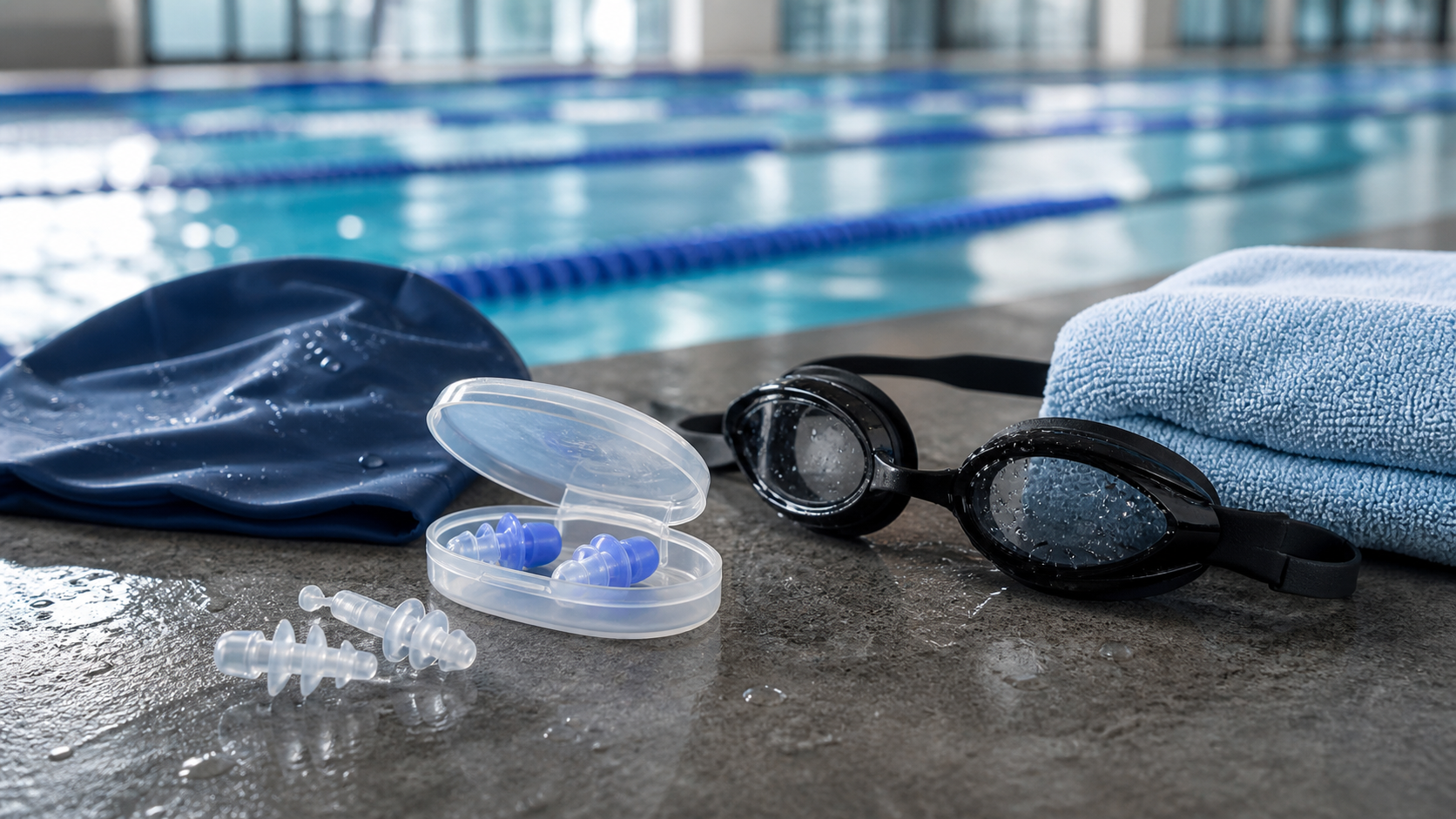
Choosing and Using Ear Plugs
There are many types of ear plugs on the market. Here is a comparison of common types available in Taiwan:
| Ear Plug Type | Material | Suitable For | Advantages | Disadvantages |
|---|---|---|---|---|
| Moldable silicone | Silicone | General swimmers | High seal, reusable | Requires reshaping, hands must be clean |
| Preformed silicone | Hard silicone | Competitive athletes | Quick to insert, does not affect balance | Correct size must be selected |
| Foam ear plugs | PU foam | Children | Soft and comfortable | Less effective at waterproofing |
| Custom-molded ear plugs | Silicone ear impression | Frequent trainers | Perfect fit, best waterproofing | Higher cost (approximately NT$1,500–3,000) |
| Wax ear plugs | Beeswax | Sensitive skin | Soft, hypoallergenic | Lower durability |
Purchasing recommendations: If you swim more than 3 times per week, investing in custom-molded ear plugs is recommended; occasional swimmers can opt for moldable silicone; for children or women with narrower ear canals, preformed silicone models labeled “S/XS” are recommended.
Special Considerations for Children with Swimmer’s Ear
Many parents in Taiwan bring their children to swimming lessons, but children’s ear canals are relatively narrower and more horizontal, making it harder for trapped water to drain naturally. Recommendations:
- Have children use moldable silicone ear plugs immediately after swimming (put them on before the lesson)
- After the lesson, tilt the head and gently pat to help drain water
- If a child frequently cries and pulls at their ears, or has restless sleep at night, seek medical attention promptly
- Children with tympanic membrane perforation or who have undergone ear tube surgery must consult an ENT physician before swimming
Practical Advice
- Make using ear plugs or ear drops after swimming a fixed routine, just like changing clothes or taking a shower
- If ear canal pain occurs, never probe with cotton swabs or ear picks on your own—seek medical attention immediately
- Pool water quality (residual chlorine, pH level) also affects the risk of otitis externa; avoid prolonged stays in public pools with poor water quality
- Avoid using earphones or hearing devices immediately after swimming to allow the ear canal to breathe fully
- ENT departments at major hospitals across Taiwan can all treat otitis externa, and most can provide same-day consultation without a special appointment
Conclusion
Swimmer’s ear is a common and preventable condition. The key lies in establishing a post-swim ear care routine. Choosing the right ear plugs for yourself, mastering proper drying techniques, and seeking medical attention promptly at the onset of symptoms will allow swimming to remain your most enjoyable and healthiest exercise choice—rather than a source of ear troubles.
Related Reading
- Ear Care After Swimming: Prevention and Management of Swimmer’s Ear (Otitis Externa)
- The Complete Swimmer’s Ear Protection Guide: Otitis Externa Prevention, Ear Drying Techniques, and Ear Plug Selection
- Swimmer’s Ear (Otitis Externa): Prevention and Proper Management
- Post-Swim Ear Canal Infection: Prevention of Otitis Externa and Post-Swim Ear Care
洗單車神器 吹水機! 實際洗車用用看 暴力洗鍊條大法 | 公路車 | CT Yeh
4 年前
單車 重低音 藍芽喇叭 音質實測 SoundBot SB525 Real Sound Test
8 年前
3C開箱) SoundBot 老車升級智慧音響 SB360 藍芽 免持 接收器 Aux in 手機 汽車音響 美國聲霸
7 年前
2025 海鷗團體繞圈賽 網路直播 超激烈裁判長視角 / EIPC 李廷威、Waypoint 等眾多高手競爭 / feat. 卡密兒主持 / 海鷗繞圈賽
9 個月前
詳測) 小米 電動打氣筒 公路車胎要充多久? 值得買嗎? 米家充氣寶 小心燙手!
7 年前
水金九不厭五分 10度寒流冷到不願停!feat. 卡卡 / 公路車 / CT Yeh
6 個月前
DJI OSMO Pocket 外接麥克風 測試 External Microphone Audio Adapter 原廠 聲音轉接頭 開箱 3.5mm
7 年前
一日北高常見問題大集合 | 攻略 | 路線 | 訓練 | 補給 | 自行車 單車 | 一日雙城 | 雙塔 | TWB北高360 | 屁股痛
6 年前