文章導覽
Introduction
When you spot a high-end road bike with a foreign brand name on a European street, it was very likely made in Taiwan. This is no secret—Taiwan is the world’s most important bicycle manufacturing and R&D hub, and this status was built on the founding stories of two companies in the 1970s. Giant (Giant Manufacturing, with the Giant brand) and Merida (Merida Industry) are not just Taiwan’s pride; they are key shapers of the global bicycle industry landscape.
The Transformation from OEM to Brand
The Rise of Giant Manufacturing
In 1972, King Liu founded Giant Manufacturing Co., Ltd. in Dajia, Taichung. The company started with OEM manufacturing, producing bicycles for well-known brands such as Schwinn in the United States. In the 1980s, King Liu made a far-reaching decision: even though Schwinn’s OEM orders were stable, he insisted on launching the company’s own brand, “Giant,” and began building brand recognition in the European market.
This decision was fraught with risk at the time—many OEM factory owners believed that as long as orders were coming in, there was no need to spend resources on brand marketing. But King Liu saw a different picture: OEM factories are forever at the mercy of brand owners, with limited profit margins; only with an own brand could a company control pricing power and market influence.
In 1986, Giant established its first overseas sales company in Amsterdam, the Netherlands, officially entering the European market. The Netherlands is one of Europe’s most important cycling cultures, making the choice of location strategically significant. Over the next decade, Giant successively established subsidiaries in Germany, the UK, and the US, gradually building a global sales network.
Merida’s Technology-First Approach
In the same year, 1972, Ike Tseng founded Merida Industry in Changhua. Slightly different from Giant’s brand-focused path, Merida placed technological R&D at the core of its competitiveness earlier on. In 1999, Merida acquired a 26% stake in the renowned German brand Centurion, and further established a long-term strategic partnership with Specialized, manufacturing for one of the world’s largest high-end bicycle brands while also building an independent market for its own Merida brand.
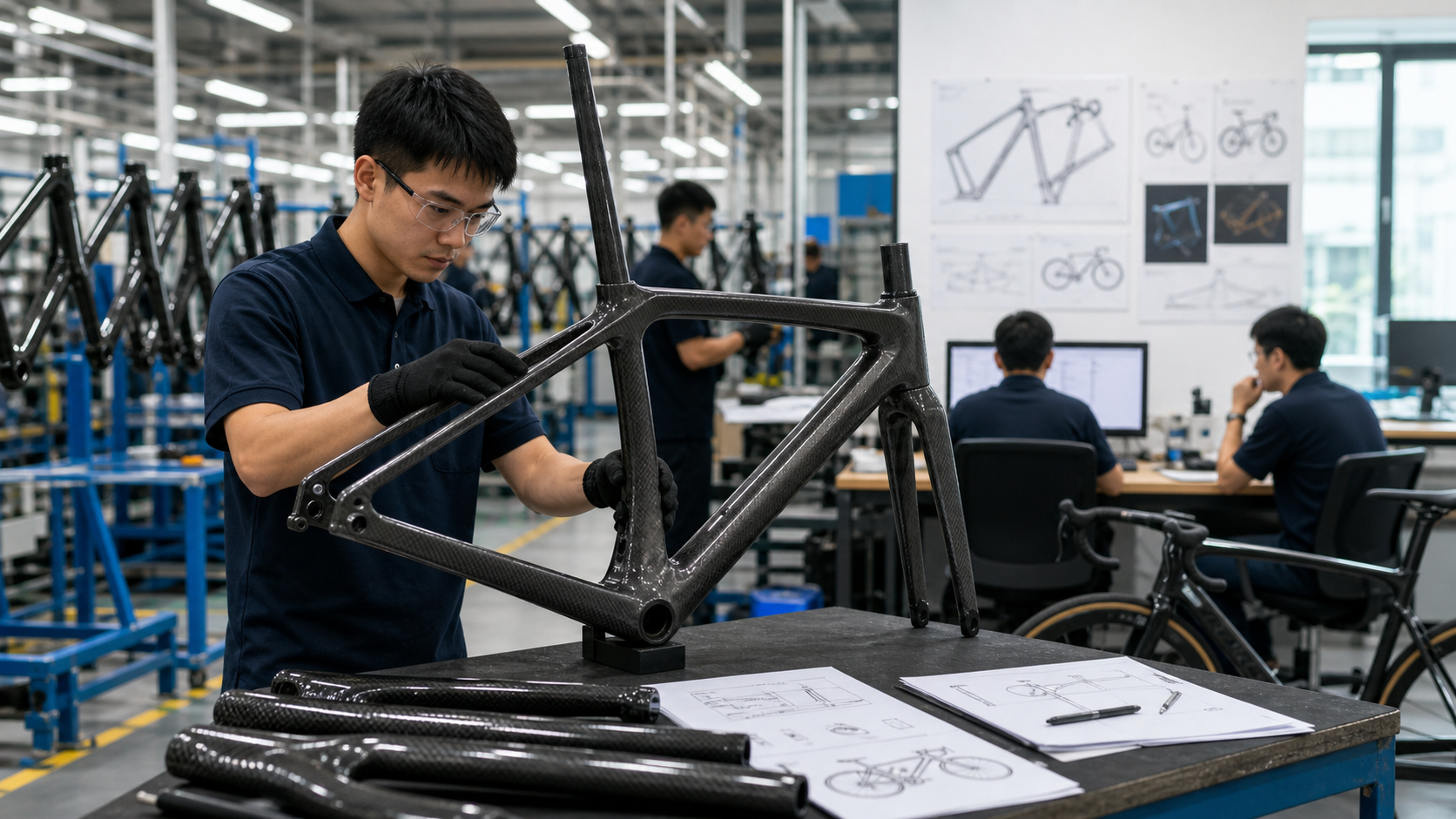
Merida’s technological breakthroughs are particularly prominent in the field of carbon fiber frames. Its Longtan carbon fiber factory boasts world-class manufacturing processes, producing carbon fiber frames that not only supply its own brand but also serve as a supplier for several top European brands.
The Cluster Effect of Taiwan’s Bicycle Industry
| Development Stage | Period | Key Characteristics |
|---|---|---|
| OEM Infancy | 1970–1980s | OEM-focused, low-cost competition |
| Brand Building | 1985–1995 | Own brands launched, overseas market expansion |
| Technology Deepening | 1996–2010 | R&D in carbon fiber, electric assist, and other technologies |
| Global Integration | 2011–present | Cross-border M&A, vertical integration, smart manufacturing |
The success of Taiwan’s bicycle industry cannot be attributed to any single company alone; more importantly, it stems from the “industrial cluster” formed in the central region (Taichung, Changhua, Nantou). This cluster encompasses:
- A complete supply chain: From metal processing, carbon fiber composites, and rubber tires to electronic shifting systems
- The A-Team alliance: Led by Giant and Merida, integrating Taiwan’s top component manufacturers (KMC chains, SRAM Taiwan plant, etc.) into a collaborative R&D mechanism
- Technical service industries: Supporting services from professional design firms, materials testing institutions, and mold manufacturers
Key Decisions in Globalization Strategy
Giant and Merida each took different but equally successful paths to globalization:
- Giant chose to directly develop consumer markets with its own brand, building a network of company-owned or licensed stores across more than 50 countries, becoming one of the world’s largest bicycle brands
- Merida, while maintaining its OEM/ODM business, continuously strengthened its own brand’s market position in Europe, pursuing a dual-track strategy of manufacturing and branding
Both companies have made “premiumization” their core strategy, deliberately avoiding the red-ocean competition of the low-price market and focusing on the R&D and manufacturing of mid-to-high-end and top-tier bicycles.
The Soft Power of Taiwan’s Bicycle Brands
The achievements of Taiwan’s bicycle industry are not just business figures; they are also an expression of cultural soft power:
- Giant sponsors world-class road cycling teams (Team Sunweb, formerly Team Giant), letting a Taiwanese-made brand race at high speed on the Tour de France
- Taiwan’s “Taipei Cycle” has become the world’s third-largest professional bicycle trade show, attracting manufacturers and buyers from over 60 countries each year
- Taiwan-developed E-Bike drive systems and smart shifting technologies are leading the next generation of the cycling revolution
Practical Advice
As a Taiwanese consumer, you can keep the following principles in mind when purchasing a bicycle:
- Buying a Giant or Merida bicycle locally in Taiwan is often 20–40% cheaper than imported European or American brands with equivalent specifications
- Choosing frames marked “Made in Taiwan” generally offers better quality assurance; many advanced models are still produced in Changhua and Dajia
- Giant and Merida have a dense service network in Taiwan, providing more reliable after-sales maintenance
Conclusion
The story of Giant and Merida is one of the most remarkable chapters in Taiwan’s post-war industrialization. They proved that OEM factories don’t have to remain OEM factories forever—with sufficient vision, patience, and technological accumulation, Taiwanese manufacturing can stand at the center of the world stage. The next time you ride your bicycle, regardless of the brand, it may well carry the dedication of Taiwanese engineers—a pride that every Taiwanese cyclist deserves to feel.
Related Reading
- Taiwan’s Bicycle Industry: How GIANT and MERIDA Went Global
- A Tour of Taiwan’s Bicycle Industry: Giant, Merida, and World-Class Manufacturing Strength
- Taiwan’s Position on the International Cycling Stage: How Giant and Merida Changed the Global Cycling World
- The Rise of Taiwan’s Homegrown Bicycle Brands: Giant and Merida’s Road to the World