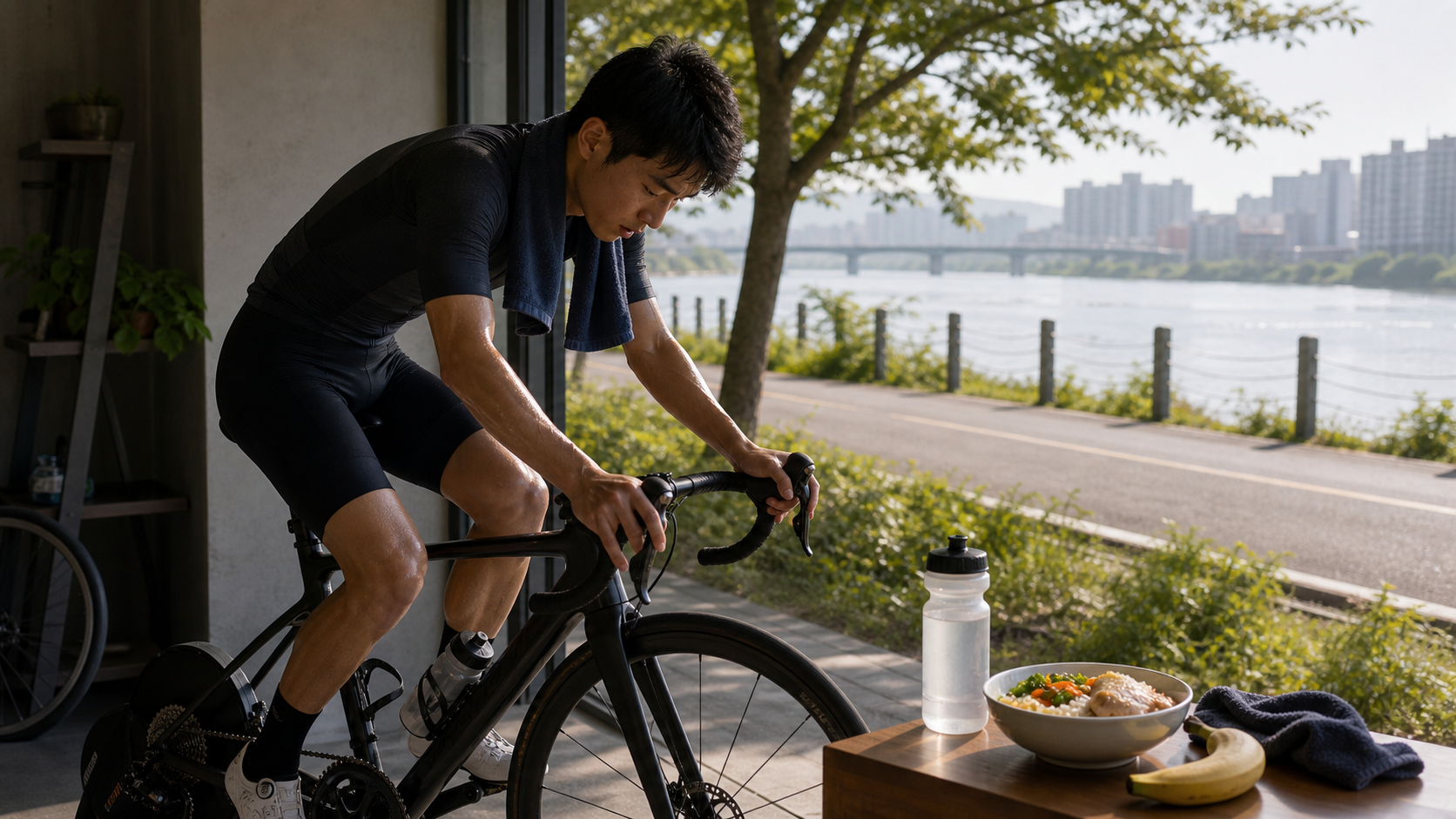
Introduction
After a race, many riders’ first impulse is to “keep training tomorrow and not waste any time,” or conversely, “rest completely for three days to regain strength.” In fact, neither extreme is the most effective recovery strategy. Sports science research indicates that “Active Recovery” during the 24–48 hours after a race clears metabolic waste faster, lowers markers of muscle damage, and gets the training cycle back on track sooner than complete rest.
What Happens to the Body After a Race?
| Physiological Change | Duration | Impact on Training |
|---|---|---|
| Muscle glycogen depletion | 24–48 hours | Requires substantial carbohydrate intake |
| Muscle micro-damage (DOMS) | 24–72 hours | Reduced efficiency in high-intensity training |
| Nervous system fatigue | 24–72 hours | Decreased reaction speed and explosive power |
| Hormone levels (elevated cortisol) | 12–24 hours | Temporary decline in immune function |
Understanding these changes is essential for designing targeted recovery strategies.
Race Night (0–6 Hours Post-Race)
This is the “golden replenishment window,” when the body’s absorption efficiency for carbohydrates and protein is at its highest:
- Within 30 minutes: Consume 0.5–0.8 g/kg of carbohydrates (sports drinks, bananas, white rice) and 20–25 g of protein (eggs, soy milk, chicken breast)
- 2–3 hours post-race: A full meal with white rice as the staple, paired with vegetables and protein, avoiding fried foods
- Hydration: Urine returning to a pale yellow color indicates adequate hydration; electrolytes can be added to replace lost sodium, potassium, and magnesium
The Day After the Race: Active Recovery Workout
The purpose of active recovery is to promote blood circulation and accelerate the removal of metabolic waste—not to train or improve fitness:
Recommended workout: 30–45 minutes of easy spinning (Zone 1)
- Pace: Feels very easy, an intensity where you can chat comfortably
- Heart rate: < 65% of max heart rate (typically around 130 bpm or below)
- Cadence: 95–105 rpm (high cadence reduces muscle strain)
- A flat-road stationary trainer is an option to avoid sudden acceleration demands outdoors
Situations where active recovery is not suitable:
- Feeling very unwell, or muscle soreness severe enough to make normal walking difficult
- Signs of a cold (during the post-race immune dip, forced exercise may worsen the condition)
- Severely insufficient sleep (< 4 hours)
Training Adjustments After 72 Hours
Decide when to return to normal training based on race intensity:
| Race Type | Recovery Days | Timing of First Normal Training |
|---|---|---|
| Light criterium (< 2 hours) | 1–2 days | Days 2–3 post-race |
| Moderate-intensity road race (2–4 hours) | 2–3 days | Days 3–4 post-race |
| Gran Fondo (> 5 hours) | 3–5 days | Days 4–6 post-race |
| Multi-day stage race (e.g., Tour de Taiwan series) | 5–7 days | Days 6–8 post-race |
Note: “Returning to normal training” does not mean immediately doing maximum-intensity work. Start with low-intensity sessions; the first two workouts should feel easy, and only from the third session onward should you gradually introduce high-intensity intervals.
Other Recovery Aids
- Contrast water therapy (hot/cold): 10 minutes in hot water (38–40°C) followed by 2 minutes in cold water (15°C), repeated for 3 cycles, to promote muscle blood flow
- Light massage or foam rolling: Focus on the quadriceps, glutes, and calf gastrocnemius muscles
- Sleep quality: Sleep on the first night after a race is central to recovery; if excitement makes it hard to fall asleep, try 10 minutes of deep breathing or meditation before bed
- Avoid alcohol: Heavy drinking after a race (even to celebrate) suppresses sleep quality and muscle protein synthesis
Recovery Planning Recommendations for the Taiwan Race Season
Taiwan’s cycling season is relatively concentrated (March–November). If you race every two weeks, recovery needs to be scheduled between events:
- Days 1–2 post-race: Active recovery or rest
- Days 3–5: Recovery training, primarily Zone 2
- Days 6–10: Normal high-intensity training block
- Days 11–14: Taper week, reducing training volume by about 40% to prepare for the next race
Conclusion
A race is a stressful event for the body, and post-race recovery is the process through which the body grows from that stress. A well-designed post-race recovery plan is not about giving up progress—it turns every race into an opportunity to enhance physical capacity, laying the foundation for an even better performance next time.
Related Reading
- The Supercompensation Window at 72 Hours Post-Training: Research on Optimal Retraining Timing
- Post-Swim Recovery: A 48-Hour Body Care Plan After a Race
- Post-Basketball Recovery Protocol: Restoring 90% Performance Within 48 Hours
- Rapid Recovery After a Swim Meet: Nutrition and Relaxation in the 30 Minutes Post-Race
西進武嶺 免費訓練分析服務 Intervals | 練不夠還是練過頭?你哪一種類型選手?AI模型告訴你! | 備戰神器 | 公路車 訓練 | CT Yeh
4 年前
CT暗黑廚房) 車友必備 宇宙無敵鮮蚵湯 幫助訓練恢復 天然食補 好市多 超肥鮮蚵 破PR
7 年前
Live) 備戰2019彰化經典百K 賽前攻略 (已完賽請看新影片
7 年前
FTL 與 SYB 車隊專訪 西進武嶺 實用攻略分享! 2小時 如何練?!你不知道的眉角!新手準備武嶺必看 EP1 | 實力派女車友 | 精華版 | 公路車 | CTYeh
4 年前
西進武嶺 自製新版AI配速表產生器 x 賽前攻略 抱佛腳! 沒有功率計也可以產生配速表嗎?有什麼其他眉角賽前要注意的呢? | 西進武嶺 / 東進武嶺 KOM 攻略 | 公路車 | CT Yeh
4 年前
一日北高 11小時 賽後心得分享篇 | TWB北高360 | 一日雙城 | 單車 | 公路車
6 年前
#公路車 #Fitting 靠人工智慧APP 幫你調整單車
6 年前
live) 超越北高 之一日北高12小時 策略
7 年前