Introduction
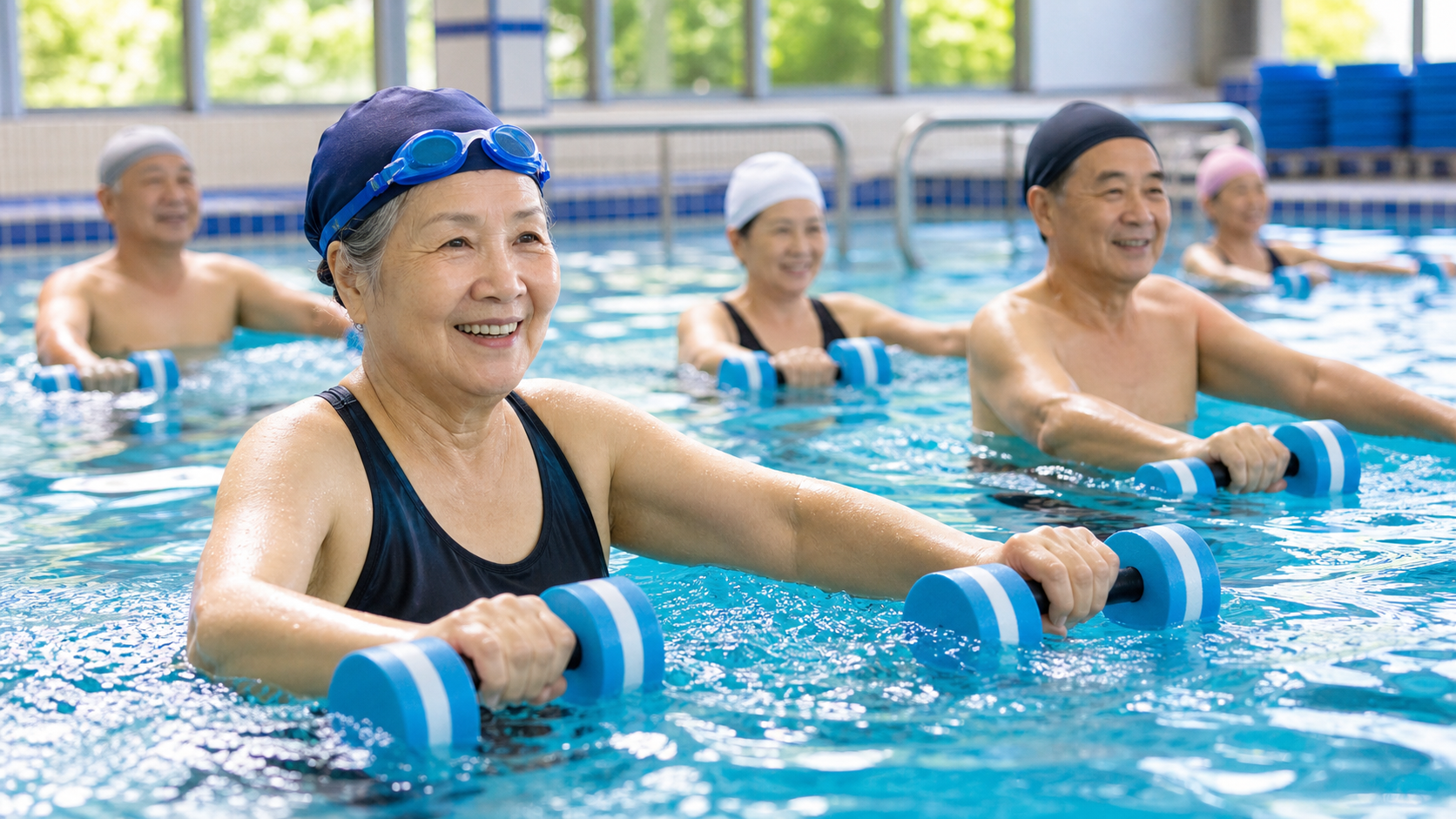
Taiwan officially entered the super-aged society in 2025 (with over 20% of the population aged 65 and above), and helping seniors maintain an active, healthy quality of life is a shared challenge for all of society. Among the many exercises suitable for older adults, swimming (including water aerobics, water walking, and other aquatic exercise forms) is widely recognized as one of the most joint-friendly options while also providing full-body training benefits.
Most public swimming pools in Taiwan’s cities and counties offer senior discounts, and some community pools have even dedicated aquatic fitness classes for older adults. However, many seniors still have reservations about swimming: “Is it okay if I can’t swim?” “Can I swim with a heart condition?” “I’m afraid of falling, so I don’t dare go to the pool.” This article will address these concerns one by one and provide a science-based swimming guide for seniors.
The Multifaceted Benefits of Swimming for Seniors
Cardiorespiratory Function
The benefits of swimming for maintaining cardiorespiratory function are especially important for the elderly, as cardiorespiratory endurance (VO₂max) naturally declines by about 10% every 10 years, and regular swimming can significantly slow this decline. Studies show that regular swimmers aged 65–75 have a VO₂max that is 15–20% higher than their sedentary peers.
Muscle Strength and Muscle Mass
Sarcopenia is the most common physical decline issue among older adults, with a loss of 1–2% of muscle mass each year, leading to reduced mobility and increased fall risk. Swimming provides resistance stimulation to the entire body’s musculature through water resistance. Although its effect on increasing muscle strength is not as pronounced as weight training, it contributes significantly to “maintaining” muscle mass and is safer than land-based weight training.
Balance and Fall Prevention
Taiwan records approximately 500,000 emergency visits annually for fractures and fall-related injuries among seniors. Aquatic exercise has a unique advantage: water resistance provides dynamic resistance, forcing the body’s balance regulation system to work continuously; even treading water and changing direction in shallow water is an efficient training for the vestibular system and proprioception, which can significantly improve land-based balance.
Chronic Disease Management Benefits
| Chronic Disease | Specific Benefits of Swimming |
|---|---|
| Hypertension | Swimming 3 times per week can lower systolic blood pressure by 5–8 mmHg |
| Type 2 Diabetes | Improves insulin sensitivity, aids blood sugar control |
| Osteoarthritis | Water reduces body weight by 90%, allowing damaged joints to move with less pain |
| Chronic Low Back Pain | Aquatic core exercises improve spinal stability and reduce daily pain |
| Chronic Obstructive Pulmonary Disease (COPD) | Swimming’s breathing pattern training improves respiratory efficiency |
Cognitive and Mental Health
Taiwanese research shows that regular exercise (including swimming) in older adults is significantly associated with a slower rate of cognitive decline. The movement coordination and route memorization required for swimming provide particularly beneficial protective stimulation to the hippocampus and prefrontal cortex.
Suitable Swimming Programs for Taiwanese Seniors
Beginners (Non-Swimmers): Water Aerobics
Even without knowing how to swim, performing aqua aerobics in the pool can yield significant health benefits:
- Water walking (walking forward and backward in shallow water): 20–30 minutes, heart rate at 60–70% HRmax
- Water leg lifts and high kicks: strengthens hip flexors and quadriceps
- Wall-supported leg lifts and abduction: strengthens the gluteus medius, improves balance
- Water boxing (punching the water): upper-body aerobic training, suitable for seniors with healthy shoulder joints
Those with Swimming Experience: Stroke Selection
| Stroke | Suitability for Seniors | Notes |
|---|---|---|
| Backstroke | Most recommended | No need to lift head for breathing, minimal spinal pressure |
| Freestyle (slow pace) | Recommended | For those with better technique, effective low-speed aerobic exercise |
| Breaststroke | Moderate | Watch the knees; avoid excessively wide leg movements |
| Butterfly | Not recommended | High stress on the lower back, unsuitable for most seniors |
Recommended Training Program
- Frequency: 2–3 times per week, 30–45 minutes per session (including warm-up in the water and a cool-down swim)
- Intensity: RPE 10–13 (able to talk and breathe easily), no need to swim fast
- Supplement: Add 1–2 sessions of light land-based weight training per week (to protect bone density)
Safety Precautions
- Pool Temperature: Older adults have reduced thermoregulation ability; it is recommended to choose pools with water temperatures of 28–32°C to avoid cardiovascular stress from overly cold pools
- Entering and Exiting the Pool: Use entry ladders with handrails; slip-resistant flooring is especially important, as locker room floors in many Taiwanese public pools still pose a slipping hazard
- Bring Your Own Medication: Those with a history of heart disease or hypertension should ensure they have not discontinued their medication while swimming
- Buddy System: It is recommended to swim with a companion and never use the pool alone, so that mutual assistance is available in an emergency
Practical Advice
- Almost every city and county in Taiwan offers “senior swimming classes” or “water aerobics courses” led by trained instructors, which are safe and reasonably priced
- Joining an early-morning swimming community is an excellent social activity; many early-morning swimming clubs in Taiwan have rich group activities that help combat loneliness in old age
- Before your first swim, consult your family physician to confirm there are no cardiovascular contraindications
- Osteoarthritis patients should compare pain levels between aquatic and land-based activities after exercise; if pain is significant in the water as well, the range of motion should be adjusted first
- Remember to rehydrate and have a light snack (such as a banana or soy milk) after swimming to prevent hypoglycemia
Conclusion
For seniors in Taiwan, swimming may be the most “cost-effective” health investment—it is safe, comprehensive, strengthens the body, and uplifts the spirit. There is no need to worry about how slowly or how much you swim; what matters is staying active in the water. Every stroke of your arms in the water is a gift of longevity to yourself.
Related Reading
- Health Benefits of Swimming for Seniors: An Aquatic Prescription for Slowing Aging
- Senior Swimming Training: A Safe Beginner’s Program and Precautions for Those Over 65
- Swimming for Seniors: An Aerobic Exercise Guide for Those 75 and Older
- Senior Swimming Culture: The Vital Aquatic Life of Taiwanese Elders
一日北高/長距離團騎 常見問題補充篇 / 組團或跟團的眉角 / 壯車友容易被瘦車友慢性拉爆 / 原來屁股痛可能是這個原因...? / 風場配速法 / 公路車 / CT Yeh
2 年前
白沙屯媽祖進香在家走!UREVO 坡度自調走步機 / 可連接訓練遊戲APP MyWhoosh / 邊看直播邊走起來 / CT Yeh
11 個月前
靠單車減肥35公斤 心得分享與整理
7 年前
[防寒衣體驗] 鐵人魂 三鐵 防寒衣試穿會 於松運 深水游泳池 鯨魚池
8 年前
嘉義大埔、阿婆灣挑戰賽,美到以為在日本!ft. 環騎5 Cool 西拉雅188 / 公路車 / CT Yeh
7 個月前
#公路車 #Vo2Max #最大攝氧量 測驗 體驗 | 心肺測試
6 年前
一日北高常見問題大集合 | 攻略 | 路線 | 訓練 | 補給 | 自行車 單車 | 一日雙城 | 雙塔 | TWB北高360 | 屁股痛
6 年前
西進武嶺 免費訓練分析服務 Intervals | 練不夠還是練過頭?你哪一種類型選手?AI模型告訴你! | 備戰神器 | 公路車 訓練 | CT Yeh
4 年前