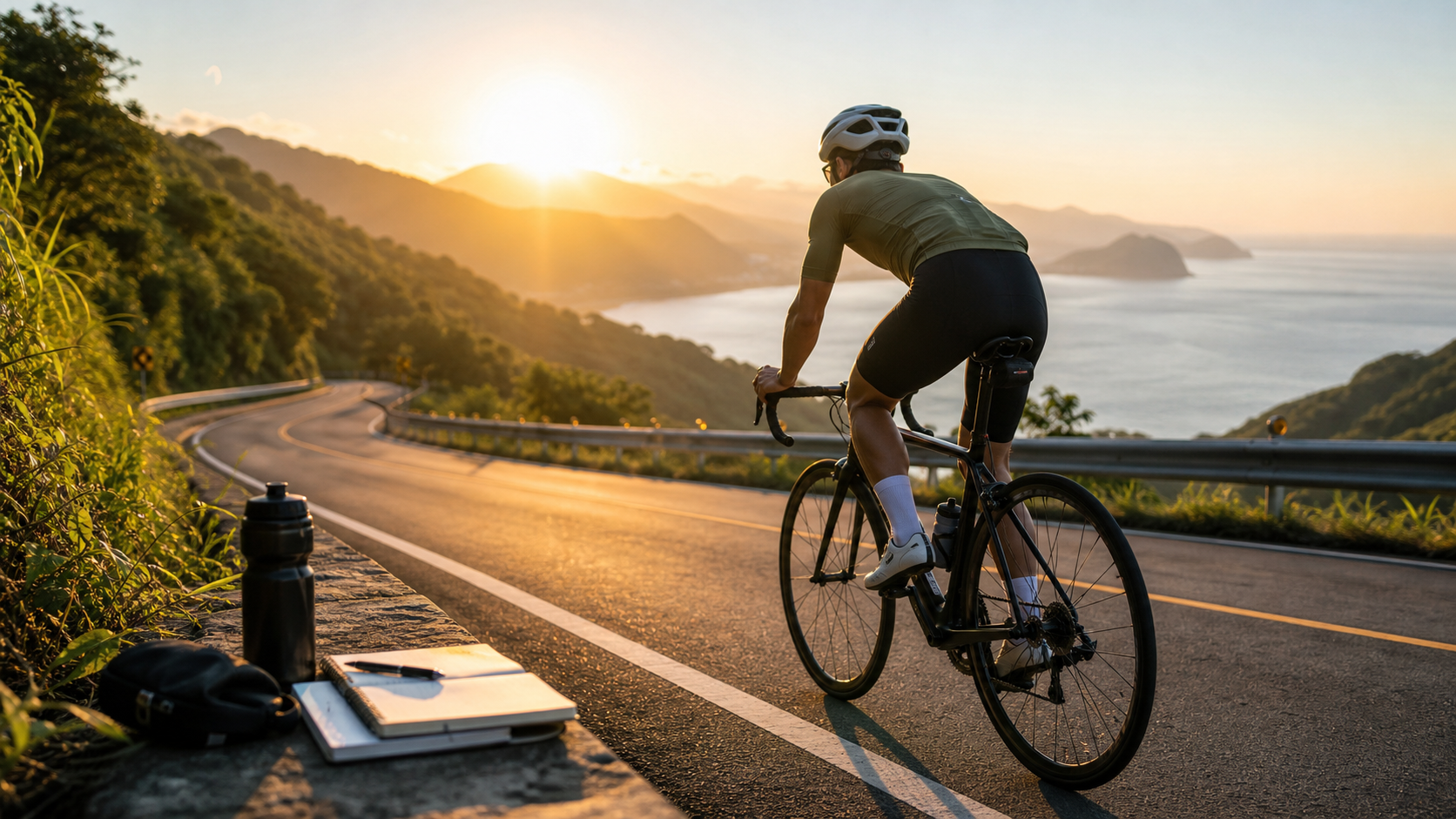
Introduction
Many people are overly optimistic about their fitness before their first round-the-island ride. “I usually ride 80 km on weekends, so a round-the-island trip should be no problem”—this mindset overlooks a key point: the challenge of a round-the-island ride isn’t the daily distance, but riding continuously for 9 days without a break. Fatigue accumulates, muscles need time to repair, and your performance on Day 5 depends directly on how much of a foundation you built in the 3 months before departure.
Three-Month Training Structure
The entire preparation period is divided into three phases, progressing from base endurance building to race-day simulation:
| Month | Training Focus | Weekend Long Ride Distance | Weekday Rides |
|---|---|---|---|
| Month 1 | Base aerobic endurance | 60–80 km | 2–3 times/week, 30–45 minutes each |
| Month 2 | Endurance extension + climbing | 80–120 km | 3 times/week, including 1 climbing session |
| Month 3 | Consecutive-day simulation + tapering | 2 consecutive days of 100 km each | Taper during the final 2 weeks |
Month 1: Building Your Aerobic Base
The focus of this phase is getting your body used to being on the bike for more than 3 hours. There’s no need to chase speed; ride at an intensity where you can hold a relaxed conversation (heart rate around 65–75% of max HR).
Sample Weekly Plan:
- Tuesday: 40-minute flat ride, maintaining a steady cadence
- Thursday: 45-minute ride, with a slight acceleration in the final 15 minutes
- Saturday: Long ride of 60–70 km, without worrying about speed
Things to Note:
- Issues with riding posture and saddle comfort are most noticeable in this phase, so make adjustments as early as possible
- If you feel significant discomfort in your sit bones, consider changing your saddle or investing in a good pair of cycling shorts
Month 2: Adding Intensity and Climbing Training
The toughest challenge on a round-the-island trip isn’t the mileage—it’s the climbs on the Suhua Highway and the South Link mountain roads. In Month 2, you should incorporate regular climbing practice.
Common Climbing Practice Spots in Taiwan:
- North: Yangmingshan Zhuzihu, Wulai, Beiyi Highway
- Central: Puli to Cingjing, Huisun Forest Area
- South: Qishan to Meinong in Kaohsiung
Weekly Plan Adjustments:
- Tuesday: Maintain aerobic fitness, 45 minutes
- Thursday: Climbing session—choose a route with 300–500 meters of elevation gain, repeat 2–3 times
- Saturday or Sunday: Long ride of 90–120 km, including at least one significant climb
First Taste of Consecutive Riding: In the latter part of Month 2, schedule a weekend of back-to-back rides (80 km on Saturday + 60 km on Sunday) to experience what your legs really feel like on the second day.
Month 3: Simulating Round-the-Island Conditions
The most important practice in this phase is “consecutive-day simulation”—riding over 80 km for 2–3 days in a row to teach your body to keep functioning under fatigue.
Consecutive-Day Simulation Recommendations:
- Find a 3-day long weekend and ride 80–100 km each day
- Use the same gear you’ll use on the round-the-island trip (panniers, clothing, nutrition)
- Practice your pre-ride bike check routine every morning
Tapering in the Final Two Weeks: Two weeks before departure, significantly reduce your training volume (by 50%) to allow your muscles to fully recover. This period is your “energy storage phase”—don’t overtrain out of anxiety.
Other Fitness Tips
- Don’t skip core training: Cycling isn’t just about your legs; the support from your back and abdominal muscles determines how long you can hold proper form. Doing planks and bridges twice a week is highly effective
- Sleep is the best recovery medicine: Ensure 7–8 hours of sleep each night during training; lack of sleep will greatly diminish your training results
- Protein intake: Within 30 minutes after a long ride, consume protein-rich foods (soy milk, eggs, yogurt) to speed up muscle repair
- Weight management: For every 1 kg of body weight you lose, you can reduce your power requirement by approximately 5–10 watts when climbing
Conclusion
Three months of systematic training won’t turn you into a pro cyclist, but it will prepare your body to take on the challenge of a round-the-island ride. Another important function of training is helping you identify your weaknesses—whether it’s lack of climbing power, lower back soreness after long distances, or an ill-fitting saddle—finding and fixing these issues before departure is far better than discovering them mid-trip.
Related Reading
- Round-the-Island Fitness Prep: A Progressive 3-Month Training Plan Before Departure
- Round-the-Island Fitness Training Plan: A 12-Week Preparation Schedule Before Departure
- Round-the-Island Fitness Prep: An 8-Week Plan to Help Beginners Complete a Taiwan Loop
- Cycling Round-the-Island for Beginners: Ideal Duration, Gear Checklist, and Fitness Thresholds
單車 一日北高 ( 雙城 ) 肥宅雙人瘋狂行 紀錄片 REACTO
10 年前
2019 夏季KOM 5小 完賽心得 準備攻略 東進武嶺 夏季登山王之路 Taiwan KOM Challenge
7 年前
靠單車減肥35公斤 心得分享與整理
7 年前
金門 ! 我騎過最棒的離島了 / 最後可以騎車上金門大橋的機會!?/ 公路車 / CT Yeh
1 年前
2016 桐花飛舞 單車挑戰 精華片段
10 年前
Never Stop 西進武嶺 前後雙機 完整全程錄影 訓練台 實境
8 年前
Live) 備戰2019彰化經典百K 賽前攻略 (已完賽請看新影片
7 年前
JJSC南台灣單車走春三日行 DAY 1 / 強度 x 美食 x 節慶體驗 / 公路車 CT Yeh
5 個月前