Race Day Nutrition Plan: A Complete Eating Strategy from the Day Before to the Finish Line
文章導覽
/no_think
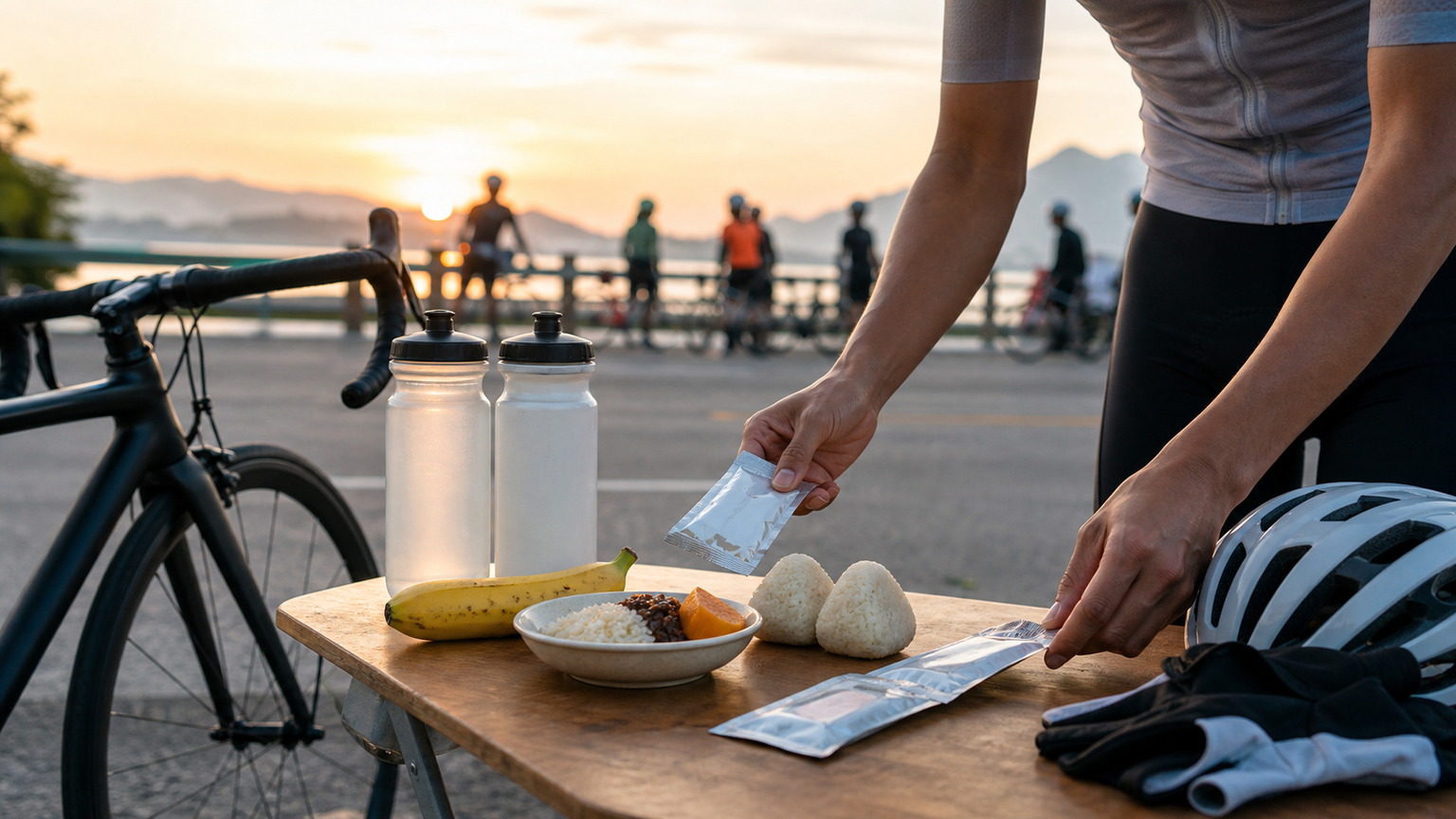
Race Day Nutrition Plan: Complete Eating Strategy from the Day Before to the Finish Line
You’ve spent months training, refining your physique, boosting your FTP, and familiarizing yourself with the course. But if your race day nutrition goes wrong, all that effort could be wasted. A well-planned nutrition strategy is the final piece of the puzzle for race success.
The Day Before: Laying the Foundation
Final Carbohydrate Loading Push
If you’ve already executed a three-day carbohydrate supercompensation protocol (see the glycogen loading article), the day before the race is your final adjustment day.
Goal: 8-10 grams of carbohydrate per kilogram of body weight
Key Principles:
- Choose foods you’re familiar with and certain won’t cause gastrointestinal issues
- Avoid high-fiber foods (whole grains, large amounts of vegetables, legumes)
- Reduce spicy, fried foods and alcohol
- Don’t eat your last meal too late—finish 2-3 hours before bedtime
Pre-Race Dinner Example
Recommended Combination:
- White rice or pasta (large portion)
- Simply seasoned chicken or fish (moderate protein)
- Small amount of cooked vegetables
- White bread with jam
- Juice or sports drink
Avoid:
- Raw salads (bacterial risk + high fiber)
- Restaurant dishes you’ve never tried
- Alcoholic beverages
- Dairy products (if you have a lactose intolerance tendency)
Fluid Preloading
- Ensure steady hydration throughout the day
- Pair dinner with an electrolyte drink
- Urine color before bed should be pale yellow
- Don’t chug large amounts of water at once (frequent bathroom trips will disrupt sleep)
Race Morning: Starting the Engine
Pre-Race Breakfast Timing
Eat 3-4 hours before the start, this is the most critical time point.
Reasons:
- Enough time for digestion and absorption
- Blood sugar stabilizes and settles
- Avoids gastrointestinal discomfort while riding
- Completes the final glycogen “top-up”
Pre-Race Breakfast Design
Carbohydrate Goal: 1-4 grams per kilogram of body weight (70 kg rider = 70-280 grams of carbs)
Classic Pre-Race Breakfast (70 kg rider example):
| Food | Carb Content | Notes |
|---|---|---|
| 1.5 bowls of white rice | 80g | Main base |
| 1 banana | 27g | Contains potassium, easy to digest |
| 2 slices of white toast with honey | 45g | Quick carbs |
| 300ml juice | 35g | Fluids + carbs |
| 1 boiled egg | 0g | Small protein to stabilize blood sugar |
| Total | ~187g |
Alternatives (for those with smaller appetites):
- 2 energy bars + 500ml sports drink
- Pancakes with maple syrup + juice
- Congee with simple toppings
60-30 Minutes Before the Start
- Sip 200-300ml of electrolyte drink
- Optionally take one energy gel or half a banana
- Bring a bottle of sports drink when heading to the warm-up area
10-5 Minutes Before the Start
- One last sip of sports drink
- If using a caffeine strategy, this is a good time to take a caffeinated gel
- Take a deep breath and trust your preparation
During the Race: Sustained Fueling
Carbohydrate Intake Guidelines
In-race carbohydrate intake depends on race duration and intensity:
| Race Duration | Carbohydrate Recommendation | Notes |
|---|---|---|
| < 45 minutes | Not needed | Just rinse your mouth |
| 45-75 minutes | Small amount (<30g/hr) | Not essential but may help |
| 1-2.5 hours | 30-60g/hr | Single carbohydrate source is sufficient |
| 2.5-3+ hours | 60-90g/hr | Requires mixed carbohydrate sources |
| Ultra-long distance | 80-120g/hr | Requires gut training |
The Importance of Mixed Carbohydrate Sources
When carbohydrate intake exceeds 60 grams per hour, intestinal absorption of a single carbohydrate (such as pure glucose) reaches saturation. At this point, you need a glucose + fructose blend (approximately 2:1 ratio), because they use different intestinal transport proteins, allowing total absorption to increase to over 90 grams per hour.
Product Selection and Timing
Energy Gels
- Carb content: 20-30 grams per packet
- Pros: Easy to carry, precise dosing
- Cons: May cause gastrointestinal discomfort, needs to be taken with water
- Timing: One packet every 30-45 minutes
Energy Bars
- Carb content: 30-50 grams per bar
- Pros: Provides satiety, variety of flavors
- Cons: Requires chewing, difficult to eat at high intensity
- Timing: On flatter sections or at feed zones
Sports Drinks
- Carb content: Approximately 30 grams per 500ml
- Pros: Replenishes fluids and electrolytes simultaneously
- Cons: May become warm and lose appeal in hot weather
- Timing: Sip continuously
Solid Foods (Natural Foods)
- Rice balls, salty crackers, dried fruit
- Suitable for long-distance, low-intensity sections
- Provides psychological satisfaction
In-Race Hydration Strategy
- Drink every 15-20 minutes
- Fluid intake of 500-800ml per hour
- Increase to 800-1,000ml in hot conditions
- Alternate between sports drinks and plain water
Nutrition Strategies for Different Race Types
Road Races (80-200 km)
- First 1/3: Steady fueling, 40-60 grams of carbs per hour
- Middle section: Maintain or slightly increase to 60-80 g/hr
- Final 1/3: Ensure you don’t run low on sugar; consider a caffeinated gel before key climbs
- Use the calmer moments in the peloton to eat
Individual Time Trials (20-50 km)
- Pre-race nutrition is most important; in-race fueling is minimal
- Use a bottle with a high-concentration carbohydrate drink
- Shorter events may not require solid fuel
- Take caffeine 30-60 minutes before the start
King of the Mountains (Climbing Races)
- High intensity over a long duration, so carbohydrate demands are high
- Focus on liquid and gel fueling (solid foods are hard to digest)
- Take an energy gel every 20 minutes
- Pay special attention to dehydration at high altitude
Long-Distance Gran Fondos (200+ km)
- Carbohydrate intake needs to reach 80-120 g/hr
- Mix solid and liquid fueling to avoid flavor fatigue
- Include salty foods (rice balls, salty crackers)
- Set alarms to remind yourself to eat (easy to forget during long rides)
After the Race: Kickstarting Recovery
Golden Recovery Window (Within 30 Minutes of Finishing)
- Recovery drink or chocolate milk (carbs + protein)
- Fruit (watermelon, oranges)
- 500ml of electrolyte drink
Recovery Meal (1-2 Hours Later)
- Balanced meal with a carb-to-protein ratio of 3:1
- Example: Chicken rice + miso soup + fruit
- Adequate fluid replenishment
Ongoing Recovery (24 Hours Post-Race)
- Eat every 2-3 hours
- Don’t binge eat out of a “compensation mindset”
- Maintain steady carbohydrate and protein intake
- Monitor urine color to ensure hydration recovery
Race Day Nutrition Checklist
- [ ] Complete carbohydrate loading the day before
- [ ] Finish breakfast 3-4 hours before the start
- [ ] Prepare enough supplies (energy gels, energy bars, drink mix)
- [ ] Bottles filled with sports drink
- [ ] Spare supplies in your bag
- [ ] Know the location of feed stations on the course
- [ ] Set watch/computer reminders for fueling times
- [ ] All supplies have been tested in training
The Most Important Rule
Never try anything new on race day.
All nutrition strategies, products, and food combinations should be tested repeatedly in training. Race day is simply about executing the plan you’ve already rehearsed. This is the simplest yet most frequently violated principle in sports nutrition.
Prepare your nutrition plan, then trust it, and focus on the race itself.
Related Reading
- Race Nutrition Strategy: A Scientific Fueling Plan Before and During Competition
- 100-Mile Cycling Race Nutrition Timeline: Complete Fueling Strategy from Start to Finish
- Triathlon Nutrition Strategy: Complete Fueling Plan Before, During, and After the Race
- Pre-Race Week Carbohydrate Loading Strategy: Maximizing Glycogen Stores