文章導覽
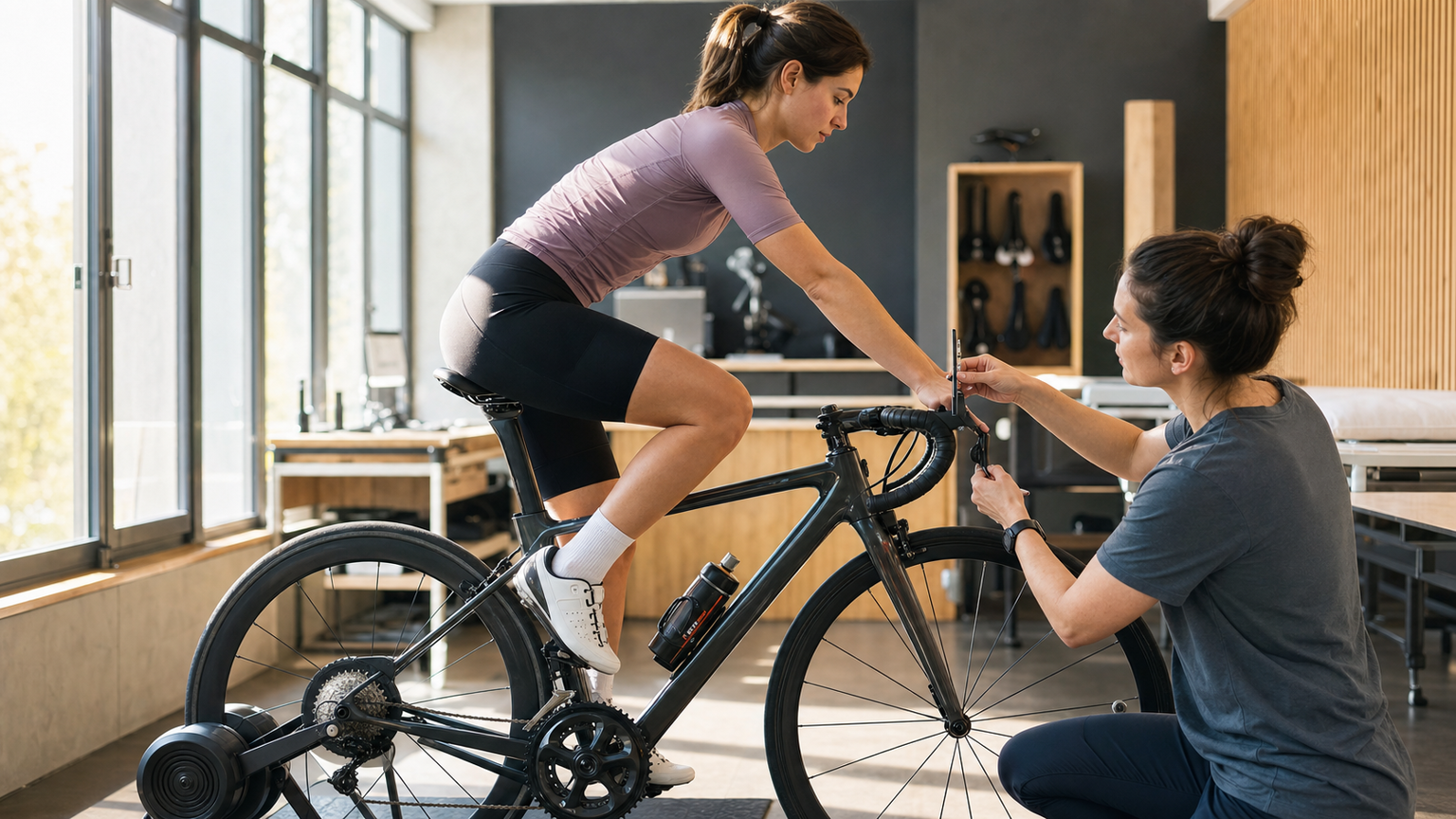
Women’s-Specific Bike Fitting: Crafting a Position That Truly Fits You
Cycling is a sport that demands precise coordination between the rider and the machine. However, the history of bicycle design has been almost entirely based on the male body as the standard, meaning that female riders, without proper adjustments, often find themselves at a disadvantage in terms of comfort, efficiency, and injury prevention. Understanding the unique considerations of the female body in Bike Fitting is an essential lesson for every female rider.
Key Structural Differences Between Male and Female Bodies
Before discussing the details of Fitting, we need to recognize several important anatomical differences that affect riding position:
Pelvic Structure
The female pelvis is typically wider and shallower, with an average sit bone spacing 1-3 cm wider than that of males. This directly influences saddle selection—using a saddle that is too narrow can place excessive pressure on soft tissues, causing numbness, pain, and even long-term nerve damage.
Torso and Limb Proportions
At the same height, women tend to have shorter torsos and longer legs. This means a standard frame may lead to excessive forward lean, while a top tube that is too long can cause overextension of the arms.
Shoulder Width and Hands
Women have narrower average shoulder width, as well as smaller palms and fingers. Standard handlebar widths and brake lever reach may not be suitable, leading to handling difficulties and hand fatigue.
Q-Factor (Pedal Spacing)
Women have wider pelvises, but this does not mean they need a wider Q-Factor. In fact, excessively wide pedal spacing can cause the knees to cave inward, increasing the risk of IT Band friction and knee pain.
The Saddle: The Most Critical Yet Most Overlooked Element
Saddle discomfort is the most common complaint among female riders and is one of the primary reasons many women give up cycling.
How to Choose the Right Saddle
Step 1: Measure Sit Bone Width
Most bike shops have sit bone measuring tools. Sit bone width determines the minimum width requirement for the saddle—the saddle should be approximately 2 cm wider than your sit bone width.
Step 2: Consider Your Riding Position
- Upright posture (leisure riding, commuting): Requires a wider saddle with a larger support area
- Moderate forward lean (sportive riding): Medium width; pressure distribution changes when the pelvis tilts forward
- Aggressive forward lean (road racing): Narrower saddle; the contact area of the sit bones changes with significant pelvic tilt
Step 3: Central Cutout or Relief Channel Design
Soft tissue pressure on the perineal area is an issue that must be taken seriously. Saddles with a central cutout or fully open relief channel can effectively reduce soft tissue pressure and minimize numbness. Research shows that relief designs can reduce perineal pressure by 50-70%.
Step 4: Saddle Material and Shape
- Flat saddles suit riders with high pelvic flexibility
- Curved saddles suit riders with less pelvic tilt
- Overly soft saddles can actually cause more problems—soft tissue can sink into the padding
Professional Advice: Don’t be afraid to try multiple saddles. Many shops offer demo programs that let you test before you buy. Finding the right saddle may take 2-3 attempts, and that’s completely normal.
Frame Geometry and Sizing
Women’s-Specific Models vs. Unisex Models
Women’s Specific Design (WSD) models exist on the market and typically feature:
- Shorter top tubes
- Narrower handlebars
- Shorter cranks
- Smaller brake lever reach
- Women’s-specific saddles
However, not all women need a WSD model. Taller women or those with longer arms may be more comfortable on a standard frame. The key isn’t the label on the frame, but whether the final Fitting numbers are appropriate.
Key Fitting Measurements
| Parameter | Common Adjustment Direction for Women | Reason |
|---|---|---|
| Stem Length | Shorter (80-100mm) | Shorter torso proportions |
| Stem Angle | Higher rise or additional spacers | Reduce excessive forward lean |
| Handlebar Width | Narrower (36-40cm) | Narrower shoulder width |
| Crank Length | Shorter (165-170mm) | Shorter femur length |
| Saddle Fore/Aft Position | May be slightly rearward | Differences in pelvic structure |
| Cleat Position | Pay attention to internal/external rotation angle | Q-angle is typically larger |
Considerations for the Hands and Upper Body
Handlebar Selection
Women’s-specific handlebars typically feature a shallower reach and shorter drop at the drops, allowing riders with shorter fingers to comfortably grip the drops and operate the brakes.
Brake Lever Adjustment
Most modern road bike brake levers offer reach adjustment. Be sure to adjust the levers to a position where your fingers can easily reach them. Being unable to comfortably operate the brakes not only affects the riding experience but is also a serious safety hazard.
Gloves and Bar Tape
- Choose correctly sized gloves to avoid imprecise handling from oversized gloves
- Thicker bar tape can compensate for the reduced vibration absorption from smaller hands
- Consider gel bar tape or additional gel pads
Lower Body Setup
Saddle Height
The principles for setting saddle height are the same for men and women, but women need to pay special attention to pelvic stability during the pedal stroke. A wider pelvis may cause the pelvis to rock side to side while pedaling, which is often a sign that the saddle is too high.
Cleats and Cycling Shoes
Women typically have a larger Q-angle (quadriceps pull angle) due to a wider pelvis. This means:
- Cleat float settings require more careful consideration
- Wedges may be needed to adjust foot inversion/eversion
- The internal/external rotation angle of the cleats is especially important
- Watch the knee tracking during the pedal stroke—there should be no obvious knee caving inward
The Professional Bike Fitting Process
A complete professional Fitting session should include:
- Interview: Understanding riding goals, injury history, and discomfort symptoms
- Physical Assessment: Flexibility testing, strength evaluation, and observation of skeletal structure
- Dynamic Analysis: Riding on a trainer while using motion capture systems to analyze the pedal stroke
- Adjustment and Testing: Making real-time adjustments to various parameters and repeating the analysis
- Recording and Follow-up: Documenting final measurements and scheduling follow-up sessions
In Taiwan, more and more Fitters have experience working with female riders. When choosing a Fitter, don’t hesitate to ask whether they have experience fitting female clients and whether they understand the unique anatomical considerations of women.
Invest in Fitting, Invest in Your Cycling Future
A professional Bike Fitting session costs approximately NT$3,000-8,000, which may seem substantial. But compared to the cost of treating injuries caused by an improper riding position, or the riding time lost to discomfort, this investment offers an extremely high return.
Remember, the bicycle should adapt to your body, not the other way around. Find the setup that truly fits you, and make every pedal stroke a pleasure.
Related Reading
- Bike Fit for Female Riders: Gender Differences in Sit Bone Width and Saddle Selection
- The Complete Guide to Bike Fitting: Why Do You Need a Professional Fitting?
- Equipment and Bike Fit Differences for Female Riders: Saddles, Handlebars, Frame Geometry, and Managing Perineal Discomfort
- The Complete Guide to Cycling Position Fitting
