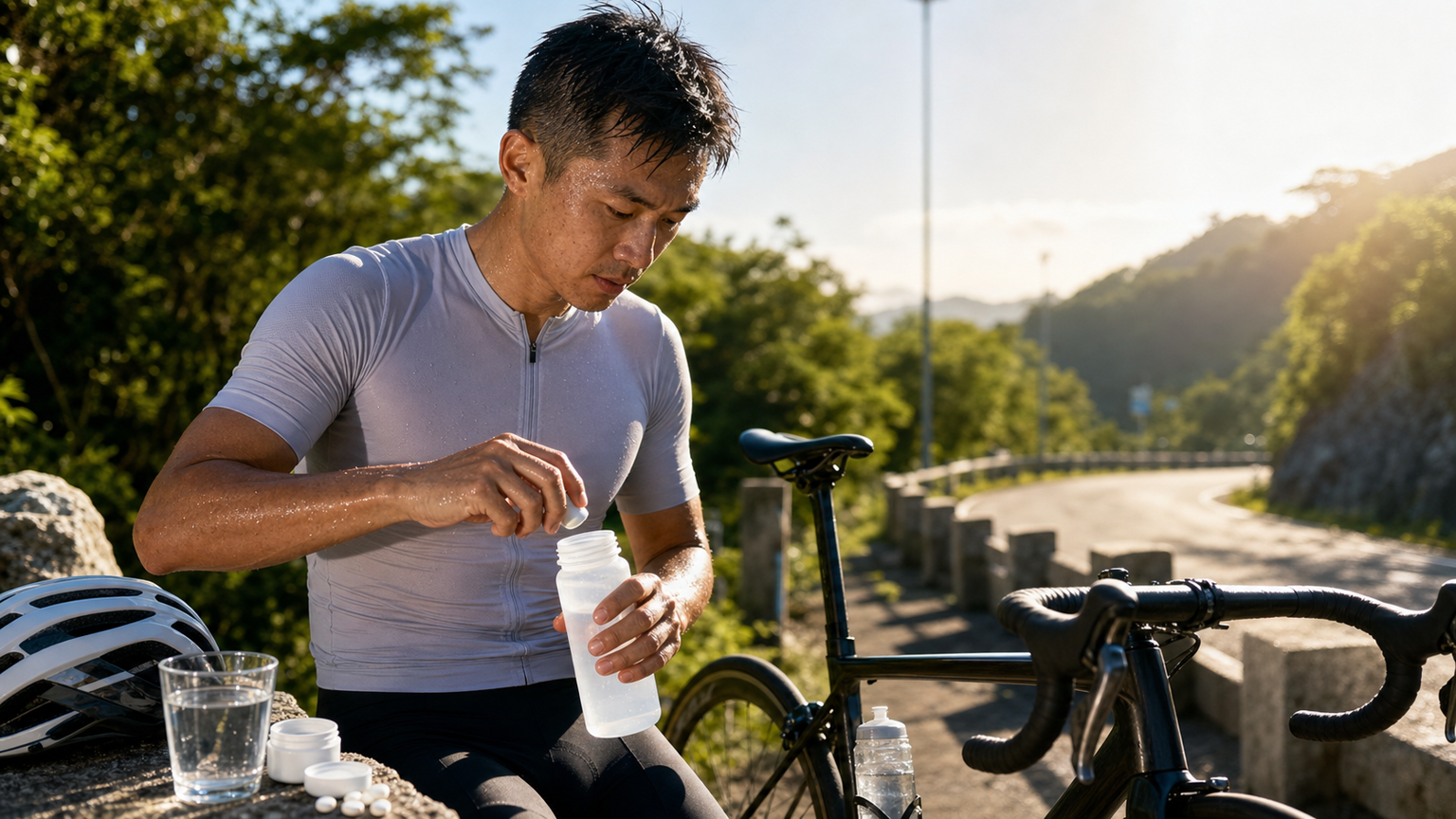
Sodium Loading Strategy: The Secret Weapon Before Hot Races
Introduction: The Performance Killer in High Heat
Taiwan’s cycling season often falls squarely in the scorching summer, with ambient temperatures exceeding 32°C and humidity above 70% being the norm. Under these conditions, athletic performance can drop by 15-20%, with dehydration and electrolyte imbalance being the primary culprits. Sodium loading—systematically increasing sodium intake before a race—has become a key strategy for elite endurance athletes battling the heat.
Why Is Sodium So Important?
Sodium’s Core Role in Exercise
Sodium ions (Na+) are the most abundant electrolyte in the body’s extracellular fluid, playing multiple critical roles in exercise physiology:
-
Maintaining Plasma Volume: Sodium is the primary regulator of blood osmotic pressure. Adequate sodium can maintain or even expand plasma volume, directly affecting the amount of blood the heart pumps per beat and heat dissipation efficiency.
-
Regulating Sweat Mechanisms: Sodium concentration in sweat varies widely (200-1600 mg per liter), depending on an individual’s sweat salt concentration and sweat rate. High-salt sweaters can lose more than 1500 mg of sodium per hour in hot environments.
-
Promoting Intestinal Water Absorption: The sodium-glucose cotransport mechanism (SGLT1) is the most efficient pathway for water absorption in the gut. Without sodium, water absorption efficiency drops dramatically.
-
Neuromuscular Function: Sodium is involved in nerve impulse transmission and muscle contraction. Severe hyponatremia can cause muscle cramps and even become life-threatening.
Individual Differences in Sweat Sodium Loss
This is an important concept that is often overlooked. Sweat sodium concentration can vary by up to 8-fold between individuals:
- Low-salt sweaters: 200-400 mg Na+/L
- Moderate-salt sweaters: 500-900 mg Na+/L
- High-salt sweaters: 1000-1600 mg Na+/L
If you notice heavy white salt stains on your clothing after exercise, your eyes stinging from sweat, or a tendency to cramp during exercise, you are likely a high-salt sweater, and sodium loading will benefit you even more significantly.
The Science Behind Sodium Loading
Expanding Plasma Volume
The core mechanism of sodium loading is expanding plasma volume by increasing the body’s sodium reserves. When you systematically increase sodium intake 24-48 hours before a race:
- Blood sodium concentration rises slightly
- The thirst mechanism is triggered, prompting you to drink more fluids
- The kidneys respond to the high-sodium environment by reducing water excretion
- Plasma volume increases by approximately 5-10%
This extra plasma volume provides a “buffer zone” during exercise in the heat—more blood means greater stroke volume from the heart, more efficient skin blood flow for heat dissipation, and better blood supply to working muscles.
Research Evidence
- Sims et al. (2007): Female athletes improved time trial performance by 3.2% in 32°C conditions after pre-race sodium loading
- Coles & Luetkemeier (2005): A meta-analysis showed sodium loading increased plasma volume by an average of 4.5% and improved thermoregulation
- McCubbin et al. (2019): Triathletes who supplemented with sodium before racing finished significantly faster and lost less body weight post-exercise
Practical Implementation
The 24-48 Hour Pre-Race Strategy
Option 1: Progressive Sodium Loading (Recommended)
Starting 48 hours before the race:
- In addition to your normal diet, add 1/4-1/2 teaspoon of table salt (about 500-1000 mg of sodium) to each meal
- Pair with adequate fluid intake (body weight in kg x 40 ml)
- Choose foods higher in sodium: miso soup, soy sauce, pickled foods, cheese, bread
12-24 hours before the race:
- Increase extra sodium intake to 30-50 mg per kilogram of body weight
- Example: 70 kg rider = 2100-3500 mg of extra sodium
- Continue pairing with adequate fluids
Option 2: Concentrated Pre-Race Supplementation
2-3 hours before the race:
- Drink a high-sodium beverage: add 1500-1800 mg of sodium to every 500ml of water
- Drink slowly, finishing over 60-90 minutes
- This is a more aggressive approach; it is recommended to test it during training first
Sodium Source Options
| Source | Sodium per Serving | Advantages | Disadvantages |
|---|---|---|---|
| Table salt (1/4 tsp) | ~580 mg | Cheap, easy to find | Poor taste |
| Sports electrolyte capsules | 200-400 mg/capsule | Convenient to carry | Higher cost |
| Effervescent electrolyte tablets | 300-700 mg/tablet | Tastes good | Some are high in sugar |
| Miso soup (1 bowl) | ~900 mg | Delicious, contains other nutrients | Bulky |
| Soy sauce (1 tbsp) | ~900 mg | Easy to add | Watch sodium content |
| Salty crackers (10 pieces) | ~500 mg | Also provides carbs | Fiber may affect digestion |
In-Race Sodium Supplementation Guide
Sodium loading is a pre-race strategy, but continued supplementation during the race is equally important:
- Target: 500-1000 mg of sodium per hour (use the upper limit in hot conditions)
- Sources: Sodium-containing sports drinks, electrolyte capsules, salty energy foods
- Pair with: 500-800ml of water per hour (adjust based on ambient temperature and sweat rate)
Precautions and Risk Management
Gastrointestinal Tolerance
High-concentration sodium solutions can cause nausea, bloating, or diarrhea. Be sure to test your sodium loading protocol multiple times in training—never try a new strategy on race day.
Blood Pressure Considerations
If you have a history of hypertension or are taking blood pressure medication, consult your physician before sodium loading. Short-term high sodium intake may cause a temporary rise in blood pressure.
Weight Gain Is Normal
You may gain 0.5-1.5 kg after sodium loading (due to water retention). Don’t panic—this extra fluid is exactly the buffer you need in the heat.
Requires Normal Kidney Function
Healthy kidneys can effectively handle short-term high sodium intake, but if you have kidney disease, this strategy is not suitable for you.
Avoid Over-Supplementation
Excessive sodium intake is equally dangerous. Exceeding the recommended dose can lead to severe nausea, vomiting, or even hypernatremia. Follow the progressive principle and don’t adopt a “more is better” mindset.
Assessing Your Individual Sodium Needs
Simple Sweat Test
- Ride a familiar training route at race intensity for 60 minutes
- Record the weight difference before and after training (weigh yourself in minimal clothing)
- Add back the amount of water consumed during training
- Calculate sweat rate = (weight difference + fluid intake) / training duration
Self-Assessment of Sweat Salt Content
- Obvious white salt stains on clothing after exercise → high-salt sweater
- Sweat stings your eyes or tastes very salty on your lips → high-salt sweater
- Frequent cramping during or after exercise → possibly excessive sodium loss
Conclusion
Sodium loading is a well-supported scientific strategy for preparing for hot-weather races. It doesn’t require expensive supplements—just basic salt and water, plus careful planning. In Taiwan’s summer cycling events, properly executed sodium loading can deliver a 2-5% performance improvement—which at competitive levels is often the difference between podium finishes.
Remember: Test it in training first, confirm your gastrointestinal tolerance, and only then execute it on race day. Everyone’s sodium needs differ, so take the time to understand your own sweating characteristics to build the heat-combat plan that works best for you.
Related Reading
- Electrolyte Supplementation Strategies for Road Running: The Key Roles of Sodium, Potassium, and Magnesium in Long-Distance Events
- Electrolyte Supplementation Strategies for Summer Cycling in Taiwan: A Quantitative Study on Sodium, Potassium, and Magnesium Supplementation for High Sweat Rates
- Electrolyte Strategies for Ultramarathons: Timing and Dosage Calculations for Sodium, Potassium, and Magnesium Supplementation
- Electrolyte Supplementation for Summer Training: The Precise Ratio of Sodium, Potassium, and Magnesium
CT暗黑廚房) 車友必備 宇宙無敵鮮蚵湯 幫助訓練恢復 天然食補 好市多 超肥鮮蚵 破PR
7 年前
西進武嶺 免費訓練分析服務 Intervals | 練不夠還是練過頭?你哪一種類型選手?AI模型告訴你! | 備戰神器 | 公路車 訓練 | CT Yeh
4 年前
CT 喇低賽) 武嶺牽車 才是王道 西進牽車四小時內秘訣 攝手位置 如何判斷 防抽筋小秘訣
7 年前
雨戰! 西進武嶺員工旅遊 加料 各路段大數據分析 | 同事端出5公斤的公路車來挑戰!? EP1
4 年前
西進武嶺 自製新版AI配速表產生器 x 賽前攻略 抱佛腳! 沒有功率計也可以產生配速表嗎?有什麼其他眉角賽前要注意的呢? | 西進武嶺 / 東進武嶺 KOM 攻略 | 公路車 | CT Yeh
4 年前
水金九不厭五分 10度寒流冷到不願停!feat. 卡卡 / 公路車 / CT Yeh
6 個月前
#公路車 #西進武嶺 配速配瓦實驗 坡度分析 四小時內攻略 建大盃 NeverStop #西進武嶺攻略
6 年前
單車 一日北高 ( 雙城 ) 肥宅雙人瘋狂行 紀錄片 REACTO
10 年前