15 Most Common Race Mistakes Triathlon Beginners Make and How to Fix Them: A Coach's Step-by-Step Breakdown
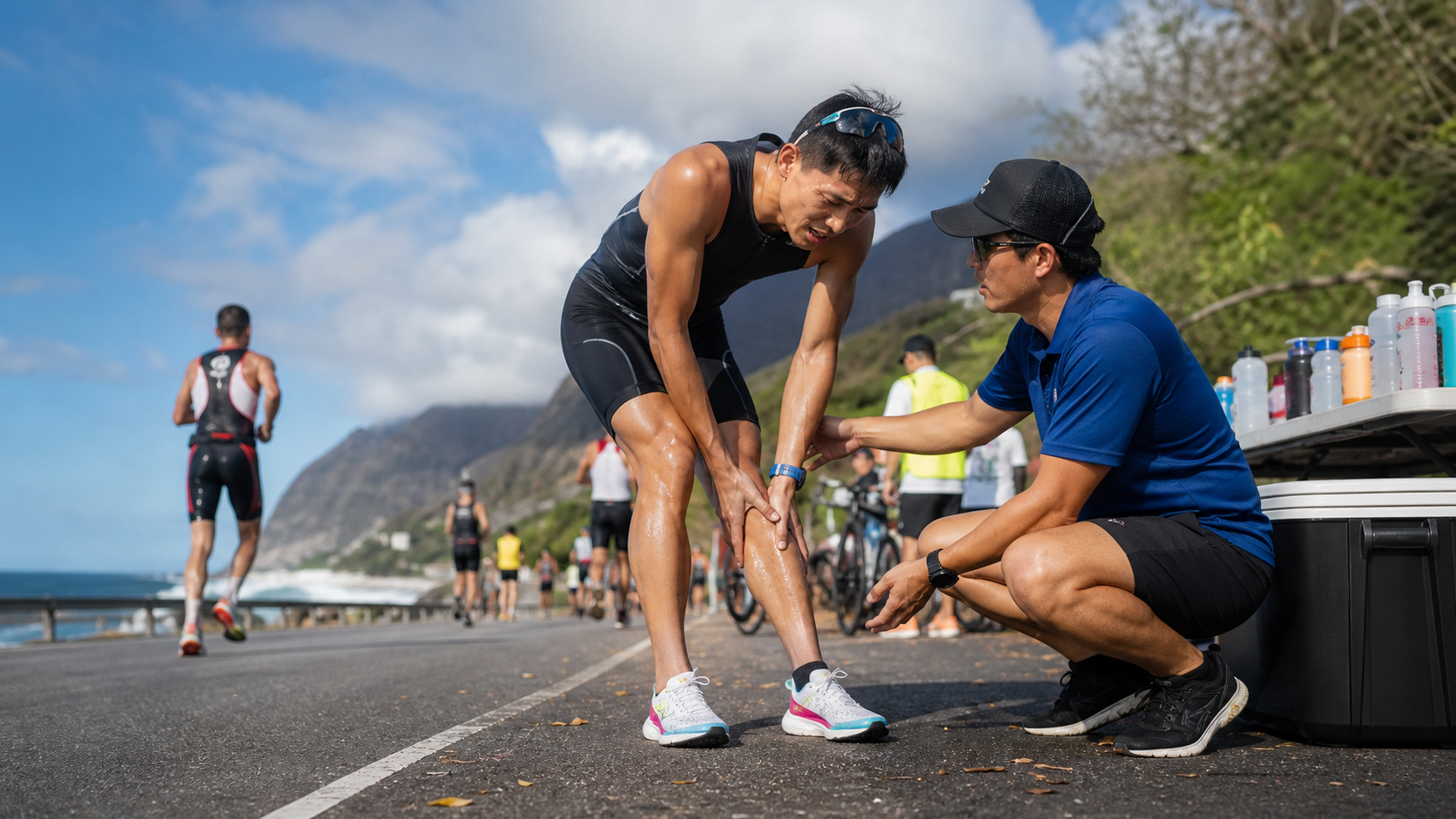
Coach’s Opening: It’s Not Your Fitness, It’s That You “Don’t Know What Pitfalls Await”
I’ve been coaching triathletes for nearly 15 years, from office workers so nervous about their first 51.5 (Olympic distance) they couldn’t sleep, to veterans who eventually qualified for Kona (Ironman World Championship). I’ve seen every level. Over the years, I’ve watched too many expressions at the finish line: some are exhausted but smiling with satisfaction, others are so frustrated they want to cry—because deep down, they know they didn’t lose on fitness today; they “made mistakes they shouldn’t have.”
I often tell my athletes: Your first triathlon result isn’t determined by your strongest discipline, but by the mistakes you make. Strong swim, powerful bike, fast run—if you’re fumbling in transition, bonking on nutrition, or surging on pacing, all your training will be for nothing.
In this article, I’ve compiled the 15 most common race mistakes I see in beginners, covering five key areas: Equipment, Pacing, Nutrition, Transition, and Mindset. For each one, I’ll tell you “why it happens,” “what it costs you,” and “how to prevent it.” This isn’t just theory—it’s the pitfalls I’ve watched athletes step into, time and again, on Taiwanese race courses like Kenting, Taitung, Sun Moon Lake, and Yilan.
After reading this, you won’t suddenly get faster, but you’ll avoid a lot of unnecessary detours. For a beginner, that’s worth more than an extra month of training.
Foundational Concept: Triathlon is a Sport of “Avoiding Mistakes,” Not “Pushing Limits”
Before breaking down the 15 mistakes, I want to establish a core concept.
Many beginners think of triathlon as “the sum of three individual races,” so they desperately try to swim faster, bike harder, and run quicker. This mindset itself is the biggest mistake.
The real difficulty of triathlon lies in “continuity” and “transition”: your body must switch from horizontal swimming to high-heart-rate cycling, then to weight-bearing running, all without adequate rest. With each switch, your body must redistribute blood flow, adjust muscle groups, and stabilize core temperature. If any link fails, the cost gets amplified later.
That’s why I say triathlon is a sport of “avoiding mistakes.” Elite athletes win by making fewer mistakes, and beginners finish by making fewer mistakes. You don’t need to score 100% in every discipline; you just need to avoid fatal errors at critical moments.
This is also why I wrote this article as a “mistake checklist” rather than a “training plan”—because for beginners, the marginal benefit of avoiding landmines far outweighs training 5% more.
I also want to add one observation: beginners most often underestimate not “the difficulty of a single discipline,” but “the accumulation of fatigue.” Swimming 1500 meters in a pool feels easy, but it’s not the same in open water where you’re crowded, need to sight, and dodge kicks; riding 40 km on a spin bike at the gym feels fine, but it’s not the same on a real course with sea wind, traffic awareness, and eating while riding. Fatigue in triathlon is “multiplicative,” not “additive” —which is why those 15 mistakes cost more as the race progresses. Understanding this will make you genuinely willing to “conserve” in the early stages.
Category 1: Equipment Errors
Mistake 1: Wearing Brand-New Gear on Race Day
This is the most common and most painful mistake I’ve seen—bar none.
I had an athlete, Xiao Chen, who a week before his first 113 half-distance race, excitedly bought a pair of brand-new top-tier running shoes. He couldn’t bear to wear them, saving them as his “battle gear” for race day. Result: at the 15 km mark of the run, his toes and heels on both feet were rubbed raw. He finished the last 6 km hobbling with a strange, lopsided gait. He told me afterward: “Coach, those shoes felt great on their own.” That’s exactly the problem—feeling great on their own is one thing; feeling great after swimming, cycling, with swollen feet and soaked socks, is another.
Cost: Blisters, chafing, stiff neck and shoulders (new wetsuit), stomach issues (new nutrition)—any one of these can ruin a race.
Prevention:
- “Nothing new on race day” is the iron rule of triathlon. Your shoes, socks, tri suit, wetsuit, sunglasses, and nutrition must all be used at least 2–3 times in training.
- New running shoes need at least 50–80 km of “break-in” before racing.
- A wetsuit must be tested in open water, not just tried on at home. In Taiwan, Living Water Lake, Longdong, and Emerald Bay are common practice spots.
Mistake 2: Ill-Fitting Wetsuit or Not Knowing How to Take It Off
The wetsuit is a love-hate piece of gear for many beginners. It provides buoyancy and warmth, theoretically making you swim faster. But an ill-fitting wetsuit will constrict your shoulders, making it hard to pull through the water and leaving you increasingly breathless; not knowing how to take it off will leave you fumbling at your spot in transition for 30+ seconds.
Prevention:
- When choosing a wetsuit, shoulder mobility trumps everything. Try some stroke movements when testing it on; if your shoulders feel bound, it doesn’t fit.
- Practice “quick removal”: unzip the back and peel the top half down to your waist while jogging from the water, so you’re half out before reaching T1.
- Many Taiwanese summer races have high water temperatures (often becoming wetsuit-optional or banned above 24.5°C), so also practice swimming without a wetsuit—don’t rely solely on buoyancy.
Mistake 3: Bike Not Serviced or Test-Ridden in Advance
Chain drops, flats, brake noise, skipping gears… 80% of these mechanical issues on race day are caused by “not checking before the race.”
Prevention:
- Do a full service one week before the race (clean and lube the chain, check brake pads, confirm tire pressure and tread).
- Learn how to fix a flat yourself. This is a mandatory skill for triathlon beginners. Not knowing how means leaving your finish to luck. At minimum, you should be able to change an inner tube within 5 minutes.
- Install and test-ride the exact wheels, saddle, and pedals you’ll race with beforehand—don’t use them for the first time on race day.
- Carry a “basic rescue kit” on the bike: spare tube (or patches), CO2 inflator or mini pump, tire levers, and a compact multi-tool. You won’t need it most days, but the one time you do is the difference between finishing and not. I’ve seen athletes wait by the roadside for the sag wagon because they didn’t bring a tire lever—that frustration is just not worth it.
Category 2: Pacing Errors
Pacing is where beginners lose control most easily, and what I warn about most. Based on multiple triathlon coaching resources, beginners surging too hard in the first 100–200 meters of the swim is almost universal (see references at the end).
Mistake 4: Surging Off the Start in the Swim
The moment you hit the water, everyone around you is kicking for their lives, adrenaline is through the roof, and you unconsciously chase them. Result: you’ve racked up an oxygen debt in the first 200 meters, your breathing goes haywire, your heart rate spikes above 180 bpm, and the rest of the swim is spent “trying to find your breathing rhythm”—miserable.
Prevention:
- “Controlled” start: deliberately hold back for the first 30–60 seconds, then settle into cruise pace once your breathing stabilizes.
- Beginners should start “to the side and toward the back,” avoiding the most crowded frontal clash zone. You swim cleaner and stay calmer.
- Practice “negative splits” in training: second half faster than the first, teaching your body to “start steady, finish fast.”
- Practice “sighting”: lift your head to spot the buoy every 6–10 strokes. Poor sighting makes you swim 5–10% extra distance—wasted effort that also tires you out. But don’t over-sight every two strokes out of nervousness; that breaks your rhythm and wastes more energy.
Mistake 5: Pushing Too Hard on the Bike and Riding Away Your Run Legs
This is the most critical and most common pacing mistake of the entire race. The bike is the longest discipline in triathlon. Many people think “the bike doesn’t feel hard” and hammer away, only to get off and find their legs feel like lead—the classic “jelly legs.”
The iron rule of triathlon: The bike leg isn’t for “racing”; it’s for “banking”—you’re preserving leg power for the run.
If you have a power meter, use this simplified pacing intensity table as a reference (based on your FTP, Functional Threshold Power):
| Race Distance | Suggested Bike Intensity (% of FTP) | Corresponding Feel |
|---|---|---|
| 51.5 Olympic Distance | 80–90% | Somewhat hard but sustainable; can speak short sentences |
| 113 Half-Distance | 70–80% | Comfortably steady; can speak full sentences |
| 226 Full-Distance | 65–75% | Should feel “easy to the point of slow” the whole way |
No power meter? No problem. Use heart rate and rate of perceived exertion: beginners should aim for an intensity on the bike where “you can still speak a full sentence to the person next to you.” If you’re so breathless you can only get out single words, you’re pushing too hard.
Prevention:
- Practice “Brick training”: ride then immediately run, teaching your body what “post-bike legs” feel like and learning to trade a conservative bike pace for a smooth run.
- Remember a phrase I tell my athletes: “Everyone who passes you on the bike, you’ll catch on the run.” The leg power you save up front will pay you back double on the run.
Mistake 6: Pushing Your Normal Run Pace Right Out of T2
For the first 1–2 km off the bike, your legs are still in “cycling mode”—cadence feels off, posture feels off. If you charge out at your normal run pace, you’re very likely to blow up (hit the wall) later.
Prevention:
- Deliberately slow down for the first 1 km out of T2. Use a high cadence, short stride to “wake up” your running muscles, then gradually build speed once your legs feel normal.
- This is also a key focus of Brick training: getting your body used to the “discomfort of the early transition phase” so you don’t panic on race day.
Category 3: Nutrition Errors
Nutrition is the second big boss for beginners. You can’t wait until you’re hungry or thirsty to fuel, because by then it’s already too late.
Mistake 7: Getting Fuel Amounts Wrong—Too Little or Too Much
According to general sports nutrition guidelines, carbohydrate intake during endurance exercise generally falls in the range of 30 to 90 grams per hour: for races lasting 1–2 hours, roughly 30–60 g/hour; for longer races over 2 hours, you can push to 60–90 g/hour, and well-trained athletes can go even higher (see references at the end).
Note that this is a range, not a precise prescription. Everyone’s gut tolerance varies greatly—you must test in training to find out “how much your stomach can handle.”
Here’s a sample 113 half-distance fueling framework for beginners (adjust actual numbers based on your body weight and tolerance):
| Segment | Fueling Focus | Reference Range |
|---|---|---|
| 30 min before swim | Small amount of easily digestible carbs | One banana or half an energy bar |
| Bike leg (per hour) | Carb-focused, easily absorbed | ~60–90 g carbs + fluids |
| Before bike-to-run transition | One carb + electrolyte hit | One energy gel |
| Run leg (per hour) | Small, frequent amounts to avoid bloating | ~30–60 g carbs |
Cost: Too little fuel leads to “hitting the wall” (glycogen depletion, sudden loss of power); too much or the wrong kind (high concentration, high fiber, or something you’ve never eaten) leads to bloating, nausea, or diarrhea—equally unable to run.
Prevention:
- “Small and often” principle: instead of downing a big pack at once, take a little every 15–20 minutes.
- Products with a 1:1 glucose-to-fructose ratio are absorbed more efficiently by the gut and less likely to cause bloating.
- Your fueling plan must be rehearsed during long training sessions to find out what your stomach can and cannot handle at high heart rates.
Mistake 8: Only Fueling Carbs, Forgetting Electrolytes and Fluids
Taiwanese summer races are hot and humid, and sweat loss is staggering. Many beginners chug energy gels with only a sip of water, or drink plain water without sodium, and end up with cramps (electrolyte imbalance) or hyponatremia (water intoxication).
Prevention:
- In hot races, be sure to take electrolytes (especially sodium), via electrolyte tablets, sports drinks, or salted fuel.
- Energy gels must be “washed down with water,” otherwise the concentrated gel sits heavy in your stomach.
- Make good use of aid stations at Taiwanese summer races—drink when you should, and pour water over yourself to cool down when needed.
- A simple self-check: if you barely need to pee all race and your urine is dark, you’re likely under-hydrating; conversely, if you constantly need the bathroom but feel weak, you may be low on sodium. Learn to read these signals during training.
Mistake 9: Eating Wrong the Night Before and a Bad Breakfast on Race Day
Some athletes “carbo-load” the night before by eating until stuffed—heavy, greasy, high-fiber meals, or the spicy, fried, or seafood dishes Taiwanese love—and end up with gastrointestinal rebellion in the middle of the night or early morning.
Prevention:
- The night before, stick to familiar, light, easily digestible carbs (white rice, pasta, white toast), avoiding high-fat, high-fiber, spicy, or raw foods.
- Eat your race-day breakfast 2.5–3 hours before the start to give your gut time to digest, and make sure it’s something you’ve eaten in training.
- Taiwan has convenient food options, but for those two pre-race meals, “play it safe, don’t chase excitement”—don’t risk it for novelty.
Category 4: Transition Errors
The transition area (T1: swim-to-bike, T2: bike-to-run) is called “the fourth discipline” of triathlon. It requires no fitness, but it’s where panic can easily waste 1–3 minutes—or even earn you a penalty.
Mistake 10: Chaotic Transition Flow and Gear Placement
Common beginner mistakes: not remembering which row your bike is in, gear scattered everywhere, spending ages hunting for what you need. I’ve seen athletes run back and forth across transition three times looking for their sunglasses—the anxiety visibly draining their energy and morale.
Prevention:
- Walk the transition flow before the race: memorize the path from “swim exit → your bike spot,” where the “bike mount line” is, and where the “run exit” is. Pick obvious landmarks (a big tree, a flag, a row number) to mark your spot.
- Arrange gear in the order you’ll use it: helmet first (you’ll be penalized if you touch your bike without your helmet on), then shoes, then nutrition.
- Lay a brightly colored towel under your bike as a “landing pad”—easy to spot and good for wiping your feet.
Mistake 11: Getting Helmet Buckle and Cycling Shoe Order Wrong
In triathlon rules, you must have your helmet buckled before touching your bike. Many beginners get penalized for the wrong order (grabbing the bike before putting on the helmet). Also, being unskilled at clipping in and out of cycling shoes wastes a lot of time in transition.
Prevention:
- Make “helmet on first, helmet off last” muscle memory.
- Practice the advanced technique of “putting on cycling shoes after mounting” (shoes pre-attached to pedals with rubber bands)—but this is an advanced move; if you’re not proficient, it’s safer to stop and put your shoes on properly before riding. Safety first.
Mistake 12: Not Practicing “Wet Operations”
Fresh out of the water, you’re soaking wet, fingers are cold and shaking, vision is blurry. Unzipping the wetsuit, buckling the helmet, and opening nutrition packaging are three times harder than usual. Many beginners practice transitions in a dry state, then everything falls apart on race day when they’re wet.
Prevention:
- During Brick training, deliberately swim or douse yourself with water before doing transition drills to simulate the real cold, wet feel.
- Pre-tear a small opening in nutrition packaging and energy gels so they’re easier to open with wet hands.
Category 5: Mindset & Strategy Errors
Mistake 13: Spiking Training Volume and Racing Injured
Many beginners get nervous after signing up and suddenly spike their training volume in the one or two months before the race, ending up injured before they even start (runner’s knee, plantar fasciitis, and Achilles tendinitis being most common). Training volume should increase progressively; general advice is to avoid aggressive weekly jumps, giving your body time to adapt and recover.
Prevention:
- Increase training volume progressively—don’t cram right before the race.
- Prioritize recovery: sleep, stretching, massage, and easy days are all non-negotiable.
- If any pain persists for more than a few days, get professional assessment immediately—don’t “train through the pain.”
- A special note for those with a strong running background: your cardiovascular system and muscles might be able to “handle” higher training volume, but tendons, ligaments, and joints adapt much slower than muscle—which is why many runners transitioning to triathlon are actually more prone to pre-race injuries. “I can still train” doesn’t equal “I should train.” Learning to hit the brakes even when you feel great is wisdom only experienced athletes understand.
Mistake 14: Skipping “Course Recon” and Weather Preparation
Taiwanese races each have their own temperament: Kenting’s climbs and sea wind, Taitung’s Living Water Lake sun exposure, Sun Moon Lake’s long swim, Yilan’s humid heat… Going into a race without knowing the course is like driving with your eyes closed.
Prevention:
- Study the course map and elevation profile beforehand—know where the big climbs are, where the headwinds hit, and where the aid stations are.
- Check the weather forecast and prepare accordingly: heat means boosting electrolytes and cooling strategies; rain means watching for slippery corners and bringing wind protection.
- If possible, do a course recon in person—at least ride or run the key sections once.
Mistake 15: Unrealistic Goal Setting and Crumbling at the Start
Aiming for “I must go sub-X hours” or “I must beat so-and-so” in your first race, then having a mental meltdown when you realize you can’t keep up—the more anxious you get, the more chaotic, and the more mistakes you make.
Prevention:
- A beginner’s first goal should always be “finish smoothly and enjoy the process.” Results come later.
- Set “A/B/C tiered goals”: A is the ideal time, B is the realistic time, and C is “finish no matter what.” This way, no matter what happens, you have a definition of “today counts as a success,” keeping your mindset stable.
- Remember: Your first race is for “learning how to race,” not for proving anything.
Action Recommendations for Athletes of Different Levels
After reading 15 mistakes, you might think “how am I supposed to remember all this?” Don’t worry—I’ve prioritized them by level.
First-Time Beginners (First 51.5 or Shorter)
Your priorities are “don’t get injured, don’t drown, and finish.” Focus your energy on:
- Nothing new on race day (Mistake 1)—test all gear beforehand.
- Don’t surge in the swim (Mistake 4)—controlled start, stay back and to the side.
- Walk the transition area (Mistakes 10, 11)—helmet on first.
- Get your mindset right (Mistake 15)—finishing is victory.
Advanced Beginners (Challenging Your First 113 Half-Distance)
As distance increases, pacing and nutrition become dramatically more important. In addition to the four points above, strengthen:
- Bank leg power on the bike (Mistake 5)—this is the key to 113 success.
- Rehearse your fueling (Mistakes 7, 8)—test your gut during long training.
- Brick training (Mistakes 6, 12)—transition adaptation and wet operations.
Here’s a simplified 4-week pre-race weekly training framework for advanced beginners (intensity described by feel; adjust to your situation and coach’s guidance):
| Week | Focus | Key Workouts |
|---|---|---|
| 4 weeks out | Build endurance | 1 long ride + 1 Brick + open water swim |
| 3 weeks out | Fuel rehearsal | Long ride following your full race fueling plan |
| 2 weeks out | Fine-tune intensity | Start tapering, keep a little high-intensity stimulus |
| 1 week out | Taper | Significantly reduce volume, maintain feel, rest fully |
Veterans Chasing Results
If you’ve already finished several races and want to go further, you’ve likely already avoided those 15 mistakes. What you need to do is “squeeze out the losses in every link”: seconds saved in transition, optimizing your pacing curve, fine-tuning fueling timing. This is where tools like power meters, heart rate, and lactate threshold testing come into play. But that’s a topic for another article.
Real Case Study: A Race That “Should Have Gone Smoothly but Nearly Fell Apart”
Theory is one thing; a real story is another. I want to share the story of my athlete Xiao Mei’s first 113 half-distance race, because she “demonstrated” nearly all the mistakes above in one race—and it convinced me even more that this article was worth writing.
Xiao Mei was a solid runner with three years of experience, a sub-4-hour marathoner with undeniable fitness. She thought triathlon was “just swimming and cycling added on,” so before signing up, she only seriously trained the swim, barely touched the bike, and never rehearsed nutrition at all.
Swim leg (Mistake 4 in action): At the gun, she got swept up by the crowd and surged for the first 200 meters. By 300 meters, her breathing was chaotic, she swallowed water, and her heart rate was through the roof. She told me that at that moment, “my mind went blank, I was just thinking about how not to sink.” Luckily, she stayed calm enough to flip onto her back and float for 20 seconds to steady her breathing, then barely made it through the swim.
Bike leg (Mistake 5 in action): Once on the bike, the runner’s competitive instinct kicked in. Seeing people pass her, she wanted to chase, hammering near her limit the whole way. She was indeed fast for the first 40 km and felt pretty pleased with herself.
Run leg (chain reaction blowup): This is where the real disaster began. The moment she got off the bike, her prized legs refused to obey—classic “jelly legs.” Her sub-4 marathon fitness saw her pace drop nearly two minutes per kilometer in the first 5 km. Worse, she’d barely fueled all race, her blood sugar was bottoming out, and with the heat and sweat without electrolyte replacement, her calves started cramping at the 10 km mark. She finished the last stretch walking, stopping, cramping, and rubbing her legs the whole way.
Post-race review: She finished, but her time was far below her fitness level, and she was dehydrated and exhausted. We sat down and went through it item by item. The conclusion was clear:
| Segment | Mistake She Made | What If She’d Done It Right |
|---|---|---|
| Swim start | Surged, lost breathing control | Controlled first 60 seconds, saved massive energy for the whole leg |
| Bike pacing | Hammered at near-limit effort | Preserved leg power, no jelly legs on the run |
| Nutrition | Barely ate, no sodium | No wall, no cramps |
| Training prep | Only trained swim, no Brick | Transition adaptation, muscle memory |
The next year, she rebuilt her training—this time doing Bricks properly, rehearsing nutrition, and learning to “bank leg power” on the bike. Same race, she was nearly 40 minutes faster, smiling the entire run, and told me at the finish: “Coach, it turns out not making mistakes feels this good.”
I tell this story to new athletes often because it perfectly illustrates the core of this article: Your natural fitness gets eaten away, mistake by mistake; but once you patch those mistakes, the same body can produce a completely different race.
FAQ
Q1: I can’t swim in open water, only in a pool. Is that okay?
I strongly recommend at least 2–3 open water sessions before the race. The pool and open water are two different worlds: no lane lines to follow, you need to learn “sighting,” water temperature and visibility differ, and there’s crowd jostling. Many people who swim great in the pool lose their breathing to panic in open water. In Taiwan, Living Water Lake, Longdong, and Emerald Bay are all places people practice—go with an experienced partner for safety.
Q2: Do I really need a power meter and a triathlon bike?
Absolutely not. Beginners can finish with their existing road bike, or even a mountain bike. Gear is a bonus, not an entry ticket. I’ve coached an athlete who completed a 226 full-distance race on a secondhand road bike. Spend your money first on things that directly affect finishing—like a well-fitting wetsuit and comfortable running shoes—rather than expensive carbon wheels.
Q3: What should I do when I cramp mid-race?
First, slow down, stretch the cramping muscle group, take in electrolytes and fluids, and gradually resume once it eases. But the real solution is “prevention”: top up electrolytes before the race, keep taking sodium during, and train the muscles you’ll use. Cramping is often a combination of “pacing too hard + electrolyte deficiency.”
Q4: Can I really eat while riding? Won’t I choke?
Yes, you can, and you must practice it. The bike leg is the best time to eat (your body is relatively stable, heart rate usually lower than running). But “eating while riding” is a skill—you need to train until you can hold the bars with one hand, open packaging with the other, and stay stable. Beginners should eat on flat, safe sections, while slowing down—don’t push it on descents or in crowds.
Q5: Taiwanese summer races are so hot. Anything special to watch for?
The biggest enemies at Taiwanese summer races are “heat” and “humidity.” High humidity means sweat doesn’t evaporate easily, making it harder to dissipate body heat, and the risk of heatstroke and dehydration skyrockets. My advice: First, cooling takes priority—pour water over yourself at every aid station; neck, head, and inner wrists are key heat-loss zones. Second, electrolytes, fully topped up—heavy sweating means heavy sodium loss; plain water alone is actually dangerous. Third, be more conservative with pacing—for the same time goal, perceived effort on a hot day is significantly higher than on a cool day, so don’t force it. Sun exposure at places like Taitung and Kenting is especially intense—don’t skimp on sunscreen.
Q6: I’m busy with work and can only train 5–6 hours a week. Can I finish a 51.5?
Yes, but you need to “train smart.” When time is limited, focus on “frequency” rather than “single-session duration”: instead of one 4-hour ride on the weekend, split it into several shorter, solid sessions during the week to maintain familiarity with all three disciplines. Touch swim, bike, and run at least once each per week, plus one Brick to keep the transition feel. Many Taiwanese commuters fit training into life’s cracks with “bike commuting,” “lunchtime swims,” and “evening runs”—and they still finish. The key isn’t how long you train, but whether you’ve practiced avoiding the mistakes mentioned above within your limited training time.
Conclusion: Train “Not Making Mistakes” Into Instinct
After coaching for so many years, I believe one thing more and more: The key to finishing a triathlon is training “not making mistakes” into instinct.
None of these 15 mistakes are advanced techniques—they’re all things “you can avoid just by knowing.” But strangely, at every finish line, there are still people kicking themselves over one or two of them. The reason is simple—they knew, but they never “practiced” it in training.
So let me distill the essence of this article into one sentence for you: Everything you want to do right on race day, you must have done right in training at least three times. Gear tested, pacing practiced, nutrition eaten, transitions rehearsed—then on race day, you’ll discover that everything is under control.
That grounded feeling of “everything under control” is the most beautiful part of triathlon. May your next race be one you finish, finish steady, and cross the line smiling.
Finally, here’s a “One-Week Pre-Race Checklist” I give to every athlete. You can check these off directly. It condenses the 15 mistakes in this article into actionable steps. Stick it on the fridge or save it on your phone, and confirm each item before the race:
- [ ] All gear (shoes, socks, tri suit, wetsuit, goggles, nutrition) used at least 2–3 times in training
- [ ] Wetsuit swum in open water, and practiced quick removal
- [ ] Bike serviced, tire pressure normal, know how to fix a flat
- [ ] Fueling plan rehearsed in long training; know how much and what to eat per hour
- [ ] Electrolyte supply ready (especially important for hot races)
- [ ] Pre-race meals confirmed (familiar, light, easily digestible)
- [ ] Studied course elevation profile, aid station locations, and weather forecast
- [ ] Have A/B/C tiered goals in mind, with C being “just finish”
- [ ] Walked the transition flow on-site, memorized bike spot landmarks
- [ ] Gear arranged in order of use, helmet on top
Check all ten of these, and you’ve already won a big part of your first race. The rest is up to the body you’ve trained so hard, and the you at the finish line smiling brighter than anyone.
See you at the finish line.
This article is educational content and does not replace individual assessment by a physician, physical therapist, or nutritionist.
References
- Precision Hydration — How much carbohydrate do athletes need per hour?:https://www.precisionhydration.com/performance-advice/nutrition/how-much-carbohydrate-carbs-athletes-per-hour/
- alltriathlon.com — Triathlon Carbohydrate Intake: How Much is Enough?:https://alltriathlon.com/triathlon-carbohydrate-intake/
- TRI247 — Open Water Swimming Tips for Beginners:https://www.tri247.com/triathlon-training/swim/open-water-swimming-tips-for-beginners-triathlon
- TriLaunchpad — How to Improve Triathlon Pacing:https://triathlon.mx/blogs/triathlon-news/how-to-improve-triathlon-pacing
Related Reading
- The Complete Beginner’s Guide to Your First Triathlon: A 12-Week Blueprint from Sign-Up to Finish
- Triathlon Pacing Philosophy: Energy Allocation Across Three Disciplines, and the Classic Script of “Swim Too Hard, Ride Too Fast, Run Too Slow”
- Triathlon Beginner Gear Checklist: A Complete Preparation Guide from Scratch
- The Triathlon Injury Map: Early Warning Signs and When to See a Doctor for Swimmer’s Shoulder, Runner’s Knee, and Lower Back Pain
CT 喇低賽) 武嶺牽車 才是王道 西進牽車四小時內秘訣 攝手位置 如何判斷 防抽筋小秘訣
7 年前
福隆鐵人團練隨拍
8 年前
一日北高常見問題大集合 | 攻略 | 路線 | 訓練 | 補給 | 自行車 單車 | 一日雙城 | 雙塔 | TWB北高360 | 屁股痛
6 年前
Never Stop 西進武嶺 前後雙機 完整全程錄影 訓練台 實境
8 年前
CT 喇低賽) 單車 比賽總是沒照片? 攝影師的觀點大公開 姿勢就是力量! 請加速1.25倍收看
7 年前
2019 夏季KOM 5小 完賽心得 準備攻略 東進武嶺 夏季登山王之路 Taiwan KOM Challenge
7 年前
富士山KOM 賽事篇 VLOG!/ 小野田出沒!/ 完整路段分析 / 武嶺要騎多快才能拿環?/ 台灣選手 第20回Mt.富士ヒルクライム 参加!/ 公路車 / CT Yeh
2 年前
一日北高/長距離團騎 常見問題補充篇 / 組團或跟團的眉角 / 壯車友容易被瘦車友慢性拉爆 / 原來屁股痛可能是這個原因...? / 風場配速法 / 公路車 / CT Yeh
2 年前