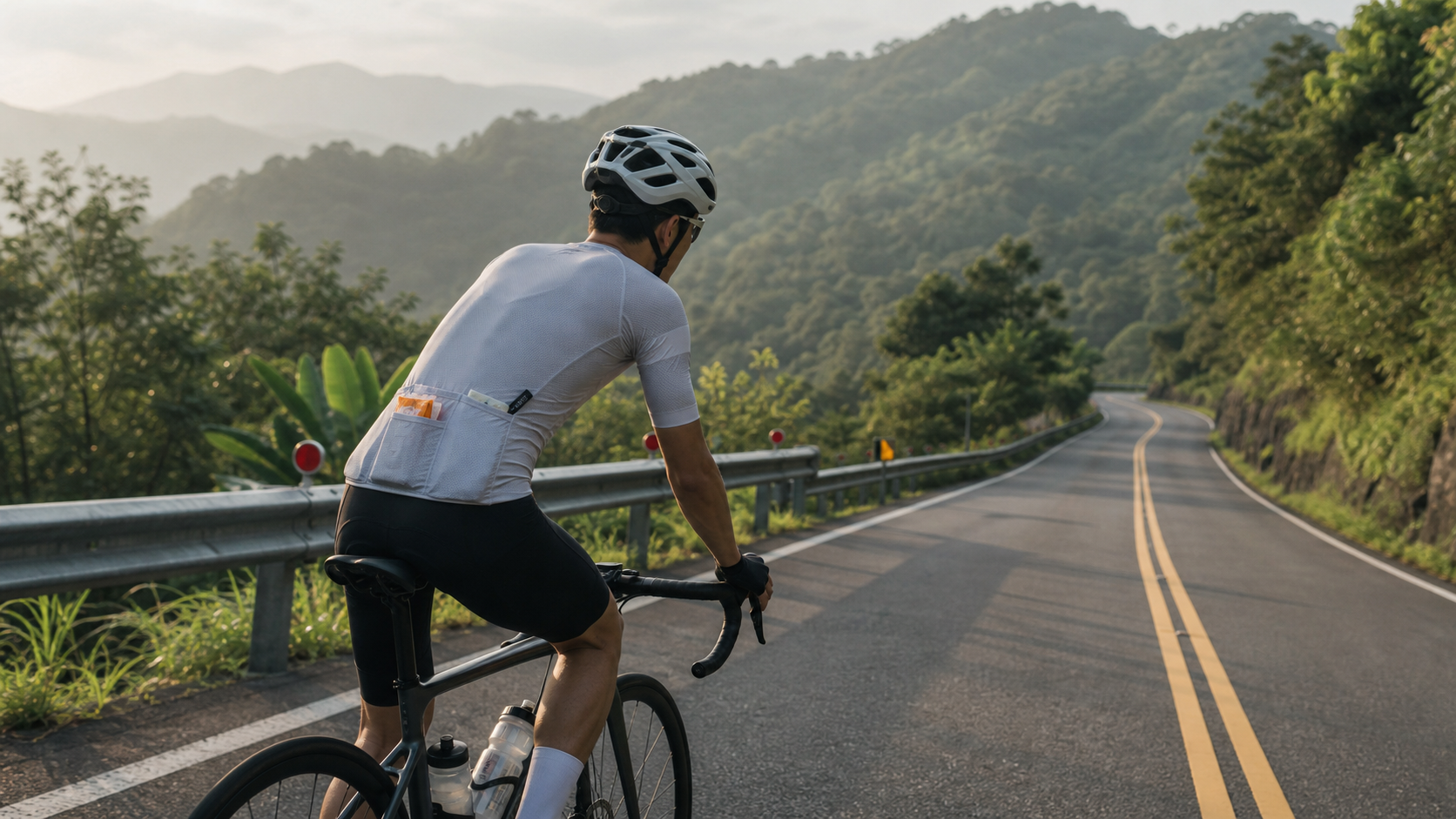
Having coached so many athletes, I’ve found that the “long ride” is the workout most often done wrong.
Beginners treat the long ride as a test of willpower—“ride as much as possible, hold on as long as you can”—only to fade, cramp, and feel dizzy in the latter half, then collapse for two days at home. Riders with some experience often go the opposite way: they try to “sneak in some intensity” on every long ride, turning it into a four-hour slog at moderate intensity that’s neither here nor there, with slow recovery. Neither of these is the long ride I’m after.
In my 15 years of coaching, the core of a long-distance ride workout has never been “how far you ride,” but rather “what exactly am I trying to train on this ride.” The same three hours can be a pure aerobic base builder, a race-pace rehearsal, or a fueling experiment. Different purposes mean different intensity, routes, nutrition, and even whether you should ride indoors on a trainer or head outside.
In this article, I’ll lay out the logic I use with my athletes to clarify “stacking long rides from 2 hours to 6 hours”: first, build the concepts and scientific foundation; then give you ready-to-use workout examples and tables; next, address the most common mistakes I see and how to fix them; and finally, provide specific action recommendations for athletes targeting their first iron-distance race, advanced racing, 113 half-distance, and 226 full-distance events. The content is set against Taiwan’s races, routes, climate, and eating-out environment, so you can apply it right away.
1. First, Understand: What Is the Long Ride Actually Training?
Many people’s idea of the “long ride” stops at “just riding longer.” But if you ask me, a proper long ride should have one “primary purpose,” and that purpose determines the entire design of the workout. I tend to divide long rides into three main categories.
1. Aerobic Base
This is the most fundamental and important purpose of the long ride. Intensity falls in what we commonly call Zone 2—roughly 55% to 75% of FTP, or held below your first lactate threshold (LT1) by heart rate—an intensity where “you can still talk comfortably, but don’t really feel like singing.”
Why spend so much time riding this slowly? Because Zone 2 is the most efficient range for stimulating mitochondrial biogenesis and capillary growth. Your slow-twitch fibers (Type I) are heavily recruited at this intensity, and the body, through the PGC-1α gene pathway, builds more and denser mitochondria, improving fat oxidation capacity and overall aerobic efficiency. According to sports science literature, top endurance athletes spend roughly 60% to 80% of their training volume in this low-intensity zone—not because they’re lazy, but because a massive aerobic base is the foundation that allows subsequent high-intensity training to be absorbed by the body.
In other words, the aerobic base long ride trains “engine displacement.” It won’t make you faster this week, but it will make you, three months later, produce more watts at the same heart rate, spare more glycogen, and get tired later.
2. Race-Pace Rehearsal
As race day approaches, the purpose of the long ride gradually shifts from “building aerobic base” to “rehearsing race conditions.” The core of this type of long ride is to let your body and brain become familiar in advance with “the intensity, the rhythm, and the duration you’ll need to hold on race day.”
Take a 113 half-distance triathlon as an example: the bike leg of 90 kilometers typically takes 2.5 to 3.5 hours. The job of a race-pace rehearsal long ride is to let you truly experience, in training, what it feels like to “hold your target race intensity for that full duration”: at what point you start wanting to slack off, where your sit bones hurt, whether your fueling rhythm is right, and how much leg you have left when you get off the bike to run. This type of long ride usually sits in the upper Zone 3 to Sweet Spot range (about 88% to 94% of FTP), but the key isn’t pushing peak watts—it’s “holding the target pace steadily to the very end.”
3. Fueling Experiment
This is the most underestimated category of long ride, yet the one that most determines race success or failure. Your fueling plan—how many grams of carbs per hour, how much water, how to manage electrolytes, when to eat solids versus gels—absolutely cannot be tested for the first time on race day.
The gut is trainable. Research shows that 30 to 90 grams of carbs per hour is the mainstream recommendation for endurance exercise: for rides of 1 to 2 hours, aim for 30 to 60 g/hour; beyond 2 hours, push toward 60 to 90 g/hour; athletes who have undergone gut training can even absorb 120+ grams per hour. But that “ability to absorb” is built through training, not innate. The fueling experiment long ride is your safe laboratory to push your gut to its limits and find out “how much this gut of mine can actually take while riding.”
These three purposes are not mutually exclusive—a long ride can have one primary purpose while secondarily working on another. But you must clearly know “what the primary purpose of today’s ride is,” because it determines whether intensity should be kept low or pushed high.
2. The Science: Why “Stacking” Instead of “All at Once”?
I use the word “stacking” deliberately. Long-ride ability isn’t something where you decide you want to ride 6 hours and just go ride 6 hours next week—that’s a trip to the hospital, not training.
The body adapts according to the principle of progressive overload. This week you ride a max of 2 hours, and the body adapts; next week or the week after, you push to 2.5 hours, and it adapts again; and so you build up step by step. Each stimulus that is “slightly beyond current ability,” combined with adequate recovery, is what translates into real performance gains. Jump too fast, and the body can’t keep up—what you get instead is excessive fatigue, a suppressed immune system, and even injury.
I typically use “increase your single longest ride by 15 to 30 minutes every 1 to 2 weeks” as a safe stacking rate. That sounds slow, but long-ride stacking is measured in months. A full cycle from 2 hours up to 6 hours reasonably takes 12 to 20 weeks.
There’s another scientific point that’s often overlooked: fatigue from long rides is “non-linear.” Adding one hour from 2 to 3 hours versus from 5 to 6 hours is not the same magnitude of stress on the body at all. In the latter hours, glycogen drops lower, core temperature rises higher, focus deteriorates, and pressure-related discomfort in the sit bones and hands becomes more pronounced. This is why, for rides beyond 4 hours, the margin for error in fueling and pacing shrinks dramatically—and that’s exactly why we need to rehearse it repeatedly in training.
3. Practical Method: The Blueprint for Stacking from 2 to 6 Hours
Now that the concepts are covered, let’s look at how to actually schedule it. Below is the long-ride stacking framework I designed for an office-worker athlete (let’s call him A-De) whose goal was to complete his first 113 half-distance triathlon, with long riding time only available on weekends. His starting point was being able to comfortably ride 2 hours, with the target race 16 weeks away.
Long-Ride Stacking Schedule
| Week | Longest Single Ride Duration | Primary Goal | Intensity Zone | Nutrition Focus |
|---|---|---|---|---|
| W1–2 | 2:00 | Aerobic base | Zone 2 | Establish 40–50g carbs/hour habit |
| W3–4 | 2:30 | Aerobic base | Zone 2 | Fluid and electrolyte rhythm |
| W5 | 2:00 (cutback) | Recovery | Zone 1–2 | Easy; test new nutrition products |
| W6–7 | 3:00 | Aerobic base + pacing | Zone 2 primarily, final 20 min Zone 3 | 50–60g carbs/hour |
| W8–9 | 3:30 | Pacing practice | Includes 2×30 min sweet spot | Alternate solid food and gels |
| W10 | 2:30 (cutback) | Recovery | Zone 2 | Review previous nutrition issues |
| W11–12 | 4:00 | Pacing + nutrition experimentation | Target race intensity | Test 60–80g carbs/hour |
| W13 | 4:30 | Nutrition experimentation | Zone 2–3 | Full rehearsal of race-day nutrition SOP |
| W14 | 3:00 (cutback) | Recovery | Zone 2 | Fine-tuning |
| W15 | 2:30 | Pre-race sharpening | Includes short bursts | Confirm no GI issues |
| W16 | Race week | Race | — | Execute the established plan |
This table isn’t scripture—it’s a framework. You’ll notice a few principles I always insist on:
- Schedule a cutback week every 3 to 4 weeks, with the longest single ride duration clearly reduced. Stacking isn’t about mindlessly adding more; your body needs the cutback week to “digest the training you’ve absorbed into fitness.”
- When duration increases, intensity comes down first. When Ade first rode 4 hours, I had him stay in Zone 2 the entire ride—let the body adapt to “long,” rather than challenging “long and hard” at the same time.
- Nutrition difficulty scales up with duration. At 2 hours, you only need to build the habit of eating; above 4 hours, you need to fully rehearse your race-day nutrition SOP.
The Internal Structure of a 4-Hour “Nutrition Experiment” Long Ride
Talking about duration alone isn’t enough—let me show you what the “inside” of a long ride should look like. This is the segment-by-segment design of Ade’s W11 4-hour workout:
| Time Block | Content | Intensity | Nutrition Action |
|---|---|---|---|
| 0:00–0:15 | Warm-up | Zone 1→2 | Ate a full meal 30 min before start |
| 0:15–1:15 | Steady aerobic | Zone 2 | Drink at 30 min; first nutrition at 45 min |
| 1:15–2:00 | Sweet spot #1 | 88–92% FTP | Drink every 20 min; gel at 90 min |
| 2:00–2:30 | Active recovery | Zone 2 | Electrolyte tablet; solid food (rice ball/banana) |
| 2:30–3:15 | Sweet spot #2 | 88–92% FTP | Drink + gel every 20 min |
| 3:15–3:45 | Steady output under fatigue | Zone 2–3 | Monitor GI response; no new food |
| 3:45–4:00 | Cool-down easy spin | Zone 1 | Review total nutrition intake for the ride |
After this ride, Ade had to report three things: total grams of carbs consumed, any GI discomfort, and how much speed he lost in the latter half. These data points are the real output of a long ride. The first time he did it, he felt bloated at just 45g per hour; by W13, he could steadily take in 70g per hour without nausea—that’s the tangible result of gut training.
4. Intensity Control: The Most Common Mistake in Long Rides
“Intensity control” is where I see the most errors in long rides. The principle is simple: easy long rides must be genuinely easy, and pacing-practice long rides must genuinely hold the pace. But in execution, human nature always gets in the way.
Aerobic-Base Long Rides: Slow Enough to Doubt Yourself
The biggest enemy of a Zone 2 long ride is “feeling it’s too easy and wanting to speed up.” Especially when riding with friends—the moment you hit a climb, you unconsciously start competing, your heart rate spikes to Zone 4, and the entire nature of the workout changes.
I give athletes a very straightforward check: Zone 2 is the intensity where you can hold a full conversation with the person next to you, but you’d need to catch your breath mid-sentence. If you can rattle off long sentences effortlessly, you’re probably too easy (unless it’s a recovery day); if you can only get out two or three words, you’re well past Zone 2. With a power meter, target 55–75% FTP; with a heart rate strap, stay below LT1. Many riverside bike paths in Taiwan (like Dajia River, Erren River, and Xindian River) are flat with few traffic lights—actually ideal venues for pure Zone 2 aerobic base work, far easier to control intensity than mountain roads that constantly force you to climb.
Pacing-Practice Long Rides: Holding the Pace Is Harder Than Going Hard
The difficulty of pacing practice lies in the latter half. Anyone can hold the target intensity for the first two hours, but by the third and fourth hour, as glycogen drops and fatigue accumulates, the same wattage feels progressively harder (this is called “cardiac drift”). Many people either crack and slow down, or push too hard and blow up.
What I want athletes to train is “the ability to maintain a set pace under fatigue”—this is precisely the key to winning on race day. So for pacing-practice long rides, I often deliberately place the sweet-spot segments in the latter half of the ride, forcing you to hold the target output even when your legs are already tired. This is far more meaningful for racing than surging early when you’re fresh.
5. Hydration, Electrolytes, and Hot Environments: The Hidden Challenge for Taiwanese Riders
You can’t talk about long rides without mentioning carbs. But training and racing in Taiwan, managing fluids and electrolytes is every bit as important as calorie intake—in fact, during summer, it’s often the real deciding factor in whether you fall apart in the latter half.
Taiwan’s humid heat is famous worldwide. Riding the same 4 hours in dry, cool Europe versus muggy, humid central or southern Taiwan involves completely different magnitudes of fluid and sodium loss. High humidity prevents sweat from evaporating, reducing cooling efficiency and making core temperature rise more easily; heavy sweating also strips sodium, potassium, and other electrolytes. Once imbalanced, you get cramps and fading speed at best, heat exhaustion at worst.
Here’s the hydration management principle I give athletes:
- Aim for 500 to 1000 ml of fluid per hour during riding, depending on temperature and sweat rate. In Taiwan’s summer long rides, you often need to go toward the upper limit or beyond—don’t wait until you’re thirsty to drink; by the time you feel thirsty, your body is already mildly dehydrated.
- For rides over 1 hour, especially those with heavy sweating, you must supplement electrolytes—plain water alone won’t cut it. Replacing fluid without sodium can actually dilute blood sodium levels, which not only fails to solve cramps but can trigger the more serious problem of hyponatremia.
- “Weighing yourself” is the most practical self-check. Weigh before and after a long ride; the weight lost roughly reflects your dehydration level. If you lose more than 2% of body weight on a ride (e.g., a 70 kg person losing over 1.4 kg), your hydration strategy was clearly insufficient and needs adjustment next time.
I once had an athlete with excellent fitness and strong flat-road power who kept cramping and fading in the latter half of summer races. He suspected his leg strength was insufficient. We used long rides as a testing ground and found he was drinking only about 400 ml per hour with almost no sodium. We bumped his fluid intake to 750 ml per hour and added one electrolyte tablet per hour—with the same fitness, his cramps completely disappeared in the latter half of the next race. This is why I say—many problems people think are fitness issues are actually nutrition and cooling issues.
Heat acclimatization itself can also be trained. Within safe limits, moderately exposing your body to training in hot environments (e.g., outdoor long rides in the slightly warmer early morning, or deliberately not cranking the AC too high on the indoor trainer) will, over one to two weeks, improve sweat efficiency, lower sweat sodium concentration, and increase plasma volume—making you more heat-tolerant on hot race days. But this must be gradual; it’s absolutely not about riding hard at noon in 37°C heat—that’s not heat acclimatization, that’s heat injury.
6. Indoor Trainer or Riding Outside?
This is a question every athlete asks me. The answer is: It depends on your goal. Neither is inherently better; each suits different types of long rides.
Advantages of the Indoor Smart Trainer
- Precision intensity control that’s almost obsessive. In ERG mode, the trainer locks your target wattage, completely eliminating interference from traffic lights, climbs, descents, and headwinds/tailwinds. For training “pure, clean, environment-free sweet spot intervals,” the indoor trainer is irreplaceable.
- The perfect environment for nutrition experiments. Doing nutrition experiments indoors means you don’t worry about getting distracted while eating and riding, or about gastrointestinal issues striking in the middle of nowhere with no bathroom in sight. For the first test of a new high-carb nutrition strategy, I always recommend doing it on the indoor trainer first.
- Safety and efficiency. No waiting at red lights, no dodging cars, no getting a flat tire in the middle of nowhere with no help in sight. For time-crunched office workers trying to squeeze in a solid 1.5-hour session on a weekday evening, the indoor trainer is the most efficient option.
In Taiwan’s summer (especially June to September), afternoon temperatures routinely exceed 35°C with extreme humidity. Heading out for a long ride at noon is practically asking for heatstroke. In such conditions, riding indoors with air conditioning actually allows you to train at a more consistent quality.
The Irreplaceable Value of Outdoor Riding
- Races are held outdoors. Real road vibration, wind resistance, descending and braking, cornering weight shifts, and the palm and sit-bone pressure from prolonged handlebar positions—these can never be simulated on an indoor trainer. The closer you get to race day, the more your long rides should move outdoors.
- The real-world context of pacing and fueling. Outdoors, you have to actually maintain your pace while pulling out nutrition, opening packaging, swallowing it, and stowing the trash. This entire “sequence of actions” itself needs practice.
- Mental toughness. Facing a long road alone for 4 consecutive hours—that boredom, loneliness, and internal dialogue is a rehearsal for the latter stages of a race. On an indoor trainer, staring at a screen, there’s always a sense of an endpoint no matter how tired you get. It’s a different psychological pressure than being outdoors where you’re “in the middle of nowhere.”
My practical advice: Use the indoor trainer for shorter weekday long rides (2–2.5 hours) and pure nutrition experiments; for the key weekend long rides (3+ hours, pace rehearsal), get outside as much as possible. The closer to race day, the higher the proportion of outdoor riding. Taiwan’s East Rift Valley, Sun Moon Lake loop, Beiyi Highway, and Fengguizui to Yangjin are all excellent long-ride venues. Choose a route with light traffic and continuous riding for the best experience.
7. Common Mistakes and Corrections
Having coached so many athletes, I encounter the following mistakes almost every season.
Mistake 1: Trying to “Sneak in Intensity” on Every Long Ride
Symptoms: Forcing hill sprints into a Zone 2 long ride, resulting in a whole ride of mediocre mid-intensity grinding—neither building pure aerobic base nor reaching the intensity to be a true high-intensity stimulus. You’re stuck in the “grey zone.”
Correction: Polarize your training. Keep long rides genuinely low-intensity (Zone 2), and schedule high-intensity work separately in shorter interval sessions. Low enough, high enough, and minimize time in the grey zone in between. This is a common principle in elite endurance training.
Mistake 2: Waiting Until Race Day for the First Serious Nutrition Practice
Symptoms: On race day, your stomach churns, you get diarrhea, or you can’t eat—or conversely, you completely forget to eat and “bonk” hard in the latter stages.
Correction: Treat every long ride of 3+ hours as a formal nutrition rehearsal. Every single item you plan to use on race day—that brand of energy gel, that electrolyte mix, that type of rice ball—must be tested at least three times during training to confirm your gut tolerates it. Never try anything new on race day. This is an iron rule.
Mistake 3: Ramping Up Long Rides Too Aggressively
Symptoms: 3 hours this week, then excitedly jumping straight to 5 hours the next week. Afterward, you’re so exhausted that the entire following week’s training quality is ruined—or you even catch a cold.
Correction: Return to the rhythm of “adding 15 to 30 minutes every 1 to 2 weeks,” and strictly implement deload weeks. Long-ride capacity is built up over months, not earned through a single heroic ride.
Mistake 4: Neglecting the “Run Off the Bike” Transition (Specific to Triathletes)
Symptoms: Your cycling long rides are going great, but on race day, the moment you dismount and start running (after T2), your legs feel like lead and your pace falls apart.
Correction: Regularly follow your long rides with a short run (this is called a brick workout). Even just 15 to 20 minutes of running after the ride helps your body adapt to that awkward feeling of “switching from cycling muscle patterns to running muscle patterns.” This is an indispensable part of a triathlete’s long-ride training plan.
Mistake 5: Training Only the Engine, Ignoring the “Sit Bones and Hands”
Symptoms: The engine is built, but by hour 4, you’re in severe sit-bone pain and your hands are numb. Localized discomfort forces you to cut the ride short, severely compromising the quality of your long ride.
Correction: “Contact point tolerance” for prolonged riding also needs progressive accumulation. Adapting to your saddle, bib shorts, and handlebar position is itself part of the long-ride build-up. If your butt gives out first every time, you should be reviewing your bike fit and equipment, not just blindly adding more hours.
8. Actionable Advice for Athletes of Different Levels
The same build-up logic applies, but the execution details differ greatly depending on the athlete’s goals. Below are specific directions for three common scenarios.
Scenario A: Beginner Triathlete (Goal: First-time completion of a Sprint/Standard 51.5 or Half 113)
- Mindset adjustment: Your primary goal is “finishing,” not “setting a PB.” The job of the long ride is to build your aerobic base and practice nutrition, not to chase speed.
- Build-up focus: Your longest single ride doesn’t need to far exceed your estimated bike split time. For a 40km standard distance, being able to consistently ride 2 to 2.5 hours in Zone 2 is sufficient; for a 113, build up to 4 to 4.5 hours.
- Frequency: One long ride per week is enough. Better to do one solid session than to force two messy ones.
- Local advice: Find a familiar, safe riverside or suburban route and ride it repeatedly. Focus first on consistent completion to build confidence.
Scenario B: Advanced Age-Grouper (Goal: 113 PB or First-time 226 Challenge)
- Mindset adjustment: You already have a base. Long rides now need to emphasize “quality” rather than just “duration.” Pace rehearsal and precise nutrition planning become the main focus.
- Build-up focus: The bike leg of a full 226 is 180km. Your long rides need to build up to 5 to 6 hours, while still holding your target pace in the latter stages. Sweet spot intervals should be practiced in the second half of the ride.
- Nutrition upgrade: Seriously commit to gut training. Push your hourly carbohydrate intake toward 80 to 90 grams, or even higher—but progress gradually and experiment on the indoor trainer first.
- Brick workouts: Increase both the frequency and duration of runs following long rides, simulating the brutal transition of a 226 where you “still have to run a full marathon after the bike.”
Scenario C: Time-Crunched Office Worker
- Realistic compromise: It’s hard to find 3 hours on weekdays. Use the indoor trainer to maximize your 1.5-hour weekday sessions (sweet spot, nutrition experiments), and concentrate long rides on the weekends.
- Bi-weekly long ride method: If you can’t even carve out extended time every weekend, alternate “long week, short week.” The key is ensuring you get one crucial ultra-long ride (4+ hours) every 2 to 3 weeks.
- Make the most of the indoor trainer: Rain, extreme heat, darkness—don’t let the environment become an excuse not to train. The indoor trainer is the office worker’s most loyal companion.
9. Frequently Asked Questions (FAQ)
Q1: Do long rides have to be as long as race distance?
Not necessarily, and usually they don’t need to be. Take the 180 km of a 226 as an example—few people actually ride the full race duration in training. Building up to 5 to 6 hours and proving your body can hold pace and nutrition is enough to estimate race performance. Overly chasing “riding the full distance in training” actually increases the risk of injury and overtraining fatigue.
Q2: If my stomach feels off on long ride day, should I push through?
Distinguish between “fatigue-related discomfort” and “a warning sign from your body.” Simple leg soreness or mild laziness usually works itself out once you start riding. But if you experience intestinal cramping, dizziness, heart palpitations, or sharp joint pain, stop immediately. Long rides are for racing, not for getting injured.
Q3: How many long rides should I schedule per week?
For the vast majority of amateur athletes, one key long ride per week is enough. Long rides have a high recovery cost; cramming in too many will compromise the quality of your other sessions (intervals, running, swimming, strength).
Q4: Does slowing down always mean insufficient fitness?
Not necessarily. The three main culprits for fading in the latter part of a ride are: insufficient fueling (glycogen depletion), dehydration and electrolyte imbalance, and elevated core body temperature (especially in Taiwan’s summer). Many people assume it’s a fitness issue and pile on training volume, when what actually needs fixing is their fueling and cooling strategy.
Q5: Is indoor trainer power the same as outdoor power?
There may be a discrepancy. With the same data, many people find indoor training feels “harder” than outdoors, due to poorer cooling, lack of natural recovery on descents, and a locked-in pedaling cadence. So when comparing indoor power to outdoor pace, be aware of this difference and cross-validate with your own perceived exertion and heart rate.
Q6: What should I eat before a long ride? Does riding fasted work?
For a general long ride, I recommend eating a digestible, carbohydrate-focused meal 1.5 to 2 hours before departure, so your glycogen stores are full before you head out. As for the popular “fasted ride” trend, it does have a theoretical basis for improving fat metabolism, but it’s a tool for advanced athletes in specific training blocks, for short durations, and at low intensity. It’s not suitable for all long rides, and beginners definitely shouldn’t attempt a fasted long ride—you’ll likely hit the wall and fail to get quality training. Anyone with a history of metabolic conditions should consult a professional first.
Q7: How should I recover after a long ride?
Within 30 to 60 minutes after finishing, consume carbohydrates plus some protein to help replenish glycogen and repair muscle. Rehydrate fully and replace electrolytes. Getting enough sleep that night is the most effective recovery method. If you have a session the next day, pay even more attention to this “post-race fueling window.” Half of a long ride’s training effect comes from the ride itself; the other half comes from “recovery.”
Q8: Should I record GPX routes and power data for every ride?
Highly recommended. The real value of a long ride lies in “data that can be reviewed”—how many carbs you consumed per hour, how much heart rate drift occurred, how much you faded in the latter part, and your average versus normalized power. With this data, you and your coach can objectively determine what to adjust, rather than training blindly by feel. The bike computers and training platforms commonly used by Taiwanese athletes can all export this data. Develop the habit of reviewing after each ride, and you’ll improve much faster.
10. Train the “Bookends” of Your Long Ride: Warm-Up and Cool-Down
One last detail that’s often overlooked—the warm-up and cool-down for long rides. Many people hop on the bike and immediately dive into the main set, or stop and collapse the moment they finish. Both of these steal quality from your training.
Warm-up: Give yourself 10 to 15 minutes before a long ride, gradually building from Zone 1 to Zone 2, letting your heart rate, body temperature, joint lubrication, and pedaling rhythm all come online. Especially when heading out in the early morning in Taiwan, your muscles aren’t awake yet, and jumping straight into high intensity risks a pull. The warm-up is also a great time for a “systems check”: confirm shifting is smooth, brakes are responsive, tire pressure is adequate, and all your nutrition bottles are on the bike.
Cool-down: When the main set is done, don’t jump off the bike right away. Spend 5 to 10 minutes spinning easy in Zone 1 to help flush metabolic waste and let your heart rate come down smoothly—this greatly aids next-day recovery. This cool-down period is also the perfect time to mentally review the entire ride: Was my fueling rhythm on point today? Where did I fade? Any stomach issues? Write these notes down while the memory is fresh—they’ll be the basis for optimizing your next long ride.
11. Conclusion: Long Rides Are Slow Work, But They Determine Your Race Floor
I often tell athletes this: Your ceiling on race day is determined by your speed; but your floor on race day is determined by your long rides. Someone with good speed but sloppy long rides will fly through the first half and fall apart in the second. Someone who has built a solid foundation of long rides may not be flashy early on, but they’ll hold steady all the way to the finish, squeezing out every bit of their potential.
In long-distance endurance events, the contest is never about who has the most explosive power—it’s about who can maintain discipline after four or five hours of fatigue, hunger, and heat. And that discipline is built, ride by ride, through purposeful long rides.
Stop treating long rides as mindless, ride-hard-and-long willpower tests. Think clearly about “what is this ride meant to train”—aerobic base, pacing, or fueling—hold your intensity, practice your nutrition, and gradually stack up the duration. Three months from now, you’ll thank the version of yourself who was willing to slow down and do long rides right.
Taiwan’s riding environment is actually a gift: riverside paths for building aerobic base, mountain roads for pacing practice, and valley routes for ultra-long rides. Convenience stores make it easy to grab rice balls, bananas, and supplies on the go. Use these resources well—you don’t need to live at altitude or have pro team resources to build a long-ride foundation that’s deep and solid.
Wishing you a next long-distance race where you ride steady, run strong, and cross the finish line smiling.
This article is for educational purposes and does not replace individual assessment by a physician, physical therapist, or nutritionist. Please adjust fueling strategies and training load according to your personal health condition. If you have a history of cardiovascular, metabolic, or gastrointestinal conditions, be sure to consult a qualified medical professional first.
References
- Precision Hydration — How much carbohydrate do athletes need per hour?: https://www.precisionhydration.com/performance-advice/nutrition/how-much-carbohydrate-carbs-athletes-per-hour/
- CTS TrainRight — How Many Carbohydrates Should You Eat Per Hour On The Bike?: https://trainright.com/how-many-carbohydrates-per-hour-on-the-bike/
- Athletica — The Science of Zone 2 Training: Physiology, Performance, Endurance Optimization: https://athletica.ai/blog/zone-2-training-benefits-performance
- TrainingPeaks — Zone 2 Training: Build Your Aerobic Capacity: https://www.trainingpeaks.com/blog/zone-2-training-for-endurance-athletes/
Related Reading
- Two-Day Long Ride Training Method: Fatigue Adaptation from Consecutive Weekend Long Distances
- Building Cycling Endurance: Why Triathlon-Specific Long Rides Shouldn’t Be Ridden Mindlessly
- How to Execute the Long Run Correctly: Pace, Distance, and Frequency
- 4-Hour Long Ride Fueling Plan: A Strategy for Uninterrupted Fuel Throughout
一日北高常見問題大集合 | 攻略 | 路線 | 訓練 | 補給 | 自行車 單車 | 一日雙城 | 雙塔 | TWB北高360 | 屁股痛
6 年前
一日北高/長距離團騎 常見問題補充篇 / 組團或跟團的眉角 / 壯車友容易被瘦車友慢性拉爆 / 原來屁股痛可能是這個原因...? / 風場配速法 / 公路車 / CT Yeh
2 年前
一日北高前的高裝檢 | 北高 360 | 挑戰11小時的裝備 | 一日雙塔 | 補給
6 年前
Live) 備戰2019彰化經典百K 賽前攻略 (已完賽請看新影片
7 年前
一日北高 11小時 賽後心得分享篇 | TWB北高360 | 一日雙城 | 單車 | 公路車
6 年前
一日北高前的西濱集訓 | 跟著11小時軍團 | 300W踩不動的大逆風 | 輪車破風差幾瓦?
6 年前
單車AI教練!全新 ChatGPT4o 幫你分析訓練成果!排武嶺課表,分析騎車姿勢! 太神了! / 公路車 / CT Yeh / feat. 緯緯
2 年前
[教學] Dashware 教學 如何製作有 速度 功率 心律的 騎車影片 Guages Video
8 年前