When the Body Quietly Flips the Switch: The Female Athlete Triad, RED-S, and the Interplay of Energy, Menstruation, and Bone Health
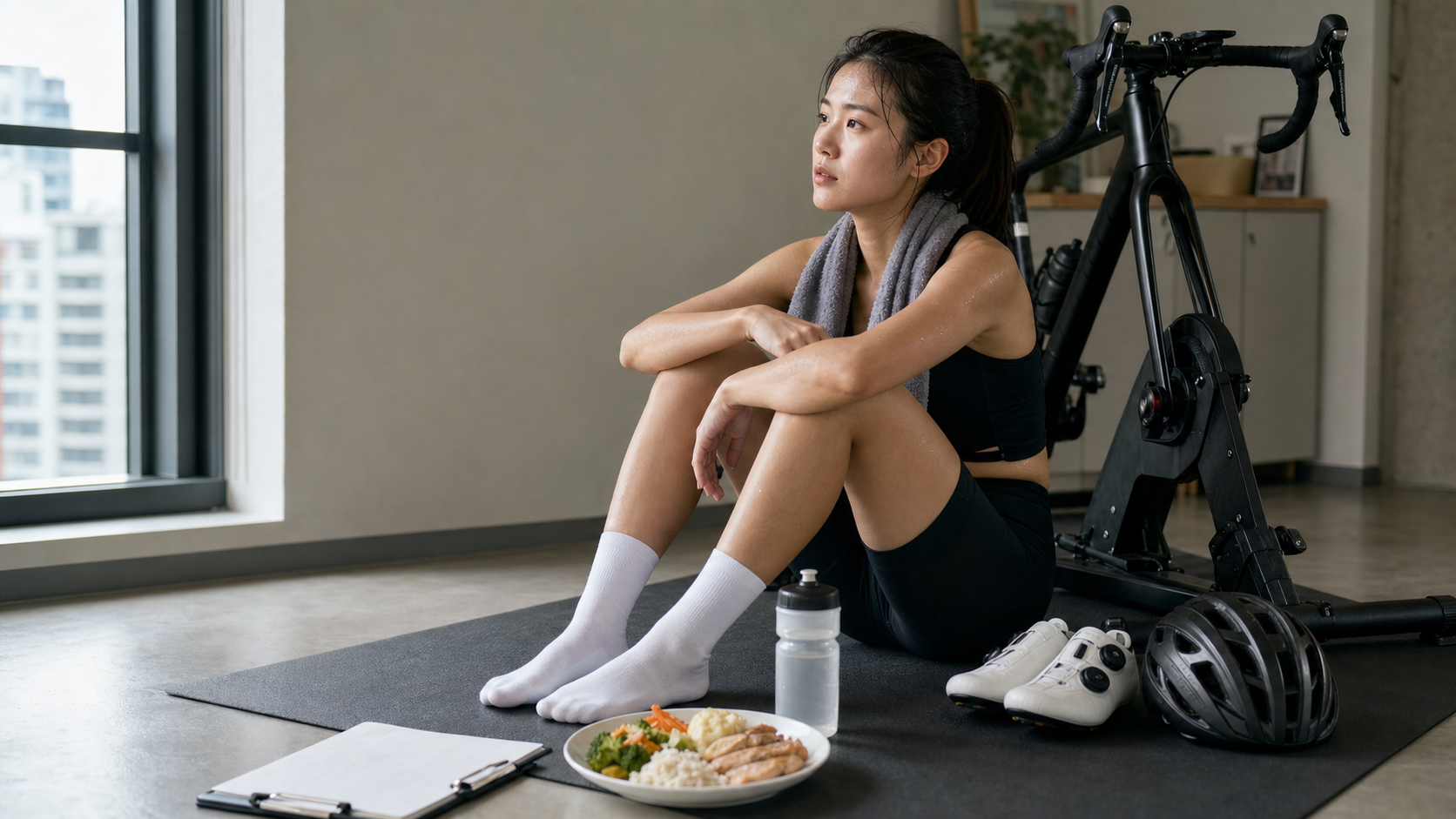
Starting with a Female Rider Who Got Weaker the More She Trained
I’ll never forget the female rider who came to see me—let’s call her Xiao Yun. She was 26, weighed about 52 kg, and stood 165 cm tall. She’d been training in triathlon and road cycling for three years, and her average power kept climbing—she was one of the most disciplined athletes I’ve ever coached. Every morning she was up at 5:30 to hit the rollers and the trainer, and her food diary was as clean as a nutrition textbook: oatmeal, chicken breast, sweet potato, boiled vegetables—almost no oil touched her plate. Her reason for coming to me was simple—“Coach, why am I getting weaker the more I train lately?”
Over the past six months, her power had stagnated or even dropped. Climbing, her heart rate would hit 175 bpm but she couldn’t push any harder. Her sleep had worsened, her hands and feet were cold, and most troubling of all, she let slip: “Also, I haven’t had my period for almost a year now, but I can’t be bothered to deal with it anyway.” Digging further, last winter she’d also had a stress fracture in her left tibia and took two months off.
At that moment, every red flag in my mind went up. Low power, amenorrhea, stress fracture—in her eyes, these were three separate pieces of bad luck, but in sports science, they are often three faces of the same problem. In this article, I want to lay out the full path I walked with Xiao Yun (and many similar cases since), so you can see it too: what the Female Athlete Triad and RED-S are, how they quietly switch off your body’s systems one by one, and how you—as an athlete or coach—can recognize and address them.
This is a severely underestimated issue among the cycling, running, and swimming community in Taiwan. Especially in an endurance-sport culture that prizes “thin is beautiful, light is fast,” combined with the fact that many Taiwanese eat out regularly and unknowingly under-fuel at main meals, the energy gap is more common than you’d think.
Core Concept: It All Starts with “Energy Availability”
To understand the Triad and RED-S, you only need to grasp one key term: Energy Availability (EA).
Many people think “energy balance” simply means calories in minus total daily expenditure. But sports science looks at it more precisely. Energy availability refers to:
After subtracting the calories burned through exercise from the calories you consume, how much energy is left for the body to maintain basic physiological functions (heartbeat, body temperature, immunity, hormones, bone building, repair).
The conceptual formula is:
Energy Availability (EA) = (Daily Energy Intake − Exercise Energy Expenditure) ÷ Fat-Free Mass (kg)
The unit is kcal/kg FFM/day. Fat-Free Mass (FFM) refers to body weight minus fat—mainly muscle, bone, and organs.
According to the International Olympic Committee (IOC) consensus statement on RED-S and related sports nutrition literature, the following ranges serve as reference:
| Energy Availability (EA) | Approximate Status | Body Response |
|---|---|---|
| Above ~45 kcal/kg FFM/day | Adequate | Most physiological functions operate well |
| ~30–45 kcal/kg FFM/day | Gray zone | Some individuals begin showing subclinical changes |
| Below ~30 kcal/kg FFM/day | Clearly low (LEA) | Multiple body systems are disrupted |
Note that these numbers are reference ranges, not absolute red lines. Everyone’s threshold differs—some women already experience menstrual changes in the 30s. In practice, I don’t force athletes to calculate to the decimal point every day, but this concept helps you understand one thing—the root problem isn’t “you’re not trying hard enough,” but “you’re not giving your body enough energy to work with.”
Why Does the Body “Turn Off Switches”?
Imagine your body is a company CFO. When income (food) chronically falls short of expenses (training + maintenance), the CFO starts cutting budgets. The order of cuts is telling: the heartbeat, breathing, and body temperature that keep you alive can’t be cut, so it targets “non-essential” high-energy items first.
For the body, reproductive function is the first to be sacrificed—because in times of energy scarcity, reproducing is a “luxury.” So the hypothalamus downregulates its signals to the gonads, estrogen drops, and periods become irregular or stop entirely. Then, because estrogen is a key hormone protecting bone, bone mass begins to decline, bone formation can’t keep pace with bone resorption, bone density falls, and the risk of stress fractures rises.
That’s the three components of the Female Athlete Triad—they aren’t three separate problems but a causal chain:
- Low Energy Availability (LEA)—the root cause
- Menstrual dysfunction (lengthened cycles, oligomenorrhea, or amenorrhea)
- Low bone density (from osteopenia to osteoporosis)
Menstruation: The “Fifth Vital Sign” for Female Athletes
I want to emphasize the menstrual component because it’s the most sensitive—and most easily ignored—“dashboard” a female athlete has.
Traditionally, we talk about four vital signs: temperature, heart rate, respiration, blood pressure. Sports medicine has a great saying—for female athletes, a regular period can almost be treated as the “fifth vital sign.” That’s because a regular period requires an entire hormonal system to function healthily, and that system is extremely sensitive to energy deficits. When you’re chronically under-fueled, it’s one of the first things to protest.
Menstrual dysfunction comes in several forms, not just “it completely stops”:
- Lengthened cycles: From around 28 days to 35 days or more between periods
- Oligomenorrhea: Periods coming only every few months
- Secondary amenorrhea: Periods that used to come but have stopped for three or more consecutive months
- Primary amenorrhea: An adolescent who never gets her first period when she should
Many athletes think, “Not having to deal with pads every month is actually convenient,” treating amenorrhea as a small blessing. That’s the worst mindset to have. Amenorrhea isn’t your body saving you trouble—it’s a distress signal that, under energy scarcity, it has shut down the entire high-cost function of “reproduction.” Think of it this way: your body has become so poor that even the “family inheritance fund” has been forced into a freeze.
From the “Triad” to “RED-S”: A Broader Picture
The Female Athlete Triad concept focuses on energy, menstruation, and bone. But sports medicine later discovered that low energy availability affects far more than just these three systems.
The IOC therefore proposed a broader concept—RED-S (Relative Energy Deficiency in Sport). It emphasizes that the physiological damage caused by low energy availability can extend to metabolic rate, menstrual function, bone health, immunity, protein synthesis, cardiovascular health, and more—and it’s not limited to women; male athletes are affected too.
The table below helps you see the systems RED-S can impact. It’s also the checklist I use when doing a “warning sign inventory” with athletes:
| Affected System | Possible Manifestations |
|---|---|
| Endocrine / Menstrual | Oligomenorrhea, amenorrhea, decreased libido; low testosterone in men |
| Bone Health | Decreased bone density, recurrent stress fractures, bone pain |
| Metabolic | Reduced resting metabolic rate, cold hands and feet, feeling cold |
| Immune | Frequent colds, slow wound healing, more upper respiratory infections |
| Gastrointestinal | Bloating, constipation, poor digestion |
| Psychological | Low mood, irritability, poor concentration, strained relationship with food |
| Sleep | Difficulty falling asleep, poorer sleep quality |
| Performance | Stagnant or declining power/pace, slower recovery, reduced endurance |
See that? Performance decline is often the last thing noticed, yet it’s frequently the only thing athletes care about. That’s why so many people, like Xiao Yun, go around in circles before finding the root cause.
What’s the Difference Between the Female Athlete Triad and RED-S?
Many athletes ask me: “Are these two terms actually the same thing?” Let me use a table to help you tell them apart:
| Aspect | Female Athlete Triad | RED-S |
|---|---|---|
| Context of Origin | Proposed earlier, focused on females | Proposed later, broader scope |
| Core Root Cause | Low energy availability | Low energy availability (same origin) |
| Population Covered | Primarily female athletes | Both males and females |
| Systems Covered | Energy, menstrual, and bone — three components | Adds metabolic, immune, cardiovascular, gastrointestinal, psychological, and other systems |
| Clinical Focus | Menstrual and bone health | Whole-body multi-system health and performance |
In short, RED-S can be thought of as an “expanded version of the triad”: the root cause is the same — insufficient energy — but it reminds us that the damage is by no means limited to menstruation and bones, and that men are not exempt either. In practice, I use both frameworks — for female athletes, the triad’s three components are intuitive and easy to understand; but when assessing whole-body impact, I use RED-S’s wide-angle lens to scan.
Bone Health: Why “Stress Fractures” Are the Most Blaring Alarm
I especially want to highlight the bone component, because it’s the area where endurance athletes in Taiwan are most likely to “only regret it once the pain hits.”
Bone is not a dead lump of calcium; it’s living tissue, constantly renewing itself through the dynamic balance of “osteoclasts breaking down and osteoblasts building up.” Estrogen is one of the key hormones protecting this balance. When energy is chronically insufficient and estrogen drops, the scales tip toward “breaking down faster than building up,” and bone density is lost bit by bit.
What’s more troublesome is the timing issue. Bone mass accumulates to its peak from puberty through the 20s. If this golden window for “banking bone” is missed due to RED-S, trying to make up for it later will be extremely difficult. That’s why I constantly stress to adolescent female athletes and their parents: training on an empty stomach at this stage could cost you a lifetime of bone bank.
Stress fractures are the most blaring alarm because they signal that the bone “can no longer withstand repeated loading.” Clinically, the proportion of amenorrheic female athletes with osteopenia and osteoporosis is significantly higher than in the general population; the prevalence of secondary amenorrhea is also elevated among long-distance runners and dancers. These aren’t scare tactics — they’re reminders that: when your bones start protesting, it means this causal chain has already progressed quite far. Don’t wait any longer.
Practical Approach: How to Identify, Assess, and Manage
Now that we’ve covered the concepts, let’s get to the most practical part. Below is the process I actually use with my athletes — you can treat it as a framework for self-assessment and action.
Step 1: Recognize the Warning Signs (No Equipment Needed)
Start with a rough screening of “whether you’re affected.” These are the red-flag signals I pay the most attention to:
- Menstrual changes: cycle lengthening (over 35 days), significantly lighter flow, no period for three consecutive months or more, or delayed menarche (in adolescents)
- Recurrent stress fractures or unexplained bone pain
- Stagnant or declining performance, especially when training volume hasn’t decreased
- Feeling cold all the time, cold hands and feet, low resting heart rate
- Slower recovery, poor sleep, daytime fatigue
- Recurrent colds or frequent minor illnesses
- Excessive anxiety about food and body weight, deliberately skipping meals, feeling guilty about “eating fats”
- Deliberately and severely restricting calories while maintaining high training volume
A special note to male cyclists and runners in Taiwan: RED-S is not exclusive to women. If you’ve been fixated on “dropping weight to improve W/kg” long-term and notice decreased libido, fewer morning erections, getting sick easily, or slow wound healing, stay alert too.
You can use the simple self-check list below — check off each item that applies. This is not a diagnostic tool; it’s just a threshold to help you decide “whether you should seek professional help”:
| Check Item | Yes / No |
|---|---|
| Irregular, infrequent, or absent periods for over three months | ☐ |
| History of stress fracture or unexplained bone pain | ☐ |
| Performance stagnant or declining despite unchanged training volume | ☐ |
| Often feel cold, cold hands and feet | ☐ |
| Slower recovery, poorer sleep | ☐ |
| Recurrent colds or frequent minor illnesses | ☐ |
| Excessive anxiety about food or weight, deliberately skipping meals | ☐ |
| Deliberately severe calorie restriction while maintaining high training volume | ☐ |
If you’ve checked two or more — especially if either “menstrual dysfunction” or “stress fracture” is among them — I strongly urge you to follow the medical pathway described later in this article. Checking items doesn’t mean you definitely have RED-S, but it does mean this deserves serious attention rather than pushing through.
Step 2: Roughly Estimate Your Energy Availability
This step doesn’t need to be precise — just capture the big picture. Using Xiao Yun as an example, here’s a one-week estimate:
| Item | Value (Example, Not Applicable to Everyone) |
|---|---|
| Body weight | 52 kg |
| Body fat percentage (estimated) | ~18% |
| Fat-free mass (FFM) | ~42.6 kg |
| Average daily intake | ~1,900 kcal |
| Average daily exercise expenditure | ~700 kcal |
| Energy remaining after exercise | ~1,200 kcal |
| Energy availability (EA) | ~28 kcal/kg FFM/day |
The calculation lands at roughly 28, clearly below the commonly cited reference threshold of 30. This isn’t a coincidence — it’s the shared upstream cause of her lost periods and recurrent fractures.
Again, I want to emphasize: this number is an estimate meant to point you in the right direction, not a tool for self-judgment. Food calorie estimation alone carries significant error, and exercise expenditure is even harder to pin down. For actual clinical assessment, leave it to a professional medical team.
Step 3: Seeking Medical Care and Cross-Disciplinary Evaluation (Taiwan’s Medical Pathway)
If you experience the red flags above — especially amenorrhea or recurrent fractures — please seek medical care. Don’t tough it out on your own or just self-supplement with calcium. In Taiwan, here’s how you can navigate the system:
- Obstetrics & Gynecology: Evaluate the cause of amenorrhea and rule out pregnancy, polycystic ovary syndrome, thyroid issues, and other conditions. This step cannot be skipped.
- Family Medicine / Endocrinology & Metabolism: Overall health, hormonal, and metabolic assessment.
- Orthopedics / Rehabilitation Medicine: Manage stress fractures and assess bone health; arrange a bone density scan (DXA) if necessary.
- Registered Dietitian: Rebuild adequate and balanced nutrition; both NHI-contracted facilities and many clinics offer nutrition counseling resources.
- Clinical Psychology / Psychiatry: If an eating disorder or excessive weight anxiety is present, this component is critical.
Taiwan’s NHI makes seeing a doctor convenient — make good use of it. A woman with a training background who has had amenorrhea for over three months should not be dismissed with a “maybe it’s just stress” — proactively share your training volume and dietary status so the physician has complete information to work with.
When visiting a doctor, I often advise athletes to prepare the following in a phone memo beforehand to make the consultation more efficient:
- Recent menstrual history: when your last period was, cycle length, changes in flow
- Training volume: hours per week, approximate intensity distribution
- Dietary overview: roughly what you eat in a day, whether there’s deliberate restriction
- Symptom list: whether you feel cold, recover poorly, get recurrent colds, sleep badly, or have mood changes
- Injury history: any stress fractures, when, and where
Bringing this organized information makes it much easier for the physician to connect the dots between “scattered minor symptoms” and makes it less likely that RED-S will be missed.
Step 4: The Core of Treatment—Restoring Energy
The core of all interventions is one thing: improving energy availability. There are usually two paths, and it’s best to do both:
- Increase intake (the main focus in most cases)
- Moderately reduce training expenditure (especially during the acute phase)
The adjustments I designed for Xiao-Yun are outlined below. This isn’t a prescription for you to copy, but rather to help you understand “how large the adjustment range should be”:
| Aspect | Before Adjustment | Direction of Adjustment |
|---|---|---|
| Daily intake | ~1,900 kcal | Gradually increase by 300–500 kcal, prioritizing carbohydrates and healthy fats |
| Training volume | ~12 hours/week, including lots of high intensity | Reduce volume and intensity during the acute phase; prioritize recovery |
| Meal timing | Often trained fasted, delayed eating long after workouts | Ensure proper fueling before and after training; avoid prolonged energy gaps |
| Fat intake | Almost zero fat | Incorporate healthy fats like nuts, avocado, olive oil, egg yolks |
| Mindset | Viewed “eating” as the enemy | Relearn to treat food as part of training |
Many endurance athletes resist “increasing intake” and “reducing training” the most because it goes against their instincts. But I often tell my athletes: you’re not slacking off right now; you’re helping your body switch the switches back on, one by one. Menstrual recovery and bone rebuilding take time—often months to over a year—so don’t rush it.
Practical Fueling Tips for the Taiwan Context
Eating out is convenient in Taiwan, but it’s easy to fall into traps. Here are specific strategies I give to athletes who eat out often:
- Don’t just have unsweetened soy milk and a tea egg for breakfast: Add a rice ball, sweet potato, or toast with egg to get enough carbohydrates
- Convenience stores are your best friend: Onigiri, tea eggs, unsweetened yogurt, bananas, milk, and small nut packs can easily fill a meal gap on the go
- Eat something within 30–60 minutes after training—don’t wait two hours after your workout for your main meal
- At buffet restaurants, actively grab one staple food + one protein, and don’t be afraid of that spoonful of oil
- Calcium-rich foods: Dried small fish, black sesame, milk, dried tofu, and dark leafy greens—incorporate them into your daily diet (whether you need additional calcium supplements should be evaluated by a nutritionist or doctor based on your individual situation; don’t self-supplement in large amounts)
Taiwan’s summers are hot and humid. Long rides or runs cause heavy sweating and often suppress appetite, so you need to be even more deliberate about replenishing energy and electrolytes. Don’t let “too hot to eat” become a long-term energy deficit.
A Sample “Recovery Phase” Weekly Schedule (Using Xiao-Yun’s Acute Phase as an Example)
Many people ask me, “So how exactly should I structure my week?” Here’s a general outline of Xiao-Yun’s early recovery phase (after the fracture healed and she began rebuilding energy). This is a conceptual example, not a universal training plan. Any actual plan should be adjusted by your coach and medical team based on your individual situation:
| Day | Training Plan | Fueling Focus |
|---|---|---|
| Monday | Complete rest | Three full meals, plus an afternoon snack |
| Tuesday | Easy 60-min ride (Zone 1–2) | Eat breakfast before the ride; consume carbs + protein within 1 hour after |
| Wednesday | Core + light strength training 40 min | Protein after strength work; add a serving of healthy fat at dinner |
| Thursday | Complete rest | Same as Monday; key point is not to eat less just because you didn’t train |
| Friday | Easy 75-min ride (Zone 2) | Fuel during the ride; don’t go too long fasted |
| Saturday | Slightly longer but still easy aerobic 90 min | Fuel regularly throughout; eat a full meal afterward |
| Sunday | Complete rest or walking | Three meals + snacks; make up the week’s energy |
Note two key points from this table: First, intensity is reduced across the board, putting recovery first; second, on rest days, you actually need to eat enough—because many people subconsciously eat less when they don’t train, and the energy deficit never gets closed. The goal of the recovery phase isn’t “progress”; it’s “getting the body’s switches to light back up.”
Common Mistakes and Corrections
Having worked with so many cases, I’ve found that the pitfalls people fall into are highly repetitive. Here are the most common ones:
Mistake 1: Treating Amenorrhea as a “Training Achievement” Badge
This is the most dangerous misconception. In the past, some circles treated “training until your period stops” as a symbol of hard work. That’s completely wrong. Amenorrhea is your body screaming “I can barely hold on”—it’s an alarm for severe energy deficiency, not a badge of honor.
Correction: Treat a regular menstrual cycle as the “fifth vital sign” for female athletes. If it’s regular, it means your energy and hormonal systems are healthy.
Mistake 2: Thinking “I’m Eating, So It’s Fine” and Ignoring the Deficit
Many athletes say defensively, “But I do eat!” The problem isn’t whether you eat; it’s whether the amount you eat covers your training expenditure and still leaves enough for your body to function. The more you train, the more you need to consume—this is where many people fall behind.
Correction: When training volume increases, intake must increase in tandem. Treat exercise expenditure as an “extra expense” and remember to pay it back.
Mistake 3: Only Supplementing Calcium and Vitamin D Without Fixing the Energy Deficit
When bone density drops, many people’s first reaction is to load up on calcium pills. But if energy availability isn’t restored and estrogen remains low, calcium supplementation alone has very limited effect.
Correction: Energy availability is the foundation; calcium and vitamin D are the building materials. If the foundation isn’t solid, piling on more materials won’t build a house. Supplement dosages should be determined by your doctor or nutritionist based on your blood work and diet assessment.
Mistake 4: Buying Hormones Online or Randomly Stopping Birth Control to Regulate Periods
Menstrual issues involve complex hormonal mechanisms—never self-medicate. Oral contraceptives may make your period “appear” to return, but they can mask the underlying energy problem and don’t necessarily improve bone density.
Correction: All hormone-related treatments should be evaluated individually by an OB-GYN.
Mistake 5: Rushing Back to Training During Recovery
As soon as a stress fracture heals or the period returns, some athletes can’t wait to jump back to their original training volume—only to relapse.
Correction: Recovery is gradual. Let energy, menstruation, and bone health stabilize for a period of time first, then slowly increase volume. Haste makes waste.
Mistake 6: Judging Yourself with Body Fat Scales or Weight Numbers
Many athletes are driven to anxiety by home body fat scales or the “ideal body fat” numbers on social media. Even when their performance and health are fine, they still feel the need to shave off another layer. Home body fat scales have large error margins, and the numbers fluctuate daily. Using them as a life goal will only hold your mindset hostage.
Correction: Shift your evaluation focus from “numbers” to “function”—is your period regular, is recovery going well, is performance stable, how are your mood and sleep? These living indicators are far more honest than that erratic percentage on a body fat scale.
Mistake 7: Coaches or Teammates Leading the “Thin Is Glory” Culture
This one is for coaches and team captains. If the sports environment is saturated with “who lost another few kilos” or “climbing means being light,” it pushes the whole group toward energy deficits. I’ve seen too many young athletes go astray because of a comparative culture within their team.
Correction: Coaches should lead the shift in language from “you’re too heavy” to “are you eating enough, are you recovering well?” The power of culture is greater than you think; leading it in the wrong direction can harm an entire group of people.
Actionable Advice for Readers at Different Levels
If You’re a Beginner New to Sports
- Build the right mindset: Progress in training comes from “eating enough + training + sleeping,” not “eating less + training hard”
- Don’t chase extreme weight loss: Focus on performance and health, not the number on the scale
- Track your menstrual cycle: Women, make it a habit to record your cycle—it’s the cheapest health monitoring tool you have
- See a doctor at any red flag: Medical care is very accessible in Taiwan; don’t delay
If You’re an Intermediate Athlete with a Fair Amount of Training
- Do regular self-check-ins: Periodically review yourself against the warning signs table earlier
- Increase meals when increasing volume: When your training cycle enters a high-volume phase, proactively increase intake
- Prioritize pre- and post-training fueling: Don’t train fasted for long periods; eat promptly after workouts
- Bring back healthy fats: Endurance athletes often over-restrict fat—nuts, avocado, and good oils should be part of your diet
If You Are an Advanced/Competitive Athlete or Coach
- Include menstruation as a monitoring metric: Like power and heart rate, it is an important training-load indicator
- Periodize energy across the season: Pay special attention to energy availability during high-volume phases—don’t dig an energy deficit while building fitness
- Build a referral network: Know trusted OB-GYNs, dietitians, and sports medicine physicians so you can refer athletes promptly when issues arise
- Lead cultural change: Don’t glorify “the lighter, the stronger” on your team or in your community—that mindset harms people
FAQ
Q: I’m male—does this article apply to me?
A: Absolutely. RED-S clearly shows that men also suffer from low energy availability—lower testosterone, bone density loss, impaired immunity, and stalled performance. Male cyclists who love dropping weight to chase W/kg should pay special attention.
Q: My period is fairly regular—does that mean I’m fine?
A: A regular period is a good sign, but RED-S affects many systems. If you have other red flags (repeated colds, poor recovery, stalled performance, always feeling cold), it’s still worth examining your energy availability.
Q: Do I have to calculate an exact EA number?
A: No. Numbers are just tools to help you understand direction. In practice, grasping the big picture, watching for red flags, and seeking medical care when needed matter more than forcing yourself to calculate daily—obsessive calorie tracking can itself sometimes be part of the problem.
Q: How long does recovery take?
A: It varies by individual. Menstrual recovery may take months, while bone rebuilding often takes over a year. The key is patience and consistency, not quick fixes.
Q: Can I lose weight while improving these issues?
A: Generally not recommended during the acute phase. Prioritize bringing energy availability back into a healthy range and letting physiological function recover before pursuing other goals. Discuss this with your medical and nutrition team and decide on an individualized basis.
Q: Am I more at risk if I’m vegetarian or vegan?
A: Vegetarianism itself isn’t the problem—many elite athletes eat plant-based. The risk lies in “not eating enough while also restricting food groups,” which makes it easier to fall short on total energy and certain nutrients. Endurance athletes who eat plant-based should be extra careful to get enough total calories, protein, and healthy fats, and consult a dietitian if needed.
Q: I took birth control pills and my period came back—does that mean I’m fine?
A: Not necessarily. Birth control pills can make your period “look” regular, but that bleeding is driven by exogenous hormones—it doesn’t mean your own energy and hormonal systems have recovered, nor does it guarantee improved bone density. The real indicator is whether your body can maintain a regular period on its own, without exogenous hormones. Whether and how to use medication should be left entirely to your OB-GYN’s judgment.
Q: I’m a teenager / I’m a parent—what should I watch for?
A: Puberty is the golden window for building bone bank, and also a stage with particularly high risk for the Triad. Parents should watch for delayed first period, irregular cycles, excessive preoccupation with weight, or deliberately skipping meals. If you spot warning signs, seeking medical care is far wiser than “waiting to see.”
Q: Can I use the energy availability thresholds in this article as a standard?
A: Those numbers are reference ranges to “aid understanding,” not red lines for self-diagnosis. Everyone’s threshold differs, and real assessment depends on overall clinical presentation and professional judgment. Rather than obsessing over numbers, focus on red-flag signals and daily functioning.
Conclusion: Turning the Body’s Switches Back On
Back to Xiao-Yun. She spent about ten months gradually increasing her intake, reducing training volume during the acute phase, and working with a dietitian and OB-GYN. Her period quietly returned in the fifth month, and afterward her power not only returned to previous levels but hit new highs. She later told me something that really resonated: “I always thought it was discipline—turns out I was slowly starving myself.”
The Female Athlete Triad and RED-S are dangerous precisely because they are quiet. They don’t announce themselves with immediate pain like a cramp or a sprain; instead, like a frog in slowly warming water, they switch off the body’s functions one by one. By the time you notice, you’re often already amenorrheic, fracturing bones, and watching performance collapse.
But here’s the good news—it is preventable and reversible. The root cause is simple: give your body enough energy. Treat food as part of your training, treat a regular period as a health dashboard, and take every signal your body sends seriously. Truly strong athletes aren’t the ones gritting through on an empty stomach—they’re the ones who know how to fuel their bodies and let them perform at their best.
If you see yourself or a teammate in this article, don’t hesitate—seek medical care and professional help. You’re not lacking grit; you just need to restore your energy. May you run long, ride far, and stay healthy on Taiwan’s mountain roads and racecourses.
This article is educational content and does not replace individualized diagnosis or treatment advice from a physician, physical therapist, or dietitian. If you have amenorrhea, recurrent fractures, suspected eating disorders, or other health concerns, please seek individualized evaluation and support from OB-GYN, sports medicine, nutrition, and psychology professionals as soon as possible.
References
- International Olympic Committee (IOC) Consensus Statement on Relative Energy Deficiency in Sport (RED-S): 2018 Update — https://journals.humankinetics.com/view/journals/ijsnem/28/4/article-p316.xml
- 2023 IOC consensus statement on Relative Energy Deficiency in Sport (REDs) — https://pubmed.ncbi.nlm.nih.gov/37752011/
- Female Athlete Triad — StatPearls, NCBI Bookshelf — https://www.ncbi.nlm.nih.gov/books/NBK430787/
- Female Athlete Triad and Relative Energy Deficiency in Sport (REDs): Nutritional Management — https://www.ncbi.nlm.nih.gov/pmc/articles/PMC10857508/
Related Reading
- The Female Athlete Triad: Integrated Management of Energy Availability, Menstrual Cycle, and Bone Health
- RED-S Relative Energy Deficiency in Sport: An Energy Supply Warning for Female Athletes
- Bone Health in Athletes: The Risks of RED-S and Low Energy Availability
- RED-S in Female Runners: Relative Energy Deficiency Is More Than Just Eating Less
西進武嶺 免費訓練分析服務 Intervals | 練不夠還是練過頭?你哪一種類型選手?AI模型告訴你! | 備戰神器 | 公路車 訓練 | CT Yeh
4 年前
把帶被我推爛,換新的防推爛款💪 #cycling #公路車 #曜越單車
2 年前
FTL 與 SYB 車隊專訪 西進武嶺 實用攻略分享! 2小時 如何練?!你不知道的眉角!新手準備武嶺必看 EP1 | 實力派女車友 | 精華版 | 公路車 | CTYeh
4 年前
JJSC南台灣單車走春三日行 DAY 1 / 強度 x 美食 x 節慶體驗 / 公路車 CT Yeh
5 個月前
小野田真的存在!日本赤城山爬坡公路賽 台灣首發團完全實錄 | 頭文字D真實賽道! | 看完東奧自行車賽後好想再去騎一次啊! | 公路車 | CT Yeh
4 年前
下次拍照前要查清楚啦🤣 #cycling
7 個月前
摔車後補裝備: 好市多新款單車安全帽& Specialized Romin 北高整路屁股都不痛的坐墊 | 一千元居然有MIPS | CT Yeh | 公路車
4 年前
中秋團練!GoPro Hero 9 拍攝絲般順滑,ft. 新竹某校隊 公路車
5 年前