The Complete Guide to Carbohydrates: The Main Fuel for Endurance Sports — Types, Daily Requirements, and Race Fueling Strategies
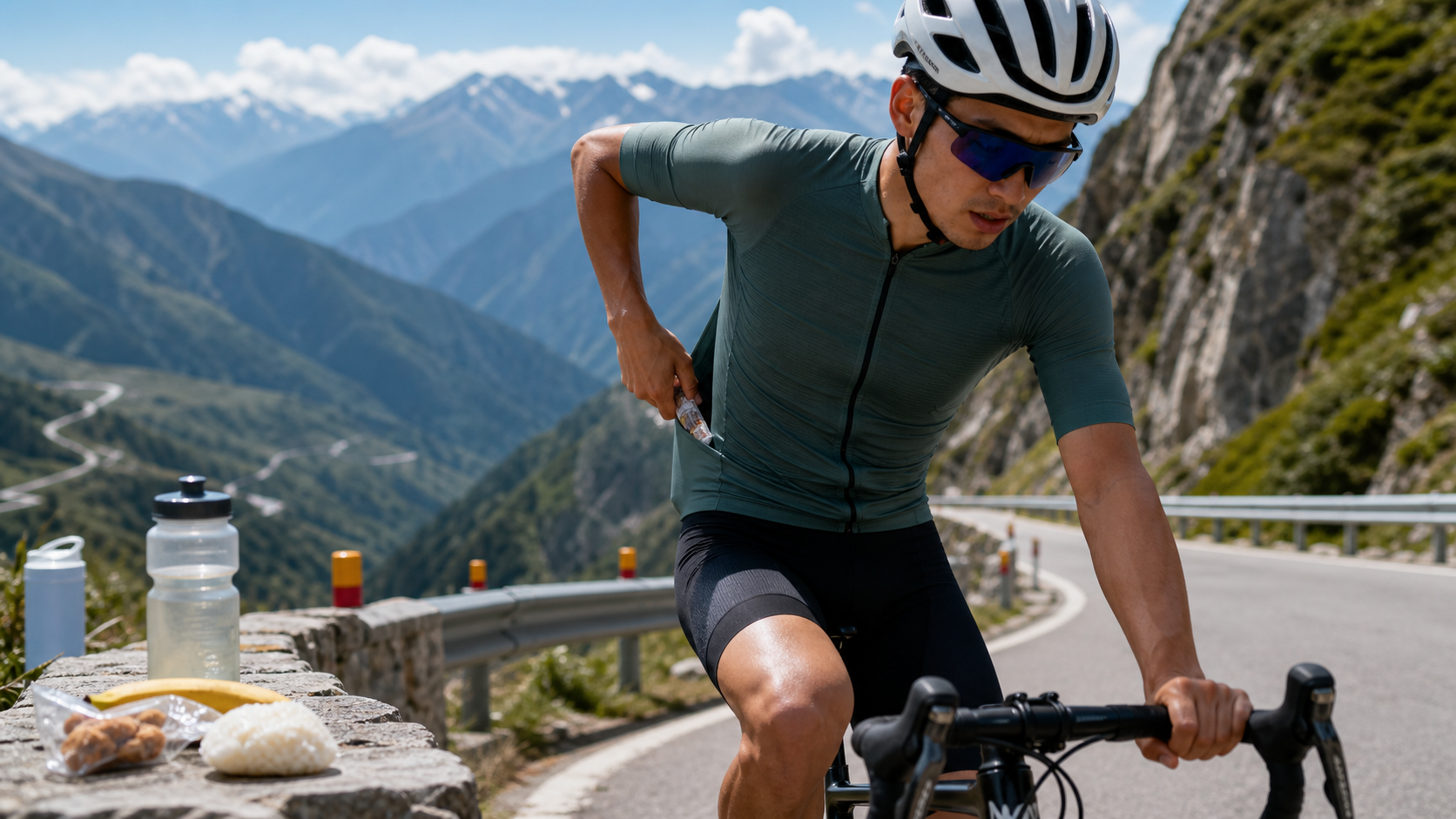
Opening: The Student Who “Ran Out of Power” Halfway Up Wuling
I still remember a student in his early forties named A-Ming I coached a few years ago. He was an engineer with incredible willpower and extremely disciplined training habits. He told me he wanted to take on the western route up Wuling, so I put together a three-month training plan for him — all the climbing work and mileage accumulation, nothing was skipped. But on race day, after Cuifeng and still a ways from the finish, he completely “ran out of power” — not because his legs gave out, but that dizzy, hands-shaking, mind-blank state where even his pedaling rhythm fell apart.
Afterward, I asked him what he ate for breakfast and what he took in along the way. He said proudly: “Coach, I’ve been controlling my sugar intake for six months. For breakfast I only had two eggs and some nuts, and on the ride I barely ate anything because I was afraid my blood sugar would spike.” I understood immediately. He had taken the correct concept of “cutting refined sugar for daily fat loss” and forced it onto a completely different scenario — a four-hour high-intensity endurance event. So when his body needed fuel the most, the tank was empty.
Over these fifteen years of coaching athletes at all levels and general fitness enthusiasts, I’ve seen too many A-Mings. Carbohydrates have been heavily demonized in health discourse, but for endurance athletes, they are nothing less than the primary fuel. Today, I want to lay out the whole carbohydrate picture from start to finish: what types exist, how much you actually need daily, and how to eat for training and racing. I’ll give you tables you can copy directly, and I’ll cover common mistakes. After reading this, I hope you won’t become another A-Ming stranded on the mountainside.
Concepts and Scientific Foundations: Why Carbohydrates Are the Primary Fuel for Endurance Sports
The Body’s Two Main Fuel Tanks
Let’s start with a core mental image. Your body burns two main fuels during exercise: fat and carbohydrates (stored as glycogen and blood glucose). The relationship between the two is a lot like a hybrid car — at low intensity, the fat proportion is higher; as intensity ramps up, the body relies more and more on carbs.
Fat stores are nearly “unlimited” — even elite athletes with very low body fat have enough fat to burn for dozens of hours. The problem is that fat “burns slowly”; it requires plenty of oxygen, has a limited energy production rate, and can’t sustain high-intensity output. Carbohydrates are the opposite: they produce more energy per unit of oxygen and have a faster energy supply rate, making them the main fuel when you want to hold high wattage or a fast pace. But carb stores are very limited.
A well-trained adult has total glycogen stores of roughly 300 to 600 grams (muscle glycogen plus liver glycogen), which translates to about 1,200 to 2,400 kcal. That sounds like a lot, but a high-intensity long ride or a full marathon can burn 500 to 900 kcal per hour. Do the math yourself — if you’re not fueling during exercise, your tank will be empty within two to three hours. That’s what endurance athletes call “hitting the wall” or “bonking” — it’s not a lack of effort; the fuel is genuinely gone.
Types of Carbohydrates: Not All Sugars Are Created Equal
Many people think carbohydrates are just “sugar,” but it’s actually a big family. Understanding the types is the key to knowing which one to eat and when.
- Monosaccharides: The smallest units, including glucose, fructose, and galactose. Energy gels and sports drinks during exercise rely mainly on these fast-absorbing sugars.
- Disaccharides: Two monosaccharides combined, such as sucrose (table sugar, glucose + fructose), lactose (in milk), and maltose.
- Oligosaccharides and polysaccharides: Multiple monosaccharides linked together, such as maltodextrin and starch. Maltodextrin is common in sports nutrition because it’s low in sweetness, low in osmolality, less likely to cause bloating, yet breaks down quickly into glucose.
- Fibre: Polysaccharides the body can’t digest well. It’s important for daily gut health, but on race day or in the pre-race meal, you should deliberately reduce it to avoid gastrointestinal discomfort and frequent bathroom trips.
Here’s a practical key point: the concept of “glycemic index (GI)” is used differently depending on the context. For daily weight management and metabolic health, we tend to choose low-GI, high-fibre whole grains and root vegetables to keep blood sugar stable. But during exercise and in post-exercise recovery, we actually want fast-absorbing, moderate-to-high GI carbs so energy arrives quickly and glycogen is replenished rapidly. The same food can be “good” or “bad” in opposite ways depending on the context — this is where many people get confused.
It’s easier to remember with foods familiar to Taiwanese people. For regular meals outside of training, I encourage students to eat more brown rice, sweet potatoes, pumpkin, and oats — carbs that digest more slowly, have higher nutritional density, and contain fibre, keeping blood sugar steady and providing satiety. But during or right after exercise, these high-fibre foods become a burden; you’ll want white rice balls, white toast, bananas, sports drinks, and energy gels — sources that are easy to absorb and get into the bloodstream quickly. Many people are stuck in the “white rice is bad” mindset, but white rice is actually an excellent fuel in the context of sports nutrition. No food is absolutely good or bad — it depends on the context and what you need it to do.
One more detail that’s often overlooked: carbohydrates aren’t just “calories” — they’re tied to water storage too. Every gram of glycogen stored brings about three grams of water along with it. That’s why people who do glycogen supercompensation see their weight go up a kilo or two and feel a bit puffy — that’s not fat gain; it’s glycogen and water being stored together, which is actually a sign of a full tank. Understanding this, you won’t panic and cut back when the scale shows an extra kilo the day before a race.
Key Science: Why “90 Grams Per Hour” Has Its Ceiling and How to Break Through
One of the most important advances in sports nutrition in recent years is understanding the “ceiling” of intestinal carbohydrate absorption.
If you only consume a single type of glucose, your body absorbs it via a transport protein in the gut called SGLT1, and this channel gets “congested” — it saturates at about 60 grams per hour. Eat more than that, and the excess sugar just sits in your gut fermenting, causing bloating and nausea; it never reaches your bloodstream to help you produce power.
But research has found that fructose uses a completely different pathway (GLUT5). This means if you consume glucose and fructose together, both pathways can operate simultaneously without competing, pushing total absorption higher. At roughly a 2:1 glucose-to-fructose ratio, you can absorb about 90 grams per hour, and the oxidation rate of exogenous carbohydrates is significantly higher than with glucose alone (studies have observed improvements of about 50% to 65%). This is the principle behind “multiple transportable carbohydrates (MTC),” and it’s why nearly all high-end energy gels and sports drinks now tout a 2:1 glucose-to-fructose ratio (sources at the end of this article).
In recent years, some well-trained elite athletes have pushed intake to 120 grams per hour or even higher, but this requires long-term “gut training” — trying it casually will only blow up your stomach. For the vast majority of readers, 60 to 90 grams per hour is the most practical target range.
The Gut Is a Muscle That Can Be Trained
I want to expand on this point specifically, because too many people overlook it. Your heart, lungs, and legs can be strengthened through training, and your gastrointestinal tract can be trained too. In sports science, this is called “gut training.” The core concept is that the number and activity of transport proteins in the gut (SGLT1, GLUT5) will “upregulate”—meaning they increase and become more efficient—with consistent, long-term carbohydrate intake during exercise.
This explains a common phenomenon: why do some beginners feel nauseous or get diarrhea from eating a gel while riding, yet elite athletes can pack in 90 or even 120 grams per hour without issue? It’s not innate; it’s trained. When I guide athletes through gut training, I typically structure it like this:
- Start with a low dose: Initially, only supplement 30 to 40 grams per hour during longer training sessions, letting the gut adapt to “digesting while exercising.”
- Increase gradually every two to three weeks: Once the body adapts, push the target up to 50 or 60 grams.
- Train at intensities similar to racing: Because at high intensity, blood flow is shunted away from the gut to the muscles, reducing digestive capacity. You have to train in that context for it to be meaningful.
- Log gut reactions: Record bloating, nausea, or the urge to use the bathroom to identify your current tolerance limit.
This process can’t be rushed; it typically takes several weeks to several months. But once you’ve trained it, you can absorb more fuel on race day, and your endurance will noticeably improve.
So, Does “Keto / Low-Carb” Work?
In recent years, ketogenic (keto) and low-carb, high-fat (LCHF) diets have become very popular. Athletes often ask me: “Coach, if I switch to keto and teach my body to burn fat, won’t I avoid needing constant carbs and hitting the wall?”
My stance is: For endurance athletes chasing performance, long-term strict keto is usually not the optimal solution. The reason is simple—as mentioned earlier, the rate of fat oxidation is limited and can’t support high-intensity output. Research shows that low-carb diets can indeed increase fat oxidation capacity, but in high-intensity situations requiring surges or sustained fast pacing, exercise economy often declines, meaning you expend more energy at the same speed.
This doesn’t mean low-carb is useless. It might be suitable for those doing purely low-intensity, ultra-long-duration exercise where performance isn’t a priority, or for individuals with specific metabolic needs under professional guidance. But if your goal is to ride Wuling faster or run a marathon under a certain time, I’d recommend building your foundation on a carbohydrate-based fuel system, then making periodized adjustments as needed. Don’t force extreme internet diets onto your competitive goals.
Practical Approach: How Much Carbohydrate Should You Actually Eat
Now that the theory is covered, let’s get to what most people want to know: the specific numbers. I’ll break it down into four scenarios—“daily needs,” “before exercise,” “during exercise,” and “after exercise”—each with a table. The following doses are based on per kilogram of body weight (kg), so you can easily apply them to your own weight.
1. Daily Carbohydrate Needs: Adjust by Training Load
How much carbohydrate you should eat daily depends on your training load for that day (or that training block). This is the foundational concept of “carbohydrate periodization”—not eating the same amount every day, but adjusting based on training stress. Here’s a framework based on scientific consensus that I actually use with my athletes:
| Training Scenario | Daily Carb Recommendation (per kg body weight) | Example for a 70 kg Athlete | Notes |
|---|---|---|---|
| Rest day / very easy day | 3–5 g/kg | ~210–350 g | Low intensity or rest; no need to top off the tank |
| Moderate training load (~1 hour per day) | 5–7 g/kg | ~350–490 g | Typical for recreational amateurs |
| High training load (1–3 hours of moderate-to-high intensity daily) | 6–10 g/kg | ~420–700 g | Common during serious race preparation |
| Very high training load (4–5+ hours daily / multi-day events) | 8–12 g/kg | ~560–840 g | For round-island rides, stage races, ultra-marathon prep |
Practical note: These numbers can look daunting at first—700 grams of carbs is roughly the equivalent of over a dozen bowls of rice in a day, which most people can’t eat and don’t need. Only those with genuinely high training loads need to approach the upper limit. For most enthusiasts who ride on weekends and run three to four times a week, 4 to 6 grams per kilogram is more than sufficient. In Taiwan, rice, noodles, bread, and dumplings make it easy to hit these targets. Ironically, many people are “deliberately cutting carbs,” which degrades training quality and slows recovery without them even realizing it.
2. Before Exercise: How to Fill the Tank Pre-Race
The goal of pre-exercise carbohydrate intake is to fill muscle glycogen stores and stabilize blood sugar. Timing is critical:
- Eat a carb-focused meal 1 to 4 hours before the event, at a dose of about 1 to 4 grams per kilogram of body weight (the more time you have, the more you can eat). For example, a 70 kg athlete 3 hours before the start might eat a breakfast with 140 to 200 grams of carbs (a large bowl of rice or noodles, a banana, a slice of toast with honey, etc.).
- This meal should be low in fiber, low in fat, and low in protein—prioritize easy digestibility. White toast, rice balls (with less oily fillings), plain congee, or plain misua from a Taiwanese breakfast shop are all good choices. Avoid high-fiber vegetables, fried foods, and excessive meat.
- 5 to 15 minutes before the start, you can take a small amount of fast-acting sugar (half a gel, a few sips of sports drink) to top off blood glucose before heading out.
- “Carb loading”: For endurance events lasting over roughly 90 minutes, you can increase carbohydrate intake (up to 8 to 10 g/kg) in the 1 to 3 days before the race while tapering training to maximize glycogen stores. But this only matters for longer distances; it’s unnecessary for shorter events, and forcing it will just leave you feeling bloated on race day.
3. During Exercise: The Most Critical Part, and Where Most People Go Wrong
This is where A-Ming ran into trouble, and it’s the section I want to emphasize most. The principle of fueling during exercise is to “match intake rate to exercise duration”:
| Exercise Duration | Carb Recommendation per Hour | Recommended Carb Sources | Notes |
|---|---|---|---|
| Less than 45–60 minutes | Barely needed (rinsing the mouth is enough) | Mostly plain water | Glycogen stores suffice for short efforts |
| ~1–2 hours | 30–60 g/h | Glucose / maltodextrin is sufficient | A single sugar source is enough |
| 2–3+ hours | 60–90 g/h | Glucose:fructose at roughly a 2:1 ratio | Requires multiple transportable carbohydrates |
| Ultra-long distance (ultra-marathon, multi-day events, elite) | 90+ g/h | 2:1 ratio plus gut training | Requires long-term adaptation; don’t attempt casually |
Let’s translate that into easy-to-remember real-world items: a standard energy gel contains roughly 20 to 30 grams of carbs, and a 500 ml bottle of sports drink contains about 15 to 30 grams. So, to hit 60 grams per hour, you’re looking at “a third to half a gel every 20 minutes, sipped with sports drink or water.” The key is small amounts, frequently, evenly distributed—don’t wait until you’re hungry or lightheaded to eat, because by then it’s already too late.
I usually tell athletes to set their watch to vibrate every 15 to 20 minutes during long rides or runs, and take a bite or sip when it goes off, turning fueling into a mechanical habit rather than relying on feel. Feelings can deceive you—by the time you “feel hungry,” your blood sugar is often already dropping.
4. After Exercise: The Golden Window for Recovery
The goal of post-exercise carbohydrate intake is to rapidly replenish glycogen and aid recovery, so you can train again the next day. The consensus recommendation: as soon as possible after finishing, consume 1.0 to 1.2 grams per kilogram per hour of moderate-to-high GI carbohydrates for the first 3 to 4 hours, paired with about 20 grams of protein to support muscle repair.
For a 70 kg athlete, that’s roughly 70 to 84 grams of carbs in the first hour post-exercise. In practice, you don’t need to be that precise—a “large braised pork rice bowl plus a cup of unsweetened soy milk” or “two rice balls plus a bottle of chocolate milk” gets you there. The convenience of getting carbs from Taiwanese convenience stores and eateries is a real advantage for us. But if you don’t have training the next day, there’s no need to force extra carbs—just return to a normal, balanced diet.
Common Mistakes and Corrections
Having coached students for so many years, the same mistakes are made over and over again. I’ve listed the most common ones below—check and see if any of them apply to you.
Mistake 1: Applying “cut back on sugar for daily fat loss” to “cut back on sugar for racing”
This is exactly what Ah-Ming did. Controlling refined sugar and choosing low-GI foods during a fat-loss phase is fine for daily life. But endurance racing is a completely different metabolic scenario—you need large amounts of rapidly available energy. The fix: mentally separate “daily eating” from “training/racing eating” into two different systems, and don’t feel guilty about fueling when you need to.
Mistake 2: Trying a new supplement for the first time on race day
This is a cardinal-rule-level mistake: “Nothing new on race day.” Some people hear that a certain brand of energy gel is amazing, eat it for the first time on race day, and end up with a churning stomach and diarrhea. Any fueling strategy, any brand, any concentration must be rehearsed during training first. Your gut needs to be trained too. The fix: treat long-distance training sessions as “fueling dress rehearsals,” using exactly the same products and the same timing as you will on race day.
Mistake 3: Only eating solids or only drinking highly concentrated sugar water, neglecting water and concentration
When carbohydrate concentration is too high (e.g., dissolving a pile of sugar powder into a tiny bottle), gastric emptying slows down and bloating occurs. Sports drinks are generally designed at around 6% to 8% carbohydrate concentration for good reason. Especially in Taiwan’s hot, humid summer environment, you need to replenish water, electrolytes, and carbohydrates simultaneously—all three must be balanced. The fix: during prolonged exercise in the heat, use a combination of “more diluted sports drink + separate solid gels/small snacks” rather than relying solely on concentrated sugar water.
Mistake 4: Neglecting electrolytes (especially sodium)
Taiwan’s climate is truly unforgiving. When cycling or running in summer, you sweat profusely, and that sweat carries away large amounts of sodium. Replenishing water without sodium can lead to hyponatremia, cramping, or even more serious conditions. Your carbohydrate strategy needs to go hand in hand with your electrolyte strategy. The fix: for prolonged sweaty exercise, choose sports drinks containing sodium or take electrolyte tablets—don’t just chug plain water.
Mistake 5: Completely avoiding carbohydrates to “train fat burning,” but using it in the wrong situations
“Train low” has theoretical value in specific training phases and specific low-intensity sessions, but it’s not something you do every day, and certainly not something you take into a race. Many people half-understand the concept and go low-carb long-term, only to find their training intensity drops, immunity declines, and women may even experience menstrual irregularities. The fix: if you want to try advanced carbohydrate periodization, do it under the guidance of a professional coach or sports nutritionist—don’t experiment on your own.
Actionable Advice for Readers of Different Levels
Beginner: You exercise on weekends, 3–4 times per week
- Don’t fear carbohydrates. Eat a balanced diet daily; on training days, eat enough rice, noodles, and bread in your main meals—4 to 6 grams per kilogram of body weight is plenty.
- Start fueling once exercise exceeds one hour. Prepare an energy gel or a banana and a bottle of sports drink, and take small amounts every 20 minutes.
- Eat a normal meal after exercise—don’t skip recovery meals out of fear of “getting fat.”
- First, build the habit of “small amounts, frequent fueling.” Once you nail this, how you feel during exercise will improve immediately.
Intermediate: You’re preparing for races and training regularly each week
- Start adjusting daily carbohydrate intake based on training load—eat more on big days, less on rest days.
- During long-distance training, rehearse your race-day fueling and figure out the amount you can comfortably absorb per hour (for most people, 60 g/h is a good starting point).
- Learn to read nutrition labels and familiarize yourself with 2:1 glucose:fructose products—they’ll come in handy for long distances.
- Do a moderate glycogen supercompensation 1 to 3 days before race day (only for races lasting 90 minutes or longer).
Advanced: You’re chasing performance and tackling ultra-long distances
- Systematically do gut training, gradually pushing your hourly intake toward 90 g/h or beyond—but progress step by step and log your gastrointestinal responses.
- Integrate carbohydrates, water, and electrolytes into a complete race fueling plan, calculating exactly what to consume at each aid station.
- Consider consulting a sports nutritionist for individualized adjustments, especially if you have special dietary needs or digestive issues.
- Use training data to back-calculate your needs: if you have a power meter or heart rate strap, you can roughly estimate hourly energy expenditure, making your fueling amounts closer to actual needs rather than guessing by feel.
- Don’t overlook integrating legal aids like caffeine—but the same principle applies: anything new must be tested in training first. Nothing new on race day.
A Complete Walkthrough of a Common Scenario: Full Marathon Fueling
Let me tie everything together with a concrete example. Suppose you’re a 65 kg runner targeting roughly a 4-hour finish, running a typical urban marathon in Taiwan during spring or autumn (starting early morning, moderate temperature but still sweating):
| Time Point | What to Do | Approximate Carbohydrates |
|---|---|---|
| 3 hours before race | White rice or noodles + banana, low-fat low-fiber breakfast | About 130–200 g |
| 10 minutes before race | Half an energy gel + a few sips of sports drink | About 15 g |
| Every 20–25 minutes after start | Sports drink at aid stations, paired with energy gels | Target 40–60 g/h |
| At 25–30 km (where hitting the wall is most likely) | Keep blood sugar from dropping; fuel steadily without interruption | Continuous |
| Within 30 minutes after finishing | Moderate-to-high GI carbs + about 20 g protein | About 65–80 g |
You’ll notice there’s no “fake-precise” magic number anywhere here—everything is a range, because everyone’s gut tolerance, sweat rate, and intensity on the day are different. This is also what I always emphasize: the table is a starting point, not a bible. You need to keep fine-tuning during training to find your own optimal solution.
Frequently Asked Questions (FAQ)
Q: I’m trying to lose weight. Should I eat fewer carbs during exercise to burn more fat?
A: This is the most common myth. Properly fueling with carbs during exercise allows you to maintain intensity, train longer and better, and is actually more beneficial for improving body composition in the long run. Deliberately training on an empty stomach often leads to poor training quality, worse recovery, and a higher risk of binge eating. Weight loss comes down to overall energy balance and long-term habits, not starving yourself during workouts.
Q: Isn’t fructose bad? Why add fructose to sports nutrition?
A: Consuming large amounts of “added fructose” in daily life (such as bubble tea or sugary drinks) is indeed detrimental to metabolic health. But during exercise, fructose uses an independent pathway and can bypass the glucose absorption limit—it serves a completely different purpose. Different contexts lead to different conclusions.
Q: I have diabetes/blood sugar issues. Can I follow this article?
A: You absolutely must discuss this with your doctor and dietitian first. Blood sugar regulation in diabetics differs from the general population, and carbohydrate intake during exercise plus insulin management require highly individualized planning. This article provides an educational framework for the general healthy athletic population and cannot replace your medical team’s advice. In Taiwan, with easy access to healthcare under NHI, please make full use of endocrinology and nutrition consultation resources—don’t adjust things on your own based on internet articles.
Q: Commercial energy gels are expensive. Can I prepare my own?
A: Yes, you can. In practice, many of our athletes hit their targets using bananas, rice balls, honey, convenience store gummy candies, or sports drinks at a much lower cost. The key isn’t “which premium brand you must use,” but rather enough total quantity, correct timing, and gut tolerance. Whatever DIY approach you choose still needs to be tested during training first.
Q: Isn’t fasted morning cycling/running better for fat burning?
A: Short, low-intensity fasted cardio might work for some people during specific training phases, but it’s not suitable as a regular practice, and definitely not for high-intensity or long-duration sessions. Doing intensity work fasted, you’ll likely hit the wall early, training quality will suffer, and long-term recovery and hormonal health may be affected. If you really want to do fasted cardio, keep it easy, short, and have fuel on hand in case you feel unwell.
Q: I felt nauseous and wanted to throw up during a race. Did I eat too many carbs?
A: Possibly, but it’s also often caused by concentration being too high, insufficient water intake, or an untrained gut. At high intensity, blood flow shifts to the muscles, reducing blood supply to the GI tract, which naturally impairs digestion. Corrective steps: dilute your sugar drink a bit more, separate solid and liquid intake, pair with adequate water, and go back to doing gut training in your workouts. Don’t stop fueling altogether because of one bad episode—that will make you bonk even more easily.
Q: Do women and men have the same carbohydrate needs?
A: The general recommendations based on “per kilogram of body weight” are broadly similar, but women have specific considerations—such as metabolic differences across menstrual cycle phases, and the fact that long-term inadequate energy and carbohydrate intake can affect menstrual function and bone health (this falls under the scope of Relative Energy Deficiency in Sport, RED-S). If you’re a female athlete who has been on a prolonged low-carb approach and is experiencing menstrual irregularities, please seek medical attention and consult a sports dietitian—don’t take it lightly.
Second Case Study: Nutrition Planning for a Multi-Day Huadong (Hualien–Taitung) Ride
Here’s another scenario quite different from a marathon. Our athlete Xiao-Ting planned a three-day cycling trip with friends through Hualien and Taitung, spending five to six hours on the road each day with both climbs and flats. Her initial plan was “eat when I’m hungry”—I stopped her right there.
The biggest challenge of a multi-day event isn’t single-day performance; it’s continuous glycogen replenishment—what you burn today needs to be restored tonight so you have the capacity to ride again tomorrow. If you under-fuel every day, your glycogen stores will get progressively emptier, and by day three your legs will feel like lead no matter what you eat. The principles I re-planned for her were:
| Time | Strategy | Key Points |
|---|---|---|
| Breakfast each day | High-carb meal, eat well 1–2 hours before start | Rice/noodles/toast + banana, fill the tank |
| During riding | 50–60 g per hour, set an alarm to fuel on schedule | Rotate energy gels, bananas, rice balls—don’t get sick of one thing |
| Lunch break | Eat a proper meal, don’t skip it | Rehydrate, replenish sodium and carbs together |
| Dinner each day | Plenty of carbs + adequate protein | This is key for next-day endurance—don’t just eat anything because you’re tired |
| Before bed | If the day’s load was especially high, add a bit more carbs | Helps overnight glycogen restoration |
Convenience stores and aid points are sparser in the Hualien–Taitung area than in urban zones, so I specifically told her to always carry one extra backup supply on the bike and make good use of convenience stores along the way. After the three days, she told me the most surprising thing was “having energy to sprint up the climbs on day three”—that’s the power of consistent carb fueling. For multi-day events, nutrition planning matters even more than for single-day races.
One local Taiwan detail worth mentioning here: on routes like Hualien–Taitung or mountain areas, aid points are sparse and weather can change dramatically—hot and humid in summer, with sudden temperature drops in the mountains. Your fueling strategy needs “buffer”—better to carry one extra portion than to gamble. I’ve seen too many people overestimate themselves between aid points and run out of fuel twenty kilometers before the next convenience store. Backup supplies can never be too much.
Conclusion: Put Your Primary Fuel to Proper Use
Back to A-Ming from the beginning. I helped him rebuild his entire fueling philosophy, and the following year he took on Wuling again. He fueled on schedule the whole way, didn’t bonk, and even had enough power to accelerate on the final stretch. He told me: “Coach, it turns out I wasn’t weak—I was just sending myself into battle hungry.”
I love that quote, and I want to share it with everyone who has read this far. Carbohydrates have been unfairly demonized in health discourse, but for endurance athletes, they are your body’s primary and most efficient fuel. Your goal isn’t to avoid them—it’s to learn to use them smartly: adjust intake based on daily training load, fill the tank before competition, take small amounts frequently during exercise, and replenish properly afterward.
This article gives you tables and ranges you can copy directly, but the real homework is this: take these principles, experiment, record, and fine-tune them in your own training to find your personal fueling rhythm. Taiwan’s food environment—convenience stores, street food stalls—actually gives us an incredibly convenient fueling support system. Don’t waste that advantage.
Wishing you full tanks and light feet on your next challenge—no more bonking halfway up the mountain.
This article is educational content and cannot replace individual diagnosis and treatment advice from a physician, physical therapist, or dietitian. If you have diabetes, hypertension, heart disease, or other chronic conditions, please consult your medical team for individualized assessment before making any dietary or exercise changes.
References
- Gatorade Sports Science Institute — Dietary Carbohydrate And The Endurance Athlete: Contemporary Perspectives. https://www.gssiweb.org/sports-science-exchange/article/dietary-carbohydrate-and-the-endurance-athlete-contemporary-perspectives
- Gatorade Sports Science Institute — Multiple Transportable Carbohydrates And Their Benefits (SSE-108). https://www.gssiweb.org/sports-science-exchange/article/sse-108-multiple-transportable-carbohydrates-and-their-benefits
- Precision Hydration — How much carbohydrate do athletes need per hour? https://www.precisionhydration.com/performance-advice/nutrition/how-much-carbohydrate-carbs-athletes-per-hour/
- Science in Sport — Single vs Multi-Source Carbohydrate Ingestion During Exercise. https://www.scienceinsport.com/sports-nutrition/single-vs-multi-source-carbohydrate-ingestion-during-exercise/
Related Reading
- Daily Carbohydrate Needs for Endurance Triathlon: Calculation Methods for Cycling, Running, and Swimming
- The Training Science of Fat as Fuel: How to Train Fat Adaptation and What Low-Carb Training Costs You
- Triathlon Race-Day Nutrition Plan: Complete Templates for 51.5, 70.3, and 226 Distances
- Nutrition Recovery: A Comprehensive Guide to Carbohydrate Loading Strategies for Endurance Athletes — A Full Practical Guide to Meal Planning with 10g of Carbs per kg Body Weight in the 72 Hours Before Race Day, Plus Recovery Scheduling
Never Stop 西進武嶺 前後雙機 完整全程錄影 訓練台 實境
8 年前
西進武嶺 免費訓練分析服務 Intervals | 練不夠還是練過頭?你哪一種類型選手?AI模型告訴你! | 備戰神器 | 公路車 訓練 | CT Yeh
4 年前
CT趣訪 西進武嶺 2小時組 EP2 全村的希望 蔣緯緯! 訓練菜單&技巧公開 |公路車 |CT Yeh
4 年前
FTL 與 SYB 車隊專訪 西進武嶺 實用攻略分享! 2小時 如何練?!你不知道的眉角!新手準備武嶺必看 EP1 | 實力派女車友 | 精華版 | 公路車 | CTYeh
4 年前
#公路車 #西進武嶺 配速配瓦實驗 坡度分析 四小時內攻略 建大盃 NeverStop #西進武嶺攻略
6 年前
CT 喇低賽) 武嶺牽車 才是王道 西進牽車四小時內秘訣 攝手位置 如何判斷 防抽筋小秘訣
7 年前
水金九不厭五分 10度寒流冷到不願停!feat. 卡卡 / 公路車 / CT Yeh
6 個月前
CT暗黑廚房) 車友必備 宇宙無敵鮮蚵湯 幫助訓練恢復 天然食補 好市多 超肥鮮蚵 破PR
7 年前