Post-Race Recovery Nutrition: The Golden Strategy After the Finish Line — A Complete Guide to Glycogen Replenishment, Protein, and Fluid-Electrolyte Balance
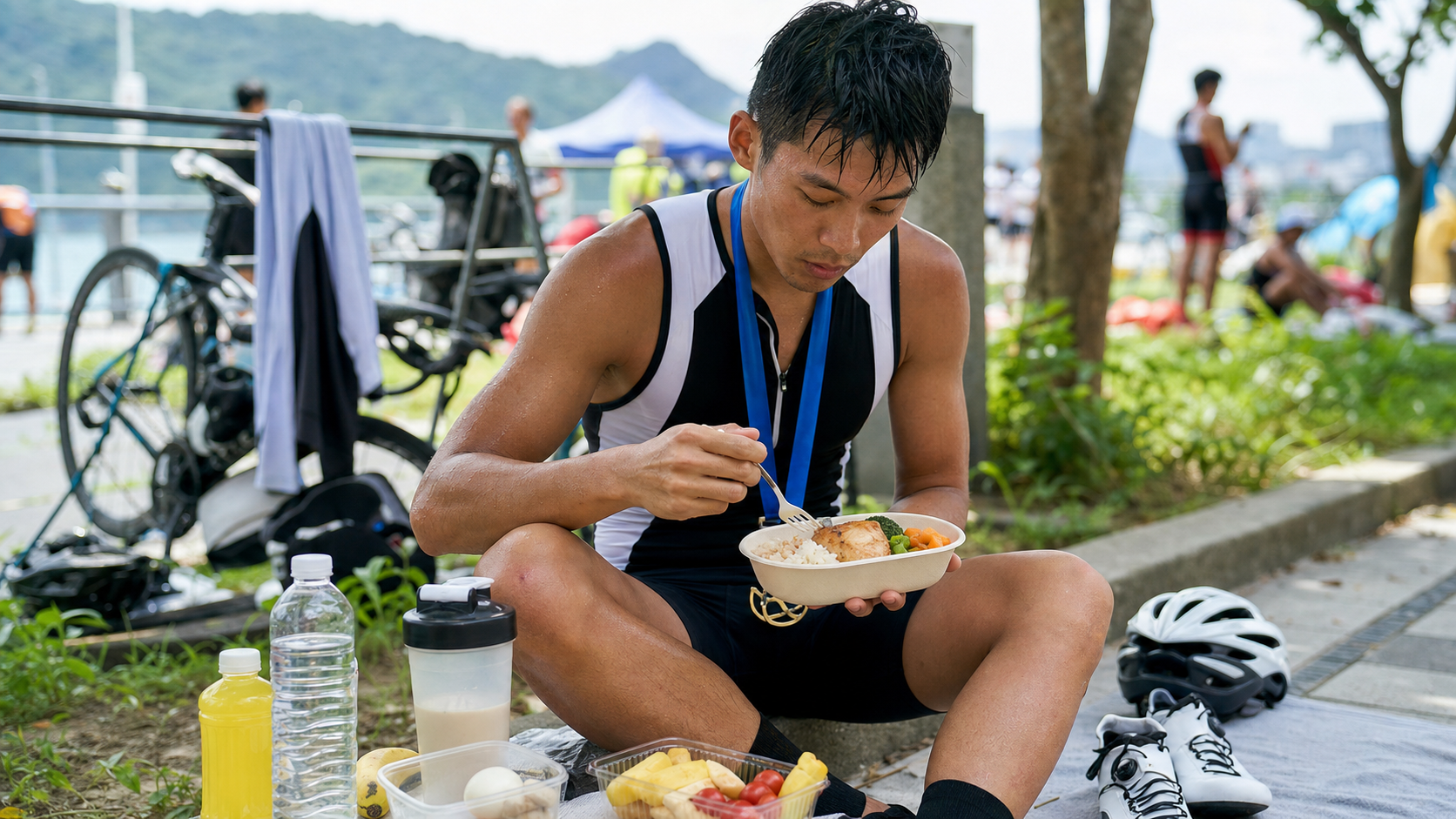
Starting with a Day After Crashing
I once coached an amateur triathlete—let’s call him A-Kai. One day, he did a 3.5-hour long climbing ride on Yangjin Highway. When he got home, he collapsed onto the sofa, paired a bubble tea with a bag of potato chips, and “rested” like that for the entire afternoon. He figured he’d taken in sugar and salt, so he should be fine. But the next morning, during his scheduled tempo run, his pace dropped by nearly 30 seconds per kilometer, his legs felt like lead, and his heart rate was 8 to 10 bpm higher at the same pace. He looked at me, baffled, and asked: “Coach, I did eat something—why am I still this exhausted?”
I’ve heard this question hundreds of times over the past 15 years. The answer usually isn’t “whether you ate,” but “what you ate, when you ate it, and how much.” The moment you cross the finish line, the race or workout is only half done; the other half is quietly completed over the next few hours—and even into the next morning—through recovery nutrition. How you treat your body after the finish line directly determines your form for the next event, the quality of next week’s training, and whether fatigue accumulates into overtraining or even injury.
In this article, I want to lay out post-race recovery nutrition clearly and practically. We’ll start with the three pillars—glycogen replenishment, protein repair, and fluid & electrolytes—paired with the fueling schedule I actually use with my athletes, and finish with an actionable checklist you can follow directly, tailored to your level. Taiwan’s climate, eating-out environment, and riding terrain all have their own particularities, and I’ll weave those local contexts in as well.
Let me start with one concept to carry with you as you read: Recovery nutrition isn’t a “supplement”—it’s part of training. Every hour you put into your training plan loses some of its benefit if it isn’t matched with proper recovery.
Why Post-Finish-Line Nutrition Matters So Much
What Happens to Your Body After the Finish Line
When a high-intensity or long-duration effort ends, your body is actually in a fairly “rough” state:
- Muscle and liver glycogen are heavily depleted: Glycogen is the body’s stored form of carbohydrates and the primary fuel for moderate-to-high-intensity exercise. A long ride or a full marathon can push muscle glycogen nearly to empty.
- Muscle fibers sustain micro-damage: Especially in activities with eccentric contractions (downhill running, weight training), muscles develop micro-tears. This is the starting point for getting stronger later, but right now, they need raw materials to repair.
- Heavy sweating causes fluid and electrolyte loss: In Taiwan’s muggy, humid summers, losing one to two liters of sweat per hour isn’t an exaggeration, along with electrolytes like sodium, potassium, chloride, and magnesium.
- Inflammation and oxidative stress rise; immunity temporarily drops: This is why many people tend to catch a cold after a big race.
These conditions don’t magically fix themselves—they need “raw materials.” Carbohydrates replenish glycogen, protein provides amino acids for repair, and fluid and electrolytes restore fluid balance. Whether you supply them, how much, and how promptly, determines the slope of your recovery curve.
I often use this analogy with my athletes: After exercise, your body is like a convenience store that just closed after being cleaned out by customers. The shelves are empty (glycogen depleted), some equipment is broken and needs fixing (muscle micro-damage), and the store is stuffy and short on water (dehydration and electrolyte loss). Recovery nutrition is the restocking truck—the earlier and more systematically you restock, the more smoothly you can open for business the next morning. Conversely, if you wait until late at night and haphazardly shove a few boxes onto the shelves, opening the store the next day will inevitably be chaotic and sales will suffer. That’s why “how you eat after the finish line” matters just as much as “how hard you train”—and even more so during a dense race season.
The Over-Mythologized—and Over-Dismissed—“Golden Window”
Many people have heard of the “30-minute golden window after exercise.” This concept has merit, but it’s also often misunderstood, and I want to help you recalibrate it.
Where it holds true: Right after exercise ends, the GLUT4 transporter proteins on muscle cell membranes—responsible for moving glucose into cells—are at their highest activity, and muscles are also most insulin-sensitive. During this period, carbohydrate intake is indeed most efficient for glycogen replenishment. Research generally agrees that the first 2 to 4 hours after exercise are the fastest period for glycogen resynthesis.
Where it’s often misunderstood: If you’ve just done a routine workout and have more than 24 hours before your next session, then whether you refuel within 30 minutes doesn’t make that dramatic a difference—as long as your total carbohydrate and protein intake for the day is sufficient, glycogen will eventually be restored.
So I usually tell my athletes this: The importance of the golden window is proportional to how soon you need to exercise again. If you race in the morning and have to go again in the afternoon or early the next day (multi-day events, back-to-back training, triathlon discipline transitions), then this window is critical, and you must race against the clock. If you finish a long weekend ride and have two or three easy days ahead, then take it easy—focus on “total daily intake” rather than “every minute counts.”
A Table to See How “Context Determines Strategy”
I’ve organized common exercise scenarios and their corresponding recovery urgency into this table. First, find which category you fall into, and the strategies below will have direction:
| Scenario | Time Until Next Session | Golden Window Urgency | Primary Strategy |
|---|---|---|---|
| Weekend long ride, easy days ahead | 24+ hours | Low | Just hit total daily intake; regular meals plus snacks |
| Hard weekday session, training again tomorrow | ~12–24 hours | Medium | Get carbs and protein in within 4 hours post-session |
| Morning ride, second session in the afternoon | 4–8 hours | High | Refuel aggressively immediately; every 30 minutes |
| Multi-day event (e.g., island tour, stage race) | 8–16 hours, consecutive days | Extremely high | Systematic fueling; calculate both glycogen and electrolytes precisely |
| Triathlon discipline transitions (swim-to-bike, bike-to-run) | Minutes to tens of minutes | In-race fueling level | This falls under “in-race nutrition”—a separate matter |
The core message this table conveys is: There’s no one-size-fits-all post-race fueling—only fueling that fits your current situation. A weekend recreational rider and a rider on day three of an island tour have vastly different recovery strategies. Knowing which box you’re in prevents both excessive anxiety and excessive carelessness.
Pillar One: Glycogen Replenishment (Carbohydrates)
How Much Carbohydrate Do You Actually Need?
This is the most frequently asked question, and the area where most people fall short. Based on sports nutrition research and international guidelines, if you want to quickly replenish glycogen after exercise (especially when you need to perform again within a few hours), the recommended intake rate is approximately:
1.0 to 1.2 grams of carbohydrate per kilogram of body weight per hour, consumed within the first 2 to 4 hours after exercise. It’s recommended to split this into smaller doses every 30 minutes or so, rather than consuming it all at once.
Here’s a breakdown into concrete numbers—this is the table I actually send to my athletes:
| Body Weight | Hourly Carb Target (1.0–1.2 g/kg/hr) | Recommended Total Range for First 4 Hours | Real-Life Reference |
|---|---|---|---|
| 55 kg | ~55–66 g/hour | ~220–264 g | 1 bowl of white rice ≈ 60 g carbs |
| 65 kg | ~65–78 g/hour | ~260–312 g | 1 medium banana ≈ 27 g |
| 75 kg | ~75–90 g/hour | ~300–360 g | 1 slice of toast ≈ 15 g |
| 85 kg | ~85–102 g/hour | ~340–408 g | 1 bottle of 600ml sports drink ≈ 35 g |
Seeing these numbers, many athletes’ first reaction is, “That’s way too much, right?” Yes, and that’s exactly the point—most people consume far less carbohydrate after a race than this. A banana plus a sports drink gives you roughly 60 grams, which for a 70 kg person doesn’t even reach the first hour’s target.
One important note: the high-rate “aggressive rapid replenishment” approach in the table above is designed for situations where you need to compete again within a short timeframe (multi-day events, or a hard session the next day). If you’re just doing regular training and have easy days ahead, there’s no need to force yourself up to that upper limit—just make sure your total daily carb intake is adequate, with normal meals plus snacks. Give a range, not false precision—your appetite, gut tolerance, and training schedule will all influence where you ultimately land.
Practical Details for Carb Replenishment
Which carbs to choose? In this special post-race window, I’m actually less insistent on the “low glycemic index, whole foods” approach. When exercise has just ended and you need rapid replenishment, moderate-to-high glycemic index (GI) carbs are actually more beneficial, because they quickly raise blood sugar and insulin, accelerating glycogen synthesis. White rice, white toast, bananas, sports drinks, cereal, sweet potatoes, and potatoes are all good choices. Once you’re back to daily life, you can return to whole foods and balanced eating.
Liquid or solid? If your appetite is poor right after racing (common in hot conditions), start with liquids: sports drinks, sweetened soy milk, congee, or fruit smoothies are easier to get down. Once your stomach settles, move on to solid meals.
Does adding protein to carbs have a synergistic effect? Yes. Research shows that when you can’t reach the maximum carb intake rate (e.g., you simply can’t eat that much), adding some protein can help you achieve similar glycogen synthesis with less carbohydrate. So the “carbs + protein” combination is a more practical and executable strategy for most amateur athletes.
A common misconception about “glycogen”: Studies have found that when consuming very large amounts of carbs (e.g., the extremely high dose of 10 g per kg body weight), liver glycogen can be replenished quickly, but muscle glycogen replenishment actually has its physiological ceiling—you can’t infinitely accelerate it by force-feeding. This gives us two practical takeaways: first, don’t buy into the “one massive intake” myth—splitting into regular doses is more efficient; second, complete muscle glycogen replenishment inherently takes time (often 20 to 24 hours or more), so carb intake the next day is just as important as the immediate post-race window. Don’t think you’re done after those first few hours.
Local Taiwanese Post-Race Carb Options
Taiwan’s advantage is the convenience of eating out and one of the highest convenience store densities in the world, making post-race replenishment very accessible. Options I often recommend to athletes:
- Convenience store options: Onigiri (rice balls), sweet potatoes, bananas, unsweetened or sweetened soy milk, sports drinks, tea eggs (bonus protein), and cereal with milk.
- Street food stalls: A bowl of braised pork rice (lu rou fan) or chicken rice (carbs + protein in one go), rice noodle soup, or sliced noodles.
- Beverages: If you really have no appetite after the race, a half-sugar milk tea or sweetened soy milk can still get some carbs and protein in.
Pillar Two: Protein Repair
How Much Protein After a Race
The amino acids from protein are the raw materials for repairing damaged muscle fibers and triggering muscle protein synthesis. According to sports nutrition research, a single post-exercise intake of approximately 0.25 to 0.4 grams of protein per kilogram of body weight effectively stimulates muscle protein synthesis; multiple studies place the optimal single dose around 0.3 g/kg, with synthesis rates beginning to plateau around 0.25 g/kg.
Converted into concrete numbers:
| Body Weight | Post-Race Single Protein Target (0.25–0.4 g/kg) | Food Reference |
|---|---|---|
| 55 kg | ~14–22 g | 2 whole eggs ≈ 12 g |
| 65 kg | ~16–26 g | 1 chicken breast (100 g) ≈ 23 g |
| 75 kg | ~19–30 g | 1 tub of unsweetened Greek yogurt ≈ 15–17 g |
| 85 kg | ~21–34 g | 1 scoop of whey protein powder ≈ 20–25 g |
For most people, getting 20 to 30 grams of quality protein in your post-race meal lands you in the ideal range. Quality protein refers to sources with sufficient leucine and a complete amino acid profile, such as eggs, dairy, whey, lean meat, fish, and soy products.
Practical Protein Points
- Don’t just binge on protein in the post-race meal; spreading it throughout the day matters more: Research consistently shows that distributing your daily protein total into doses of about 0.25–0.4 g/kg per meal stimulates synthesis more consistently than concentrating it in a single meal. Rather than forcing down a huge steak after the race, have one serving post-race and then one serving at each subsequent meal and snack over the next few hours.
- Eat carbs and protein together: As mentioned earlier, the combination benefits both glycogen replenishment and muscle repair. This is why a classic Taiwanese combo like “braised pork rice + braised egg + blanched greens” is actually an excellent post-race meal.
- A slow-digesting protein before bed: If your race or training is in the evening, a serving of slower-digesting protein before bed (e.g., milk, yogurt, casein) supports overnight repair.
Pillar Three: Hydration and Electrolytes
Taiwan’s Humid Heat Is a Hidden Recovery Killer
This pillar is especially important in Taiwan. In summer, temperatures routinely exceed 32°C with humidity at 70% to 90%. Sweat doesn’t evaporate well, evaporative cooling is inefficient, and dehydration after a long-distance event is often more severe than you’d expect. Dehydration doesn’t just affect performance in the moment—it also slows post-race recovery: blood becomes thicker, nutrient transport slows, and thermoregulation declines.
How Much Water and How to Replenish
The most practical method is weighing yourself before and after exercise:
- Each kilogram lost after exercise represents roughly 1 liter of fluid loss.
- It’s recommended to replenish 1.25 to 1.5 times the weight lost (because some of the water you drink is lost through urination), taken in divided doses rather than chugging it all at once.
| Post-Race Weight Loss | Recommended Fluid Intake (~1.25–1.5x) |
|---|---|
| 0.5 kg | ~625–750 ml |
| 1.0 kg | ~1,250–1,500 ml |
| 1.5 kg | ~1,875–2,250 ml |
| 2.0 kg | ~2,500–3,000 ml |
Another simple indicator is urine color: when well-hydrated, it should be pale yellow (like diluted lemon juice); if it’s dark yellow or amber, you haven’t replenished enough.
Don’t Just Drink Plain Water—Electrolytes Matter Just as Much
If you only chug plain water after sweating heavily, you might actually dilute the sodium in your blood even further. In severe cases, this can cause hyponatremia (headache, nausea, confusion, and in extreme situations, it can be life-threatening). So after heavy sweating, you must replenish electrolytes along with fluids—especially sodium.
Practical approach:
- Sports drinks are the most convenient option, containing sodium, potassium, and carbs—covering multiple needs at once.
- Eating a “saltier” post-race meal also helps; Taiwan’s noodle soups, miso soup, and savory rice porridge can all help replenish sodium.
- Electrolyte tablets or powders are suitable for those who sweat excessively or compete in multi-day events.
Combining the Three Pillars: A Complete Post-Race Replenishment Timeline
Now that the concepts are covered, I know what you really want is “so what exactly should I do.” This is the post-race replenishment timeline I actually give to my athletes—you can follow it directly:
| Time | What to Do | Specific Example (for a 70 kg athlete) |
|---|---|---|
| 0–30 minutes after finish | Replenish liquid carbs + electrolytes first to relieve thirst and nausea | 500–600ml sports drink + 1 banana (about 60g carbs) |
| 30–60 minutes | Have the first “carb + protein” meal or snack | Chocolate milk or sweetened soy milk + rice ball + tea egg |
| 1–2 hours | If racing again, continue replenishing carbs in intervals | About 20–30g carbs every 30 minutes (oatmeal, sweet potato) |
| 2–4 hours | A full meal, carb-focused with adequate protein | Braised pork rice + braised egg + blanched vegetables + miso soup |
| Before bed | Have a slow-digesting protein to support overnight repair | A glass of warm milk or a container of unsweetened yogurt |
| Next morning’s breakfast | Continue with high carbs to fully top off glycogen | Sweet potato + egg + milk + fruit |
The spirit of this table is: address the most urgent needs first (fluids, electrolytes, fast carbs), then handle repair (protein), and finally maximize recovery through total daily intake. You don’t need to execute every box perfectly—nailing the first two boxes and the main meals already puts you ahead of most people.
Comparing Common Post-Race Recovery Drinks
Many athletes ask me “what should I drink after a race.” Rather than pushing specific products, I prefer to walk them through the “ingredient logic.” This table compares several options easily available in Taiwan, so you can judge for yourself:
| Drink Option | Carbs | Protein | Electrolytes | Best Timing |
|---|---|---|---|---|
| Sports drink (600ml) | Medium (about 35g) | None | Yes (sodium, potassium) | First thing after the finish line, to quench thirst and replenish sodium |
| Chocolate milk (290ml) | Medium-high | Medium (about 8–9g) | Small amount | The carb + protein combo at 30–60 minutes |
| Sweetened soy milk (400ml) | Medium | Medium (about 12g) | Small amount | Liquid replenishment when you have no appetite post-race |
| Whey protein + fruit | Depends on pairing | High (about 20–25g) | Small amount | When you need precise protein intake, quick and convenient |
| Unsweetened yogurt + fruit | Medium | Medium (about 15g) | Small amount | Slow-digesting protein before bed |
| Plain water | None | None | None | Only suitable as a supplement, never the main event |
You’ll notice that no single drink can fully cover all three needs at once. That’s exactly why I emphasize “combination” rather than “finding one magic drink.” Sports drinks handle sodium and fast carbs, milk or soy milk brings in protein, and meals top off the total—each doing its job is what smart recovery looks like.
Common Mistakes and How I Help Athletes Fix Them
After coaching athletes for so many years, post-race recovery mistakes are highly repetitive. Here are the most common ones I’ve seen, along with the corresponding fixes:
Mistake 1: Only Replenishing Water, Not Carbs and Electrolytes
Many people only focus on “quenching thirst” after a race and chug plain water. As mentioned earlier, this not only fails to restore glycogen but also carries the risk of diluting blood sodium. Fix: The first thing after a race should be a sports drink or electrolyte-containing liquid carbs, with plain water as a supplement rather than the main event.
Mistake 2: Not Eating Enough Carbs, Held Back by “Fear of Fat”
This is the most common issue I’ve seen, especially among those with weight anxiety. They train hard and burn a huge amount of energy, but after the race they only dare to eat a little salad and chicken breast, leaving carbs severely insufficient. The result is glycogen never gets restored, next day’s training quality collapses, and long-term it can even affect hormones and immunity. Fix: I’ll directly do the math with them—“You rode for three hours today and burned this much glycogen. At this point, white rice isn’t your enemy; it’s the capital that lets you train again tomorrow.” I help them understand that post-race carbs are an “investment,” not “indulgence.”
Mistake 3: “Rewarding Yourself” with Bubble Tea and Junk Food
A-Kai started out this way. Bubble tea and potato chips do have sugar and salt, but they have almost zero protein and low nutritional density—they don’t provide the raw materials needed for repair. Fix: An occasional treat is fine, but don’t let it replace a real recovery meal. If you want bubble tea, choose one with fresh milk and treat it as part of your carb intake, but you still need to make up the protein and vegetables in your main meals.
Mistake 4: Waiting Too Long Before the First Bite
Some people are busy taking photos, chatting, and packing up gear after a race, and two or three hours pass before they think about eating. Especially if they have another race the next day, this wastes the most efficient window. Fix: Treat “post-race replenishment” as part of the process. Prepare bananas and sports drinks in your bag before the race, and start executing the moment you cross the finish line.
Mistake 5: Ignoring Sleep—the “Ultimate Recovery Tool”
No matter how perfect your nutrition is, insufficient sleep resets everything to zero. Sleep is the golden window for growth hormone secretion and tissue repair. Fix: Go to bed early and sleep enough on race night; avoid staying up scrolling your phone late into the night from post-race excitement. Recovery nutrition and sleep are partners—you can’t have one without the other.
Actionable Advice for Readers at Different Levels
Everyone’s training volume and goals differ, so I’ve divided the advice into three tiers—just find where you fit.
Weekend Warriors / Beginners
You might exercise one to three times a week at moderate intensity, with health and enjoyment as your main goals.
- Keep it simple: Eat a balanced meal after the race (with rice, meat, and vegetables), and just follow the “carb + protein” principle.
- Focus on fluids and electrolytes: Taiwan’s weather is hot, and this is the most overlooked area—one sports drink solves most of the problem.
- Don’t obsess over the golden window: You’ll be resting for the next few days anyway; hitting your total daily intake matters more than racing against the clock.
Advanced Enthusiasts / Those with a Structured Plan
You train four to six times a week with a clear training cycle and are pursuing progress.
- Start quantifying: Aim for 0.3 g/kg of protein post-race (about 20–30g), adjust carbs based on training load, and replenish aggressively after hard sessions.
- Make the most of the 4-hour window: After long-distance or high-intensity training, replenish carbs in intervals during the first 4 hours so your next day’s session doesn’t suffer.
- Build a fixed routine: Turn post-race replenishment into a habit, and have easily accessible supplies ready.
Race Athletes / Multi-Day Events and Back-to-Back Training
You’re facing consecutive days of racing or training, where recovery speed is your competitive edge.
- Maximize the golden window: Immediately after the finish, execute aggressive carb replenishment at 1.0–1.2 g/kg/hr, every 30 minutes.
- Calculate electrolytes precisely: Sodium loss accumulates over multi-day events, so electrolyte replenishment needs to be systematic—don’t wait until cramping to address it.
- Monitor recovery markers: Morning heart rate, body weight, urine color, and subjective fatigue are all clues for judging whether recovery is on track.
How to Know If You’ve Recovered Enough: Four Simple Indicators
After all this talk about “what to replenish,” you might ask: how do I know if I’ve replenished enough? I teach my athletes four indicators that cost nothing and can be tracked at home to assess recovery status:
Indicator 1: Morning Resting Heart Rate
Measure your resting heart rate every morning right after waking up, before getting out of bed. If one morning it’s 5 to 10 bpm or more above your usual baseline, it usually means your body hasn’t fully recovered—possibly due to dehydration or accumulated fatigue. When this happens, you should lighten that day’s training and be more aggressive with recovery nutrition.
Indicator 2: Morning Body Weight
Weigh yourself at a fixed time in the morning, after using the restroom, on an empty stomach. If your weight is noticeably low the day after a race or heavy training session (dropping a kilo or two and not quickly returning), it is often a sign of unreplenished dehydration, not that you’ve “lost weight.” At this point, rehydrating with fluids and electrolytes is the top priority.
Indicator 3: Urine Color
As mentioned earlier, pale yellow indicates adequate hydration, while dark yellow or amber means you’re still dehydrated. This is the most intuitive and immediate self-check, and you can observe it at any time throughout the day.
Indicator 4: Subjective Fatigue and Sleep Quality
Your body’s sensations are actually quite honest. If you feel heavy-legged, lack motivation, sleep poorly, or have a poor appetite for several consecutive days, it’s often a warning sign of accumulating recovery debt. What you need at this point is not harder training, but more serious recovery—eat enough, sleep enough, and schedule a full rest day when necessary.
Treat these four indicators as your “recovery dashboard,” and you’ll gradually develop a keen awareness of your body that’s more reliable than any expensive wearable device.
A Complete Case Study: A-Kai Before and After Adjustments
To help you feel the difference recovery nutrition makes more concretely, I’ve compiled A-Kai’s situation before and after adjustments into a comparison table (the data comes from his own training log, not laboratory data, and is for conceptual reference only):
| Item | Before Adjustment (Casual Fueling) | After Adjustment (Systematic Recovery) |
|---|---|---|
| Time to first food intake post-race | Often delayed 2–3 hours | Within 15 minutes after finishing |
| Carbohydrate intake 4 hours post-race | Low, mostly snacks | Systematically replenished based on body weight |
| Post-race protein | Barely supplemented | Approximately 0.3 g/kg per meal |
| Fluid and electrolyte replenishment | Plain water only | Sports drinks + savory meals |
| Heart rate at same pace the next day | Elevated by about 8–10 bpm | Returned to near baseline |
| Subjective feeling during next day’s training | Legs felt like lead, no motivation | Noticeably lighter, able to complete the workout |
The row that struck A-Kai the most was “Heart rate at same pace the next day.” He saw with his own eyes that at the same pace, his heart rate dropped by nearly 10 bpm after proper recovery, and that feeling of being “charged up” returned. The effects of recovery nutrition aren’t mystical—they’re honestly reflected in your data and how you feel.
FAQs Most Frequently Asked by Athletes
Q: Do I have to buy whey protein and supplements?
A: Not necessarily. Whole foods (eggs, milk, meat, soy products) can fully meet your protein needs. The advantage of whey protein is convenience, easy absorption, and being easy to consume when you have no appetite post-race, but it’s a “tool,” not a “necessity.” If you’re on a budget, rely on whole foods—they work just as well.
Q: Can I drink alcohol to celebrate after a race?
A: Alcohol interferes with glycogen replenishment, affects fluid balance and sleep quality, and inhibits muscle protein synthesis. If you really want to have a drink, it’s best to first get your fluids, carbohydrates, and protein replenished properly, then drink in moderation—don’t chug on an empty stomach.
Q: I have diabetes/high blood pressure. Will post-race carbohydrate intake be a problem?
A: This requires individualized assessment. Blood sugar management for diabetics and sodium intake for those with hypertension are closely tied to your medications and condition, so general advice doesn’t apply. Be sure to discuss a post-exercise fueling plan suitable for you with your primary care physician or dietitian. With Taiwan’s easily accessible National Health Insurance, metabolic, cardiology, or nutrition consultation clinics can help you design a personalized plan—don’t just improvise on your own.
Q: How can vegetarians get enough post-race protein?
A: Soy products (soy milk, tofu, dried tofu, tempeh), edamame, chickpeas, quinoa, and nuts—when combined properly—can still provide 20–30 grams of quality protein. A single source of plant protein may have an incomplete amino acid profile, so diverse combinations are key.
Q: What if I have no appetite at all after a race?
A: This is common in hot environments. Start with liquids—sports drinks, smoothies, sweetened soy milk, or congee are all easier to get down than solid food. Once your core temperature drops and your stomach settles, your appetite usually returns. You can also cool down in a shaded area or take a quick rinse, which often improves appetite.
Q: Do I need anti-inflammatory supplements (like high-dose fish oil or large amounts of antioxidants) to speed up recovery?
A: A generally balanced diet provides sufficient antioxidant and anti-inflammatory nutrition. A special note: post-exercise inflammation is actually one of the signals that your body is adapting and getting stronger. Deliberately using high-dose antioxidant supplements to “suppress” it may actually interfere with training adaptation. Rather than spending money on a pile of supplements, focus on the fundamentals—carbohydrates, protein, fluids, electrolytes, and sleep. If you have specific needs, consult a dietitian before deciding.
Q: Do ice baths, massage, and compression recovery work? How do they compare to nutrition?
A: These methods may help with “subjective feeling” and relieving soreness, and moderate use is fine. But they’re “icing on the cake,” not “fuel in the tank.” If you haven’t even gotten the basics of carbohydrates, protein, and fluids right, no amount of expensive recovery equipment will save you. The order is always: first build a solid foundation with nutrition and sleep, then consider other recovery methods if you have the capacity.
Q: How soon after a race can I train normally?
A: This depends on the intensity and duration of the event, your recovery status, and whether there’s significant muscle damage or soreness. Using the four indicators mentioned earlier (morning heart rate, body weight, urine color, subjective fatigue) will be more accurate than “counting days.” If soreness or fatigue lingers, or you experience unusual persistent pain, don’t push through—rest when you need to, and seek medical evaluation if necessary.
Conclusion: Make Recovery Part of Your Training
Back to A-Kai’s story. Later, I helped him redesign his post-race protocol: immediately after crossing the finish line, a sports drink and a banana; within 30 minutes, a chocolate milk and an onigiri; two hours later, a proper meal of braised pork rice with blanched vegetables and miso soup; and a glass of milk before bed. Two to three weeks later, his pace and heart rate during next-day training stabilized noticeably, and that “lead-legs” feeling disappeared. He told me: “Turns out I wasn’t training too little before—I just wasn’t recovering properly.”
I want to share that sentiment with every athlete who trains seriously. Every drop of sweat you shed on your workout plan deserves to be caught by proper recovery nutrition. Glycogen replenishment, protein repair, fluids and electrolytes—these three pillars don’t require you to become a nutrition scientist. Just remember the principles, build the habits, and make them a natural reaction after crossing the finish line.
The finish line isn’t the end—it’s the starting point for your next great performance. Starting with today’s training, take good care of yourself after the finish.
This article is educational content and cannot replace individual diagnosis and treatment advice from a physician, physical therapist, or dietitian. If you have diabetes, high blood pressure, heart disease, or other chronic conditions, or are taking medication, be sure to consult your primary care physician or a registered dietitian for individualized assessment of your post-race nutrition and exercise plan.
References
- Regulation of Muscle Glycogen Repletion, Muscle Protein Synthesis and Repair Following Exercise (PMC): https://pmc.ncbi.nlm.nih.gov/articles/PMC3905295/
- Postexercise muscle glycogen resynthesis in humans (Journal of Applied Physiology): https://journals.physiology.org/doi/full/10.1152/japplphysiol.00860.2016
- Maximizing Post-exercise Anabolism: The Case for Relative Protein Intakes (Frontiers in Nutrition / PMC): https://pmc.ncbi.nlm.nih.gov/articles/PMC6746967/
- Carbohydrate intake of 10 g/kg body mass rapidly replenishes liver, but not muscle glycogen (The Journal of Physiology): https://physoc.onlinelibrary.wiley.com/doi/10.1113/JP289115
Related Reading
- Post-Race Recovery Nutrition: An Eating Plan from the Finish Line to 48 Hours
- The Complete Guide to Post-Race Recovery Nutrition: A Nutritional Repair Plan from the Finish Line to Your Next Race
- Pre-Race Nutrition Strategy: The Complete Guide to Glycogen Loading and Gut Management from One Week Out to the Starting Line
- Running Nutrition Science: Carbohydrate Loading, Race-Day Fueling, and Recovery Eating
CT暗黑廚房) 車友必備 宇宙無敵鮮蚵湯 幫助訓練恢復 天然食補 好市多 超肥鮮蚵 破PR
7 年前
FTL 與 SYB 車隊專訪 西進武嶺 實用攻略分享! 2小時 如何練?!你不知道的眉角!新手準備武嶺必看 EP1 | 實力派女車友 | 精華版 | 公路車 | CTYeh
4 年前
西進武嶺 免費訓練分析服務 Intervals | 練不夠還是練過頭?你哪一種類型選手?AI模型告訴你! | 備戰神器 | 公路車 訓練 | CT Yeh
4 年前
Live) 備戰2019彰化經典百K 賽前攻略 (已完賽請看新影片
7 年前
水金九不厭五分 10度寒流冷到不願停!feat. 卡卡 / 公路車 / CT Yeh
6 個月前
西進武嶺 自製新版AI配速表產生器 x 賽前攻略 抱佛腳! 沒有功率計也可以產生配速表嗎?有什麼其他眉角賽前要注意的呢? | 西進武嶺 / 東進武嶺 KOM 攻略 | 公路車 | CT Yeh
4 年前
崇越盃武嶺冠軍高手 賽前JJSC 群峰會精華!對應大數據分析,會有落差嗎?/ feat. JJSC中部公路車約騎 /公路車 / CT Yeh
2 年前
#公路車 #西進武嶺 配速配瓦實驗 坡度分析 四小時內攻略 建大盃 NeverStop #西進武嶺攻略
6 年前