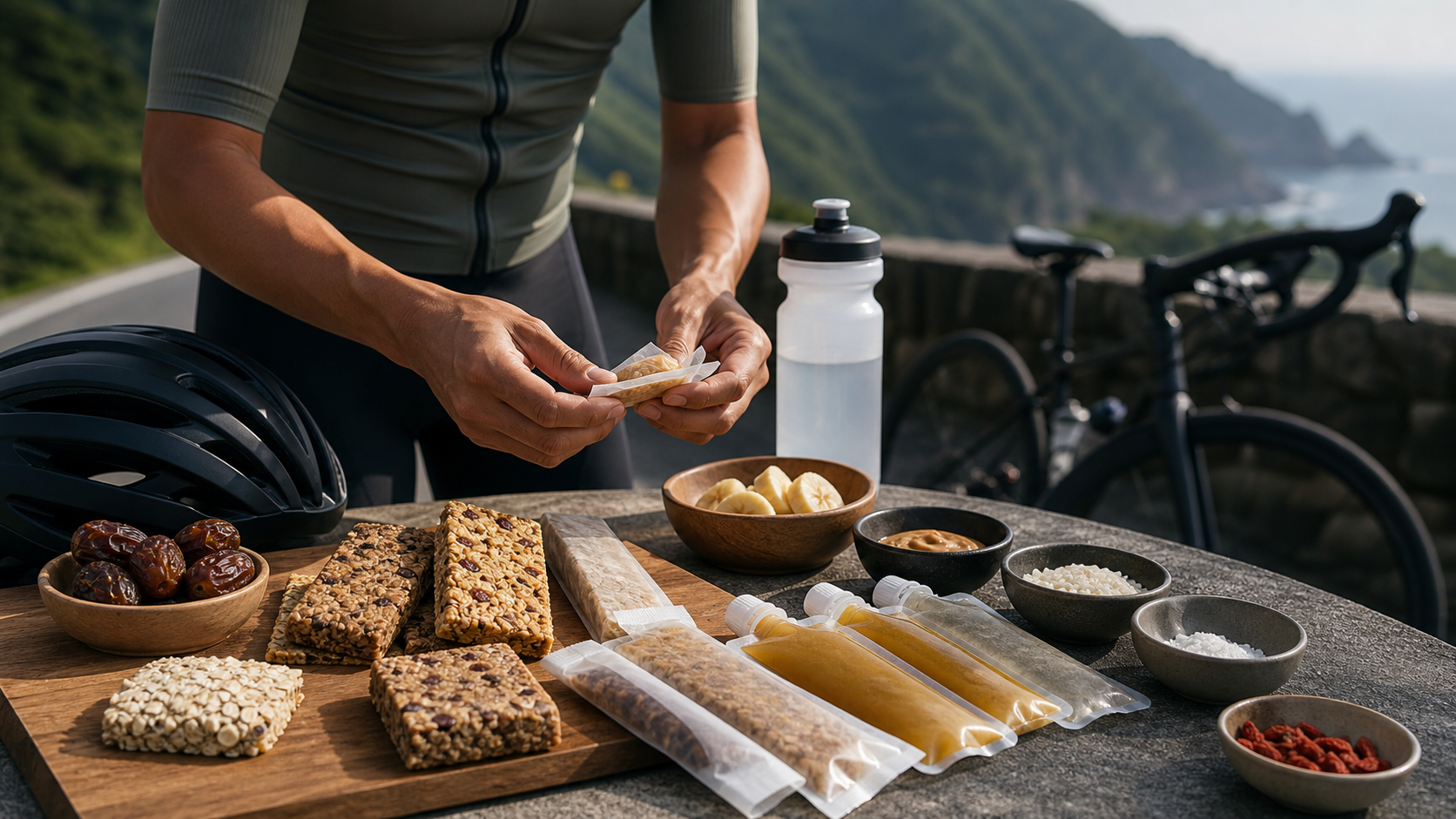
It All Started with a Collapse at the Wuling Aid Station
In all my years coaching athletes, one memory stands out: a recreational cyclist in his early forties—let’s call him A-Hong. He had trained for months for the Wuling ascent from the west side. His fitness was solid, and his power numbers had improved. But on race day, after Cueifeng, he completely “shut down.” It wasn’t his legs that gave out; it was his stomach rebelling. At the finish line, he told me, “Coach, I did exactly what I read online—two energy gels every hour.”
When I asked, I found out he was eating two gels of the same brand and flavor, made entirely of single-source glucose maltodextrin, and washing them down with plain water instead of a sports drink. During over four hours of high-intensity climbing, he had essentially maxed out his intestinal glucose transport channels and kept force-feeding. Gastric emptying slowed, water was pulled into the gut, and the result was bloating, nausea, and the urge to vomit—a condition sports physiologists call exercise-induced GI distress, incredibly common in long-duration endurance sports.
A-Hong’s problem wasn’t “eating too little”; it was “eating the wrong structure.” After that incident, I spent considerable time breaking down energy gels and bars for my athletes. This article is the full version of that explanation: we’ll go from how to read ingredient labels and the science of multiple carbohydrates, all the way to selection logic, and finally give you a few DIY recipes you can make in a Taiwanese kitchen. Whether you’re a weekend rider doing 60 km or a hardcore cyclist preparing for the Twin Towers Challenge or the Tour of East Taiwan, you’ll finish with a framework you can call your own.
Let me state the conclusion first: There is no “best” energy gel, only the fuel that best fits your situation at that moment. Instead of memorizing which brand is good, you need to learn to flip the package over and understand the ingredient label.
Foundational Concepts: What Your Body Burns During Exercise
Carbohydrates Are the Primary Fuel for High-Intensity Exercise
To simplify, the energy sources for exercise are fat and carbohydrates. At low intensity—like an easy ride or a conversational jog—fat supplies a higher proportion of energy. But when intensity ramps up—climbing, chasing, race pace—your body relies more and more on carbohydrates because they “burn fast and deliver quickly.”
The problem is that your body’s glycogen stores (carbohydrates stored in muscles and the liver) are limited, enough for roughly 90 minutes to two hours of moderate-to-high-intensity exercise. Once depleted, you hit the infamous “bonk”: sudden full-body weakness, dizziness, loss of focus, even low mood. That’s why for endurance exercise lasting over an hour, “fueling while moving” becomes the core strategy—you’re continuously adding fuel to the tank before it runs dry.
Why There’s an “Hourly Limit” to Carbohydrate Intake
This is the key point, and where A-Hong went wrong. You might think, “Why not just eat more?” But the body has a bottleneck in absorbing carbohydrates.
After glucose enters the small intestine, it’s mainly transported into the blood by a protein called SGLT1. This pathway gets “congested”—when you consume only glucose or maltodextrin, absorption saturates at around 60 grams per hour. Anything more gets stuck in the gut, pulling water into the intestines, leading to bloating, cramps, and nausea. It’s not that your stomach is “weak”; it’s a physiological ceiling.
Multiple Carbohydrates: The Science of Breaking Through the Ceiling
Sports scientists later discovered something clever: fructose uses a different transport pathway (GLUT5) that doesn’t compete with glucose. So if you consume glucose and fructose together, you’re effectively opening two highways at once, raising total absorption.
Research shows that when glucose and fructose are consumed together, carbohydrate oxidation rates can be about 50% higher than with glucose alone. Moreover, the limiting factor isn’t muscle utilization or gastric emptying, but small intestinal absorption capacity. This is the concept of “multiple transportable carbohydrates.” The classic golden ratio is approximately 2:1 glucose (or maltodextrin) to fructose—for example, in 90 grams per hour, 60 grams of glucose-based carbs fill SGLT1, then add 30 grams of fructose via GLUT5, pushing the total to 90 grams per hour or higher.
Recent studies have explored higher ratios (e.g., 1:0.8) at very high intakes (110–120 grams per hour), but for the vast majority of amateur cyclists, nailing the 2:1 ratio at 60–90 grams per hour already puts you ahead of most people at the aid station.
Don’t Forget Sodium and Water
Riding in a Taiwanese summer means sweating by the bucketload. Sweat contains not just water but also significant electrolytes, especially sodium. Prolonged exercise in heat with water but no sodium can lead to hyponatremia, muscle cramps, and nausea. So when I look at energy gel and bar ingredients, I pay special attention to sodium content (milligrams per serving)—something many overlook but is absolutely critical in Taiwan’s climate.
Breaking Down the Ingredient Label: Energy Gels vs. Energy Bars
Flip the package over and you’ll see a list of terms. Let me walk you through what they actually do.
Common Energy Gel Ingredients
| Ingredient | What It Is | What to Watch For |
|---|---|---|
| Maltodextrin | A polysaccharide made of glucose chains; easily absorbed, low sweetness | Uses the SGLT1 pathway; hits the ceiling quickly if used alone |
| Fructose | A monosaccharide using the GLUT5 pathway | Only delivers the 2:1 benefit when paired with glucose |
| Glucose / Dextrose | The most direct blood sugar source | Fast absorption, rapid blood sugar spike |
| Sodium | Primary electrolyte | Pay attention to content for long summer rides in Taiwan |
| Caffeine | Boosts alertness, reduces fatigue | Sensitive individuals should avoid late afternoon; affects sleep |
| BCAA / Amino Acids | Branched-chain amino acids | Limited evidence of benefit; not essential |
| Citric Acid / Flavorings | For taste, masking sweetness | Can irritate an empty stomach in some people |
The role of energy gels: Fast, potent, easily absorbed. They’re almost pure carbohydrate with low water content (so you need to drink water with them; otherwise, the thick consistency slows gastric emptying). They’re suited for high intensity, quick fueling, and moments when you can’t chew—like mid-climb or during a race surge.
Common Energy Bar Ingredients
| Ingredient Type | Common Sources | Characteristics |
|---|---|---|
| Complex Carbohydrates | Oats, puffed rice, brown rice syrup | Slower release, more satiating |
| Simple Sugars | Honey, dried fruit, syrups | Quick energy |
| Fat | Nuts, coconut, seeds | High calorie density but slows digestion |
| Protein | Whey, soy, nuts | More filling, but a digestive burden at high intensity |
| Fiber | Whole grains, dried fruit | Excess can cause bloating during exercise |
The role of energy bars: Slow, filling, long-lasting. They contain fat, protein, and fiber, digest more slowly, and provide steadier energy. They’re suited for long distances, low-to-moderate intensity, and moments when you have time to chew—like flat sections of a round-island ride or long LSD training. But note: fat, protein, and fiber all slow gastric emptying, so don’t eat energy bars at high intensity, or your digestive system will compete with your muscles for blood flow—guaranteed discomfort.
One Sentence to Remember the Difference
Energy gels are a “first-aid kit”; energy bars are a “packed lunch.” When intensity is high and you need speed, use a gel; when intensity is steady and you have time, eat a bar.
A Step-by-Step Guide to Reading Nutrition Labels
Products sold in Taiwan all have nutrition labels. Here’s a three-step method to quickly evaluate them, so you can decide in 30 seconds at a convenience store or bike shop shelf:
- Check the “Carbohydrates” line: This is the core. How many grams of carbs per serving? Calculate how many servings you’d need to hit your hourly carb target (e.g., 60 grams).
- Look at the first few ingredients: If you only see “maltodextrin, glucose” with no fructose source, it’s a single-carb product that will hit the ceiling at high intakes. Ideally, you want to see glucose-based carbs + fructose (or sucrose, which is itself glucose plus fructose) together.
- Check “Sodium” content: How many milligrams per serving? For long summer rides in Taiwan, I want overall fueling to provide adequate sodium. If a product is very low in sodium, you’ll need to make it up with sports drinks or salt tablets.
Here’s a useful fact: sucrose (table sugar) is one molecule of glucose plus one molecule of fructose, so products containing sucrose inherently have multiple-transportable-carbohydrate properties. That’s why many DIY recipes work well with honey or sugar.
Sweetness Doesn’t Equal Carb Content
Many people assume “if it tastes sweet, it has lots of sugar.” Not necessarily. Maltodextrin has very low sweetness, but it’s real carbohydrate with good energy efficiency; fructose, on the other hand, is relatively sweet. So don’t judge a product’s ability to fuel you by how sweet it tastes—look at the grams on the label. Some people deliberately pick unsweetened gels, yet the carb content is no less.
Practical Methods: A Fueling Logic You Can Follow
Now that the theory is covered, here’s something actionable. The table below is my time-based fueling reference for athletes, giving general direction based on total exercise duration and intensity (values are ranges; adjust based on your body weight and gut tolerance).
Fueling Strategy by Exercise Duration
| Exercise Duration | Recommended Carbs per Hour | Recommended Fuel Type | Water / Electrolytes |
|---|---|---|---|
| < 60 minutes | Usually no extra carbs needed | Plain water is fine | General hydration |
| 60–150 minutes | About 30–60 grams | Primarily energy gels or sports drinks | Sodium-containing sports drink |
| 150+ minutes | About 60–90 grams | Multiple carbs (gel + sports drink), with energy bars interspersed | Enhanced sodium intake |
| Ultra-long (>4–5 hours) | 60–90 grams, needs variety | Alternate gels, bars, real food to avoid monotony | Monitor sodium hourly; consider salt tablets |
“Gut Training”—The Most Underrated Thing
I want to emphasize one concept: your gut can be trained just like your muscles. Your small intestine’s ability to absorb carbohydrates improves when you “eat during exercise” regularly. Many people never fuel during training, then on race day force 90 grams per hour—of course their gut goes on strike.
My approach for athletes: treat long training rides as fueling rehearsals. Use the same gel, the same bar, the same intake you plan for race day, and practice it in training. This has two benefits: first, it trains your gut’s absorption capacity; second, it reveals things like “I’ll feel nauseous by the third pack of this flavor” that you can only learn in practice. Never use untested products on race day—this is an iron rule. I’ve seen too many people try something new out of curiosity and end up with diarrhea on the course.
How to Use Caffeine
Many energy gels contain caffeine (typically 20–100 mg per serving). Moderate caffeine can genuinely help reduce fatigue and improve focus. But two cautions: first, sensitive individuals may experience stomach irritation, and events in the afternoon or evening can disrupt sleep that night (especially since many Taiwanese weekend events end in the afternoon); second, don’t treat caffeinated gels like regular gels and eat them continuously—accumulated doses can cause heart palpitations and shaking. I usually recommend saving caffeinated gels for the latter part of the ride when you need the boost most.
A Real Case Study: Xiao-Mei’s Tour of East Taiwan Fueling Diary
Another example: Xiao-Mei, a woman in her mid-30s who works an office job, weighs about 52 kg. Her goal was to complete the two-day Tour of East Taiwan, roughly 130 km per day with several long climbs. Her previous problem was “feeling dizzy and miserable by afternoon, losing patience with teammates”—a classic sign of under-fueling combined with blood sugar swings.
I calculated a general plan for her: given her weight and intensity, target 50–70 grams of carbs per hour for long rides (since she’s smaller and her gut tolerance needed to be built gradually, I didn’t start her at 90). We broke the day into segments:
| Time Segment | Situation | Fueling Content (approx. per hour) | Notes |
|---|---|---|---|
| First 0–1 hour | Just warming up, gut still waking up | Sports drink primarily, about 30 grams carbs | Start small to get the gut going |
| Flat cruising | Moderate intensity, time to eat | Half a homemade oat bar + sports drink, about 60 grams carbs | Solid food, more satiating |
| Long climbs | High intensity, breathing hard, no time to chew | Multiple-carb energy gel + water, about 60 grams carbs | Liquid for fast absorption, no extra gut burden |
| Afternoon fatigue | Sleepy, attention dropping | One caffeinated energy gel | Only caffeinated gel of the day |
| Before finish | Nearing the end | Sports drink for water and sodium | Don’t force solid food |
After putting this into practice, Xiao-Mei’s feedback was: “The afternoon dizziness and irritability are gone. Turns out I wasn’t bad-tempered—I was hungry and my blood sugar was dropping.” See? Get fueling right, and even your mood stabilizes—huge for team morale in multi-day events.
Glycemic Response and the “Blood Sugar Rollercoaster”
Many people don’t realize that the timing and portion size of fueling cause more problems than the “total amount.” Slamming a large, highly concentrated gel at once spikes blood sugar rapidly; the body releases insulin to bring it down, and half an hour later you crash even lower than before—this is reactive hypoglycemia (the blood sugar rollercoaster), causing sudden weakness.
The fix is simple: small amounts, frequently, on a regular schedule. Instead of one big gel per hour, break it into small portions every 20–30 minutes. During exercise, because muscles are continuously using glucose and exercise itself promotes glucose uptake into muscles (not entirely insulin-dependent), blood sugar swings are milder than at rest. But “slamming too much at once” remains a common failure point.
Solid, Gel, Liquid: How to Combine the Three Forms
I often categorize fueling into three forms, each with its place:
| Form | Example | Absorption Speed | Satiety | Best Used When |
|---|---|---|---|---|
| Liquid | Sports drink | Fast | Low | Baseline hydration and carbs throughout; hot weather |
| Gel | Energy gel | Fast | Low | High intensity, climbs, no time to chew |
| Solid | Energy bar, rice ball, banana | Slow | High | Low-to-moderate intensity, long duration, wanting the satisfaction of “actually eating” |
Smart fueling alternates among all three: liquid as the steady baseline, gels for high intensity, and solids when you ease off for flavor variety and satiety. Eating only one form the entire time not only fatigues the gut but also quickly bores you mentally to the point you can’t eat—especially noticeable in ultra-long distances. Many people don’t lack food; they “feel sick at the sight of another gel.”
Common Mistakes and Fixes
This section is the meat, because the mistakes I see are almost always the same. Check whether you’ve fallen into any of these.
Mistake 1: Eating Only Single-Source Glucose Carbs with Plain Water
This is A-Hong’s mistake from the opening. Fix: choose multiple-carb products (ingredient list shows both glucose/maltodextrin and fructose), or at least pair “energy gel + sugar-containing sports drink” so both transport pathways work together. Also drink enough water—a gel that’s too concentrated without water slows gastric emptying.
Mistake 2: Waiting Until You’re Hungry or Tired to Eat
Fueling is “preventive,” not “firefighting.” By the time you feel hungry or weak, your blood sugar is already dropping, and eating then is too late. Fix: set a timer (a small amount every 30–45 minutes) and eat regularly to maintain stable blood sugar, rather than big swings.
Mistake 3: Eating Energy Bars at High Intensity
Chewing a nut bar while your heart rate is 170 on a climb? Your digestive tract is fighting your legs for blood flow—guaranteed bloating. Fix: segment your fueling by intensity—gels for high intensity, bars when you ease off or on flats.
Mistake 4: Ignoring Sodium, Only Focusing on Carbs and Water
This is especially critical in a Taiwanese summer. Drinking only water without sodium invites cramps and nausea. Fix: check the sodium content on the label, and for long, hot rides, pair with a sodium-containing sports drink or salt tablets. If you sweat heavily and have white salt stains on your clothes (a high-sodium-loss profile), pay even more attention.
Mistake 5: Using New Products on Race Day
Mentioned earlier, but worth repeating. Fix: test all fueling in training. Your stomach only trusts what it knows.
Mistake 6: Assuming More Expensive and More Feature-Packed Is Better
Those high-priced gels with BCAAs and a bunch of fancy ingredients offer limited real benefit for amateur athletes. The core is always carbohydrates (right structure) + sodium + water. Getting the basics right matters far more than chasing premium products.
DIY Recipes: Made in a Taiwanese Kitchen
Commercial products are convenient, but they’re expensive, flavors can get tiresome, and the ingredient ratios may not match what you want. I encourage my athletes to make their own—over a long training season it saves real money and lets you precisely control the sugar-salt ratio. Here are a few recipes I’ve actually made with athletes, with good tolerance. Note: homemade products have no preservatives—make them fresh on the day you use them, and don’t store them long, especially in summer.
Homemade Energy Gel (Multiple-Carb Version)
Based on a “maltodextrin : fructose ≈ 2:1” principle, here’s the general outline (one serving ≈ 200–250 kcal):
| Ingredient | Approximate Amount | Role |
|---|---|---|
| Maltodextrin powder | About 40 g | Primary glucose-based carbs (SGLT1) |
| Fructose or honey | About 20 g | Fructose source (GLUT5) |
| Warm water | About 40–60 ml | Adjust to a squeezable consistency |
| Salt | A pinch | Sodium |
| Lemon juice | A few drops | Flavor, cuts sweetness |
Method: Stir maltodextrin and fructose/honey into warm water until fully dissolved, add a pinch of salt and a few drops of lemon juice, and fill a reusable squeeze tube. Honey naturally contains both glucose and fructose, making it a convenient natural multiple-carb source.
Homemade Energy Bar (Oat-Nut Version)
Suitable for long, flat sections where you have time to chew:
| Ingredient | Approximate Amount | Role |
|---|---|---|
| Instant oats | About 100 g | Complex carb base |
| Honey or brown rice syrup | About 60 g | Binding + quick carbs |
| Peanut butter | About 40 g | Fat and flavor (don’t overdo it) |
| Dried fruit (raisins/cranberries) | About 40 g | Simple sugars + texture |
| Salt | A pinch | Sodium |
Method: Gently warm peanut butter and honey until soft, mix in oats, dried fruit, and salt, press into a parchment-lined container, refrigerate until set, then cut into pieces. For longer shelf life, you can bake at low temperature. Don’t add too many nuts or too much fiber, or it’ll be hard to digest during exercise.
Lazy Local Version: Convenience Store Combos
No time to DIY? Taiwan’s convenience stores are a fueling treasure trove. I often teach athletes this combo: one sugar-containing sports drink (provides glucose + sodium) + one small banana or a small pack of dried fruit (natural fructose)—that’s a simple multiple-carb combination. Sweet potatoes and rice balls are also good solid carb sources for lower-intensity long rides. The key remains—test it in training before race day.
The Taiwan Context: Heat, Eating Out, and Medical Care
This section is specifically for Taiwanese cyclists, because foreign fueling guides often don’t account for our climate and lifestyle.
High Heat and Humidity Make Everything Harder
Taiwanese summers routinely exceed 35°C with high humidity; sweat doesn’t evaporate, and body temperature is harder to lower. Two things worsen in heat: first, sweat volume and sodium loss skyrocket; second, blood flow is diverted to the skin for cooling, reducing digestive capacity. So for hot-weather rides, I usually recommend shifting fueling toward liquid, easily absorbed options (more sports drinks and gels, fewer heavy solid bars), and ensuring adequate sodium. If you finish a hot ride with a ring of white salt on your clothes and helmet, you’re likely a high-sodium-loss type and need a more aggressive electrolyte strategy than most.
These signals mean your body is asking for help—stop immediately, get to shade, rehydrate with electrolytes, and seek medical attention if needed: severe dizziness, nausea/vomiting, hot skin with no sweating, or confusion. Heat exhaustion and heatstroke are not rare on Taiwan’s mountain roads in summer. Good fueling reduces the risk, but once severe symptoms appear, safety always comes before finishing.
Pre-Race Fueling for People Who Eat Out
Taiwan’s food culture makes “carb loading” the day before a race simple. The principle is: moderately increase carbohydrate intake in the days before, while reducing excess fat and fiber (to avoid gut burden on race day). Practically: white rice, noodles, toast, sweet potatoes, and bananas are all easily available carb sources; for the pre-race dinner, avoid overly oily, spicy, or high-fiber foods so your gut doesn’t act up on the course. These common Taiwanese foods are already excellent carb sources—no need to buy expensive supplements.
Health Insurance and Seeing a Doctor
Taiwan’s healthcare access is a real advantage. If you repeatedly experience severe GI distress during exercise, unexplained cramps, heart palpitations, or prolonged inability to recover after exercise, don’t just search online—see a doctor for an evaluation. Especially if you have a family history (heart disease, diabetes, hypertension), a basic health check and exercise risk assessment before seriously committing to endurance sports is a worthwhile investment. Fueling strategy is “icing on the cake”; a healthy foundation and professional medical oversight are the essentials.
Actionable Advice for Different Experience Levels
For Beginner Riders (Weekend 1–2 Hour Recreational Rides)
- For rides under an hour, plain water is usually enough—no need to deliberately fuel.
- Over an hour, bring one bottle of sugar-containing sports drink or one energy gel. Don’t overthink it.
- First build the habit of “regular hydration and paying attention to sweat,” which matters more than chasing products.
For Intermediate Riders (3–5 Hour Long Rides, Climbing Events)
- Start seriously reading ingredient labels; prioritize multiple-carb products, targeting 60–90 grams of carbs per hour.
- Treat long training rides as fueling rehearsals—train your gut, test flavors and tolerance.
- Segment by intensity: gels for climbs, bars for flats.
- In a Taiwanese summer, boost sodium intake; consider salt tablets.
For Challenger Riders (Twin Towers, Round-Island, Ultra-Long Distances)
- Fueling must be varied: alternate gels, bars, and real food to avoid flavor fatigue.
- Build a written fueling plan (what to eat at what time, how much) and rehearse it fully before the event.
- High-sodium-loss types need a customized electrolyte strategy.
- Learn to recognize early signs of GI distress; slow down and adjust rather than pushing through.
Frequently Asked Questions from Athletes
Q: Do I really need to drink water with energy gels?
A: Strongly recommended. Gels are very concentrated; without water, the high concentration slows gastric emptying and increases gut burden. Wash it down with a good gulp of water for smoother absorption and more comfort.
Q: I’m managing blood sugar / have a family history of diabetes. Can I eat these?
A: The logic of fueling during exercise differs from daily dietary carb control, but if you have a blood-sugar-related health condition, this requires individualized assessment. Please consult your physician or dietitian first—don’t just follow general advice. This is also the key compliance reminder at the end of this article.
Q: Are homemade products less effective than commercial ones?
A: As long as you nail the three things—“carb structure (multiple carbs) + sodium + water”—homemade products can be fully effective, plus they’re cheaper and customizable. Commercial products offer convenience, consistency, and longer shelf life. It’s a trade-off.
Q: What if eating a gel makes me feel even more nauseous?
A: Check three things first: Are you overeating single-source glucose carbs? Are you not drinking enough water? Is the intensity too high to digest? Adjusting one of these usually helps. If it persists severely, slow down and rest—don’t force it.
Q: Should I eat 60 or 90 grams per hour? How do I decide?
A: It depends on your weight, intensity, exercise duration, and gut tolerance. General principle: the longer and more intense the exercise, the closer to the upper limit; smaller individuals and those new to fueling should first stabilize at 30–60 grams, then gradually increase. 90+ grams is usually reserved for events lasting over two to three hours, and it requires multiple carbs and gut training from regular practice—you can’t just decide to eat that much. Rather than obsessing over exact numbers, remember the big picture: “fuel regularly, as much as your gut comfortably allows, to avoid bonking.”
Q: I don’t want anything sweet. Are there other options?
A: Yes. Carbs don’t have to come from sweet energy gels. Rice balls, sweet potatoes, savory energy bars, and even some savory sports chews all provide carbs. Convenience store rice balls are actually excellent solid fuel for long rides. The key is being able to eat it, digest it, and consistently hit your target amount—sweetness is secondary. Some people develop a strong aversion to sweet flavors after long hours of riding (perfectly normal), and savory food can be a lifesaver then.
Q: If I eat energy gels and sports drinks together, will I get too many carbs?
A: It depends on the total. What you need to do is add up all carb sources within an hour and see if it’s within your target range, rather than treating them separately. For example, if you plan 60 grams per hour, that might be one gel (about 25 grams) plus a sports drink (about 30–35 grams). Plan them as a single system, not separate additions, and you won’t overshoot.
Q: How should vegetarians fuel?
A: Good news: energy gels, sports drinks, and most carb-based fueling are already plant-based, so vegetarian cyclists have plenty of options. For DIY recipes, use honey (vegans can substitute maple syrup or brown rice syrup), oats, dried fruit, and nuts—you can make perfectly good fuel. As long as you confirm no animal-derived additives, vegetarian fueling is no disadvantage at all.
Conclusion: Make Fueling Part of Who You Are
Back to A-Hong. The following year, he took on Wuling again. I helped him rebuild his entire fueling plan: switched to multiple-carb gels, paired with sports drinks, regular intake every 40 minutes, energy bars on flat sections, and sodium monitored throughout. Most importantly, he rehearsed all of it in his long training rides beforehand. That time, not only did he not collapse, he set a personal record. His first words at the finish: “Turns out when your stomach is happy, your legs really can hold on much longer.”
Fueling isn’t something to worry about only on race day. Like your power and your climbing technique, it’s trainable, planable, and improvable. You don’t need to memorize every product. What you need is a framework you can use to judge for yourself: flip the package over and read the ingredients, recognize multiple carbs, remember sodium and water, and always test things in training first.
Internalize this framework, and the next time you stand in front of a fueling display, you won’t be held hostage by flashy packaging. You’ll know clearly—what my body needs for this ride.
Finally, here’s a simple self-check list to run through before you head out: How long is this ride? How intense? What’s my hourly carb target? Is my fuel multiple-carb? Am I getting enough sodium? Do I have enough water? Have I tested all of this in training? If you can answer all six, your fueling plan is 90% there. The rest is fine-tuning ride after ride to find the combination that works best for your body—no one knows your stomach better than you, and this judgment is something no brand can sell you; it’s experience you build yourself.
Remember, the ultimate goal of fueling is never “eat the most expensive, most professional products,” but to have steady energy, a comfortable stomach, and a good mood to enjoy Taiwan’s beautiful riding routes throughout your journey. The sea of clouds at Wuling, the coastline of the East Rift Valley, the long winds of the West Coast, the nighttime views around Sun Moon Lake—all deserve to be experienced in your best state, with full energy.
Ride far, ride strong, keep your stomach happy, and enjoy every trip to the fullest. See you at the next aid station. Ride safe.
This article is educational content and does not replace individualized diagnosis and treatment advice from a physician, physical therapist, or dietitian. If you have diabetes, cardiovascular disease, or other health conditions, please discuss exercise and fueling strategies with your medical team first.
References
- Gatorade Sports Science Institute — Multiple Transportable Carbohydrates And Their Benefits: https://www.gssiweb.org/sports-science-exchange/article/sse-108-multiple-transportable-carbohydrates-and-their-benefits
- A Step Towards Personalized Sports Nutrition: Carbohydrate Intake During Exercise (NCBI PMC): https://www.ncbi.nlm.nih.gov/pmc/articles/PMC4008807/
- Precision Hydration — How much carbohydrate do athletes need per hour: https://www.precisionhydration.com/performance-advice/nutrition/how-much-carbohydrate-carbs-athletes-per-hour/
- Mysportscience — The optimal ratio of carbohydrates: https://www.mysportscience.com/post/the-optimal-ratio-of-carbohydrates
Related Reading
- Energy Gels and Bars Fully Explained: Carb Ratios, Osmolality, Caffeine, and DIY Recipes
- Energy Bars vs. Energy Gels in Cycling: Selection and Timing
- Sports Nutrition Buying Guide: Differences Between Gels, Bars, and Electrolytes
- 2026 Practical Buying Guide for Gels, Electrolytes, and Bars: Fueling Strategies That Won’t Wreck Your Gut
CT暗黑廚房) 車友必備 宇宙無敵鮮蚵湯 幫助訓練恢復 天然食補 好市多 超肥鮮蚵 破PR
7 年前
單車 一日北高 ( 雙城 ) 肥宅雙人瘋狂行 紀錄片 REACTO
10 年前
一日北高/長距離團騎 常見問題補充篇 / 組團或跟團的眉角 / 壯車友容易被瘦車友慢性拉爆 / 原來屁股痛可能是這個原因...? / 風場配速法 / 公路車 / CT Yeh
2 年前
2021 96聯賽 桃園市長盃 4K多視角實況 當天選手瓦數/推力比/均速/時間 即時數據分析 | 公路車 | CT Yeh
5 年前
#公路車 #西進武嶺 配速配瓦實驗 坡度分析 四小時內攻略 建大盃 NeverStop #西進武嶺攻略
6 年前
靠單車減肥35公斤 心得分享與整理
7 年前
一日北高前的高裝檢 | 北高 360 | 挑戰11小時的裝備 | 一日雙塔 | 補給
6 年前
約騎爆笑地獄梗 大腸怎麼了🤣 #公路車 #cycling
3 年前