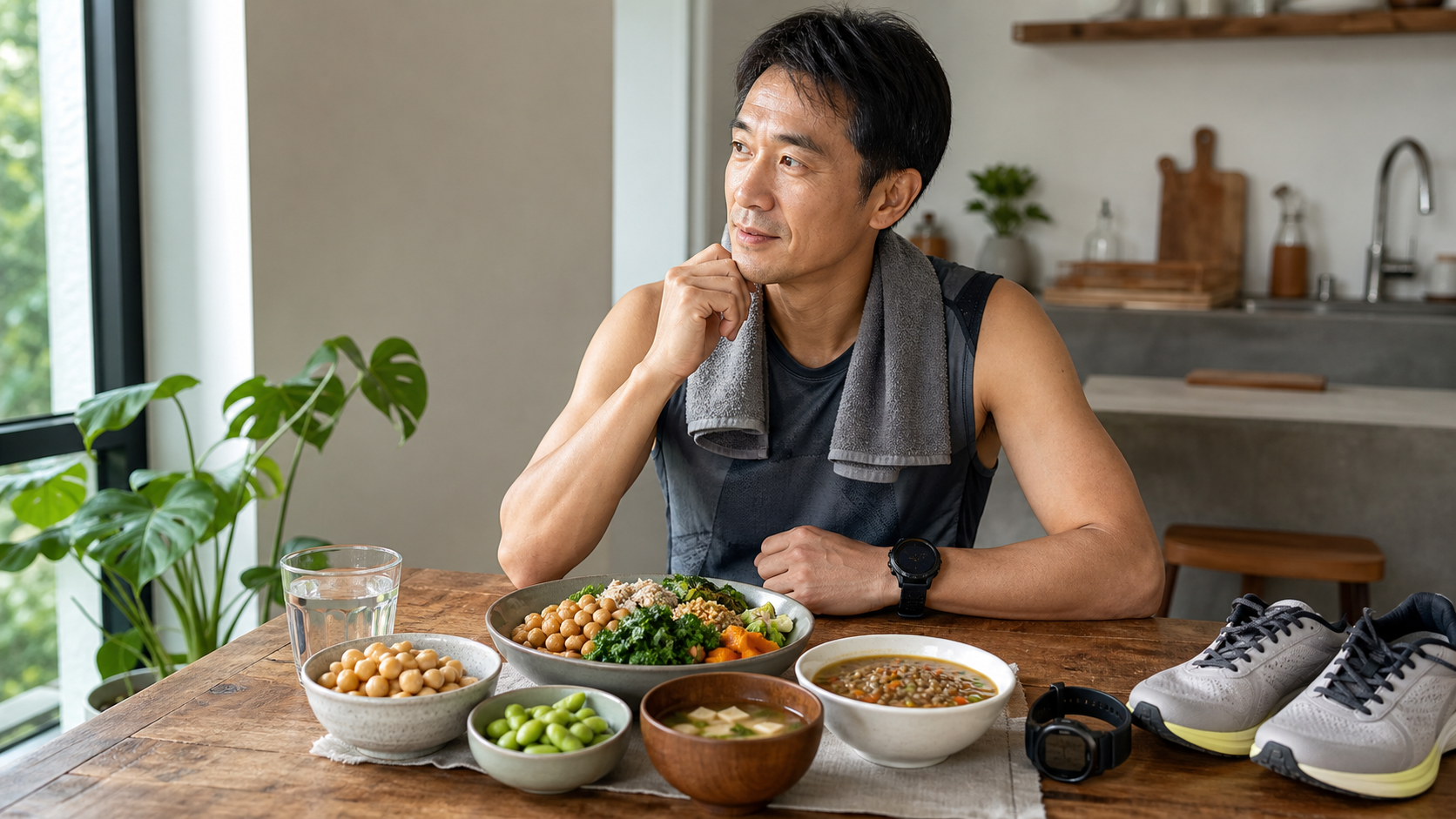
Opening: A Marathoner’s Cramps Were Actually Caused by Eating “Too Clean”
A few years ago, I worked with a 42-year-old male amateur marathoner—let’s call him A-Hong. A-Hong was dedicated, logging a steady 50 to 60 kilometers per week, never missing the gym, and his diet was so “clean” it was almost like a laboratory—chicken breast, sweet potatoes, boiled eggs, whey protein, day after day. He came to me because he frequently cramped up in the latter stages of long runs, his stomach got upset during fueling, and he complained that “even though I eat a lot of protein, my recovery isn’t as good as I’d expect.”
I looked at his week-long food diary, and my first reaction wasn’t “not enough protein,” but “you barely eat any beans.” His daily dietary fiber was only around 12 to 15 grams, far below the general adult recommendation of 25 to 38 grams; his protein sources were so monotonous that his gut microbiome was probably pretty bored too. I asked him to do one small thing: add one to two servings of legumes daily—a bowl of miso soup with edamame at breakfast, an extra serving of braised dried tofu when eating out for lunch, and a pot of chickpea or red lentil soup in the evening. Three weeks later, his stomach was noticeably more stable during long-run fueling, his bowel movements were regular, and the frequency of cramps had dropped. I won’t credit the beans entirely, but this case made me even more certain of one thing: legumes aren’t just for vegetarians—they’re a nutritional asset that all athletes underestimate.
In this article, I want to approach this from the perspective of coaching clients and break down legumes and plant protein thoroughly—what their protein quality really is, why fiber is so critical for endurance athletes, how to view the dreaded “antinutrients,” and how to actually incorporate beans into your life within Taiwan’s eating-out culture. I won’t bombard you with a bunch of hard-to-remember numbers; instead, I’ll give you concepts, tables, and steps you can put into practice tomorrow. After all, no matter how polished nutritional knowledge is, it’s just knowledge if it doesn’t translate into action; what changes your body is always the bite you actually swallow. Whether you commute by bike daily, challenge mountain climbs on weekends, or are simply a general exerciser who wants to take better care of your body, this article is for you.
Conceptual Foundation: What Legumes Actually Provide
Protein: The Quantity Isn’t Impressive, but the Value Is Severely Underestimated
Let’s start with a number that’s often misunderstood. Many people think legumes are “high-protein foods,” but in reality, cooked legumes contain only about 9 grams of protein per 100 grams (chickpeas and lentils fall in this range). Compared to chicken breast’s 20-plus grams of protein per 100 grams, the density is indeed lower. So if you only look at “protein per 100 grams,” beans look unremarkable.
But that’s the wrong way to look at it. The value of legumes isn’t in “unit density”—it’s that they are a complete nutritional package: the same food gives you plant protein, a large amount of dietary fiber, iron, folate, magnesium, potassium, and a host of phytochemicals. You get protein from chicken breast, but the fiber is zero; you eat beans, the protein is slightly lower, but you simultaneously solve the fiber deficiency that plagues most people. For athletes, this “killing multiple birds with one stone” efficiency is extremely valuable.
On protein quality, I need to be conservative and precise here. Traditionally, people say “plant proteins are incomplete proteins,” meaning certain essential amino acids are relatively low—legumes are generally rich in lysine but relatively low in methionine, while grains are the opposite. That’s why traditional diets around the world feature “legume + grain” combinations: rice with soy products in Taiwan, corn with black beans in Latin America, hummus with flatbread in the Middle East. This isn’t coincidence; it’s the accumulated dietary wisdom of thousands of years of human civilization.
Key concept: You don’t need to complete the full amino acid profile at every single meal; as long as your diet is varied over the course of a day, your body has an amino acid pool to draw from. “You must complement within the same meal” is an oversimplified notion from an older era. For the average athlete, as long as you’re eating rice, noodles, and legumes throughout the day, amino acid composition usually won’t be the limiting factor.
There’s one exception I need to highlight: soy (soybeans, black soybeans, and their products) is relatively complete among plant proteins, with a more balanced amino acid profile than most legumes. This is why soy milk, tofu, miso, and natto can play such an important protein role in many Asian diets. If you’re an athlete leaning toward a plant-based diet, soy products will be a very reliable piece of your protein puzzle. But I still want to caution: reliable doesn’t mean eat it exclusively—diversity is always the principle.
Legumes vs. Animal Protein: Not Opposites, but a Division of Labor
I’m often asked: “So should I eat beans or meat?” The question itself is framed incorrectly. They aren’t opposites; each has its own strengths. I use a table to help clients understand the differences clearly.
| Aspect | Legumes / Plant Protein | Animal Protein (Meat, Eggs, Dairy) |
|---|---|---|
| Protein density | Lower (about 9g per 100g) | Higher (can reach 20g+ per 100g) |
| Amino acid completeness | Generally low in one or another; soy is more complete | Usually complete, high in leucine |
| Dietary fiber | High—a strength | Nearly zero |
| Saturated fat | Low | Varies by cut; can be higher |
| Phytochemicals / antioxidants | Abundant | Scarce |
| Rapid post-workout synthesis stimulus | Slower | Faster (whey especially) |
| Environmental sustainability & cost | Usually lower carbon, cheaper | Usually higher |
Once you understand this table, you’ll see: animal protein has the advantage in “rapid, efficient delivery of muscle-building signals,” while legumes have the advantage in “fiber, phytochemicals, cardiovascular friendliness, cost, and sustainability.” The smart approach is to let them divide the work—lean on easily absorbed animal protein during the post-workout recovery window, and generously use legumes for the rest of your meals to make up fiber and overall quality. For plant-based eaters, rely on soy products and legume-grain combinations to fill in quality, while paying attention to portion sizes and variety.
Fiber: The Most Underrated Piece for Endurance Athletes
If protein is the overrated part of legumes, then fiber is the severely underrated part.
Cooked chickpeas have about 8 grams of fiber per 100 grams, and lentils are even higher. According to the U.S. Department of Agriculture (USDA), the daily fiber recommendation for adults is about 25 grams for women and 38 grams for men (slightly lower over age 50), but in reality, most people only consume 10 to 15 grams per day—a massive gap. With Taiwan’s high rate of eating out and often insufficient vegetable intake, this shortfall is even more pronounced.
Why is fiber important for athletes? I usually explain it to clients like this:
- Gut microbiome and immunity: Soluble fiber is food for beneficial gut bacteria; fermentation produces short-chain fatty acids, which are linked to gut wall health, inflammation regulation, and even long-term immunity. People who train intensely over long periods actually put considerable stress on their gut, and fiber is fundamental maintenance.
- Blood sugar stability and satiety: Fiber slows carbohydrate absorption, making energy release more steady—a boon for athletes who need to manage weight or body fat.
- Cardiovascular care: Soluble fiber helps manage blood lipids, which is especially important for middle-aged and older athletes or those with a family history of cardiovascular disease.
- Regular bowel movements: This sounds mundane, but ask any long-distance runner—whether your gut is regular directly affects training quality and race-day mood.
But here’s a practical reminder: fiber should be increased gradually, and it needs water. I’ve seen too many people hear beans are good and suddenly eat a huge amount, only to end up bloated, with stomach pain and constant gas, concluding “I’m just not meant to eat beans.” Wrong—you increased too fast. Your gut bacteria need time to adapt.
Let me also clear up a common misconception among Taiwanese athletes: many think fiber is only about “bowel movements,” so if they’re not constipated, they don’t need to worry. In fact, fiber’s role goes far beyond that. Soluble and insoluble fiber have different jobs—soluble fiber (more abundant in legumes and oats) forms a gel in the gut, slowing sugar and cholesterol absorption and feeding beneficial bacteria; insoluble fiber (the roughage in whole grains and vegetables) adds bulk to stool and promotes intestinal motility. Legumes provide both simultaneously, which is their advantage as a “one-stop fiber source.” For Taiwanese athletes who train heavily, have easily suppressed immunity, and frequently eat out, pushing fiber from 12–15 grams a day up to 25 grams or more is often the highest-return dietary change you can make—and legumes are the most convenient lever.
I usually give clients a very concrete picture: a bowl of chickpea or lentil soup can contain as much fiber as all the vegetables you’d normally eat in an entire day. This isn’t to say don’t eat vegetables—it’s to help you understand that when vegetable intake is inconsistent (business trips, eating out, tight schedules), a serving of beans is a very reliable fiber safety net.
Antinutrients: Don’t Be Scared, but Don’t Ignore Them Either
The term “antinutrients” sounds terrifying, as if beans contain poison. The first thing I do in lectures is help everyone demystify this word.
Antinutrients are compounds plants evolved to protect their seeds; they interfere with the absorption of certain minerals or proteins, or cause gastrointestinal discomfort. Common ones in legumes include:
- Phytic acid (phytate): Binds to minerals like iron, zinc, and calcium, reducing their absorption.
- Lectins: Some raw beans contain high levels of lectins; eating them raw or undercooked can cause significant gastrointestinal distress. Red kidney beans are the classic example—they must be thoroughly cooked.
- Protease inhibitors: Interfere with protein digestion.
- Tannins, saponins, oxalates: Affect absorption or cause astringency and bloating.
That sounds like a lot, but the key message is: the vast majority of these compounds can be significantly reduced through proper preparation, and for generally healthy people, as long as beans are properly soaked and cooked, their actual impact is very limited. You won’t become iron- or zinc-deficient from eating properly prepared beans—true mineral deficiencies are usually caused by overall dietary imbalance, not by beans.
Based on the information I’ve found, the effects of soaking and cooking are roughly as follows: many antinutrients are water-soluble, so soaking can leach out some lectins, tannins, protease inhibitors, and oxalates; boiling is particularly effective at reducing lectins, tannins, and protease inhibitors. Interestingly, research findings are inconsistent on whether soaking effectively reduces phytate—some studies show limited phytate reduction in legumes and soybeans after soaking, so don’t treat soaking as a cure-all. The most effective approach is to combine multiple methods: soak + discard the soaking water + boil thoroughly, and even sprouting or fermenting for additive effects. The “discard the soaking water” step is crucial, because the leached lectins are in that water—don’t be reluctant to throw it away.
Common Antinutrients and Processing Methods Comparison Table
| Antinutrient | Main Effect | Most Effective Processing | Practical Reminder |
|---|---|---|---|
| Lectins | GI distress when raw/undercooked | Soak, discard water, then boil thoroughly | Red kidney beans must be cooked through; never eat raw or half-cooked |
| Phytate | Reduces iron, zinc, calcium absorption | Sprouting and fermentation are more consistently effective | Soaking alone has inconsistent results; don’t over-expect |
| Protease inhibitors | Interfere with protein digestion | Heat/boiling | Normal cooking deactivates most of it |
| Tannins, oxalates | Astringency, affect minerals | Soak + boil | Discard soaking water to remove them |
| Saponins | Bloating, astringency | Soak, rinse | Rinsing canned beans removes surface foam |
In one sentence: antinutrients are a “processing problem,” not a “toxin problem.” Get the method right, and beans are a good thing.
I want to add one more point, because in recent years the “lectins are harmful” theory has been hyped up by certain diet books, leading many clients to ask me if they should completely give up beans. My position is clear: for the vast majority of healthy people, demonizing properly cooked legumes is throwing the baby out with the bathwater. To avoid the negligible amount of lectins remaining after thorough cooking, you’d be giving up the fiber, phytochemicals, minerals, and cardiovascular benefits that legumes provide—that math never works out. The people who truly need caution are the very few with specific sensitivities or diagnosed gut conditions, and that should be evaluated individually under the guidance of a physician or dietitian, not by reading a book and having the whole population quit beans. Fermentation is especially convenient in Taiwan—miso, natto, tempeh, and fermented tofu are traditional foods that have essentially “pre-processed” soybeans into a state that’s easier to digest with lower antinutrients. That’s the wisdom of our ancestors.
Practical Methods: How to Get Beans into a Taiwanese Lifestyle
This is the part I want to spend the most time on, because no matter how good the concepts are, they’re useless if they don’t translate into practice. Taiwanese people eat out a lot and have little kitchen time; I’m not going to tell you to soak and cook beans from scratch every day—that’s unrealistic. Here are the approaches I actually give to different clients.
Common Legumes and Plant Protein Ingredients Comparison Table
| Ingredient | Protein Characteristics | Fiber | Availability in Taiwan | My Common Uses |
|---|---|---|---|---|
| Soybeans / Black soybeans | Most complete and highest protein among legumes | Medium-high | Extremely easy | Soy milk, tofu, dried tofu, miso |
| Edamame | Immature soybeans, good protein | Medium | Extremely easy (available at convenience stores) | Post-workout snack, beer snack, bento side dish |
| Chickpeas | Balanced protein and fiber | High | Medium (hypermarkets, canned) | Hummus, stews, salads |
| Red / Green lentils | Easy to digest, high fiber | High | Medium | Lentil soup, curry, porridge |
| Red / Green mung beans | Moderate protein, high starch | Medium-high | Extremely easy | Sweet soups (reduced sugar), savory porridge |
| Kidney beans / Pinto beans | High fiber | High | Medium | Stews, soups (must be cooked thoroughly) |
Three Difficulty Levels for Implementation
Option One (Zero Cooking): Leverage Taiwan’s Ready-Made Soy Products. This is my top choice for busy office workers. Taiwan’s density of soy products might be among the highest in the world—soy milk at breakfast shops, unsweetened soy milk and edamame at convenience stores, braised dried tofu and tofu at buffet restaurants, miso soup—all of these are ready-made, cheap, and readily available plant protein. I often tell clients: “You don’t even need to soak beans—walk into any 7-Eleven and you can get plant protein.” A serving of braised dried tofu, a box of edamame, eaten after training—protein and fiber in one go.
Option Two (Semi-Home Cooking): Use Canned and Quick-Cook Beans. Canned chickpeas and canned red kidney beans are available at hypermarkets. Just open, rinse (to wash off surface foam and some saponins), and toss into salads or soups. Red lentils are even more forgiving—no long soaking needed, just rinse and simmer for 15–20 minutes until soft and creamy. They’re my top recommendation for beginners. Taiwan’s summers are hot and humid, so cooking a pot and keeping it in the fridge as a make-ahead staple for a few days is very convenient.
Option Three (Traditional Home Cooking): Soak Dried Beans + Cook Thoroughly. This is only for those with time and interest. Soak dried beans for several hours to overnight, discard the soaking water, then cook in fresh water until completely soft. An electric rice cooker or pressure cooker both work; the electric pressure cookers common in Taiwanese households handle dried beans especially easily. Cook a large batch at once, portion and freeze, then use as needed.
Common Legume Soaking and Cooking Time Reference Table
The table below is a quick-reference card I give to clients who cook from scratch. Times vary depending on bean freshness and cookware; the principle is “better overcooked than undercooked,” especially for beans higher in lectins.
| Legume | Recommended Soaking Time | General Boiling Time | Pressure Cooker Time (Reference) | Notes |
|---|---|---|---|---|
| Red lentils (split) | No soaking needed | 15–20 minutes | About 5–8 minutes | Fastest, easiest to digest, beginner’s choice |
| Green lentils | Optional | 25–35 minutes | About 10 minutes | Holds shape well, great for salads |
| Chickpeas | Overnight (6–8 hours) | 60–90 minutes | About 20–30 minutes | Longer soak = shorter cook |
| Black soybeans / Soybeans | Overnight | 60–120 minutes | About 25–35 minutes | Many soy products available; dried bean cooking is less common |
| Red kidney beans / Pinto beans | Overnight | 60–90 minutes | About 20–30 minutes | Must be brought to a rolling boil and cooked through |
| Red / Green mung beans | 1–2 hours or none | 40–60 minutes | About 15–20 minutes | Reduce sugar in sweet soups |
In practice, I most recommend beginners start with red lentils: no soaking, done in 20 minutes, and once simmered into a thick soup with a little salt, pepper, and curry powder, it tastes great with an extremely low failure rate. Once you’ve gotten over any psychological barrier with beans, then progress to chickpeas and kidney beans that require soaking. Taiwan’s summers are hot and humid, so remember to soak beans in the fridge to prevent them from souring at room temperature.
Sample Daily Legume Pairing for Athletes
| Time | Scenario | Legume Pairing Suggestion |
|---|---|---|
| Breakfast | Breakfast shop / at home | A cup of unsweetened soy milk, or miso soup with tofu |
| Lunch | Buffet / eating out | Add braised dried tofu or cold tofu salad alongside the main dish |
| Post-workout | Recovery window | A serving of edamame + a carbohydrate source (rice ball / sweet potato) + dairy or whey |
| Dinner | At home | Red lentil soup or chickpea stew with white rice |
Note the post-workout row: I’m not telling you to eat only beans. Post-exercise recovery requires protein + carbohydrates, and animal protein (whey, eggs, dairy) has an advantage in “rapidly supplying leucine and stimulating muscle synthesis.” My position has never been “plant vs. animal” as an either/or choice, but rather making legumes one of the main players, complementing animal protein, and filling in dietary diversity, fiber, and phytochemicals all at once. This applies equally to omnivores—which is exactly what the title emphasizes: legumes aren’t just for vegetarians.
Common Mistakes and Corrections
After coaching clients for so many years, the mistakes I see with legumes can almost all be grouped into a few categories.
Mistake One: Adding too much at once, then giving up due to bloating. This is the most common. As mentioned earlier, gut bacteria need time to adapt to increased fiber and oligosaccharides. Correction: start with small portions, increase gradually every few days, and make sure to drink enough water. Give your body a two-to-four-week adaptation period; most bloating will improve significantly. For those who are truly sensitive, red lentils and split beans are generally easier to digest—start with those.
Mistake Two: Making beans the sole protein source, then not getting enough total protein. Some people overcorrect when switching to plant protein, eating beans at every meal, only to find that because legume protein density is lower and they can’t eat that much volume, their total intake actually drops. Correction: look at total daily protein quantity and diversity—pair with dairy, eggs, fish, or meat as appropriate. Don’t sacrifice total intake for the sake of being “100% plant-based.”
Mistake Three: Not cooking red kidney beans / pinto beans thoroughly. This is one of the few areas with genuine safety concerns. Beans higher in lectins (like red kidney beans) that are only soaked or eaten half-cooked can cause significant nausea and vomiting. Correction: these beans must be fully soaked, drained, brought to a rolling boil, and cooked until completely soft—don’t use a thermos for low-temperature slow soaking and call it “cooked.”
Mistake Four: Assuming soaking alone solves everything. As mentioned, research is inconsistent on whether soaking reduces phytate. Correction: soak + discard water + boil is the basic combination; if you want to be more thorough, sprouting or fermenting (e.g., tempeh, miso, natto—fermented soy products) provides more comprehensive results.
Mistake Five: Treating sweet red bean or mung bean soup as healthy beans while sugar intake explodes. Taiwan’s red bean soup and mung bean soup are very popular, but traditional preparations contain shocking amounts of sugar. Correction: cook it yourself and drastically reduce the sugar, keeping the benefits of the beans without drinking a load of sugar.
Actionable Advice for Readers at Different Levels
If You’re a Complete Beginner (Rarely Eat Beans Now)
First, aim for presence before perfection. Goal: at least one serving of soy/bean products per day. The simplest way is to swap your breakfast drink for unsweetened soy milk, or add an extra serving of dried tofu or tofu when eating out for lunch. Do this for two consecutive weeks to let your gut adapt; you’ll find that bloating isn’t the norm and bowel movements become regular. At this stage, don’t worry about amino acid complementation or antinutrients—building the habit is what matters most.
If You’re a General Exercise Enthusiast (Regular Weekly Exercise)
Goal: incorporate legumes into your daily protein rotation and close the fiber gap. Have one to two servings of legumes daily; after training, pair edamame or soy products with carbohydrates and/or dairy. Start learning one simple home-cooked bean dish—I recommend red lentil soup as the lowest barrier. At the same time, push your daily fiber toward 25 grams or more; most people will feel a noticeable improvement in gut health and recovery.
If You’re an Advanced / High-Volume Athlete
Goal: use legumes to optimize overall diet quality while managing total protein and timing. Your protein needs are higher, so legumes should be “one of the main sources” rather than the only one, complementing animal protein and dairy to maximize dietary diversity, fiber, phytochemicals, and minerals. Pay attention to the advantage of animal protein in the post-workout recovery window, and generously use legumes for the rest of your meals. If you train at high volume long-term and your gut is a weak point, fermented soy products (miso, natto, tempeh) are worth incorporating—they’re gut-friendly and easily absorbed.
A “Legume Upgrade Two-Week Plan” You Can Copy Right Now
Many clients still don’t know where to start after hearing the concepts, so I simply give them a two-week plan they can follow directly, with the barrier set as low as possible:
- Days 1–3: Do just one thing—swap your breakfast drink for unsweetened soy milk. Change nothing else. The goal is to first establish the habit of “one serving of beans per day” and warm up your gut.
- Days 4–7: When eating out for lunch, add an extra serving of braised dried tofu or cold tofu salad. This step takes almost no effort—Taiwan’s buffets and bento shops have them everywhere.
- Days 8–11: Start adding a serving of beans at dinner—the simplest is to cook a pot of red lentil soup (no soaking, 20 minutes) and keep it in the fridge, scooping out a bowl each night. By now, you’re probably getting two to three servings of legumes per day.
- Days 12–14: Observe your body’s response. If bloating has significantly improved (it does for most people), maintain it; if there’s still some discomfort, pull back the portion slightly, drink enough water, and increase gradually again.
After two weeks, you’ll have unknowingly pushed your fiber up and diversified your protein sources. The spirit of this plan is “so small it can’t fail”—it doesn’t force you into the kitchen to soak beans, doesn’t require you to count grams. First, get beans into your life; optimization comes later. Among the clients I’ve coached, those who maintain it long-term almost all started with this kind of “painless start,” rather than trying to build a perfect meal plan from day one and giving up after three days.
Special Reminder: Readers with Chronic Conditions or Special Circumstances
I must state this conservatively and clearly. Legumes are generally considered gut-friendly for blood sugar, blood lipids, and cardiovascular health, but if you have diabetes, hypertension, heart disease, kidney disease, or are taking specific medications, dietary changes must be individualized and discussed with your physician or dietitian first. For example, those with impaired kidney function need professional evaluation of protein, potassium, and phosphorus intake—you can’t just look at “beans are healthy” and drastically increase them on your own. Taiwan’s National Health Insurance makes medical access convenient; if you have a chronic condition, I recommend regular check-ups and discussing your diet plan with your care team. Don’t treat internet articles (including this one) as a prescription.
Second Case Study: A Weight-Conscious Female Lifter Who Used Beans to Stay Full and Manage Body Fat
Let me share a very different case. Xiao-Min, 35, trains with weights three to four times a week, with the goal of building muscle and losing fat. Her biggest struggle was “no matter what I eat, I’m always hungry,” especially during fat-loss phases when calories were restricted—hunger made it hard to hold on, and she’d often binge after reaching her breaking point. Her original diet also followed the “high-protein, low-carb” route, with protein coming almost entirely from chicken breast and whey, and fiber similarly low.
My adjustment for her was simple: replace some refined carbohydrates in main meals with legumes, and add fiber to boost satiety. For example, swap part of the white rice at lunch for chickpeas or lentils, and add a serving of edamame or tofu at dinner. Legumes provide protein, fiber, and some carbohydrates simultaneously, and their satiety lasts far longer than refined carbs at the same calorie count.
Two months later, Xiao-Min’s feedback was: “I’m not constantly hungry anymore; the fat-loss phase is much more manageable.” Her weight dropped steadily, training performance didn’t collapse from dieting, and the frequency of binges dropped significantly. I want to emphasize: this isn’t because beans have some “fat-burning magic”—they don’t. What actually worked was the satiety from fiber, stable blood sugar, and the sustainability that came from higher dietary satisfaction. Whether fat loss succeeds is 80% about “can you stick with it,” and legumes happen to be very helpful in “helping you stick with it.”
These two cases—one male, one female; one endurance, one strength; one cramping, one fearing hunger—seem completely unrelated, but beans played the role of “filling dietary gaps” in both. That’s the core message I want to convey: the value of legumes isn’t in curing any disease; it’s in filling the most common holes in modern diets—insufficient fiber, monotonous protein sources, and lack of phytochemicals.
FAQ
After years of coaching clients and giving lectures, the questions about beans really boil down to the same few, so I’ve compiled them into an FAQ.
Q1: Will eating beans trigger a gout attack?
A: Purines are indeed a concern for gout patients. Legumes are moderate-purine foods and were once listed as forbidden for gout, but recent perspectives have softened; most guidelines no longer consider plant-based purine sources as primary triggers. However, if you already have gout or high uric acid, this is a question that needs individualized evaluation—please discuss it with your physician. Don’t drastically increase or completely eliminate them based on a single article.
Q2: Will drinking a lot of soy milk affect hormones?
A: This is a common misconception. Isoflavones in soy are plant compounds; at normal dietary intake levels, their effect on hormones in healthy adults is limited. Moderate consumption of traditional soy products like soy milk and tofu is safe for the vast majority of people. If you have a specific medical history or are undergoing treatment, please consult your physician.
Q3: My bloating is really severe—am I just destined not to eat beans?
A: Most cases are caused by “increasing too fast,” not by constitution. Start with small portions of easy-to-digest split beans (red lentils), soak and cook thoroughly, discard the soaking water, drink enough water, and give your gut two to four weeks to adapt. For those who are truly extremely sensitive, start with small amounts of fermented soy products (miso, natto).
Q4: Are canned beans nutritionally inferior?
A: Canned beans are a very practical option—convenient without losing nutrition. When choosing, pay attention to sodium content; rinsing after opening reduces surface sodium and saponin foam. For busy Taiwanese office workers, canned beans are a great way to make plant protein practical. Don’t reject them just because of the word “canned.”
Q5: Will eating beans during weight loss make me gain weight because of the carbs?
A: Legumes do contain carbohydrates, but they also come with fiber and protein, leading to steadier blood sugar and higher satiety. Weight loss comes down to overall calories and dietary sustainability; replacing some refined carbohydrates with legumes is often a help, not a hindrance—Xiao-Min’s case is an example.
Q6: Is getting protein only from beans after exercise enough?
A: It’s possible, but not the most efficient approach. During the post-workout recovery window, easily absorbed animal proteins high in leucine (whey, dairy, eggs) have their advantages. If you’re plant-based, you can achieve it with soy products (soy milk, tofu) paired with adequate portions and carbohydrates—it just requires eating a bit more and planning a bit more carefully.
Conclusion: Turning a Supporting Role into a Main Player
Back to A-Hong from the opening. He not only stabilized his gut and improved his recovery, but also told me, because his diet had become more varied, “eating healthy doesn’t have to be so miserable.” He went from someone who treated his diet like a laboratory to someone who cooks a pot of chickpeas himself and makes hummus to spread on bread on weekends. Beans didn’t make him run faster—training did that—but they gave his body a better foundation to handle the training.
That’s how I position legumes: they’re not a miracle cure, nor a reluctant substitute for vegetarians, but a highly efficient nutritional package that’s extremely easy to obtain in Taiwan. Protein, fiber, minerals, and phytochemicals all in one; get the preparation right, and even antinutrients are nothing to fear. Whether you’re omnivore or plant-based, beginner or veteran, making beans one of the main players on your table instead of a supporting role—your body will thank you.
Next time you walk into a convenience store, grab a box of edamame and a bottle of unsweetened soy milk. That small step might be the beginning of your dietary upgrade. Don’t overthink it, and don’t chase perfection all at once—healthy eating is never about one perfect meal, but about the accumulation of small, sustainable good choices day after day. You don’t need to become a master chef, and you don’t need to give up the foods you love. Just be willing to give beans a bigger role on your plate, and time will show you the results in how you feel, your recovery, and your health check reports. See you in the next article.
This article is educational content and cannot replace individual diagnosis and treatment advice from a physician, physical therapist, or dietitian. If you have a chronic disease or special health condition, please consult a professional before making any dietary changes.
References
- Eufic — Which pulses are high in protein?:https://www.eufic.org/en/healthy-living/article/which-pulses-are-high-in-protein
- Healthline — How Much Fiber Per Day?:https://www.healthline.com/health/food-nutrition/how-much-fiber-per-day
- Harvard Health — Should I be eating more fiber?:https://www.health.harvard.edu/blog/should-i-be-eating-more-fiber-2019022115927
- Healthline — How to Reduce Antinutrients in Foods:https://www.healthline.com/nutrition/how-to-reduce-antinutrients
- ScienceDirect — Changes in levels of phytic acid, lectins and oxalates during soaking and cooking of Canadian pulses:https://www.sciencedirect.com/science/article/abs/pii/S0963996918301492
Related Reading
- Dietary Fiber and Athletes: Too Much or Too Little? A Complete Guide from Daily Health to Pre-Race Management
- The Complete Protein Guide: How Much, When, and Which Kind—A Sports Science Consultant’s Field Notes
- Dietary Strategies for Vegan Endurance Athletes: How to Meet All Needs with Plant-Based Sources
- Protein Needs for Endurance Athletes: The Often-Underestimated Intake and Distribution Strategies
CT暗黑廚房) 車友必備 宇宙無敵鮮蚵湯 幫助訓練恢復 天然食補 好市多 超肥鮮蚵 破PR
7 年前
Never Stop 西進武嶺 前後雙機 完整全程錄影 訓練台 實境
8 年前
靠單車減肥35公斤 心得分享與整理
7 年前
單車 一日北高 ( 雙城 ) 肥宅雙人瘋狂行 紀錄片 REACTO
10 年前
一日北高/長距離團騎 常見問題補充篇 / 組團或跟團的眉角 / 壯車友容易被瘦車友慢性拉爆 / 原來屁股痛可能是這個原因...? / 風場配速法 / 公路車 / CT Yeh
2 年前
西進武嶺 免費訓練分析服務 Intervals | 練不夠還是練過頭?你哪一種類型選手?AI模型告訴你! | 備戰神器 | 公路車 訓練 | CT Yeh
4 年前
一日北高常見問題大集合 | 攻略 | 路線 | 訓練 | 補給 | 自行車 單車 | 一日雙城 | 雙塔 | TWB北高360 | 屁股痛
6 年前
水金九不厭五分 10度寒流冷到不願停!feat. 卡卡 / 公路車 / CT Yeh
6 個月前