Athletes' Hydration Habits: How Much Water Should You Really Drink a Day? A Complete Practical Guide from Daily Needs to Training Days
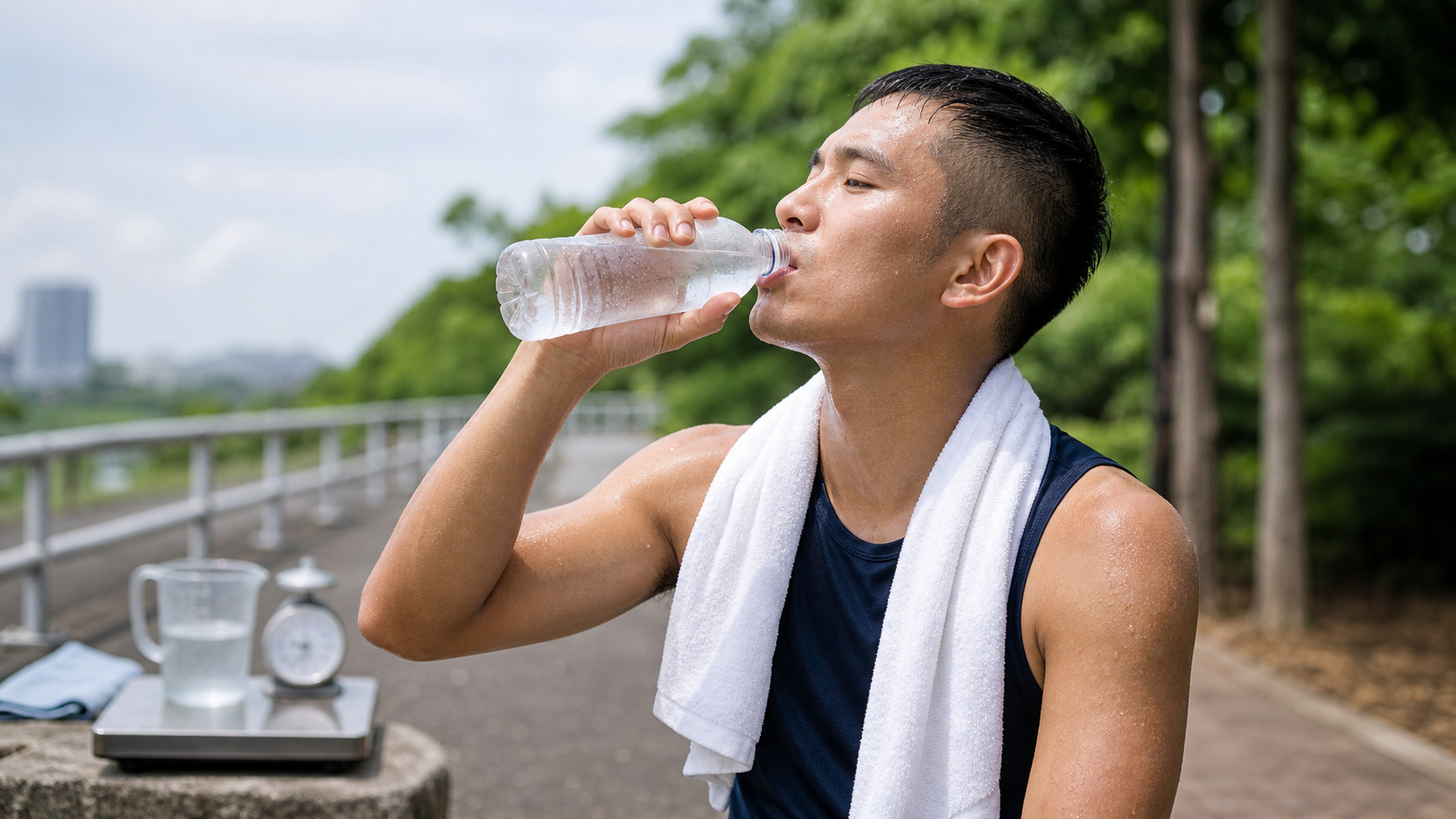
Starting with a Glass of Warm Water
In my fifteen years of working with athletes and the general exercising population, the question I get asked most often—and the one that’s most easily overlooked—isn’t actually “How do I train to get stronger?” It’s this: “Coach, how much water should I actually drink in a day?”
I remember one case vividly: an amateur cyclist in his early forties, let’s call him A-Kai. He rode Yangmingshan and Fengguizui every weekend without fail. His training volume was substantial and his fitness was decent, but every long climb, he’d cramp up and feel dizzy in the second half. Once, at the top of Balaka Road, he nearly lost his balance. At first, he was convinced it was an “electrolyte deficiency” and loaded up on salt tablets. Then he heard that “water intoxication is dangerous,” so he deliberately drank less. He tried both extremes, and his condition fluctuated between good and bad. The first thing I asked him to do wasn’t to change his gear or modify his training plan—it was to log how much he drank every day, when he drank it, what his urine looked like, and how much his weight changed before and after training for two straight weeks. The truth came out after those two weeks: he was severely under-drinking on regular days, and on training days he’d chug huge amounts of water at the wrong times. His body was stuck in a constant oscillation between “dehydrated” and “emergency rehydration.”
If you break hydration down, there’s actually a logic to it that you can quantify and manage at home. In this article, I want to approach it the way I do with my athletes—walking you through “how much water to drink a day” from daily needs to training-day adjustments, all the way to the indicators you can use to judge for yourself, so you can stop relying on feelings and hearsay.
Bottom line first: There is no “magic number that works for everyone.” Your correct water intake depends on your body weight, activity level, the day’s temperature, how much you sweat, and your diet. Rather than memorizing a number, learn to read the signals your body gives you.
Concepts and Scientific Basis: Why the Body Needs Precise Hydration
What Role Does Water Play in Athletic Performance?
The human body is about 60% water. For athletes, hydration carries at least four critical responsibilities:
- Regulating body temperature: Exercise generates heat, and the body relies on sweating and sweat evaporation to cool down. When hydration is insufficient, cooling efficiency drops and core temperature can spike.
- Maintaining blood volume: Dehydration thickens the blood and reduces blood volume, forcing the heart to work harder. At the same intensity, your heart rate gets pushed higher.
- Transporting nutrients and metabolic waste: Glycogen metabolism, lactate clearance, and nutrient delivery all require an adequate fluid environment.
- Lubricating joints and muscles: During prolonged endurance exercise, fluid status is also linked to muscle cramps and feelings of fatigue.
This is why many people think they’ve “hit a wall due to lack of fitness” when they’re actually just dehydrated. Research and sports medicine consensus generally indicate that when body weight drops by more than about 2% due to sweating, endurance performance, focus, and temperature regulation begin to suffer. For a 70 kg rider, 2% is roughly 1.4 kg—about 1.4 liters of sweat lost, which is achievable in just over an hour of cycling on a Taiwanese summer day.
How to Estimate Your Daily “Baseline Fluid Needs”
Let’s separate “daily life” from “training” first. Many people only think about hydration during exercise, forgetting that your long-term hydration status outside of training is what determines your starting point when you show up to perform.
A common rough estimate for total daily fluid intake (including water from food) for the average adult is:
- About 30 to 40 milliliters per kilogram of body weight (for general daily life, moderate activity).
- For a 60 kg person, that’s roughly 1,800 to 2,400 ml; for 70 kg, about 2,100 to 2,800 ml.
Note that this is the total including water from food. Taiwanese people commonly eat noodle soups, congee, fruit, and vegetables, all of which provide significant water, so “what you drink” doesn’t necessarily need to reach that full amount. Conversely, if your meals are mostly dry bento boxes, fried foods, or salty takeout, with little soup or liquid and high sodium, then the proportion you need to drink goes up.
The table below provides a starting point for daily (non-high-intensity training day) estimation. You’ll still need to fine-tune based on your activity and sweating that day:
| Body Weight (kg) | Estimated Total Daily Fluid (ml) | Suggested “From Drinking” Amount (ml) | Notes |
|---|---|---|---|
| 50 | 1,500–2,000 | 1,200–1,600 | Take the upper end if eating light takeout |
| 60 | 1,800–2,400 | 1,400–1,900 | Add more in Taiwanese summer |
| 70 | 2,100–2,800 | 1,600–2,200 | Don’t forget to drink in air-conditioned offices |
| 80 | 2,400–3,200 | 1,900–2,500 | Larger builds have higher needs |
| 90 | 2,700–3,600 | 2,100–2,800 | Drink in portions, don’t chug at once |
These are ranges, not precise prescriptions. I deliberately give ranges because I want you to stop obsessing over decimal points. Instead, pick a reasonable range and then correct it using the indicators I’ll cover later.
Taiwan’s Climate Is an Amplifier
Taiwan’s summers are humid and hot. When humidity is high, sweat doesn’t evaporate easily, cooling efficiency drops, and the body responds by sweating even more to try to cool down—significantly amplifying your hydration needs. The same one-hour ride or run can produce two to three times more sweat in the July midday heat than on a December morning. So the phrase “I usually drink this much and it’s enough” needs to be re-evaluated every time the seasons change.
I often tell my athletes that Taiwan’s humid heat has a sneaky quality: because sweat clings to your skin and doesn’t evaporate, you feel like “I’m sweating a ton but my body isn’t cooling down.” Your core temperature keeps climbing, your heart rate rises, and you think your fitness has collapsed—when really your cooling system is being held hostage by humidity. In this situation, hydration becomes more important, not less, because you’re using even more sweat to buy limited cooling.
Another detail that’s often overlooked is dehydration in air-conditioned rooms. Taiwanese people spend long summer hours in heavily air-conditioned offices and cars. Your skin doesn’t feel hot and you’re not really sweating, so you completely forget to drink. But dry, cool air actually pulls moisture from your body through breathing and skin without you noticing. By the time you head out to exercise after work, you’re already mildly dehydrated. This is why I keep emphasizing that “daily hydration” matters more than “chugging during exercise.”
Sodium in Sweat: Why Some People Get White Salt Stains on Their Clothes
Sweat isn’t pure water. The sodium concentration it carries varies from person to person. Sports physiology literature commonly cites a range of about 15 to 65 millimoles per liter (mmol/L). Converted to weight, that means each liter of sweat can carry anywhere from a few hundred milligrams to over a gram of sodium. Interestingly, people who do endurance sports long-term and are well heat-acclimated tend to have lower sodium concentrations in their sweat—the body learns to “conserve” more sodium when sweating.
You can observe a simple clue yourself: if you notice obvious white salt stains on dark clothing after exercise, your skin tastes very salty, or sweat in your eyes stings particularly badly, these all suggest you might be a “salty sweater” who loses more sodium. For these people, especially during long, heavy-sweat exercise, sodium replacement is particularly important. Otherwise, even if you drink enough water, you’re still prone to cramping and fatigue—and if you only drink plain water, you can dilute your blood sodium even further.
Let me clear up a common misconception here: cramping is not purely a sodium or water deficiency. The causes of exercise-associated cramps are complex, involving a mix of muscle fatigue, neuromuscular control, electrolytes, and hydration. You can’t just sum it up with “take more salt.” Proper hydration and sodium intake can reduce some risk, but if you cramp frequently, you should also examine whether your training volume is increasing too fast, whether your strength is sufficient, and whether you’re adequately heat-acclimated.
Practical Methods: Hydration Strategies for Daily Life and Training Days
1. Divide Your Day into Three Segments
I usually ask athletes to think of hydration in three segments rather than “drink when thirsty”:
- Morning segment: Drink 300 to 500 ml of warm water after waking up. Sleeping seven or eight hours means seven or eight hours without fluid, plus overnight breathing and sweating—you’re mildly dehydrated in the morning.
- Daytime segment: Drink 150 to 250 ml every one to two hours, steadily in portions. Keeping a graduated water bottle on your desk is the most effective reminder tool.
- Evening segment: Keep drinking into the evening, but reduce the amount one to two hours before bed to avoid overnight bathroom trips disrupting your sleep.
2. The “Before, During, After” Hydration Framework for Training Days
This is the part that needs the most adjustment. Common recommendations from international sports nutrition and sports medicine organizations can be organized into the practical table below. All values are given as ranges—adjust up or down based on how you feel and how much you’re sweating:
| Time Period | Recommended Approach | Reference Amount | Key Reminder |
|---|---|---|---|
| 4 hours before exercise | Start hydrating to give your body time to absorb and eliminate excess | About 5–7 ml per kg of body weight | Urine should be pale yellow before you head out; don’t chug right before starting |
| 10–20 minutes before exercise | Take small sips | About 150–250 ml | Avoid a large volume at once to prevent GI discomfort |
| During exercise | Take small sips every 15–20 minutes | About 150–250 ml every 15 minutes | Adjust based on intensity, temperature, and personal sweat rate |
| After exercise | Replace based on weight lost | About 1–1.5 liters per kg lost | Drink in portions, pair with sodium-containing foods |
There’s no magic number for during-exercise hydration. The key principle is: make what you take in as close as possible to what you’re losing—neither severely insufficient nor far exceeding. This leads directly into the most important self-assessment tool in the next section.
3. Calculate Your Own “Sweat Rate”
This is the one exercise I most recommend every active person do at least once. All you need is a bathroom scale, and once you’ve done it, you’ll have a concrete understanding of “how much you actually sweat.”
Sweat rate estimation steps:
- Before exercise, empty your bladder, weigh yourself in minimal clothing (kg), and record this as A.
- Train for about 60 minutes at near-normal intensity, and record how many milliliters of water you drink during the session, recorded as D.
- After exercise, dry off sweat, change out of wet clothes, and weigh yourself under the same conditions. Record this as B.
- Sweat loss (ml) is approximately: (A − B) × 1000 + D.
- This number is your hourly sweat rate under those weather and intensity conditions.
Example: A-Kai rides for an hour in the summer. He weighs 70 kg before and 68.8 kg after, and drinks 500 ml during the ride. Sweat loss ≈ (70 − 68.8) × 1000 + 500 = 1,700 ml/hour. That means on a Taiwanese summer ride, he’s losing about 1.7 liters per hour—no wonder he cramped and felt dizzy in the second half of long rides; he was nowhere near replacing that amount during exercise. Individual sweat rates vary enormously, from about 1 liter to 3 liters per hour, and you only know which type you are by measuring it yourself.
4. Electrolytes and Long-Duration Exercise
Sweat isn’t just water—it also carries away electrolytes like sodium and potassium. For exercise lasting more than about an hour with heavy sweating, drinking only plain water without sodium can actually increase the risk of hyponatremia (exercise-associated hyponatremia). Sports medicine guidelines indicate that for longer endurance efforts, adding a small amount of salt to your drinks (roughly 0.3 to 0.7 grams of sodium per liter) helps replace the sodium lost in sweat and reduces electrolyte imbalance-related problems.
In practice:
- Under one hour, moderate intensity: Plain water is usually sufficient.
- Over one hour, heavy sweating: Pair with sports drinks or sodium-containing beverages, plus salty snacks (like saltine crackers or sodium-containing supplements).
- Long-distance, ultra-endurance (multiple hours): Sodium replacement becomes even more critical, and you should calibrate using both “thirst” and “sweat rate” rather than mindlessly chugging plain water.
5. Heat Acclimation: Making Your Body “Sweat More, Save More Sodium”
Many people don’t know that the body can be “trained” for heat. When you exercise regularly in hot conditions for one to two consecutive weeks, your body gradually adapts: you start sweating earlier, sweat volume increases (more efficient cooling), sodium concentration in sweat decreases (more electrolyte conservation), and heart rate drops at the same intensity. This process typically takes about one to two weeks of regular exposure to establish fully.
For Taiwan’s active population, this has two practical implications. First, before a season change or traveling to a hotter place for a race, build in time for heat acclimation—don’t challenge yourself with a hot, long-distance event without any adaptation. Second, be extra careful with hydration during the acclimation period, because your body is adjusting its sweating and electrolyte mechanisms. Your sweat rate may still be shifting, so calibrate more frequently using body weight and urine color.
The table below summarizes hydration and sodium strategies across different exercise scenarios for quick reference:
| Exercise Scenario | Duration | Sweat Level | Hydration Focus | Sodium Replacement |
|---|---|---|---|---|
| Commuting rides, easy jogs | < 45 minutes | Low to moderate | Plain water, one small cup before and after | Usually not needed |
| Regular group rides, interval training | 45–90 minutes | Moderate to heavy | Small sips every 15–20 minutes during exercise | Sports drinks for heavy sweaters |
| Long climbs, half marathon | 1.5–3 hours | Heavy | Plan around your sweat rate, carry enough water | Recommend sodium-containing drinks/salty snacks |
| Ultra-distance, ultra marathon | > 3 hours | Heavy and continuous | Dual-track with thirst + sweat rate, don’t only drink plain water | Systematic sodium replacement is essential |
| Any exercise on hot, humid days | Varies | Significantly amplified | Increase all amounts and frequency | Increase sodium based on sweat and feel |
Assessment Indicators: How to Know You’re Hydrating Correctly
Memorizing numbers isn’t enough—I want athletes to learn to “read their body.” Using the following three indicators together is far more accurate than any single number.
Indicator 1: Urine Color
This is the most convenient and intuitive daily indicator.
- Ideal state: Pale yellow, like diluted lemon juice.
- Dark yellow or amber: Possible insufficient hydration—time to drink.
- Almost clear and colorless: Possible overhydration. Especially when you’re sweating heavily and only drinking plain water, watch out for dilutional hyponatremia.
The first morning void is the most informative. One caveat: certain B-vitamin supplements can turn urine fluorescent yellow, which makes color assessment unreliable—switch to other indicators in that case.
Indicator 2: Pre- and Post-Training Body Weight Change
This is the most direct way to quantify dehydration. Weigh yourself before and after exercise under the same conditions:
| Body Weight Loss Percentage | Meaning | Recommended Action |
|---|---|---|
| < 1% | Hydration is roughly on target | Maintain current strategy |
| 1–2% | Mild dehydration | Drink a bit more during and after exercise |
| 2–3% | Noticeable dehydration, performance already affected | Review during-exercise drinking frequency and volume |
| > 3% | Significant dehydration, elevated risk | Adjust strategy substantially, watch for heat injury signs |
| Weight “gain” | Possible overhydration | Reduce during-exercise drinking, watch for hyponatremia risk |
I want to circle the last row in this table specifically: if you weigh more after exercise than before, it means you drank more than you lost—and that’s not a good thing. Especially during long exercise with only plain water, this is a warning sign for hyponatremia.
Indicator 3: Thirst, Heart Rate, and How You Feel
- Thirst: Thirst is a real signal from your body—don’t completely ignore it. But for long, heavy-sweat exercise, relying on thirst alone often means you under-drink. Conversely, for short sessions, you don’t need to force fluids when you’re not thirsty. Treat thirst as an important reference, not the only switch.
- Higher heart rate at the same intensity: Dehydration reduces blood volume and forces heart rate up. If you notice your heart rate running noticeably higher than usual at the same pace or gradient, dehydration is a common cause.
- Physical signals: Dizziness, difficulty concentrating, noticeably reduced urine output, and dry mouth are all clues pointing toward dehydration. Nausea, headache, confusion, or swelling in the hands and feet during or after exercise, on the other hand, should alert you to possible overhydration-induced hyponatremia—in that case, seek medical attention promptly.
Common Mistakes and Corrections
After years of coaching, here are the most common hydration mistakes I’ve compiled. See how many you’ve made.
Mistake 1: Only Hydrating During Exercise, Drinking Too Little the Rest of the Time
Many people sit in air-conditioned offices all week and drink less than 1 liter a day, then chug fluids desperately on the weekend when they exercise. Chronic daily dehydration means you’re starting every session from a “already in debt” position.
Correction: Treat daily hydration as part of your training. Keep a graduated bottle on your desk and set a rhythm of drinking every one to two hours.
Mistake 2: Chugging Right Before You Start
You remember you haven’t drunk anything only as you’re heading out the door, so you down 700–800 ml in one go. The result: bloating, bathroom urgency, or even nausea as soon as exercise begins.
Correction: Hydrate early. Start drinking in portions 4 hours before exercise, and only take a small cup 10–20 minutes before you start.
Mistake 3: Believing “The More You Drink, The Better”
This is an error that’s been over-corrected in recent years. People hear too much about the dangers of dehydration and swing to the other extreme, forcing down large amounts of plain water at every aid station on long rides, which dilutes blood sodium. The sports medicine consensus is: no single fixed drinking volume can guarantee prevention of hyponatremia. The most practical principle is to match your intake to thirst and sweat rate, and don’t let what you drink exceed what you lose.
Correction: For long-duration exercise, calibrate with the “sweat rate + thirst” dual track and supplement sodium, rather than endlessly increasing plain water.
Mistake 4: Ignoring Sodium and Only Drinking Plain Water
Sweating heavily for a long time while drinking only plain water is essentially continuously diluting your body’s sodium.
Correction: For exercise over an hour with heavy sweating, pair with sports drinks or sodium-containing supplements.
Mistake 5: Using Someone Else’s Numbers as Your Standard
“My friend only needs two bottles for a ride—why do I need three?” Because your sweat rate, body weight, intensity, and the day’s temperature are all different. Individual variation can be enormous.
Correction: Measure your own sweat rate once and establish your own baseline.
Case Follow-Up: How A-Kai Adjusted
Back to A-Kai from the beginning. We did three things:
First, fix his daily habits. His everyday drinking went from under 1 liter to about 2 liters (from drinking), with a 750 ml graduated bottle on his desk, finishing about three bottles a day.
Second, measure his sweat rate. We calculated earlier that he sweats about 1.7 liters per hour on summer rides, so I asked him to change from “drink when thirsty” to taking fixed small sips every 15 minutes during exercise, with extra reminders on long climbs.
Third, add sodium. He used to carry only plain water on long rides. I asked him to switch to sports drinks for rides over an hour and eat something salty at aid points.
Three weeks later, he reported riding Balaka again—no dizziness in the second half, and significantly fewer cramps. His most memorable quote: “Turns out half of what I thought was ‘lack of fitness’ was just not drinking right.”
I want to emphasize that A-Kai’s numbers are his own—you can’t just copy them. But this process of “record your current state, measure your sweat rate, calibrate with indicators” is something anyone can replicate.
The Opposite Case: Drinking Too Much Can Also Be a Problem
To help you understand why “the more you drink, the better” is wrong, let me share an example from the opposite direction. A female athlete preparing for her first full marathon—let’s call her Xiao-Min—took the advice “never get dehydrated” deeply to heart. On race day, she stopped at every aid station and chugged two or three large cups of plain water each time, terrified of not drinking enough.
Around the 30-something kilometer mark, she started feeling nauseous, had a headache, her fingers felt slightly swollen, and she felt a bit foggy. Her first instinct was “I must still not be drinking enough,” so she drank even more. Fortunately, the medical staff at the aid station were alert and recognized this as more likely a sign of overhydration-induced hyponatremia. They had her stop chugging water, consume something salty, and rest under observation. Her symptoms gradually subsided.
This case gives us several important reminders:
- Nausea, headache, swelling in the hands and feet, and confusion can all appear with both dehydration and overhydration (hyponatremia). It’s very hard to tell them apart by feel alone—which is exactly why, if anything feels abnormal during a race, you must find medical staff rather than self-diagnosing and adding more water.
- Long-distance runners are a high-risk group for hyponatremia, because the duration is long and anxiety often drives over-drinking. This direction of error is actually more dangerous than dehydration.
- The golden rule of hydration, once more: match what you drink to what you lose and to your thirst—more is not safer.
Xiao-Min later re-planned with my help, switching to a “thirst + fixed small sips” approach. Her second marathon went smoothly with no recurrence of that terrifying experience. Her lesson and A-Kai’s are two sides of the same coin: one drank too little, the other drank too much—both cause problems. The “just right” line in between has to be found through indicators.
Build Your Hydration Log
I usually ask serious athletes to keep a two-week hydration diary. You don’t need a complicated app—a piece of paper or a phone note is enough. Here’s what to record, with examples:
| Date | Morning Urine Color | Daily Drinking Amount | Exercise Duration | Pre/Post Weight Change | During-Exercise Intake | Notes on How You Felt |
|---|---|---|---|---|---|---|
| Example 1 | Dark yellow (dehydrated) | About 900 ml | 60 min cycling | −1.5 kg | 500 ml | Cramping and dizziness in second half |
| Example 2 | Pale yellow (ideal) | About 2000 ml | 60 min cycling | −0.6 kg | 900 ml | Stable throughout |
After two weeks, you’ll clearly see: which days you under-drank (dark morning urine), how big your during-exercise hydration gap is (too much weight loss), and how your feel improves after adjustments. Once the data is laid out, the problems become obvious—this is far more useful than anyone giving you a slogan like “drink X liters a day.”
Actionable Advice for Readers at Different Levels
Beginners, Exercising Primarily for Health
- Focus on getting daily hydration right first: aim for about 30 to 40 ml of total fluid per kg of body weight, using roughly half to two-thirds of your body weight (in ml) as a starting point for what you drink.
- Start the morning with a glass of warm water, drink in portions during the day, and reduce before bed.
- For walking or 30-minute jogs: plain water is enough—one small cup before, during, and after.
- Learning to read urine color alone will serve you well.
Intermediate Enthusiasts with Regular Training, Pursuing Progress
- Take the time once to measure your sweat rate and establish your own baseline.
- On training days, use the framework of “4 hours before, 10–20 minutes before, every 15 minutes during, and replace after.”
- For sessions over an hour with heavy sweating, start incorporating sodium-containing supplements.
- Use pre/post-training body weight to check yourself periodically, avoiding chronic under- or over-hydration.
Advanced Athletes in Long-Distance and Ultra-Endurance Events
- Before race day, plan your water and sodium amounts at each aid station in advance, based on temperature, course, and estimated time.
- During the race, calibrate with the “thirst + sweat rate” dual track, and be wary of the “chug plain water at every station” hyponatremia trap.
- Memorize the warning signs: nausea, headache, confusion, and swelling in the hands and feet require immediate action and medical attention.
- On hot days, pay attention to your hydration status one to two days in advance—don’t wait until race morning.
Those with Chronic Conditions or Special Circumstances Must Individualize
If you have heart disease, high blood pressure, kidney disease, diabetes, or are taking medications that affect fluid and electrolyte balance (such as diuretics), your fluid intake and electrolyte strategy must be individually assessed by your medical team—you cannot directly apply general recommendations. For example, some cardiac or renal patients need to restrict fluids, which may run opposite to the athlete’s “drink more” direction. Taiwan has convenient healthcare with accessible national health insurance. If you have any of these conditions, proactively discuss your exercise hydration plan with your primary physician and dietitian, and be more conservative and alert to your body’s signals during exercise.
Special Populations: Youth and Older Exercisers
The principles above apply to most adult exercisers, but I want to specifically flag two groups because their temperature regulation and thirst mechanisms differ from the average adult.
Adolescent and child athletes. Children have a larger body surface area relative to their weight, and their cooling and sweating mechanisms aren’t fully developed. In hot, humid conditions, their core temperature rises faster than adults’, yet they often forget to drink while playing. During Taiwan’s summer team practices, cycling camps, and running camps, the biggest fear is kids training under the hot sun without adequate hydration. My advice: coaches and leaders should schedule regular rest and hydration breaks proactively, rather than waiting for kids to say they’re thirsty, and have shaded areas and electrolyte-containing drinks ready, helping kids build the habit of “take a sip when the time comes.”
Older and senior exercisers. As we age, the sensation of thirst becomes blunted—meaning older adults may already be dehydrated without really feeling thirsty. Add to that the fact that many seniors have chronic conditions and take diuretics or blood pressure medications, and their hydration strategy needs to be even more conservative and individualized. I often remind athletes who have older family members starting to exercise: build hydration into the senior’s schedule, use fixed times and a fixed water bottle as reminders, and check urine color and mental state more frequently. If you see unusual fatigue or dizziness, err on the side of caution and stop rather than pushing through. If these situations recur, make sure to follow up with a doctor.
FAQ
Q: How many liters a day is actually correct? The internet says 8 glasses.
“8 glasses a day” is a catchy slogan, not a precise prescription. The real amount depends on your body weight, activity, temperature, and diet. Instead of memorizing a fixed number of cups, calibrate using urine color and body weight changes.
Q: Does coffee or tea count as hydration?
In moderate amounts, the water in coffee and tea does contribute to daily hydration and won’t leave you “more dehydrated” to the point of imbalance. But they shouldn’t completely replace plain water, and it’s not recommended to rely on large amounts of caffeinated drinks for hydration before exercise.
Q: Should I drink sports drinks all the time?
No. For short, moderate-intensity exercise, plain water is usually sufficient. The value of sports drinks lies in long-duration, heavy-sweat situations, where they replace sodium and some energy. Drinking sports drinks like water when you’re not exercising just means excess sugar and sodium intake.
Q: I don’t sweat much—does that mean I don’t need to worry about hydration?
Low sweat output may relate to individual physiology, environmental humidity, or lack of heat adaptation, but it doesn’t mean your body doesn’t need water. Still use urine color and total daily intake to ensure baseline hydration.
Q: Can I drink water before bed?
Yes, but reduce the amount one to two hours before bed to avoid nighttime bathroom trips disrupting sleep. If you didn’t drink enough during the day, don’t try to make it all up right before bed. If you sweat heavily during an evening workout, you still need to replace that fluid—just spread it out gradually between your cool-down and bedtime rather than chugging it all right before you lie down.
Conclusion: Make Hydration a Controllable Skill
After all these years of coaching, I believe more and more in one statement: hydration isn’t about feel—it’s a skill that can be quantified and practiced. You don’t need expensive devices. A bathroom scale, a graduated water bottle, and a quick look at your urine color every morning are enough to build your own hydration rhythm.
Remember three core things: take care of baseline daily hydration first; on training days, use the “before, during, after” framework plus your sweat rate; and finally, cross-check with the three indicators—urine color, body weight change, and how you feel. Avoid the two most common extremes of “drinking too little daily” and “chugging during exercise,” and both the quality and safety of your training will improve noticeably.
Next time you head up the mountain or go for a run, ask yourself first: “Have I drunk right today?”
This article is educational content and does not replace individual diagnosis or treatment advice from a physician, physical therapist, or dietitian. If you have chronic conditions such as heart disease, kidney disease, high blood pressure, or diabetes, or if you’ve experienced abnormal symptoms during exercise, please seek medical attention and receive an individualized assessment.
References
- Korey Stringer Institute, University of Connecticut — Hydration: https://koreystringer.institute.uconn.edu/hydration/
- Korey Stringer Institute, University of Connecticut — Hyponatremia: https://koreystringer.institute.uconn.edu/hyponatremia/
- National Athletic Trainers’ Association — Fluid Replacement for the Physically Active (Position Statement): https://www.nata.org/sites/default/files/2025-08/fluid_replacement_for_the_physically_active.pdf
- American Academy of Family Physicians — Exercise-Associated Hyponatremia: Updated Guidelines from the Wilderness Medical Society: https://www.aafp.org/pubs/afp/issues/2021/0215/p252.html
- USADA — Hydration 101: What do I Need to Know?: https://www.usada.org/spirit-of-sport/hydration-101-need-know/
Related Reading
- Hydration for Swimmers: A Hydration Plan for Imperceptible Fluid Loss During Training
- Fluid Balance in Exercise: How Much Dehydration Does It Take to Wreck Your Performance?
- The Science of Fluid Replacement: How to Calculate Your Personal Sweat Rate and Hydration Needs
- Sports Drinks or Water: Hydration Choices for Long Rides and Runs
靠單車減肥35公斤 心得分享與整理
7 年前
西進武嶺 免費訓練分析服務 Intervals | 練不夠還是練過頭?你哪一種類型選手?AI模型告訴你! | 備戰神器 | 公路車 訓練 | CT Yeh
4 年前
一日北高常見問題大集合 | 攻略 | 路線 | 訓練 | 補給 | 自行車 單車 | 一日雙城 | 雙塔 | TWB北高360 | 屁股痛
6 年前
CT暗黑廚房) 車友必備 宇宙無敵鮮蚵湯 幫助訓練恢復 天然食補 好市多 超肥鮮蚵 破PR
7 年前
一日北高前的高裝檢 | 北高 360 | 挑戰11小時的裝備 | 一日雙塔 | 補給
6 年前
洗單車神器 吹水機! 實際洗車用用看 暴力洗鍊條大法 | 公路車 | CT Yeh
4 年前
單車 一日北高 ( 雙城 ) 肥宅雙人瘋狂行 紀錄片 REACTO
10 年前
一日北高/長距離團騎 常見問題補充篇 / 組團或跟團的眉角 / 壯車友容易被瘦車友慢性拉爆 / 原來屁股痛可能是這個原因...? / 風場配速法 / 公路車 / CT Yeh
2 年前