IBS and Athlete Nutrition: A Complete Guide to Low-FODMAP, Gut Health, and Pre-Race Eating Strategies
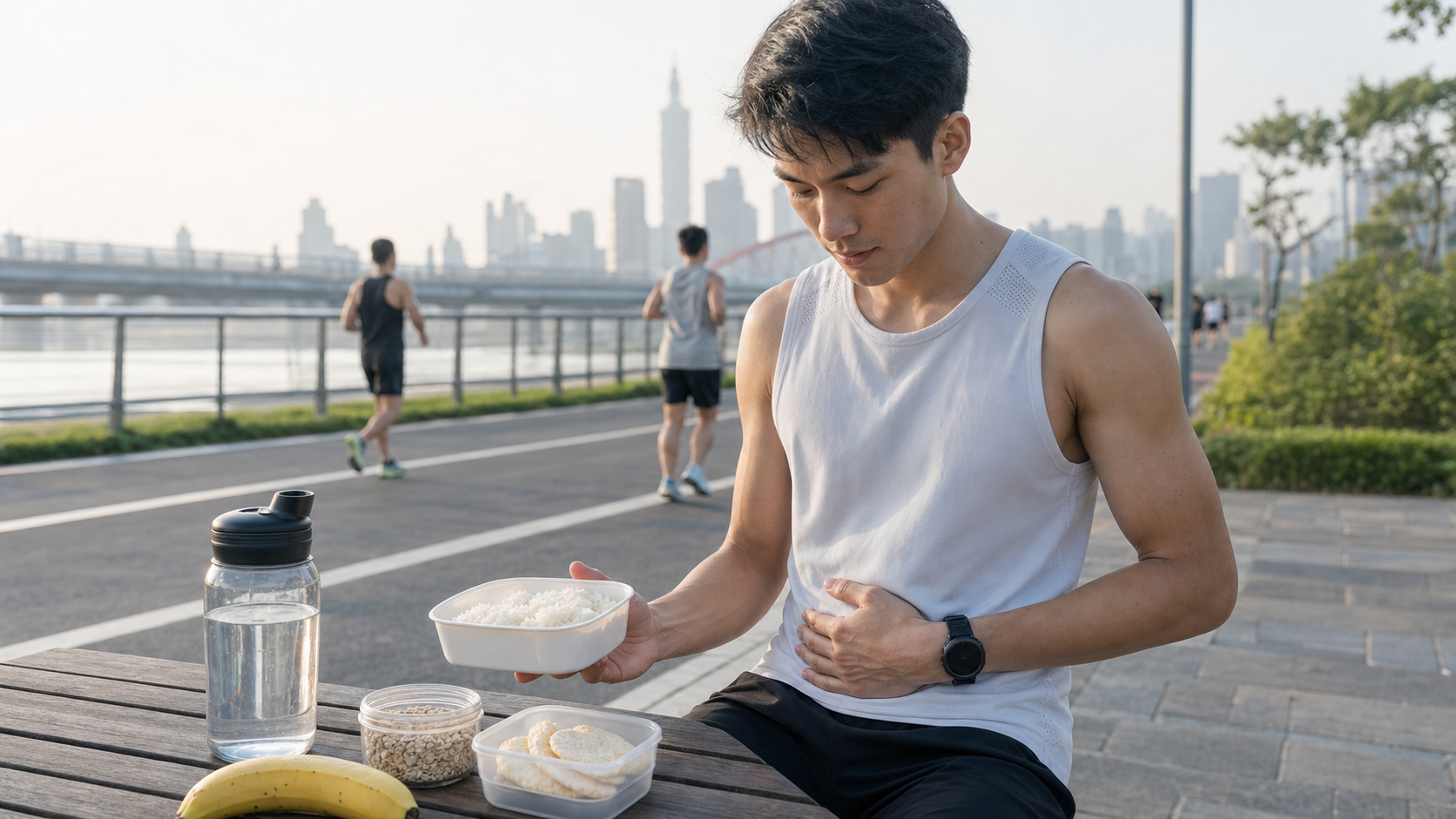
Opening: The Trainee Who Always Dashed to the Bathroom Before the Start Line
In my fifteen years coaching athletes, I’ve encountered every kind of stomach issue. Some people can eat the greasiest fuel without a problem, while others just have one latte before a race and find themselves squirming at the start line. The one that left the deepest impression on me was an amateur runner in the Taipei Marathon—let’s call him A-Kai. His training pace was steady, and his lactate threshold was well-developed, but come race day, around the ten-kilometer mark, his stomach would start cramping and bloating. Nearly every race, he’d end up diving into a portable toilet mid-course, finishing almost ten minutes slower than his training fitness suggested.
The first thing he said when he came to me was: “Coach, is my gut just too weak? Am I simply not cut out for running?” I shook my head. This wasn’t a matter of “weakness”—it was a very common yet chronically underestimated phenomenon: Exercise-Induced Gastrointestinal Syndrome, compounded by a possible underlying predisposition to IBS (Irritable Bowel Syndrome).
If you’re the type who’s “fine normally but your gut turns on you the moment you exercise,” or if you’ve been formally diagnosed with IBS yet still love cycling and running, this article is written for you. I’ll walk you from the scientific foundations to practical eating strategies, especially the low-FODMAP diet, which has gained increasing traction in sports nutrition circles in recent years, and bring it down to the realities of eating out in Taiwan, the climate, and the healthcare system.
Let me be clear upfront: this is educational content, not a substitute for your physician or dietitian. Diagnosing IBS requires professional evaluation to rule out other conditions—I’ll emphasize this repeatedly later.
Foundational Concepts: What Actually Happens to Your Gut During Exercise
Why Your Gut Protests When You Exercise
Many people assume gut discomfort means “eating the wrong thing,” but exercise itself is a massive stress test on the gut. When you start moderate-to-high-intensity exercise, your body redirects large volumes of blood to working muscles and skin for heat dissipation, and blood flow to the gut can drop significantly. Once the gut becomes relatively ischemic, the mucosal barrier weakens, intestinal permeability rises (a temporary version of the so-called “leaky gut”), and combined with the up-and-down impact of running or the forward-leaning compression of the abdomen while cycling, the gut becomes more prone to bloating, cramping, nausea, and even urgent bathroom trips.
This isn’t a minority issue. According to reviews in sports nutrition, among endurance athletes in events like marathons, triathlons, and long-distance cycling, the proportion reporting gastrointestinal symptoms is estimated between 30% and 90%—a wide range that depends on the sport type, intensity, environmental temperature, and diet. Women and younger athletes tend to have higher rates. Running, due to its greater impact, typically triggers lower-GI symptoms more readily than cycling or swimming.
Breaking down the mechanisms, gut distress during exercise generally follows three pathways: first, blood flow redistribution—the higher the intensity, the hotter the weather, and the more dehydrated you are, the more pronounced the gut ischemia; second, mechanical factors—the impact and postural compression mentioned earlier; third, nutritional and endocrine factors—including what you consume (especially high-FODMAP, high-fat, and high-concentration carbohydrates) and the effects of exercise stress hormones on gut motility. These three pathways often strike together, so the solution can’t rely on a single trick—which is why this article keeps stressing “multi-factorial, needs to be individualized.” Understanding this is crucial because it shifts your mindset from “just bad luck” or “I was born with a weak gut” to a problem that can be broken down and improved piece by piece.
IBS Is Actually Not Rare Among Athletes
Now let’s layer IBS on top. IBS is a functional gastrointestinal disorder characterized by recurrent abdominal pain and bloating accompanied by changes in bowel habits (diarrhea-predominant, constipation-predominant, or mixed), yet no structural abnormalities are found on examination. It’s diagnosed using symptom criteria (such as the Rome criteria).
Interestingly, research indicates that among endurance runners, when combining physician-confirmed cases with those meeting the Rome criteria, the prevalence of IBS is around 10%; with looser criteria, the figure may even exceed 20%. More critically, many people already meet the symptom criteria but have never been formally diagnosed—they simply endure it, treating “I get diarrhea when I run” as their fate.
So if you’ve struggled with this long-term, the first step is always: see a doctor to rule out inflammatory bowel disease, lactose intolerance, gluten-related disorders, infections, or other issues, rather than self-diagnosing online and randomly changing your diet.
Common Symptom Checklist
Gastrointestinal symptoms reported by athletes can be broadly divided into upper and lower GI groups:
| Region | Common Symptoms |
|---|---|
| Upper GI | Nausea, belching, GERD/heartburn, upper abdominal bloating, feeling like vomiting |
| Lower GI | Bloating, intestinal cramping, gas (flatulence), urgent bowel movements, diarrhea |
| Systemic | Dizziness, fatigue, decreased appetite (often secondary to the above) |
Among runners who also have IBS or other gut conditions, the most common complaints are stomach/intestinal cramping, diarrhea, and bloating, which is why dietary strategies often focus on “reducing fermentation and gas in the gut.”
The Three Types of IBS and How Exercise Strategies Differ Slightly
IBS doesn’t have just one face. Clinically, it’s broadly divided into three types based on predominant bowel habits, and the priorities for athletes differ slightly:
| Type | Key Features | Common Issues During Exercise | Dietary Strategy Focus |
|---|---|---|---|
| Diarrhea-predominant (IBS-D) | Loose stools, urgency, frequent bowel movements | Urgent bathroom needs mid-race, diarrhea | Low-residue, low-FODMAP pre-race; reduce excess fructose and caffeine |
| Constipation-predominant (IBS-C) | Difficulty passing stool, hard stools | Pre-race bloating, dull lower abdominal discomfort | Moderate soluble fiber, adequate hydration, regular routine |
| Mixed (IBS-M) | Alternating diarrhea and constipation | Unstable symptoms, hard to predict | Relies more on personalized tracking, test items one by one |
Among runners, those with IBS-D and IBS-M are the ones who most often come to me for help, because “urgent bowel movements” are truly the most miserable at a race. Meanwhile, people with IBS-C often overlook that they also count as a type of IBS, thinking “I just bloat easily.” Regardless of type, personalized tracking is the most valuable first step, because everyone’s trigger list really differs a lot.
Cycling vs. Running: The Gut Challenges Are Different
Many assume gut issues are a runner’s exclusive problem, but cycling has its own set of troubles. The runner’s main enemy is “up-and-down impact”—every footstrike jostles the internal organs, making lower-GI symptoms (urgency, diarrhea, cramping) especially likely. That’s why a low-residue pre-race strategy is so important for runners—the less content in the gut, the less chance it gets shaken out.
The cyclist’s main enemies are the “forward-leaning posture” and “long duration.” Crouching over the handlebars compresses the abdomen, easily triggering GERD, heartburn, and upper abdominal discomfort; and long-distance rides (often four to five hours or more) mean you have to consume large amounts of fuel on the bike, creating a greater cumulative load of carbohydrates and fluids for the gut to process. That’s why many long-distance cyclists are more troubled by “heartburn” and “can’t eat anymore” than by urgently hunting for a bathroom. For cyclists, avoiding high-fat and spicy foods pre-race, controlling the fructose ratio in a single fuel source, and eating small amounts frequently on the bike are often more critical than simply going low-residue. Regardless of the sport, the common solution is to rehearse early in training and find your own tolerance combination.
The Low-FODMAP Diet: The Hottest Tool in Sports Nutrition in Recent Years
What Exactly Is FODMAP
FODMAP is an acronym referring to a group of short-chain carbohydrates:
- Fermentable
- Oligosaccharides (such as fructans and galacto-oligosaccharides found in wheat, onions, garlic, and legumes)
- Disaccharides (mainly lactose)
- Monosaccharides (mainly excess fructose, such as in honey and some fruits)
- And
- Polyols (such as sorbitol and xylitol, commonly found in some fruits and sugar-free gum)
The common thread among these carbs is: they are not fully absorbed in the small intestine and are carried to the large intestine, where bacteria rapidly ferment them, producing gas and drawing water into the gut. For most people, this causes no noticeable issues, but for those with a particularly sensitive gut (such as people with irritable bowel syndrome, IBS), it can amplify into bloating, abdominal pain, and diarrhea.
The low-FODMAP diet was originally developed by the research team at Monash University to manage IBS symptoms, and clinically, many patients see significant improvement. In recent years, the sports nutrition community has taken notice: since exercise itself can make the gut more sensitive, could deliberately reducing FODMAP intake before and during exercise help those prone to gastrointestinal discomfort reduce their symptoms?
What the Current Evidence Says (Putting It Conservatively)
I have to be honest: research in this area is still accumulating, and much of it consists of small-scale studies or case reports—it cannot yet be treated as gospel. However, the current trend leans toward supporting this: for those who already tend to experience gastrointestinal symptoms during exercise, short-term reduction of FODMAP intake before competition has been observed in most studies to lower symptom severity. One representative example is applying a low-FODMAP strategy to a female ultramarathon runner with IBS, helping her manage symptoms during a multi-day ultramarathon event.
But two caveats must also be raised:
- Long-term strict low-FODMAP is not ideal. Many high-FODMAP foods (onions, garlic, legumes, some fruits, and whole grains) are actually important nutrients for beneficial gut bacteria. Severely restricting them over the long term may compromise gut microbiota diversity and overall nutrition, and long-term data in athletes remains limited.
- Low-FODMAP is not a weight-loss method, nor is it for everyone. It is a tool to be used “only when symptoms occur, and in phases.” People without gut issues have no need to restrict these foods just to run faster.
The Three Phases of Low-FODMAP
A proper low-FODMAP diet is not about “never eating these foods again”—it is a three-phase process, ideally conducted under the guidance of a dietitian:
| Phase | Duration (Approximate) | Goal | Approach |
|---|---|---|---|
| Phase 1: Strict Restriction | About 2–6 weeks | Let symptoms settle first | Switch entirely to low-FODMAP foods and observe whether symptoms improve |
| Phase 2: Systematic Reintroduction | About 3 days per item | Identify your personal triggers | Test one FODMAP category at a time, recording reactions and tolerance levels |
| Phase 3: Personalized Long-Term Diet | Long-term | Balance gut health and quality of life | Avoid only the items that truly trigger symptoms; eat everything else normally |
The spirit of this process is: find out what your triggers are, rather than avoiding everything forever. Many clients discover after Phase 2 that they are only particularly sensitive to onions and garlic, while milk and apples are actually fine—so why live the rest of your life so restricted?
Practical Approach: Specific Eating Strategies for Race Day and Training
This is the main event. I’ve organized the principles I use most often with my athletes into several tables that you can use directly.
High/Low-FODMAP Comparison of Common Foods
Note: The following are general classifications based on common knowledge; actual tolerance varies from person to person, and portion size matters (a little onion might be fine, but a large plate could set you off).
| Category | Higher FODMAP (avoid if sensitive before race) | Lower FODMAP (relatively safe) |
|---|---|---|
| Staple starches | Wheat bread, some pasta, large amounts of whole grains | White rice, white toast, potatoes, some gluten-free products |
| Vegetables | Onions, garlic, broccoli stalks, asparagus, mushrooms | Carrots, spinach, cucumber, zucchini, tomatoes (in moderation) |
| Fruits | Apples, pears, watermelon, mango, lychee | Bananas (not overripe), kiwifruit, oranges, grapes |
| Dairy | Regular milk, yogurt (containing lactose) | Lactose-free milk, hard cheeses, some yogurts |
| Legumes | All types of beans, large amounts of chickpeas | Small amounts of drained canned beans (portion-controlled) |
| Sweeteners | Honey, high-fructose corn syrup, sorbitol, xylitol | Regular sugar, glucose, small amounts of maple syrup |
Onions, garlic, and scallion-stir-fried dishes—beloved by Taiwanese people—are actually major FODMAP sources, so you really need to be careful with that pre-race meal. One handy trick: use garlic oil or scallion oil instead of minced garlic or scallion segments—FODMAPs are mostly water-soluble and do not dissolve in oil, so the garlic aroma stays in the oil while the trigger compounds remain in the discarded solids. This way, you get both flavor and gut comfort.
Practical Choices for Eating Out in Taiwan
I know—after seeing the table above, many people’s first reaction is: “Coach, I eat out for every meal. How could I possibly control things that precisely?” This is indeed the most realistic challenge for Taiwanese athletes. So I’ve put together a list of relatively safe choices for eating-out scenarios, to make those pre-race meals a bit easier:
| Scenario | Relatively Triggering (avoid before race) | Relatively Safe (prioritize before race) |
|---|---|---|
| Convenience store | Garlic bread, latte with lactose, sugar-free polyol snacks | Onigiri (rice balls), white toast, bananas, sweet potatoes (in moderation) |
| Buffet / bento box | Stir-fries with lots of onions, garlic-sautéed dishes, chives, raw salad | White rice, steamed/grilled chicken leg, lightly oiled leafy greens |
| Noodle shop | Garlic sauce, onion-based broth, large amounts of soy products | Plain white noodles, clear broth, minimal sauce |
| Breakfast shop | Milk tea (lactose), onion-filled egg crepes | White toast, plain egg crepe, small amount of unsweetened soy milk to test |
Note the word “relatively”—these are not guaranteed safe lists, but rather risk comparisons. Portion sizes still need to be controlled, and you must fine-tune based on your own symptom diary. Although eating out in Taiwan offers many choices, it also has many landmines, but as long as you stick to the key principles—“white rice and white noodles, easily digestible protein, avoid sautéed garlic/scallions/onions, and limit lactose before race day”—you can navigate it quite smoothly.
Pre-Race 24–48 Hour Eating Schedule
This is the framework I used for A-Kai, and it was key to helping him get his performance back:
| Time Point | Dietary Focus | Examples |
|---|---|---|
| 48 hours before race | Start reducing high-FODMAP and high-fiber load; begin glycogen storage | White rice, chicken breast, pumpkin, bananas |
| 24 hours before race | Low-residue, low-FODMAP, easily digestible | White rice/white noodles, skinless chicken thigh, low-oil vegetables |
| 3–4 hours before race (pre-race meal) | Focus on easily absorbed carbs; keep fat and fiber low | White toast with jam, white rice with low-oil protein, sports drink |
| 30–60 minutes before race | Small amounts of easily absorbed carbs; avoid anything new | Half a banana, energy gel (one you’ve tested in training) |
Three golden rules: low residue, easily absorbed, no experimenting. Race day is absolutely not the time to try a new gel or a new bread for the first time—I’ve said this hundreds of times in class, and yet every year someone still steps on that landmine.
How to Fuel During Exercise
Carbohydrate intake during exercise is also related to FODMAP. Traditionally, endurance exercise guidelines recommend about 30–60 grams of carbohydrates per hour, and for ultra-distances or those who have trained their gut, this can be pushed even higher. But note:
- Supplements with too high a fructose ratio are prone to causing bloating and diarrhea, because excess fructose is itself a FODMAP. Most quality sports supplements on the market use a combined glucose + fructose ratio (commonly around 2:1), which spreads the load across different absorption pathways, actually increasing total absorption while reducing gut burden.
- You can deliberately train your gut. This is called “gut training”—practicing eating and drinking according to your race plan during regular long training sessions, allowing your gut to gradually adapt to eating during exercise. Like muscles, the gut can be trained.
Progressive Gut Training Schedule
Gut training can’t be done overnight; it has to progress gradually, just like building up your running mileage. Here’s a six-week progressive framework I often give to advanced athletes. The key is allowing the gut to gradually adapt to higher carbohydrate and fluid intake during exercise:
| Week | Training Context | Hourly Carbohydrate Target | Hydration / Notes |
|---|---|---|---|
| Weeks 1–2 | 90-minute easy run / ride | ~30 grams | Choose familiar low-FODMAP fuel; build the habit first |
| Weeks 3–4 | 2-hour long training session | ~40–50 grams | Add small, frequent feedings at regular intervals |
| Week 5 | Near race duration | ~50–60 grams | Fully rehearse the race-day fueling schedule |
| Week 6 | Race-day rehearsal | Per race plan | Practice together with wake-up time and pre-race meal |
This process also helps you screen your fueling products. Some energy gels are particularly prone to causing bloating in certain people (often due to fructose or polyols). Eliminating them during training means no surprises on race day.
Hydration and Electrolytes: The Hidden Variable in Taiwan’s Humid Heat
Many races in Taiwan are held in hot, humid conditions. In summer, riding the West Coast or running along riverside paths often feels like 30+°C, and sweat loss is massive. Dehydration itself worsens gastrointestinal symptoms during exercise — blood is shunted more toward the skin for cooling, leaving the gut with less blood flow, making nausea and abdominal discomfort more pronounced. So your hydration strategy is just as important as FODMAPs.
| Time | Hydration / Electrolyte Recommendation | Reminder |
|---|---|---|
| 2–3 hours pre-race | Consume ~400–600 ml of fluid in portions | Avoid chugging too much at once, which causes stomach bloating |
| 30 minutes pre-race | Sip ~150–250 ml | Check for any sloshing sensation in the stomach |
| During exercise | Sip in portions based on sweat rate and thirst; more frequent in humid heat | For longer efforts, pair with sodium-containing electrolyte drinks |
| Post-race | Replenish lost fluids and include sodium | Aids recovery and subsequent digestion |
I won’t give you a precise milliliter formula here, because sweat rates, weather, and intensity vary greatly between individuals. The best approach is to test during training: weigh yourself before and after a session to figure out roughly how much fluid you lose per hour, then personalize accordingly. Drinks that are too concentrated (especially high-fructose ones) are more likely to make your gut shut down in humid heat — better to go slightly more diluted and sip more frequently.
Common Mistakes and Fixes
Having coached athletes for years, I’ve seen the same pitfalls far too many times. Here are the most common ones — see if any apply to you.
Mistake 1: Treating Low-FODMAP as a “Lifelong Elimination List”
Problem: Many people hear that onions and garlic are problematic, so they avoid them entirely, and end up cutting out a bunch of healthy vegetables, fruits, and legumes. Their diet gets narrower and narrower, and their gut microbiome actually gets worse.
Fix: Remember that low-FODMAP is a “three-phase, find-the-triggers, then-reintroduce” tool, not a permanent blacklist. After completing the reintroduction phase, bring foods that don’t trigger symptoms back to the table.
Mistake 2: Binge-Eating Garlic Stir-Fries, Spicy Hot Pot, and Raw Salads the Night Before a Race
Problem: Pre-race group dinners are a big tradition in Taiwan. The night before, a group heads out for spicy hot pot, garlic-heavy stir-fries, and cold raw salads — all oily, spicy, high-FODMAP, and high-fiber. Of course your gut rebels the next morning.
Fix: Choose a familiar, bland, low-residue meal for your pre-race dinner. Want a feast? Save it for the post-race celebration.
Mistake 3: Only Changing Diet, Ignoring Other Triggers
Problem: Putting all your hopes on food while ignoring dehydration, overuse of painkillers (some NSAIDs increase gut irritation), overly intense warm-ups, sleep deprivation, and pre-race anxiety — all of these can worsen GI symptoms during exercise.
Fix: GI symptoms are multifactorial. Diet is just one piece. Hydration strategy, mental relaxation before races, and avoiding random painkiller use are equally important. Taiwan’s summer heat and humidity cause rapid fluid and electrolyte loss — this cannot be ignored.
Mistake 4: Playing Doctor and Skipping a Formal Diagnosis
Problem: Reading a few articles online, concluding you have IBS, and drastically changing your diet — only to delay addressing a real medical issue (such as inflammatory bowel disease, celiac disease, or something even more serious).
Fix: If you have any of the following red flags, see a doctor immediately — don’t tough it out with self-directed diet changes: blood in stool, unexplained weight loss, waking up at night from pain, persistent fever, anemia, or a family history of GI cancer or inflammatory bowel disease. Taiwan’s National Health Insurance makes seeing a gastroenterologist easy — get checked if needed.
Actionable Advice for Readers at Different Levels
Everyone’s situation and commitment level differs, so I’ve split my advice into three tiers.
Beginners (General athletes with occasional GI discomfort)
- Start a “food and symptom diary”: log what you eat, your training, and your gut reactions for two consecutive weeks. Many people catch their triggers just by doing this.
- Start with a “low-residue, easy-to-digest, no-new-foods” pre-race meal — no need to jump straight into full low-FODMAP.
- Prioritize hydration, especially in Taiwan’s humid heat.
- If symptoms persist or red flags appear, see a doctor first.
Advanced Athletes (Regular training, specific race goals)
- Schedule a “pre-race nutrition rehearsal” 2–4 weeks before an important race, using a long training session to simulate race-day eating and find the smoothest combination.
- Begin practicing “gut training” to help your gut adapt to mid-exercise fueling.
- If pre-race symptoms recur, consider a short-term low-FODMAP reduction before races with the help of a sports dietitian.
- Review the carbohydrate composition of your fueling products; prioritize glucose + fructose blends and avoid single-source high-fructose options.
Athletes with a Confirmed IBS Diagnosis
- Work as a team with your doctor and dietitian, and complete the full three-phase low-FODMAP protocol properly — don’t impose strict restrictions on yourself.
- Incorporate both training-day and race-day nutrition into personalized management, and record which items are especially likely to trigger symptoms “under exercise conditions” (some foods are fine at rest but cause problems during exercise).
- Pay attention to psychological factors: IBS is highly correlated with stress and anxiety. Race-day nerves themselves can worsen symptoms, so pre-race relaxation and breathing regulation are part of your training.
- Keep up with regular follow-up appointments; don’t take long-term changes in symptoms for granted.
Regardless of which level you belong to, I want to remind you of one thing: progress is built on records, not on sheer willpower. Many athletes initially find keeping a food-symptom diary annoying, but after actually doing it for two or three weeks, almost everyone comes back and tells me, “So that’s what was causing it.” That feeling of finally catching the culprit is more useful than any fueling product. Treat every training session and every race’s gut reaction as a data point. Accumulate them slowly, and you’ll understand your body better and better — that’s the long-term solution. Don’t expect overnight results, and don’t write everything off because of one bad experience. If the direction is right, time will be on your side.
Wrapping Up with a Real Case Study
Back to A-Kai. What we did wasn’t actually complicated: first, we had him get a basic check-up at a gastroenterology clinic to rule out other issues (the results showed no structural pathology — his symptoms matched the picture of a functional gut problem). Next, we had him keep a food-symptom diary, which identified onions, garlic, and his pre-race latte habit (lactose) as the main triggers. In the 48 hours before the race, we switched him to a low-residue, low-FODMAP diet centered on white rice, chicken breast, and bananas, cut out all new foods, swapped his gels for a glucose-fructose blend he had practiced with during long runs, and rehearsed the entire routine across several 30K long runs.
At his next full marathon, he made it through the entire race without a single bathroom stop for the first time, and his time returned to a level close to his training fitness. When he texted me, he wrote just one line: “Turns out my gut wasn’t broken — I just never took it seriously.”
I want to dedicate that line to everyone who has ever nervously dashed to the bathroom before a start line, silently believing they just weren’t built for endurance sports. Your gut can be understood, trained, and cared for. Find the right methods and the right professionals, and you too can enjoy cycling and running with peace of mind.
Don’t Forget the Gut-Brain Axis: The Two-Way Link Between Psychology and Digestion
When discussing irritable bowel syndrome (IBS), we can’t only talk about food. The gut is called the “second brain” for good reason—there is close two-way communication between the brain and the gut (the gut-brain axis). Stress, anxiety, and tension genuinely alter gut motility and sensitivity. This is why many people can eat the same foods without issues on a normal day, but when a big race comes around and nerves kick in, their digestive system starts acting up.
That’s how it was for A-Kai at first. He later admitted that every time he stood at the starting line, just thinking “Am I going to need the bathroom again?” was enough to make his stomach uncomfortable—this is a vicious cycle formed by anticipatory anxiety: the more you fear it, the more tense you get; the more tense you get, the more uncomfortable you feel; the more uncomfortable you feel, the more you fear it next time.
What I added for him, beyond diet, were a few simple psychological and routine adjustments:
- Establish a fixed pre-race ritual: A consistent routine for waking up, eating, using the bathroom, and warming up gives the body a sense of security and reduces uncertainty.
- Diaphragmatic breathing for relaxation: Do several slow, deep breaths before the start to activate the parasympathetic nervous system and ease gut tension.
- Prioritize sleep: Protect your sleep in the week before the race; poor sleep makes the gut more sensitive and more prone to issues.
- Reframing: Change “My gut is terrible” into “I’m learning to take care of my gut.” Simply shifting this mindset can significantly reduce anxiety.
If anxiety is already severely affecting your life and racing, seeking professional psychological help is nothing to be ashamed of—it’s the same principle as working with a coach to refine your technique.
Frequently Asked Questions (FAQ)
Q1: Do I have to follow a low-FODMAP diet for life?
No. It’s a three-stage tool: “Restriction → Reintroduction → Personalization.” The strict restriction phase typically lasts only a few weeks, with the goal of identifying your trigger foods, and eventually most foods can make their way back to your plate. Long-term over-restriction can actually harm your gut microbiome.
Q2: I haven’t been diagnosed with IBS; I just occasionally feel weird in my stomach during exercise. Do I need to go low-FODMAP?
Not necessarily. You don’t have to jump straight into a full low-FODMAP diet. Start with the basics: a food-symptom diary, a low-residue, easily digestible pre-race meal, and avoiding trying new foods. Most people see significant improvement with just these steps. Only if the issue keeps recurring should you consider trying it under professional guidance.
Q3: Is a gluten-free diet the same as a low-FODMAP diet?
Not exactly. Wheat products containing gluten also happen to be high in fructans (a type of FODMAP), so some people feel better on a gluten-free diet, but it may actually be the reduction in FODMAPs that’s helping, not gluten itself. True gluten-related disorders (such as celiac disease) require a doctor’s diagnosis—don’t self-diagnose.
Q4: Can I drink coffee before a race?
It depends on the individual. Caffeine stimulates gut motility, which may help those with constipation, but for those with diarrhea-predominant symptoms or who are prone to sudden urges, a strong coffee before a race could be the last straw for your gut. Be sure to test it during training—don’t gamble on race day.
Q5: Are probiotics useful?
Some people report benefits, but the evidence is still inconsistent, and different strains have different effects, so it can’t be generalized. They’re not a magic bullet and can’t replace overall dietary and lifestyle adjustments. If you want to try them, give it a few weeks to observe results and combine them with other strategies.
Q6: What time and what should I eat on race morning?
The principle is to finish an easily digestible main meal 3–4 hours before the start, giving your body time to empty out; 30–60 minutes before the gun, you can top up with a small amount of easily absorbed carbohydrates. The key point is always: everything must be rehearsed in training first—never try anything new on race day. This is worth repeating because it can prevent more than half of race-day gut disasters. Your gut hates “surprises” the most, and what we call rehearsal is simply dismantling every surprise in advance, so that on race day your body only needs to do what it already knows well.
This article is for educational purposes and cannot replace individual diagnosis and treatment advice from a physician, physical therapist, or dietitian. The diagnosis and management of IBS and various gastrointestinal conditions must be determined by qualified medical professionals based on individual circumstances. If you experience warning signs such as blood in the stool, rapid weight loss, persistent fever, or being woken up by pain at night, please seek medical attention promptly—do not tough it out by self-adjusting your diet.
References
- Monash FODMAP — Research Update: GI symptoms and exercise: https://www.monashfodmap.com/blog/research-update-gi-symptoms-and-exercise/
- The Role of FODMAPs in Sports Nutrition: A Narrative Review and Clinical Implications (PMC): https://pmc.ncbi.nlm.nih.gov/articles/PMC12845378/
- Exit Gluten-Free and Enter Low FODMAPs: A Novel Dietary Strategy to Reduce Gastrointestinal Symptoms in Athletes (PMC): https://www.ncbi.nlm.nih.gov/pmc/articles/PMC6445805/
- Dietary Patterns in Runners with Gastrointestinal Disorders (PMC): https://pmc.ncbi.nlm.nih.gov/articles/PMC7912258/
- Applying a Low-FODMAP dietary intervention to a female ultraendurance runner with irritable bowel syndrome (Monash University): https://research.monash.edu/en/publications/applying-a-low-fodmap-dietary-intervention-to-a-female-ultraendur/
Related Reading
- Desperately Searching for a Bathroom Mid-Run? A Complete Guide to Exercise-Induced Diarrhea: Mechanisms, Dietary Adjustments, and Pre-Race Strategies
- Exercise and Digestion: Why Does Running Make You Need the Bathroom? A Complete Guide from Intestinal Ischemia to On-the-Spot Management
- Clinical Benefits of a Low-FODMAP Diet for Gastrointestinal Symptoms in Endurance Athletes
- Can You Still Exercise with a Sensitive Stomach? A Safety Management Guide for Exercise and Gastrointestinal Disorders
約騎爆笑地獄梗 大腸怎麼了🤣 #公路車 #cycling
3 年前
一日北高/長距離團騎 常見問題補充篇 / 組團或跟團的眉角 / 壯車友容易被瘦車友慢性拉爆 / 原來屁股痛可能是這個原因...? / 風場配速法 / 公路車 / CT Yeh
2 年前
一日北高常見問題大集合 | 攻略 | 路線 | 訓練 | 補給 | 自行車 單車 | 一日雙城 | 雙塔 | TWB北高360 | 屁股痛
6 年前
CT 喇低賽) 單車 比賽總是沒照片? 攝影師的觀點大公開 姿勢就是力量! 請加速1.25倍收看
7 年前
CT暗黑廚房) 車友必備 宇宙無敵鮮蚵湯 幫助訓練恢復 天然食補 好市多 超肥鮮蚵 破PR
7 年前
TBA 北高360 逆風爆熱再送空汙 苦行挑戰賽全記錄 4K沈浸式臨空畫質| 公路車 | CT Yeh
3 年前
4K 東眼山 x 水蜜桃冰沙 百人單車約騎! 操完再吃冰 多爽快
7 年前
16/02/16 - 夜訪中社路 緩慢進步中
10 年前