Stable Blood Sugar Nutrition for Athletes: A Complete Guide to GI/GL, Meal Timing, and Practical Fueling
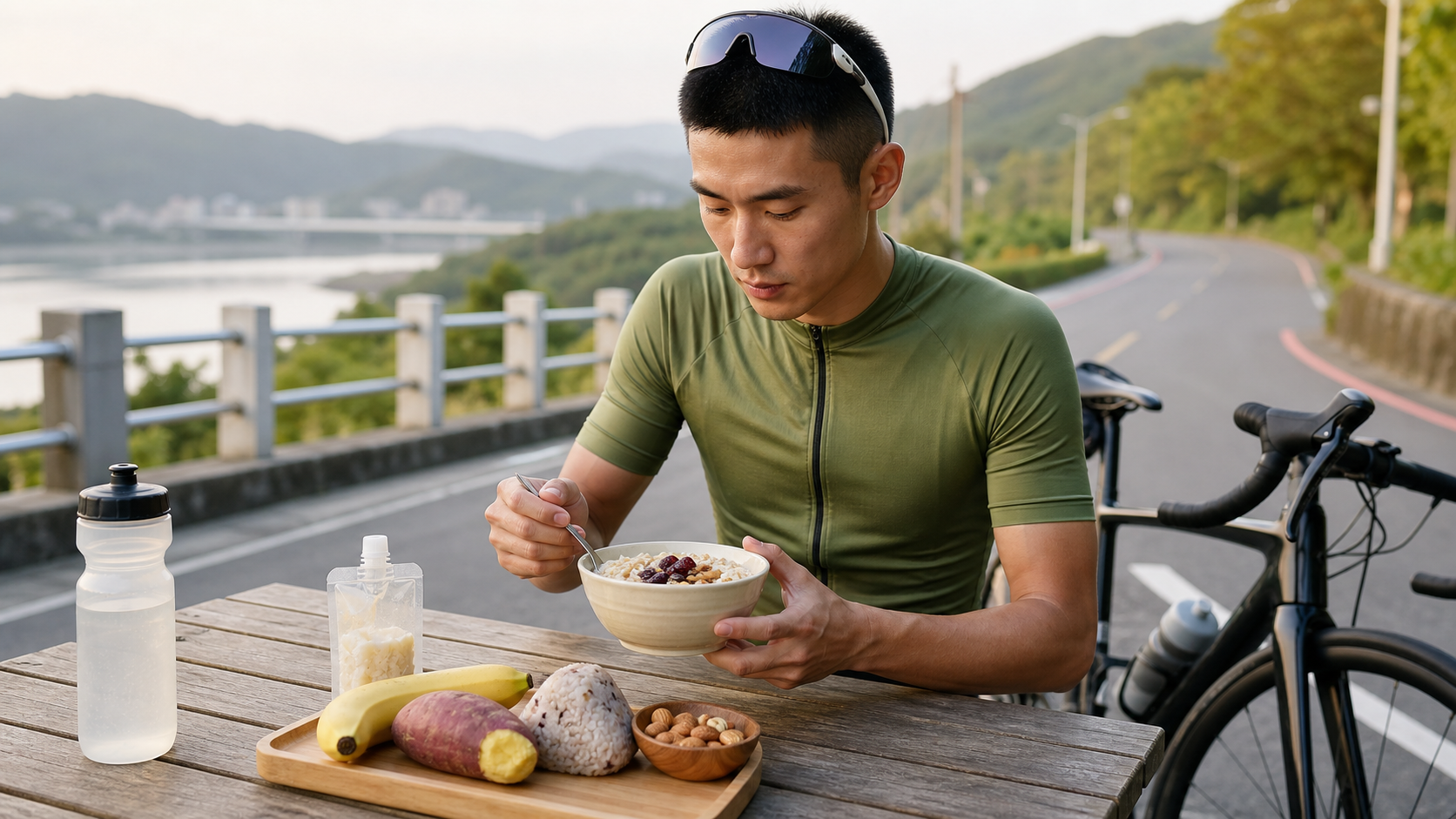
Starting with a Student Who Always “Ran Out of Gas” at the 35-Kilometer Mark
I once coached an amateur triathlete named A-Zhe. His problem was classic: he had plenty of energy in the first half of training, holding his power output beautifully, but every time he rode past the two-and-a-half-hour mark—around 35 kilometers—it was like someone pulled the plug. Power dropped steadily, pace fell apart, and his mind went blank. His own diagnosis was “not fit enough,” so he doubled down on training volume. The result? He only got more exhausted, even feeling groggy at work during the day.
I had him wear a continuous glucose monitor (CGM) patch for a week, and when we laid the data out, the answer was clear: it wasn’t a fitness problem—it was unstable blood sugar. Before heading out, he was in the habit of downing a large bottle of sugary sports drink plus two slices of white toast. His blood sugar spiked within half an hour, then insulin surged, dragging glucose back down—even overshooting—so halfway through the ride he hit the classic “reactive hypoglycemia”: shaky hands, scattered focus, and weakness. He was fueling plenty, but the way he fueled sent his body on a roller-coaster ride.
I told him: “What you need to train isn’t harder—it’s to ‘flatten’ that blood sugar curve first.” Three weeks later, on the same route and with the same training hours, he got past that 35-kilometer wall, and after getting off the bike he no longer collapsed onto the sofa in exhaustion. In this article, I want to walk you through exactly what we did in those three weeks.
This isn’t just about competitive athletes. In Taiwan, there’s a huge population of weekend cyclists, daily commuters, and after-work runners who have to juggle eating out, overtime, and sleep deprivation while still trying to protect their performance. Stable blood sugar is the foundational layer that lets you take care of both “athletic performance” and “daily energy” at the same time.
Why Stable Blood Sugar Is So Critical for Athletes
Blood Sugar Isn’t About Going Higher—It’s About Staying Steady
Many people have an intuition: to have strength for exercise, you need to eat lots of sugar and spike your blood sugar. That’s a misunderstanding. What the body actually wants is a steady, predictable supply of glucose—not wild peaks and cliffs.
When you take in a large amount of high-GI (glycemic index) carbs at once, blood sugar shoots up fast, and the body secretes a flood of insulin to cope. With high insulin, two things happen simultaneously: first, blood sugar can be dragged too low, causing hypoglycemic discomfort during or after exercise; second, high insulin suppresses fat mobilization and oxidation. This is especially costly for endurance sports, because prolonged exercise relies heavily on fat as the “big fuel tank” for sustained energy. If you suppress the fat-metabolism pathway from the start, you’re forcing the body to burn only glycogen—the “small fuel tank”—and it’s no surprise you run dry quickly.
According to research compiled in the sports-nutrition field, consuming a low-GI meal before exercise results in more stable blood glucose during exercise, higher free fatty acid concentrations and fat oxidation rates, and a relatively slower rate of muscle glycogen depletion (Burdon et al., Sports Medicine systematic review). That’s the physiological basis for how “flattening blood sugar” can delay hitting the wall.
One thing I want to make very clear here: the academic consensus on whether a pre-exercise low-GI meal definitely improves performance is not entirely consistent. Different studies use different subjects, exercise modalities, and meal timing—some show clear differences, others show minimal or no difference. So my practical approach with athletes is this—a low-GI meal is a stable, low-risk strategy that helps most people, but it’s about “laying a solid foundation,” not “guaranteeing a win.” What truly determines performance is still training, recovery, and overall nutrition. The blood-sugar strategy is the piece of the puzzle that keeps those efforts from being wasted.
What “Hitting the Wall” and “Reactive Hypoglycemia” Really Mean
Endurance athletes fear two conditions, and their mechanisms are actually different—worth distinguishing clearly:
- Hitting the wall: Usually refers to glycogen depletion after prolonged exercise, when the body can’t fill the energy gap fast enough with fat and external carbs, resulting in full-body weakness and a collapsing pace. It typically occurs in the later stages of exercise lasting over 90 minutes.
- Reactive hypoglycemia: This is caused by consuming a large amount of high-GI carbs before or early in exercise, where blood sugar spikes and then insulin overreacts, pulling glucose too low. It can show up 15–45 minutes into exercise as shaking, dizziness, and weakness.
A-Zhe’s initial problem was actually a combination of both: the high-sugar pre-ride intake caused early blood-sugar instability, and his fueling approach failed to spare glycogen, so he hit the wall in the later stages. Understanding this distinction tells you how to treat the right problem—the former is solved by “fueling timing and total amount,” the latter by “choosing the right GI for your pre-race meal.”
GI and GL: Two Concepts You Absolutely Must Keep Straight
You can’t talk about blood-sugar stability without these two terms:
- GI (Glycemic Index): Measures how fast and how much blood sugar rises from “the same amount of carbs.” Generally, GI ≤ 55 is low, 56–69 is medium, and ≥ 70 is high. It compares quality.
- GL (Glycemic Load): Factors in “the actual amount of food you eat.” The formula is GL = GI × available carbs in grams per serving ÷ 100. It compares quality × quantity.
Why look at both? Take a familiar Taiwanese example: watermelon has a fairly high GI (around 72), but a slice of watermelon doesn’t contain much actual carbs, so its GL is actually low. Conversely, white rice has a medium-high GI, but since we might eat a whole big bowl in one meal, its GL becomes substantial. Looking at GI alone misleads you; GL is closer to your real blood-sugar response after eating.
The table below helps you quickly build intuition for common Taiwanese foods:
| Food (common serving) | Approx. GI | Available carbs per serving | Approx. GL | Blood-sugar friendliness |
|---|---|---|---|---|
| White toast, 2 slices | High (approx. 75) | Approx. 30 g | Approx. 22 | Low (pronounced spike) |
| White rice, 1 bowl | Medium-high (approx. 73) | Approx. 55 g | Approx. 40 | Low to medium |
| Brown rice, 1 bowl | Medium (approx. 68) | Approx. 50 g | Approx. 34 | Medium |
| Sweet potato (1 medium) | Medium (approx. 63) | Approx. 27 g | Approx. 17 | Medium to high |
| Oats (unsweetened, 40 g dry) | Low (approx. 55) | Approx. 27 g | Approx. 15 | High |
| Whole-wheat pasta, 1 serving | Low (approx. 48) | Approx. 48 g | Approx. 23 | Medium to high |
| Banana (1 medium) | Medium (approx. 51) | Approx. 24 g | Approx. 12 | High |
| Apple (1 medium) | Low (approx. 36) | Approx. 19 g | Approx. 7 | Very high |
| Unsweetened soy milk, 1 cup | Low (approx. 34) | Approx. 6 g | Approx. 2 | Very high |
(GI/GL values are approximate ranges commonly found in the literature; individual variation is large, and the same food can differ significantly by variety, ripeness, processing, and cooking method. The table above is only for building relative intuition and should not be treated as precise data.)
What Affects Blood-Sugar Response Goes Far Beyond the Food Itself
This is the key point I always emphasize to my athletes: the same food, eaten differently, paired with different things, at different times, produces wildly different blood-sugar responses.
- Fiber: The dietary fiber in vegetables, whole grains, and legumes delays gastric emptying and carbohydrate absorption, flattening the blood-sugar curve.
- Protein and fat: Eaten together with carbs, they slow down carbohydrate absorption. The same bowl of rice with vegetables and an egg on the side produces a much gentler blood-sugar peak.
- Eating order: Eat vegetables first, then protein, and save the rice or noodles for last—post-meal blood-sugar peaks are usually lower. This trick is especially practical for Taiwanese people who eat out; just changing the order of a bento box makes a difference.
- Cooking and processing: The more thoroughly cooked, blended into juice, or finely processed, the higher the GI. White congee is a perfect example—its GI is quite high, so “easy on the stomach” doesn’t equal “blood-sugar friendly.”
- Current state: Sleep deprivation, stress, or just finishing high-intensity exercise all change how your body responds to the same food. That’s why you’re especially prone to cravings and blood-sugar swings the day after staying up late.
Practical Methods: Four Pillars for Flattening Your Blood Sugar Curve
Now that the concepts are covered, here is the operational framework I actually use with my athletes. I break it down into four pillars: plate composition, meal timing, pre-/mid-/post-exercise fueling, and daily routine.
Pillar One: The “Plate Composition” for Every Meal
Whether you’re a racer or a weekend rider, I recommend structuring everyday meals with the same template:
- Half the plate vegetables: Provides fiber—the cheapest and most effective tool for flattening blood sugar.
- One palm of quality protein: Chicken breast, fish, tofu, eggs, lean meat—slows carbohydrate absorption and aids recovery.
- One fist of whole-food starches: Brown rice, sweet potato, pumpkin, whole wheat—replacing refined white rice and bread.
- Moderate healthy fats: Olive oil, nuts, avocado—further stabilizes the curve.
The point of this structure is not “no carbs.” Athletes should absolutely not go to the low-carb extreme. Endurance sports require carbohydrates. What we need to do is choose the right types, pair them with fiber and protein, and eat them at the right time—not demonize carbs.
Pillar Two: Meal Timing—Put Carbs Where Your Body Needs Them Most
A core principle for athletes is called “carb timing”: place more and faster carbohydrates in the window around exercise when the body can utilize them most efficiently; for periods far from training (e.g., prolonged sitting at a desk, before bed), prioritize low-GI, high-fiber, protein-rich foods to avoid unnecessary blood sugar swings.
Below is a sample day I gave to an amateur rider who trains in the morning (training day):
| Time | Content | Design Logic |
|---|---|---|
| 2–3 hours pre-training | Oatmeal + unsweetened soy milk + one banana + a small handful of nuts | Low-to-moderate GI focus, provides steady fuel, avoids a pre-ride blood sugar spike |
| 30 minutes pre-training (optional) | Half a banana or a small carb snack | If the previous meal was a while ago, top up with some quickly usable carbs |
| During training (>90 min) | 30–60 g carbs per hour (sports drink/energy gel/banana) | Only needed for longer sessions, maintains blood sugar and energy supply |
| 30–60 minutes post-training | Sweet potato + chicken breast + vegetables, or chocolate milk + rice ball | Replenishes glycogen + protein for repair; the body utilizes carbs efficiently at this time |
| Lunch/Dinner | Standard plate structure (half veg + protein + whole-food starch) | Stabilizes daily blood sugar, supports recovery |
| Before bed (if hungry) | Unsweetened yogurt or a small handful of nuts | Avoids high-GI late-night snacks causing nocturnal blood sugar swings |
Please note: the recommendation of 30–60 g of carbs per hour during exercise applies to continuous sessions lasting over 90 minutes. If you’re only riding 40 minutes or running 30 minutes, you don’t need constant fueling during the session—doing so just adds unnecessary calories and blood sugar fluctuations. This is one of the most common over-fueling mistakes I see.
Pillar Three: Pre-, Mid-, and Post-Exercise Fueling Strategies
This is the part athletes care most about and where mistakes are most common. I’ve summarized the principles in a dosage table (all are general guidelines and should be adjusted based on individual body weight, intensity, weather, and gut tolerance):
| Timing | Goal | Carb Type & Approximate Amount | Coach’s Note |
|---|---|---|---|
| 2–4 hours pre-exercise | Fill the tank, keep blood sugar steady | Low-to-moderate GI focus, approx. 1–4 g carbs per kg body weight | Give the gut time to digest; avoid starting bloated |
| 5–15 minutes pre-exercise | Top up with immediately usable energy (optional) | Small amount of fast carbs, e.g., half a banana | Those with sensitive stomachs can skip |
| During exercise (<75 min) | Usually no extra carbs needed | Water primarily | Don’t fuel just for the sake of fueling |
| During exercise (1–2.5 hours) | Maintain blood sugar and performance | 30–60 g carbs per hour | Take in small, frequent sips with water |
| During exercise (>2.5 hours) | Delay hitting the wall | Up to 60–90 g per hour (requires gut training) | Use multiple carbohydrate sources; train absorption progressively |
| 0–2 hours post-exercise | Replenish glycogen, repair muscle | Carbs + protein (approx. 3–4:1 ratio) | Good Taiwan options: rice ball + soy milk, sweet potato + tea egg |
Regarding the pre-exercise meal, there’s a frequently debated question: low GI or high GI? Based on the existing literature, consuming a low-GI meal before exercise, compared to high-GI, may lead to more stable blood glucose during exercise, greater fat oxidation, and delayed onset of fatigue. Most studies observe a moderate effect that doesn’t appear consistently in performance outcomes (Burdon et al. systematic review and meta-analysis; recent study comparing low- and high-GI diets using continuous glucose monitoring). In other words, the evidence points in a positive direction, but the magnitude is a “bonus” rather than a “game-changer”—don’t treat it as magic that guarantees victory.
My practical advice is straightforward: lean toward low-to-moderate GI for the pre-exercise meal, with a bit of protein and fiber; once exercise has started and you need immediate fuel, switch to easily absorbed moderate-to-high GI fast carbs. The two serve different purposes at different times—they don’t conflict.
Pillar Four: Sleep, Stress, and Daily Routine
Many people overlook this: poor sleep and chronic stress impair blood sugar control. Sleep deprivation reduces insulin sensitivity, causing the same amount of carbs to produce larger blood sugar swings, and it also makes you more prone to cravings for high-GI foods. For Taiwanese athlete-office workers who regularly work overtime and have long commutes, getting 6.5–8 hours of sleep and learning simple stress-relief techniques like breathing exercises or walking can sometimes help blood sugar stability as much as dietary changes themselves.
Taiwan-Specific Scenarios: How Eating-Out Regulars Can Manage Blood Sugar
Taiwan’s food environment is unique: convenient, cheap, and heavily reliant on eating out—but also full of landmines of refined starches and sugary drinks. Here’s a practical comparison I give my athletes, all executable without cooking, just by walking into a convenience store or buffet restaurant:
| Common Scenario | Blood Sugar Minefield Version | Blood Sugar Friendly Version |
|---|---|---|
| Breakfast shop | White toast + milk tea | Egg crepe (less sauce) + unsweetened soy milk, or whole wheat toast with egg |
| Convenience store | Onigiri + sugary coffee | Tea egg + sweet potato + unsweetened latte, or boiled egg + banana |
| Buffet restaurant | Full bowl of white rice + two fried items | Half portion brown rice/less rice + lots of vegetables + one steamed/braised protein |
| Post-training | Full-sugar bubble tea + fried chicken cutlet | Chocolate milk or unsweetened soy milk + rice ball + tea egg |
| Late-night cravings | Instant noodles + cookies | Unsweetened yogurt + small handful of nuts, or one apple |
A few Taiwan-specific reminders:
- Bubble tea is the biggest hidden blood sugar bomb. The sugar content in one full-sugar drink often rivals an entire meal, and it’s pure liquid high-GI carbs, causing a fast and sharp blood sugar spike. If you really want one, prioritize unsweetened or lightly sweetened, and treat it as “post-exercise fuel” rather than an everyday casual drink.
- White congee, thickened noodle soups, and gravy-based dishes may be mild and easy to eat, but they’re high GI. Don’t assume “light” equals blood sugar friendly.
- Long-duration exercise in Taiwan’s hot, humid climate causes heavy sweating and reduced gastrointestinal blood flow. In this situation, fueling should be “small amounts, frequent intake, adequate hydration, and easily absorbed carbs.” Chugging too much concentrated sugar at once is more likely to cause stomach distress. When riding or running in summer, electrolytes and water are just as important as carbs.
- If you have relevant health concerns, Taiwan’s NHI system makes it easy to see a doctor. Getting blood work for fasting glucose and HbA1c is inexpensive, and discussing with a physician or dietitian when needed is far more reliable than guessing on your own online.
Common Mistakes and Corrections
Over the years of coaching athletes, I’ve repeatedly seen the same pitfalls, so let me lay them all out clearly here. Before diving into the details, here’s a “body signal reference table” to help you identify whether your blood sugar is the issue during exercise or daily life:
| Signal You Notice | Possible Blood Sugar Condition | What You Can Do Right Now |
|---|---|---|
| Hand tremors, dizziness, cold sweats 15–45 minutes into exercise | Reactive hypoglycemia (caused by high sugar intake before the event) | Take in a little fast-acting carbohydrate, ease off the intensity, adjust your pre-event meal next time |
| General weakness and pace collapse in the latter half of long exercise | Glycogen depletion / hitting the wall | Fuel regularly, ensure adequate glycogen stores before the event, practice fueling during exercise |
| Regular afternoon sleepiness, irritability, strong cravings for sweets | Daily blood sugar spikes and crashes | Review refined carbs in your lunch, adjust meal order |
| Extreme hunger after training, unusually tired the next day | Insufficient recovery meal or sharp blood sugar drop | Consume carbs plus protein after exercise; don’t stay fasted for long periods |
(If these signals are frequent and severe, especially accompanied by heart palpitations, cold sweats, or confusion, seek medical evaluation promptly—don’t try to self-diagnose.)
Mistake 1: Chugging High-Sugar Drinks Before Starting, Trying to “Get a Head Start”
This is exactly A-Zhe’s problem from the opening of the article. Consuming large amounts of high-GI carbs (sugary drinks, energy gels with white toast) within 30 minutes before exercise causes a blood sugar spike, followed by a large insulin surge. You may experience reactive hypoglycemia once exercise begins, leaving you fatigued even earlier. Correction: Move your pre-exercise meal earlier, to 2–3 hours before, focusing on low-to-moderate GI foods; if you really need a top-up right before starting, keep it to a small portion.
Mistake 2: Over-Fueling with Sugar Even for Short Workouts
Many people down sports drinks and energy gels continuously even when riding for under an hour. For exercise lasting 75 minutes or less, water is usually sufficient—the extra sugar is just surplus calories and unnecessary blood sugar fluctuation. Correction: Match your fueling strategy to workout duration; for short sessions, just drink water.
Mistake 3: Misinterpreting “Low GI” as “Can’t Eat Carbs”
Stable blood sugar ≠ low carb. Endurance sports absolutely require carbohydrates; going to an extreme low-carb approach often results in declining training quality, slower recovery, and low mood. Correction: Keep eating carbs—the key is choosing the right types (more whole foods, more fiber), pairing with protein, and timing it well, placing carbs in the golden window around exercise.
Mistake 4: Only Looking at a Single Food’s GI, Ignoring the Meal’s GL and Composition
Fixing on “what’s the GI of this food” misses the bigger picture of portion size and overall meal composition. Correction: Think in terms of GL and the whole meal structure—eat vegetables first, pair with protein, and control refined carb portions. That’s far more useful than memorizing GI numbers.
Mistake 5: Neglecting Gut Training, Then Force-Feeding High Fuel Volumes on Race Day
Consuming 60–90 grams of carbs per hour during exercise isn’t something you can just do naturally; your gut’s absorption capacity requires regular training. Many people never practice fueling in training, then suddenly over-fuel on race day, ending up with bloating, diarrhea, or vomiting. Correction: Progressively practice your fueling volume and types during long training sessions so your gut adapts.
Actionable Advice for Readers at Different Levels
The principles of blood sugar stability are the same, but how you implement them depends on where you are in your journey.
If You’re a Beginner “Just Starting Exercise, Health-Focused”
Just do the three highest-leverage things first—no need to go all-in at once:
- Cut out or drastically reduce sugary hand-shaken drinks, switching to unsweetened tea, unsweetened soy milk, or plain water. This step often shows the most immediate results.
- Eat vegetables first, then protein, then rice or noodles at every meal, and gradually swap some white rice and white noodles for brown rice, sweet potato, or whole grains.
- If your workout is under an hour, just drink water—no need to rush out and buy a bunch of supplements.
If You’re an Advanced Athlete “Training Regularly, Looking to Improve Performance”
- Start seriously practicing carb timing: put more carbs around your training sessions, and keep periods far from exercise focused on low-GI, high-fiber foods.
- Practice in-ride fueling during long training sessions, gradually increasing the amount of carbs your gut can handle and finding your optimal formula (carb type, concentration, water intake).
- After exercise, prioritize a carb plus protein (roughly 3–4:1) recovery meal—something like rice balls with soy milk, or sweet potato with chicken breast, which are easy to find in Taiwan, works perfectly.
If You’re a “Serious Race-Prepared Athlete”
- Consider using a continuous glucose monitor (CGM) short-term to observe your real responses to different meals and fuels—this is the tool I believe offers the most personalized adjustment, because individual variation in blood sugar responses is enormous; someone else’s optimal solution isn’t necessarily yours.
- Rehearse your race-day fueling plan completely during training, including the pre-race dinner, pre-race meal, and hourly doses during exercise—run through the entire scenario exactly as it will happen on race day.
- Work with a sports nutritionist to create a truly personalized plan rather than copying generic advice from the internet.
If You Have Existing Blood Sugar-Related Health Conditions
If you have diabetes, prediabetes, metabolic syndrome, or a family history of these, most of the principles above still apply, but the coordination of exercise intensity, medication, and diet must be individually assessed by your physician and nutritionist. The changes in blood sugar around exercise and the interactions between medication (especially insulin or certain glucose-lowering drugs) and exercise require professional monitoring—never make major adjustments on your own. Taiwan has convenient healthcare access, so please make full use of this resource.
A Ready-to-Follow Four-Week “Blood Sugar Balancing” Plan
Finally, here’s a progressive table I commonly use with my athletes, so you don’t have to change everything at once:
| Week | Weekly Focus | Specific Actions |
|---|---|---|
| Week 1 | Remove the biggest landmines | Switch sugary hand-shaken drinks to unsweetened or eliminate them; adjust meal order at every meal (vegetables before rice) |
| Week 2 | Swap starch types | Gradually replace some white rice and white noodles with brown rice, sweet potato, whole grains; switch breakfast to oatmeal |
| Week 3 | Align carb timing | Concentrate more carbs around training; avoid high-GI late-night snacks before bed |
| Week 4 | Fine-tune exercise fueling | Adjust sugar intake based on workout duration; practice in-ride fueling and post-workout recovery meals during long sessions |
After four weeks, what most athletes notice isn’t a particular PB, but rather feeling less tired in daily life, no more afternoon sluggishness, and faster recovery after training. When your blood sugar is stable, you’re stable—and performance will naturally follow.
Second Case Study: A Marathon Auntie’s “Afternoon Collapse”
Besides the competitive A-Zhe, I’d also like to share a case from a completely different demographic, because her situation is all too common among Taiwanese working athletes.
Auntie Shu-Fen, in her 50s, is a dedicated weekend marathon runner who works in an office during the week. When she came to see me, her complaint wasn’t actually about running—it was about “completely falling apart at 3 or 4 in the afternoon”—sleepy, irritable, unable to resist buying hand-shaken drinks and bread for a pick-me-up, poor quality evening runs, and a nagging ache in her knees.
One look at her food diary told me everything: breakfast was a large bread with a sugary latte, lunch was a big box of white rice from a buffet with fried items and very few vegetables. Her blood sugar would peak and then crash in the afternoon, so she’d spike it again with sugary drinks, then crash again in the evening. Her entire day was a series of blood sugar waves, dragging her into exhaustion.
We didn’t do anything drastic—just three adjustments: breakfast bread swapped for unsweetened yogurt with oatmeal and a boiled egg, lunch rice cut in half with vegetables and protein eaten first, and afternoon cravings replaced with a small handful of unsalted nuts with unsweetened tea. Two weeks later she told me she no longer needed drinks to survive the afternoon, her evening runs felt more powerful, and even her sleep had improved. Her example shows us: blood sugar-stabilizing nutrition isn’t just for athletes—for the general population trying to maintain an exercise habit while holding down a job, the improvement in quality of life is often even more direct.
Stable Blood Sugar Also Protects Your Brain and Mood
Here I want to expand on an aspect many people overlook: blood sugar doesn’t just affect muscles—it directly affects the brain and emotions. The brain relies almost entirely on glucose for fuel. When blood sugar plummets from a peak, beyond physical weakness, you’ll also experience scattered attention, irritability, anxiety, drowsiness, and brain fog—these cognitive and emotional symptoms.
This is why people with unstable blood sugar often have “particularly bad afternoon tempers” or feel “restless and unable to concentrate during training.” For sports that demand focused decision-making (like descending corners on a road bike, picking lines on a trail run, or pacing decisions during a race), the steady focus that stable blood sugar provides is sometimes more critical than having a little extra glycogen in your muscles.
I often tell my athletes: when you balance your blood sugar, what you’re buying isn’t just “longer-lasting legs”—it’s also “a clearer mind and steadier emotions.” For Taiwan’s athletic population juggling work and training while often sleep-deprived, that value is especially high.
Frequently Asked Questions (FAQ)
The questions most often asked when coaching athletes are compiled here.
Q1: Do I have to buy a CGM (Continuous Glucose Monitor)?
Not necessarily. A CGM is a great personalization tool that lets you see your real response to specific foods, but it is a “bonus,” not a “necessity.” Most people can get more than 80% of the benefits by implementing proper plate structure, food order, and carbohydrate timing. Only consider short-term use if you are a race-prep athlete or someone who wants to understand yourself in depth.
Q2: Will a low-GI diet make me feel weak during exercise?
No, as long as your total carbohydrate intake is sufficient. Low GI emphasizes the “type and release speed of carbohydrates,” not “eating fewer carbs.” Athletes, in fact, need to eat enough carbs—just concentrate large, fast-acting carbs around exercise and rely on slow-release, low-GI foods for daily meals.
Q3: Fruits are high in sugar—should athletes eat them?
Yes, they should. Although most fruits contain sugar, their overall GL is actually low because of the fiber, water, and micronutrients they contain (e.g., apples, berries, guava), making them great blood-sugar-friendly snacks. What you need to watch out for is juice—once the fiber is removed by juicing, blood sugar rises much faster. Eating the whole fruit is better than drinking juice.
Q4: Are ketogenic or very-low-carb diets suitable for endurance athletes?
This is a complex and highly individual topic, and the evidence is still evolving. For most endurance athletes whose goal is performance, I tend not to recommend extreme low-carb approaches, because high-intensity training relies heavily on carbohydrates. If you are interested in trying a special diet, be sure to do so under the supervision of a dietitian and physician, and closely monitor your training quality and health markers.
Q5: If my blood sugar is stable, can I eat desserts?
Occasional indulgence is fine—the key is “frequency, portion, and timing.” If you really want dessert, place it in the post-exercise window when your body can best utilize carbohydrates, and pair it with protein and fiber. That will be much gentler than eating a large piece of cake alone on an empty stomach. A diet needs to be sustainable long-term; moderate flexibility actually helps you last longer. Treating every meal like an exam is often the main reason people can’t stick with it.
Conclusion: Flattening Your Blood Sugar Curve Is the Most Underrated Training
Back to A-Zhe’s story. He later told me that what surprised him most wasn’t riding farther, but that “the afternoon sleepiness and late-night cravings I used to have could actually be changed.” The value of a blood-sugar-stabilizing diet has never been limited to the racecourse—it seeps into your daily energy, mood, and recovery.
Remember these core points: Blood sugar should be stable, not high; use GI to choose quality and GL to gauge quantity; eat carbs, but choose the right type and timing; don’t over-fuel for short rides—only long rides need systematic fueling; individual variation is huge, so the best approach is to observe yourself and adjust gradually. You don’t need to become a nutrition scientist overnight. Just start with small things like giving up sugary drinks or adjusting your food order, and the accumulated changes will exceed your expectations.
Wishing you smooth training, and may your blood sugar curve grow flatter and steadier, and your days more energetic.
This article is educational content and does not replace individual diagnosis or treatment advice from a physician, physical therapist, or dietitian. All values mentioned are common approximate ranges from the literature; individual variation is large, and they should not be treated as precise prescriptions. If you have diabetes, prediabetes, metabolic syndrome, or other metabolic or cardiovascular conditions—especially if you are taking insulin or oral glucose-lowering medications—please consult your medical team for individualized assessment and monitoring before adjusting your diet and exercise plan. Do not make major changes to your medication or diet on your own based on this article.
References
- Burdon CA, et al. Effect of Glycemic Index of a Pre-exercise Meal on Endurance Exercise Performance: A Systematic Review and Meta-analysis. Sports Medicine (Springer). https://link.springer.com/article/10.1007/s40279-016-0632-8
- Hamilton et al. Glycaemic Impact of Low- and High-Glycaemic Index Carbohydrate Diets in Ultra-Endurance Athletes: Insights From Continuous Glucose Monitoring. European Journal of Sport Science (2025). https://onlinelibrary.wiley.com/doi/10.1002/ejsc.70092
- Continuous Glucose Monitoring in Endurance Athletes: Interpretation and Relevance of Measurements for Improving Performance and Health. PMC. https://pmc.ncbi.nlm.nih.gov/articles/PMC10933193/
Related Reading
- Blood Sugar and Athletic Performance: The Science of Stable Glucose, and the Truth and Hype of CGM Continuous Glucose Monitoring
- Continuous Glucose Monitoring (CGM) in Cycling Training: After Supersapiens
- Nutrition Management for Diabetes and Exercise: A Coach’s Field Notes on Blood Sugar, Carbohydrate Adjustment, and Hypoglycemia Prevention
- Exercise and Blood Sugar Control: Exercise as Medicine for Diabetes—A Coach’s Guide to Prescribing “Movement”
CT暗黑廚房) 車友必備 宇宙無敵鮮蚵湯 幫助訓練恢復 天然食補 好市多 超肥鮮蚵 破PR
7 年前
單車 一日北高 ( 雙城 ) 肥宅雙人瘋狂行 紀錄片 REACTO
10 年前
一日北高常見問題大集合 | 攻略 | 路線 | 訓練 | 補給 | 自行車 單車 | 一日雙城 | 雙塔 | TWB北高360 | 屁股痛
6 年前
一日北高/長距離團騎 常見問題補充篇 / 組團或跟團的眉角 / 壯車友容易被瘦車友慢性拉爆 / 原來屁股痛可能是這個原因...? / 風場配速法 / 公路車 / CT Yeh
2 年前
西進武嶺 免費訓練分析服務 Intervals | 練不夠還是練過頭?你哪一種類型選手?AI模型告訴你! | 備戰神器 | 公路車 訓練 | CT Yeh
4 年前
CT 喇低賽) 單車 比賽總是沒照片? 攝影師的觀點大公開 姿勢就是力量! 請加速1.25倍收看
7 年前
靠單車減肥35公斤 心得分享與整理
7 年前
#公路車 #Fitting 靠人工智慧APP 幫你調整單車
6 年前