Hidden Mountain Trails in the Land of Indigo Dyeing: Riding Up Sanxia North 113 to Dongyan Bridge, I Finally Understood That "Numbers Don't Lie, But They Stay Silent"
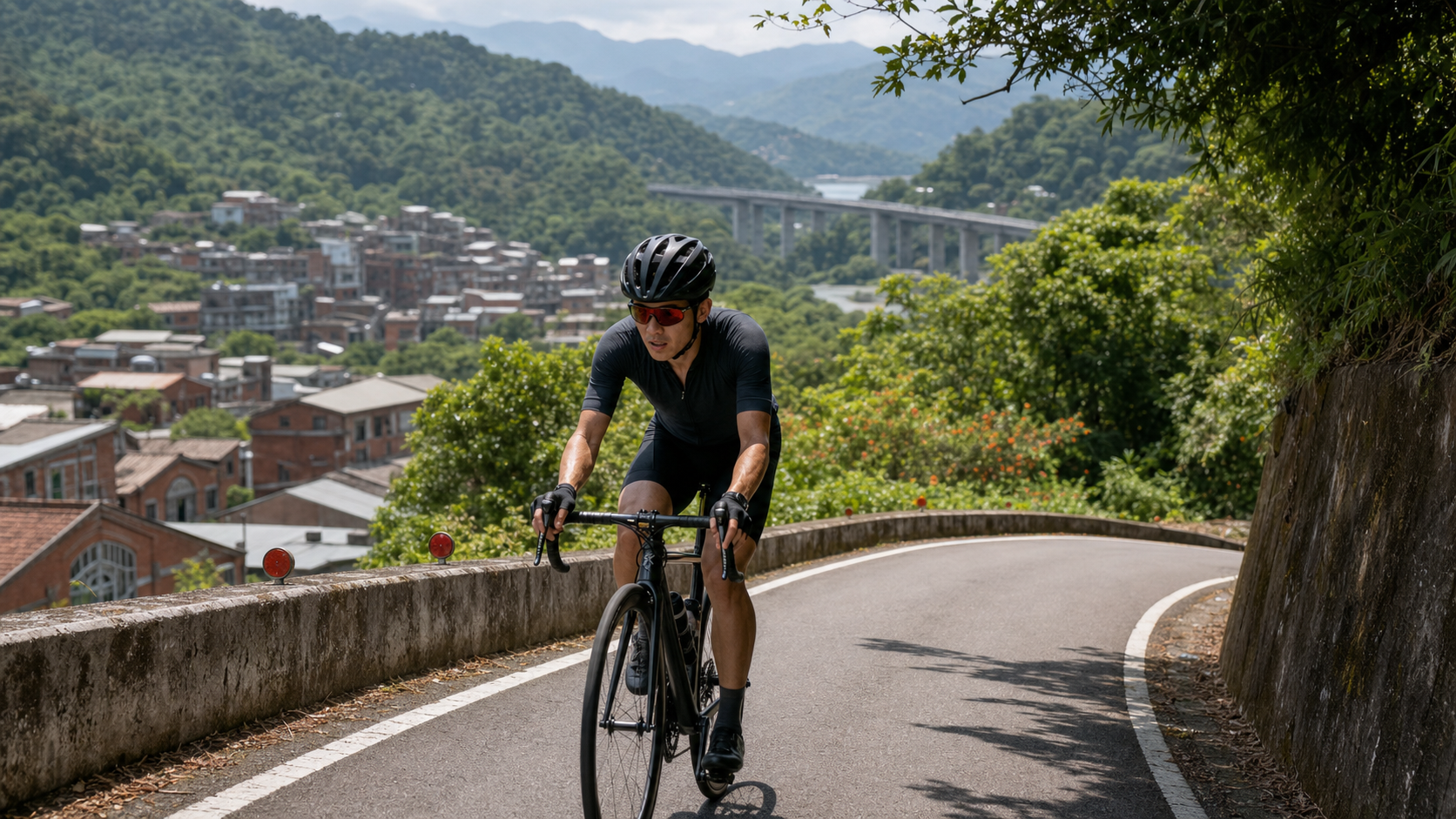
As my wheels rolled over the gradually climbing asphalt behind Sanxia Old Street, the clamor of the city grew smaller in my rearview mirror, replaced by mountain breezes, cicada songs, and that county road the locals call North 113, quietly stretching before me into the depths of the mountains. This was my third time challenging Dongyan Bridge; the first two attempts ended with me dismounting and walking my bike midway due to poor energy management. This time, I told myself, regardless of the outcome, I would ride this road completely and honestly, all the way through.
Sanxia, an Old Town Living Between Mountains and Water
To understand the North 113 Dongyan Bridge route, you first have to understand the character of Sanxia itself. Located on the southwestern side of New Taipei City, Sanxia sits precisely at the junction where the plains of the Taipei Basin meet the northern foothills of the Snow Mountain Range. This topographical feature—“half plain, half mountain”—has profoundly shaped the town’s development over the past few centuries.
Since the Qing Dynasty, Sanxia has been an important river-transport transfer point, situated where the Dahan River, Sanxia River, and Heng River converge. Tea, camphor, and timber produced in the mountains were shipped by water to Tamsui and then onward to other destinations, fueling Sanxia’s prosperity from the late Qing era into the early Japanese colonial period. This is why today’s Sanxia Old Street still preserves a wealth of red-brick facades blending Minnan and Baroque styles—a tangible testament to an era when merchants gathered and wealth flourished.
Beyond tea and camphor, Sanxia has another traditional industry that locals still take pride in: indigo dyeing. In the early days, the Sanxia region widely cultivated daqing (Strobilanthes cusia), a plant from which blue dye can be extracted. Combined with the clear waters of the Sanxia River—ideal for the multiple washing steps in the dyeing process—“Sanchiaoyung” (Sanxia’s old name) once became a major producer of indigo-dyed fabric in northern Taiwan. Although the traditional indigo industry declined over time with the spread of chemical dyes, recent efforts in local cultural preservation have revived the craft in Sanxia, making it another culturally rich experience for visitors beyond the old street’s snacks.
And when it comes to Sanxia’s spiritual center, one cannot overlook Qingshui Zushi Temple. Known as the “Oriental Art Palace,” the temple’s intricate and elaborate carvings are said to have been crafted by Taiwan’s finest artisans during its construction, making it one of Sanxia’s most important religious and cultural landmarks. Every time I ride through downtown Sanxia and see the temple’s upturned eaves glinting in the sunlight, I’m reminded that this town’s depth runs far deeper than the “holiday old street” most people imagine.
The area around Dongyan Bridge, where County Road 113 leads, belongs to Sanxia’s deeper mountain region. In the past, this area was primarily a source of mountain agricultural products, bamboo groves, and timber. The winding mountain paths were originally built mainly to transport these goods out of the hills. Today, these former industrial roads have shed their transport function and instead become a challenging hidden gem for cyclists—the gradients originally designed for oxcarts and farm vehicles now give us road cyclists a brutal workout. In a sense, that’s an unexpected gift history has left us.
Departure: From the Ease of Town to the First Warning of the Mountain Path
That morning at 6:30, I set off from near Sanxia Old Street. The sky had just brightened, and most shops along the old street were still closed, with only a few traditional breakfast spots wafting out the aroma of youtiao and soy milk. The air carried the characteristic dampness of the river valley; the Sanxia River flowed quietly by, a thin layer of morning mist still hovering over the water.
At the start of County Road 113, the pavement was gentle, with scattered houses and orchards occasionally appearing on both sides. Morning light filtered through the treetops, casting dancing patches of light on the asphalt. Riding this stretch was quite pleasant—I even briefly wondered whether the online rumors about this road’s “hidden steep climbs” were exaggerated.
But soon enough, the road began to show a different face.
The curves grew denser, and the gradient shifted almost imperceptibly from a gentle rise to something that was visibly pushing me up out of my saddle. This progressive change in slope perfectly echoed the most intriguing phenomenon in this route’s data: although the official average gradient is only 6.7%, if you cross-reference the total elevation gain of 879.659 meters against the total distance of 7.03 kilometers, the equivalent gradient approaches 12.5%. This means the route is absolutely not a “uniform, gradual climb”—instead, it lulls you with a gentle opening, then slaps the steepness right in your face at a moment you least expect.
I smiled wryly to myself: this road’s personality really is a lot like the town of Sanxia—mild and reserved on the surface, but hiding an unexpected depth and hardness underneath.
Struggle and Breakthrough: Self-Dialogue on the Steep Slopes
Once I entered the middle section of the route, the gradient turned noticeably steeper. I could feel my cadence slipping out of control, dropping from a steady 85 rpm all the way down to the 60s and 70s, and after one particular switchback, I had no choice but to stand out of the saddle, using my body weight to fight a slope steep enough that the front wheel felt like it wanted to lift off the ground.
In that moment, what flashed through my mind wasn’t any scientific pacing theory, but a very primal thought: How much longer is this climb going to stay this steep?
My breathing grew rapid, sweat dripped continuously from the edges of my helmet, and my vision narrowed as I focused on cadence and the road surface. I thought back to my two previous failed attempts—back then, I’d been fooled by the gentle early gradient, burning too much energy showing off in the opening stretch, only to find my legs completely spent when the real battle arrived.
This time, I told myself not to fight the gradient head-on, but to “negotiate” with it. I shifted my weight slightly forward to keep enough traction on the rear wheel, and used a lighter gear ratio to keep my cadence in a sustainable output range, even if my speed dropped so low it was almost walking pace. At least my legs weren’t completely locking up.
The most fascinating—and simultaneously most painful—part of climbing on a road bike is that tug-of-war sensation of “knowing the finish line isn’t far, yet your body keeps sending signals to stop.” I counted my breathing rhythm and silently counted my pedal strokes, using these mechanical repetitions to keep myself from dwelling on “how much farther,” focusing only on “the next pedal revolution.”
There were moments when I genuinely wavered, thinking I might as well dismount and walk—after all, this wasn’t a race, and no one would judge my finishing time. But every time that thought surfaced, I remembered the version of myself who had given up halfway twice before, and the feeling of riding back down with a hint of self-doubt—that didn’t sit well with me. This time, I wanted to give myself a different ending.
Dongyan Bridge: The Moment the View Opens Up
When the gradient finally began to ease and I realized I was approaching some kind of turning point, the view ahead suddenly opened wide—Dongyan Bridge had arrived.
The bridge spans across the valley; its deck isn’t particularly wide, but it’s just enough to stop, catch your breath, and take in the surroundings. Looking down from the bridge, I could see the winding stream valley and layer upon layer of mountain ridges. The mountain breeze, carrying the moisture of the creek, blew toward me and instantly cooled the sweat covering my body.
In that moment, I didn’t immediately check the numbers on my cycling computer. Instead, I stood quietly at the bridge’s edge, letting myself soak in that solid sense of “I finally did it.”
For me, the significance of Dongyan Bridge as a landmark has long surpassed the simple definition of “route endpoint.” It feels like a witness—a witness to how I readjusted my mindset after two failures, a witness to how I learned to honestly confront a route’s true difficulty rather than being misled by the gentleness of surface-level numbers. The bridge itself may be nothing more than an ordinary span on a mountain industrial road, originally built as a practical structure for hauling mountain produce across the stream, but for every rider who has struggled on this road, its meaning far exceeds its original function.
What This Route Taught Me
After completing this challenge, I often found myself wondering why a route less than 7 kilometers long could leave such a profound impression on me. Eventually, I came to understand that the answer perhaps lies in the contradiction within the route’s data—an average gradient of 6.7% and a total elevation gain of 879.659 meters. The gap between these two numbers is, in itself, an honest metaphor: you can never look only at surface-level averages and assume you understand the full picture of something.
The gentle start of this route once made me believe I was well-prepared; the sudden steepness in the middle section, however, served as a stark reminder that true difficulty often hides where you least expect it. This bears a curious resemblance to many things in life—we often assess the difficulty of a task using averages and surface-level statistics, while overlooking the fact that the devil is in the details, in the local extremes that don’t get averaged away.
And as the endpoint of this route, Dongyan Bridge also made me rethink the meaning of “completion.” The two previous failed attempts did not make me feel frustrated or want to give up; instead, they became essential nourishment for the deep sense of fulfillment I felt upon succeeding this time. Without the experience of walking my bike on those two earlier occasions, the emotion of standing on that bridge this time might not have been so profound.
The Seasonal Scenery of the Sanxia Mountains
The changing seasons in the Sanxia mountain area are another easily overlooked charm of this route.
In spring, the Sanxia mountains are often shrouded in thin mist, especially in the early morning hours. The humid air carries the scent of fresh green vegetation. Riding along County Road 113, the trees on both sides have just sprouted new buds, and the entire road seems draped in a delicate green veil.
Summer is the most vibrant season in the Sanxia mountains. The chorus of cicadas rises and falls, and brief afternoon thunderstorms occasionally roll through. After the rain, the mountain air feels exceptionally fresh, and a thin layer of clouds and mist often lingers around the mountainsides in the distance, creating a visually layered scene. However, tackling this route in summer requires full mental preparation for the dual challenge of high temperatures and high-intensity climbing.
In autumn, the temperature difference between day and night in the Sanxia mountains begins to widen. A hint of coolness can often be felt when riding in the morning, and the sky becomes exceptionally clear and blue during this season—making it the ideal time for photography and admiring the ridgelines of distant peaks.
Winter presents a completely different face of the Sanxia mountains. The northeast monsoon occasionally brings damp, cold weather, and the likelihood of mountain fog increases. When visibility is poor, extra caution for riding safety is essential. But precisely because winter visitors are relatively scarce, the mountain paths are exceptionally tranquil. If you’re willing to prepare for the cold and head up the mountain, you can instead enjoy a rare sense of peaceful solitude.
Suggested Side Trips: Extending the Challenge into a Mini Getaway
If you’re also planning to take on the County Road 113 Dongyan Bridge route in Sanxia, consider planning the entire trip more comprehensively, so that it becomes not just a physical challenge but a mini getaway combining sport and culture.
After finishing the ride and descending back to the urban area, you can take a stroll through Sanxia Old Street to soak in the historical atmosphere of its red-brick facades, and reward yourself with a bowl of the locally famous ox horn bread or traditional snacks (for actual shop options and current conditions, please refer to on-site information). Qingshui Zushi Temple is also well worth setting aside time to visit, to appreciate the intricacy of its temple carving craftsmanship. If time permits, Sanxia also offers indigo dyeing cultural experience venues or workshops—a meaningful extension for riders who wish to gain a deeper understanding of local culture (for actual venue opening status and experience details, please refer to the latest official information).
Sounds and Scents on the Mountain Path: Details That Data Cannot Record
Having ridden County Road 113 so many times, I’ve gradually come to realize that what truly moves me about this route is not just the challenge of the gradient numbers, but the sensory details that no route database can ever record.
Heading up the mountain in the early morning, the air always carries a scent that blends vegetation, soil, and dew—an aroma that can only be experienced on mountain access roads, utterly different from the exhaust fumes of urban asphalt. As elevation gradually increases, this scent subtly transforms; the closer you get to the depths of the valley, the more pronounced the moist, watery aroma becomes, and occasionally you can catch the cool, refreshing breath of a nearby stream.
Sound is also a vital part of this route. At the start, you can still faintly hear the traffic and human voices drifting up from Sanxia’s urban area, but as the climb takes you deeper into the mountains, these urban sounds are gradually replaced by the sounds of the forest—the rustling of wind through treetops, the calls of unidentified birds in the distance, and the occasional flutter of insect wings darting out from the undergrowth. By the steepest section in the latter half of the route, I could even clearly hear my own heavy breathing and heartbeat, sounds that seemed extraordinarily distinct in the silence of the mountain path, as if the entire world had shrunk to just the dialogue between myself and this road.
The play of light and shadow is equally worth savoring. In the early morning, the sun sits low, casting dappled, dancing patterns of light through the gaps in the leaves onto the road surface. As the wheels move forward, these patches of light flow and flicker before your eyes. On the section approaching Dongyan Bridge, as the terrain gradually opens up and the view is no longer blocked by the trees on either side, the expanse of sky grows larger—that sense of sudden visual openness begins to build slowly even before you actually reach the bridge itself.
These sensory details are things that no cold gradient percentage or elevation data can ever convey. And it is precisely for this reason that I have always believed the true value of a route lies never merely in quantifiable numbers, but in those moments during the ride when body and mind forge a connection with the land.
Camaraderie with Fellow Riders: The Bond Forged by Facing Steep Climbs Together
On that Dongyan Bridge challenge, I wasn’t actually riding alone. Accompanying me were two fellow riders I’ve known for years. The three of us had different fitness levels and riding styles, yet when facing the steep sections of this route, we unexpectedly developed a subtle rapport.
Before entering the mid-section climbs, we almost instinctively slowed the frequency of our conversation, replacing it with silence focused on breathing and cadence. Occasionally someone would call out, “There’s still a stretch ahead—hang in there.” Such brief reminders carried an extraordinary motivational power in that moment. Climbing is, by nature, a profoundly solitary sport—no one can pedal for you, and ultimately you must rely on your own legs to carry both body and bike to the summit—but having companions by your side dilutes that loneliness considerably.
I still remember that one of my fellow riders fell considerably behind on the steepest section, and the two of us stopped near Dongyan Bridge to wait for him. During those few minutes of waiting, we didn’t urge him on; we simply watched quietly as he gradually rode closer, until he finally reached the bridge, face flushed red and gasping for breath, yet with an unmistakable excitement shining in his eyes. At that moment, the three of us exchanged smiles. Few words were spoken, but each of us understood the struggle the others had endured.
This kind of experience—facing a challenge together and achieving a goal together—tends to forge a special bond among riders. Every time we bring up this route afterward, we invariably mention that steep climb and the image of us cheering each other on. These memories have transcended mere athletic achievement and become a story we share together.
From Failure to Completion: The Importance of a Mindset Shift
Looking back at my two previous failed attempts, I realize I made a very typical mistake in my mindset—relying too heavily on surface-level data to build confidence, without truly respecting the hidden variables this route might hold.
During my first attempt, I looked at the “6.7% average gradient” figure and thought, “This should be easy,” so I set off with a nearly careless attitude. I was caught completely off guard by the steep climbs in the middle section, my energy distribution fell apart entirely, and I ended up shamefully walking my bike for the rest of the route. That experience dealt a considerable blow to my confidence, and it even made me develop a sense of aversion toward the route, thinking, “This road isn’t anywhere near the difficulty it claims to be.”
On my second attempt, although I already knew there would be steep climbs in the middle, I lacked a concrete strategy to deal with them. I simply told myself, “Just hold on,” but when I actually faced the steep sections, I fell short once again—this time because my gear ratio wasn’t light enough and my pacing rhythm was poorly managed.
These two failures taught me that merely “knowing there are steep climbs” isn’t enough. What matters more is establishing a concrete, workable approach—including equipment adjustments, pacing strategy planning, and most importantly, maintaining humility and respect toward the route in my mindset. The reason my third attempt succeeded wasn’t because my fitness suddenly improved, but because I finally learned to understand and respect the true difficulty of this route in the right way.
This mindset shift actually echoes a very important philosophy in cycling: true progress rarely comes from relentlessly chasing faster and stronger, but rather from learning to honestly confront your own limits and overcoming challenges with wisdom rather than brute force. Route 113 Dongyan Bridge, with its uneven gradient profile, unexpectedly became a silent teacher that imparted this lesson to me.
A Word to the Next Challenger
If you’re preparing to take on Route 113 Dongyan Bridge, my advice to you is simple: don’t be fooled by the “6.7% average gradient” figure, and don’t let your guard down just because it’s only 7 kilometers. This route, in its own way, honestly conceals a challenge far tougher than the surface data suggests—but precisely because of that, when you finally stand atop Dongyan Bridge and gaze at the open valley view before you, the sense of accomplishment will feel all the more real.
The city of Sanxia tells its story of historical depth through the indigo of its blue-dyeing craft, the red brick of its old streets, and the intricate carvings of Zushi Temple. And Route 113 Dongyan Bridge, with its uneven gradient character, teaches every cyclist who rides it to humbly face the mountain once more—and to rediscover themselves.
May you too, on some early morning, ride this road with an honest heart ready to face the challenge, and find your own moment of inspiration atop Dongyan Bridge.
Related Reading
- A Stick of Incense at the End of the Mountain Trail: Cycling Notes on Sanxia’s Lishanshen Temple
- Wind Beneath Tanigawa Bridge and the Aroma of Ai-Yu Jelly: A Paiwan Mountain Trail Ride to the Edge of Wutai
- Sanxia Route 113 Dongyan Bridge Practical Guide: Don’t Be Fooled by the “6.7% Average Gradient”—This Road Hides a 12%-Grade Killer
- Sanxia Xiongkong Trail Crossing: Three Kilometers, Yet the Closest I’ve Ever Been to the Mountain
台北闊瀨陡坡 騎旅 / 日本單車雜誌編輯車友臨時加入!/ 髮香才是最強的 / feat. 北迴歸線小隊 / 公路車 CT Yeh
6 個月前
嘉義大埔、阿婆灣挑戰賽,美到以為在日本!ft. 環騎5 Cool 西拉雅188 / 公路車 / CT Yeh
7 個月前
鯉魚潭水庫 歡笑單車騎旅,季節限定大景 | 大湖/鯉魚潭水庫/龍騰斷橋/薑麻園 | 公路車 | CT Yeh
3 年前
#東眼山 #公路車 單車約騎 空拍 北 113 水蜜桃冰沙 Mavic Pro
9 年前
觀霧 變好騎了! | 北高車友爆笑大會師 | 公路車 | 單車旅遊 Taiwan Cycling Route GuanWu
6 年前
[4K空拍] 三灣落羽松 秘境 與 神仙谷
7 年前
嘉義布袋&台南北門 / 好美里、井仔腳鹽田 鮮蚵吃到飽 / CT Yeh / 公路車
4 個月前
新竹白蘭部落! 爬陡坡還能講笑話...? 廢物伙伴の約騎 | 公路車 | CT Yeh
4 年前