Knocking on the Gate of the Sacred Mountain: Riding into Taiwu, Pingtung, Paying Homage to the Paiwan's Kavulungan
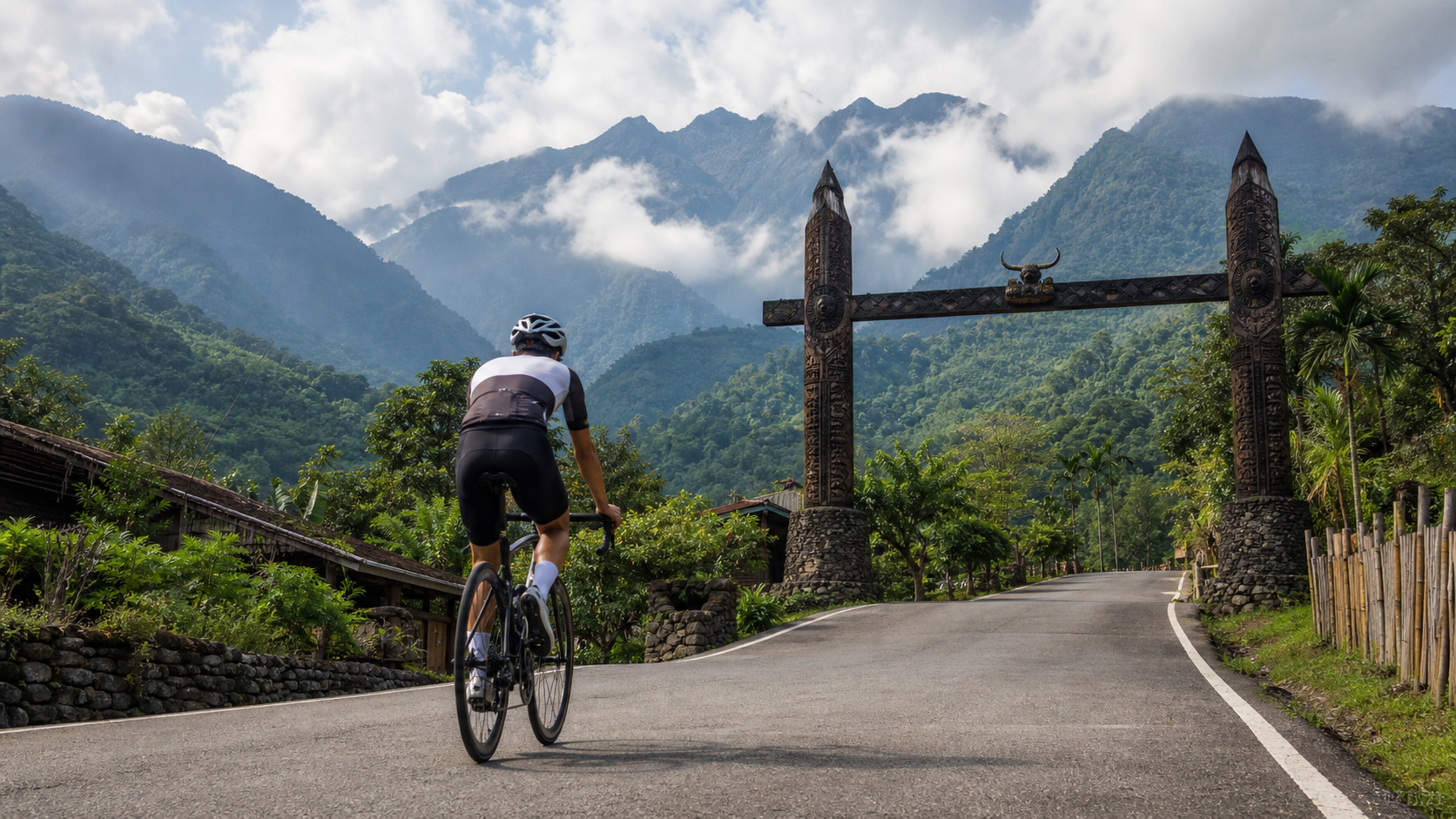
Knocking at the Gate of the Sacred Mountain: Riding into Taiwu, Pingtung, Paying Homage to the Paiwan’s Kavulungan
Mount Dawu, called “kavulungan” in the Paiwan language, means “the place that belongs to the clouded leopard.” This southernmost peak among Taiwan’s Hundred Mountains—and the only one exceeding 3,000 meters—has never been merely a geographic coordinate; it is the spiritual homeland of an entire people. This time, I did not carry a hiking backpack. Instead, I rode a bicycle, climbing along Jiatai Road toward what is known as the “Gate of Mount Dawu,” covering just over ten kilometers to feel the weight of a sacred mountain.
The Weight of a Sacred Mountain: Mount Dawu and the Paiwan’s Kavulungan
On Taiwan’s high-mountain map, the Central Mountain Range stretches more than 300 kilometers from north to south, and Mount Dawu, at 3,092 meters, is the last giant peak at the southern end of this dragon-like range to break the 3,000-meter threshold. South of Mount Dawu, the terrain gradually subsides and lowers, with no heights that can rival it. Geographers have given it a straightforward yet deeply meaningful title—“the Roof of Southern Taiwan”—because it is the only peak exceeding 3,000 meters in the entire Pingtung region, standing alone and majestic on the southern skyline.
Within Taiwan’s Hundred Mountains system, Mount Dawu is listed as one of the “Five Sacred Mountains,” alongside Yushan, Xueshan, Xiuguluan Mountain, and Nanhu Mountain. These five peaks are regarded as the most representative and最能體現台灣山岳氣勢的頂尖之作 among Taiwan’s high peaks. To earn a place among the Five Sacred Mountains, Mount Dawu relies not only on its height but also on its unique geographic position and irreplaceable views—from the summit, one can see the Pacific Ocean to the east and overlook the entire Pingtung Plain and even the Taiwan Strait to the west. This sweeping vista of “one mountain connecting two seas” is extremely rare among Taiwan’s other high peaks.
But for the Paiwan people, who have lived in these forests for generations, the significance of Mount Dawu far transcends the “Hundred Mountains ranking” that modern mountaineering culture uses to measure value. The Paiwan call Mount Dawu “kavulungan,” a word that carries profound cultural weight—it is regarded as the sacred mountain of the Paiwan, the dwelling place of ancestral spirits, and the origin point of ethnic identity and mythological genealogy. In traditional Paiwan belief, a mountain is not merely rock and soil to be trodden upon; it is a living, spiritual existence, an eternal connection point between ancestors and their descendants. Every time a tribal member gazes at this mountain, what they see is not just mist-shrouded ridgelines but an entire oral epic passed down for a thousand years.
I first came to truly understand this layer of meaning while planning this ride and researching the route. Initially, I simply wanted to challenge a climbing route in Pingtung, but when the word “kavulungan” caught my eye, I suddenly realized that where I was about to go was not just the start and finish of a Strava segment, but the most sacred direction in a people’s heart. This shift in awareness made me readjust my mindset before setting out—this should not be merely a physical challenge in pursuit of a record, but rather a pilgrimage undertaken with reverence.
A saying circulates in the cycling community: “Climbing tests your legs, mountaineering tests your will, and understanding a mountain’s culture tests whether we are willing to slow down.” For me, Mount Dawu is exactly such a mountain—it tests climbers’ physical endurance with its towering height, yet through the name kavulungan, it tests whether every visitor is willing to bow in respect before setting foot on this land.
Gazing from the Pingtung Plain Toward the Land of the Clouded Leopard: Where Geography and History Meet
To understand why Mount Dawu occupies such a central position in Paiwan culture, one must first pull the perspective back and examine the geographic relationship between the entire Pingtung Plain and the Central Mountain Range. The Pingtung Plain is one of the few alluvial plains in Taiwan tightly embraced by high mountains. To its east lie the layered ridges of the southern Central Mountain Range, with Mount Dawu serving as the most striking high point of this mountain wall. Looking eastward from the plain, on clear days, Mount Dawu’s towering silhouette dominates nearly the entire skyline. This overwhelming visual presence, in a sense, also explains why the Paiwan people regard it as sacred—when a mountain stands day after day at the very center of one’s living vista, it naturally becomes the core of collective memory and belief.
The Paiwan and Rukai are among the few indigenous peoples in Taiwan with an aristocratic class system. Their traditional territories are roughly distributed on both the eastern and western sides of the southern Central Mountain Range. Townships in Pingtung such as Taiwu, Laiyi, Majia, and Wutai still preserve a rich Paiwan cultural fabric. Mount Dawu, situated precisely at the heart of this traditional territory, serves as the geographic and spiritual hub connecting different tribes and family lineages. In the creation myths passed down orally, many important ancestral origin legends are closely tied to this mountain—the mountain is not merely a backdrop but the protagonist of the narrative.
From the perspective of modern mountaineering and cycling, the traditional route to Mount Dawu goes roughly like this: exit at the Zhutian system interchange on National Freeway 3, connect to Expressway 88, pass through the Wanjuan urban area, turn onto County Road 185, and then enter Jiatai Road from Taiwu (northern entrance) or Wutan (southern entrance). The two paths eventually converge, arriving at the Taiwu tribe—known in the Paiwan language as the “Kuljaljau” tribe. From the Kuljaljau tribe, continuing deeper into the mountains, after passing the important landmark of “the Gate of Mount Dawu,” one follows the industrial road onward, and at the very end lies what traditional hikers call the “Mount Dawu trailhead.”
The “Gate of Mount Dawu” cycling route I challenged this time follows this access road, climbing from the foothills all the way to the vicinity of the Gate of Mount Dawu—10.56 kilometers in total length with 677 meters of elevation gain. In a sense, this stretch is the first threshold for modern people to enter into dialogue with this sacred mountain—if you can ride up, it means your physical condition and willpower are ready; but having ridden this far, you have only just touched the edge of this mountain’s vast cultural and geographic significance. The true summit, that place at 3,092 meters requiring a roughly 9-kilometer hike via the Kuai-gu Lodge and Dawu Shrine with about 1,549 meters of elevation gain, belongs to the world of hikers. It demands professional gear, physical training, and at least a two-day, one-night itinerary—this lies beyond what a bicycle can reach, and is another form of pilgrimage altogether.
Departing at Dawn: The Moment the Asphalt Begins to Climb
That morning, I parked my car on the outskirts of Wanjuan, the sky still tinged with a hint of blue-purple afterglow. The air in Pingtung has a completely different texture from the north—humid with a scent of transpiring vegetation. Birdsong came from afar, occasionally interspersed with the calls of unidentified insects. This distinctive early-morning atmosphere of southern Taiwan is the first sensory memory awakened every time I ride south.
Heading along County Road 185 toward Taiwu, the landscape on both sides was typical southern Taiwan hill country—betel nut groves, banana plantations, and scattered orchards intermingled, with the mountain silhouettes in the distance gradually sharpening in the morning light. This stretch was still relatively gentle, giving me ample room to observe the surroundings and allowing my body to gradually shift from flatland riding mode to the climbing rhythm ahead. After turning onto Jiatai Road, the gradient began to rise noticeably, and the vegetation along the roadside gradually transitioned from orchards to tree species closer to primary forest. The humidity and coolness in the air increased accordingly, as if my body were passing through an invisible climatic boundary.
Around the third or fourth kilometer, I truly felt for the first time the actual weight behind the “6.4% average gradient” figure of this route. The continuous climbing quickened my breathing, and sweat began to soak through my jersey. But more than the physical strain, what impressed me most was the transformation of the surroundings—with every gain in elevation, looking back at the road behind, the view of the Pingtung Plain opened up a little more, and the faintly visible coastline in the distance reminded me of this mountain’s “one mountain connecting two seas” geographic character. This contradictory feeling of gasping for breath while being awestruck by the scenery is precisely what makes climbing routes both the most captivating and the most tormenting.
Passing several bends with wider views, I deliberately stopped to catch my breath and take a drink, taking the opportunity to look back over this land. The Pingtung Plain took on a soft golden hue in the morning light, with layered mountain ridges in the distance, and I was on the road leading to that legendary “place where the clouded leopard dwells.” At that moment, physical fatigue suddenly seemed less important, replaced by an indescribable sense of awe—I realized I was riding on land with a thousand years of cultural depth, where every stone and every leaf might carry stories handed down by Paiwan ancestors.
Kuljaljau Village and the Gate of Dawu Mountain: The Moment of Arrival
As the gradient continued to climb, the scenery on both sides of the road gradually shifted from pure natural forest to the sporadic traces of tribal settlements—this is Taiwu Village, known as “Kuljaljau” in the Paiwan language. The houses in the village blend traditional slate-house elements with modern building materials, and the walls occasionally feature distinctive Paiwan totem paintings—hundred-pacer snake patterns, sun motifs, and human figures interwoven, telling the story of this ethnic group’s unique aesthetic vocabulary and cosmology.
Passing through the village, I deliberately slowed my pace. On one hand, the gradient on this stretch was indeed demanding, requiring a more cautious pedaling rhythm; on the other, I wanted to give myself some time to properly observe this village nestled at the foot of the sacred mountain. Life in the village moves at a slow and grounded pace—occasionally you’d see residents sorting coffee beans in their courtyards or chatting in front of their homes. That way of life, so intimately connected to the land, forms a stark contrast with the fast-paced daily routine of the city.
Riding on for a while longer, I finally spotted the landmark of the “Gate of Dawu Mountain.” This is the most familiar rest stop and gathering point for traditional hikers—reportedly a well-known spot where mountaineers chat, brew tea, and gear up, and the last outpost of civilization before entering the truly wild mountain terrain. The moment I arrived, my legs were already trembling slightly from the sustained climb, but the sense of accomplishment welling up inside far outweighed the physical fatigue. I pulled my bike to the roadside, took off my helmet, and let the slightly cool mountain breeze dry my sweat-dampened hair. That feeling of exhilaration is a reward that can only be earned by riding up here yourself.
Standing before the Gate of Dawu Mountain, I looked up toward the deeper mountain ranges—that was the direction leading to the summit of North Dawu Mountain, but from here onward, the paved road came to an end. What lay ahead belonged to the world of feet and trekking poles. I was well aware that the endpoint of this cycling journey was right here; I had no intention, nor the equipment, to continue hiking deeper on foot. But just being able to ride to this “gate” and witness with my own eyes this junction connecting modern civilization with the sacred mountain’s hidden realm was already one of the most precious rewards of this journey. The meaning of this gate goes beyond a mere geographical boundary—it serves as a cultural reminder, telling every visitor that what lies ahead is a domain that requires more preparation and more reverence to enter.
The Aroma of Taiwu Coffee: A Tribal Industry Story in a Cup of Coffee
After a brief rest at the Gate of Dawu Mountain, I descended slightly along the same route to the “Taiwu Bike Station,” a well-recognized supply stop on this route and the stop I was most looking forward to on this trip. Besides offering rest for travelers, the station is most famous for serving the locally renowned Taiwu coffee.
The story of Taiwu coffee is, in fact, a representative case of indigenous tribal communities in Taiwan developing a specialty coffee industry. The Paiwan villages in the Taiwu Township area, thanks to their geographical environment and elevation being suitable for coffee tree cultivation, have gradually developed their own coffee brands and industry chain in recent years. From planting, harvesting, roasting, to brewing, every step incorporates the hard work and local wisdom of the tribal residents. This is not merely a business—it is an important pathway for the tribe to seek cultural preservation and economic self-sufficiency. By developing agricultural industries with local characteristics, younger generations of tribal members have the opportunity to stay and work in their villages, without being forced to leave their ancestral lands for livelihood reasons.
Sitting in the station, holding a warm cup of Taiwu coffee, watching the amber liquid in the cup release wisps of gentle steam, that aroma blended with the uniquely fresh mountain air formed a taste memory that is impossible to replicate. The coffee carried a hint of fruit acidity with a subtle nutty finish—smooth and gentle on the palate, making it a perfect reward after a long climb. For me, this cup of coffee was more than just a caffeinated beverage to relieve fatigue; it felt like a medium for dialogue with this land—through taste, I could sense how the Paiwan people have found their own path of survival and development between tradition and modernity.
Occasionally, I could overhear local residents chatting with visitors at the station, with topics ranging from the origin stories of coffee beans, to the historical evolution of the tribe, and even extending to recent happenings in the village. This relaxed and natural atmosphere of exchange allowed me, an outsider cyclist, to temporarily blend into the rhythm of life on this land. It’s worth noting that the station’s actual operating hours and offerings may vary depending on the season, weather, or internal arrangements of the tribe. If you plan to visit and taste Taiwu coffee, it’s advisable to check on-site announcements or official information. It’s also recommended to arrive with an open and respectful mindset—after all, this is not a standardized chain coffee shop, but a local space deeply rooted in the fabric of tribal life.
Summer Afternoon Thunderclouds and Winter Morning Serenity: Seasonal Scenery
The route to the Gate of North Dawu Mountain presents completely different appearances and atmospheres as the four seasons change—one of the reasons I believe it’s worth visiting repeatedly.
Visiting in summer, the most vivid impression is that humid heat carrying a sense of vitality. The air is still fairly crisp when setting out in the early morning, but as the sun climbs higher, humidity and temperature rise rapidly. In the afternoon, thunderclouds frequently gather over the mountains, and a convective thunderstorm can arrive without warning, accompanied by rumbling thunder and torrential rain. The mountain forest takes on a hazy, mysterious beauty through the rain curtain, but it also serves as a reminder for riders to stay alert and complete their ride early to avoid being caught in the storm. In summer, the North Dawu Mountain area is at its lushest and most verdant, with mountain mist and clouds swirling around the mountainsides. That elusive, half-hidden scenery easily evokes imagery of the clouded leopard’s habitat from Paiwan mythology.
Autumn offers a different charm. The northeast monsoon hasn’t yet arrived, and Pingtung enjoys dry, stable weather with azure skies and excellent visibility—the best season for gazing far across the Pingtung Plain and even the Taiwan Strait. During this season, the mountain vegetation begins to show signs of changing color. While not as spectacular as the autumn foliage in temperate regions, the layered variations in shades of green still carry their own unique appeal.
On winter mornings, temperatures in the mountain area are noticeably lower. Riding the road toward the Gate of Dawu Mountain, you’ll often encounter scenes of thin mist shrouding the valleys. Sunlight piercing through the fog and casting down on the industrial road creates a serene and almost sacred atmosphere. That sense of tranquility, in a way, comes closer to the solemn image this sacred mountain holds in the hearts of the Paiwan people.
Spring is the most changeable season. Occasional frontal systems bring rainfall, and after being nourished by the rain, the mountain forest appears exceptionally vibrant and lush, with the air filled with the fresh scent of soil and vegetation. However, due to the unstable weather, riders are advised to check weather conditions carefully before setting out, and to avoid scheduling rides right before or after a frontal passage.
Under different seasons and different weather conditions, the Gate of North Dawu Mountain greets every visitor with a completely different expression. This is what I find most fascinating about this route—it never repeats itself. Every visit brings new insights and discoveries.
What This Route Means to Riders: Not Just Conquest, But Understanding
On the way back, I coasted downhill the entire stretch, my body finally able to take a brief respite from the sustained climbing load, but my mind kept replaying the various feelings this journey had given me. As a cycling enthusiast who has spent years challenging climbing routes across different places, I’ve gradually come to realize that describing certain routes simply with the word “conquest” feels too shallow, too self-centered.
For me, the route to the Gate of North Dawu Mountain is more of a process of “understanding”—understanding the multiple meanings a mountain carries within different cultural contexts; understanding how the Paiwan people regard Kavulungan as the sacred land where ancestral spirits reside, rather than a mere geographical coordinate; understanding how the residents of Taiwu Village have carved out their own path between tradition and modernity through the coffee industry. These understandings are far richer and more profound than simply “completing a 10.56-kilometer route with 677 meters of elevation gain.”
Many cycling enthusiasts are passionate about collecting Strava segment records on various routes, chasing personal records (PRs). There’s nothing wrong with that in itself—it’s part of what makes this sport captivating. But I’ve gradually come to believe that what truly makes a route worth returning to isn’t just that cold completion time, but rather the depth of connection you forge with the land and its culture during the ride. The Gate of North Dawu Mountain taught me to spend some time understanding what stories the place I’m about to visit carries before I even turn the first pedal stroke—this kind of preparation won’t make you ride faster, but it will make you ride with more meaning.
This route also made me rethink the definition of “reaching the summit.” For hikers, summiting North Dawu Mountain means standing on that triangulation point at 3,092 meters above sea level. But for cyclists, our “summit” is actually reaching the Gate of Dawu Mountain—a more humble endpoint, more closely tied to the human and cultural context. This difference, in a way, reminds us that different modes of travel and different physical limits create entirely different relationships and dialogues with the same mountain—this isn’t a comparison of who is more capable, but rather that every way of arriving carries its own unique value and meaning.
Suggested Itinerary: Leave Room in Your Schedule for the Tribe and This Land
If you’re also planning to take on the Gate of North Dawu Mountain, I sincerely suggest not packing your schedule too tightly or making completing the route your sole goal. This land deserves more of your time.
Stay a while longer in the Kuralus Tribe: The tribe occasionally has small sales points for handicrafts and agricultural products. If time permits, slow down and chat with the local residents to learn more about Paiwan culture and the tribe’s development stories. This kind of face-to-face exchange is often more vivid and authentic than information you’ve looked up beforehand.
Leave time for that cup of coffee at Taiwu Bike Station: Don’t rush off after refilling your water. Find a comfortable spot to sit down and slowly savor the industry story and tribal effort behind that cup of coffee—it’s the warmest interlude on this route.
Respect the local faith and way of life: North Dawu Mountain is sacred to the Paiwan people. When riding or visiting this area, it’s recommended to maintain a humble and respectful attitude, avoid loud noise or inappropriate behavior, and treat this place as a cultural site worthy of reverence rather than a mere sightseeing check-in spot.
If time permits, arrange a one-to-two-day in-depth itinerary: Beyond the cycling challenge, the Taiwu and Laiyi areas of Pingtung are home to many Paiwan cultural sites and tribal workshops worth exploring. If you can set aside more time to gain a deeper understanding of this people’s history and contemporary life, your journey will be all the richer and more complete.
Weather and safety always come first: Whether it’s the cycling challenge or any subsequent plans to arrange a hiking trip to the actual summit, always check weather conditions in advance and be fully prepared. Mountain conditions change rapidly, and safety should always be the top priority.
The Gate of North Dawu Mountain—this short 10.56-kilometer climbing route carries far more than its geographic length. It is a gateway to the sacred mountain Kavulungan, a bridge connecting modern cycling with a thousand years of Paiwan culture, and a warm story of tribal resilience and hope in a cup of Taiwu coffee. Next time you ride this route, consider leaving a little more room between your pedal strokes for respect and understanding—that will be a riding experience more worth treasuring than any record-breaking effort.
Related Reading
- Riding to the Foot of North Dawu Mountain: A Cycling Dialogue with Jiaping Tribe in Taiwu Township
- A Back Door to Taiwu Township: Reading Resilience and Life Wisdom on Rugged Land
- Gate of North Dawu Mountain Practical Guide: Full Data Analysis of Southern Taiwan’s Tough Climb—10.56K, 677m Elevation Gain in Pingtung
- North Dawu Jiaping Climb Full Guide: Pingtung’s Hardcore 12.9km Challenge with 1,300m of Elevation Gain
大武山20%魔王陡坡【JJSC南台灣遊騎Day2】!屁股真的要裂開了...凡士林抹滿也沒用?神秘金教堂還有超便宜夜市
3 個月前
大武山後門26%歡樂陡坡!JJSC南台灣單車行Day2 / 被颱風追著跑 / 公路車 / CT Yeh
2 年前
#北橫 + #北進武嶺 最硬的員工旅遊 EP1 | #公路車 #拉拉山 | 明池 | 武嶺 | 武陵農場 | 雲海 | Taiwan Cycling Route Wulin
6 年前
嘉義大埔、阿婆灣挑戰賽,美到以為在日本!ft. 環騎5 Cool 西拉雅188 / 公路車 / CT Yeh
7 個月前
台北闊瀨陡坡 騎旅 / 日本單車雜誌編輯車友臨時加入!/ 髮香才是最強的 / feat. 北迴歸線小隊 / 公路車 CT Yeh
6 個月前
觀霧 變好騎了! | 北高車友爆笑大會師 | 公路車 | 單車旅遊 Taiwan Cycling Route GuanWu
6 年前
大禹嶺 到 武嶺牌樓 全程前後實況錄影 | 北進武嶺 | 東進武嶺 | KOM | 訓練台 | 坡度分析 | Taiwan KOM Last 10 km HARD | 公路車
6 年前
一定要騎一次!阿里山最深處:里佳部落!單車旅行 | 2800m爬升 | 深度部落體驗:嗨翻晚會、螢火蟲、銀河 | feat. JJSC & 廢物伙伴 | 公路車 CT Yeh
9 個月前