Zhiben Sanhe Radio Station: A Quiet Yet Honest Climbing Time Hidden in the Mountain Roads of Taimali
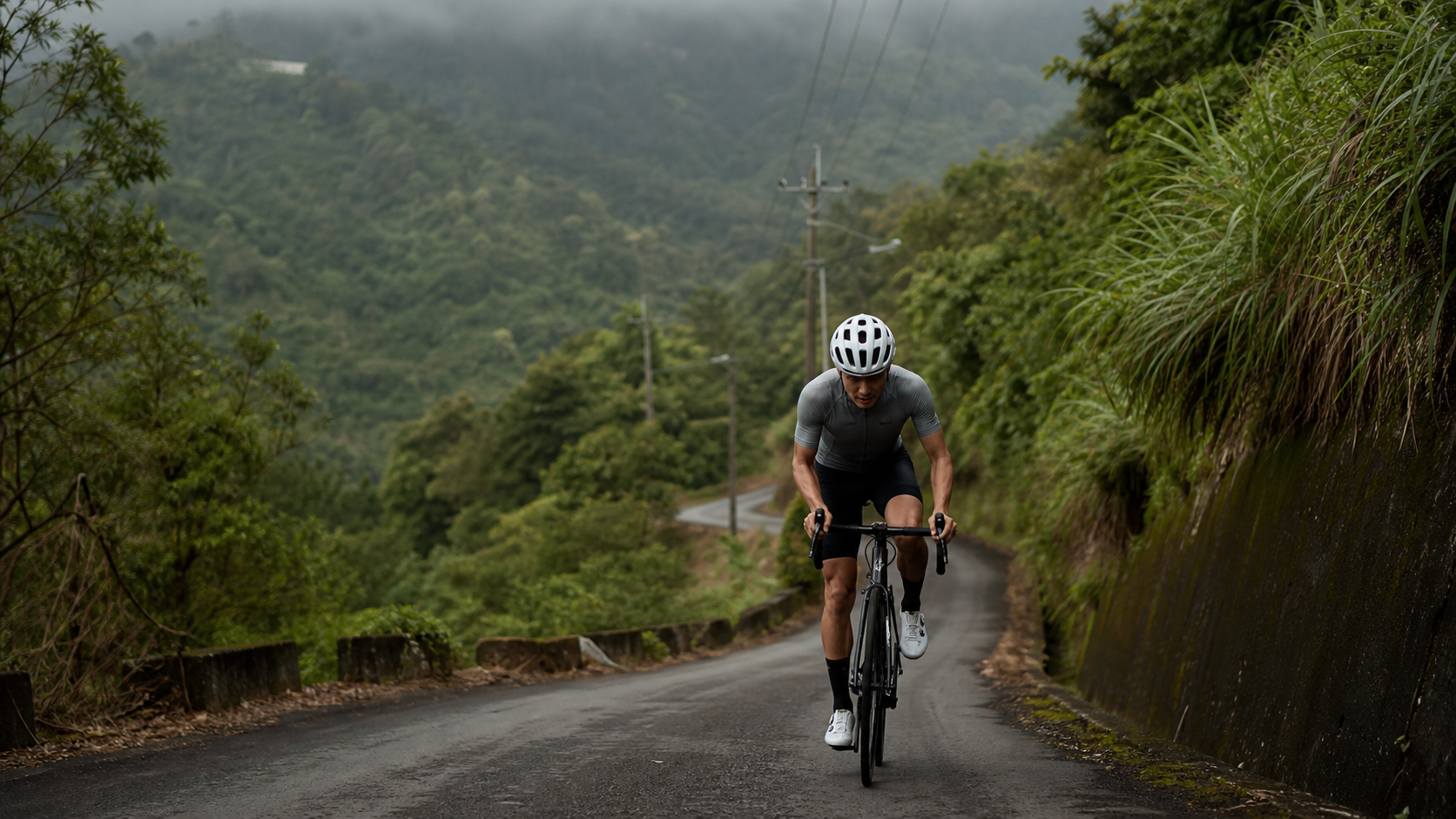
Some routes are famous for their spectacular ocean views, others are remembered for their iconic landmarks. Zhiben Sanhe Radio Station has none of that—it only offers a quiet mountain road, and you riding on it.
1. A Name with No Traceable Origin, Yet One That Sticks
“Sanhe Radio Station”—the first time you hear this name, it’s hard not to be curious. It’s neither a well-known hiking trail nor a popular tourist attraction, and even its exact naming origin is difficult to trace. Scouring public records, no documentation about the origin of this place name can be found—it’s unclear whether it was named after some broadcast relay facility in the mountains in earlier years, or if it’s related to the names used by local tribes or settlements. This state of “no records available” actually adds to the route’s mystique in a way—it wasn’t named or packaged for tourism, but rather exists as a place name born purely out of local everyday needs, quietly resting in a corner of the Taimali mountain area, waiting to be remembered by those who have truly ridden it.
The official location on Strava shows that this segment actually lies in Taimali Township, Taitung County, rather than in the Zhiben administrative district commonly associated with Taitung City. This small geographical discrepancy actually speaks to a common reality in how place names are used in eastern Taiwan—many routes are named according to the living spheres locals are accustomed to, rather than strictly matching official administrative boundaries. For riders, what matters perhaps isn’t clarifying whether it belongs to Zhiben or Taimali, but understanding that it sits in the border zone between the Zhiben hot spring area and the Taimali mountains, carrying the character of both places.
2. Another Face of the Zhiben Hot Spring Area
Mention Zhiben, and most people picture hot spring hotels, open-air baths, or the cluster of hot spring resorts along the Zhiben River valley. Zhiben’s hot springs are sodium bicarbonate springs, known as the “Beauty Water,” and rank among the most famous hot spring destinations in eastern Taiwan, drawing countless visitors specifically for a relaxing soak.
But the Sanhe Radio Station route reveals a completely different side of Zhiben—away from the bustle of the hot spring area and the tourist crowds, riding into the mountains, what replaces it is an industrial road so quiet that almost the only sounds are your own breathing and the turning of the chain. This contrast is precisely what makes the route most charming: in the same geographical area, tourists might be leisurely soaking in hot springs during the day, while in the mountains, a rider is gritting their teeth, sweating profusely, battling the gradient. Two completely different ways of travel intersect in the same mountain area, yet each leaves the other undisturbed.
3. A Ride About Honesty
A cyclist on a Taiwan round-island tour once described the roads around Zhiben in their reflections: “Much harder to ride than I imagined. When I did the round-island trip on a scooter, I didn’t notice it, but on a bicycle I realized this stretch is basically all climbing.” While this statement describes the broader Zhiben area mileage rather than precisely corresponding to the 8.5-kilometer Sanhe Radio Station segment itself, it accurately captures a psychological gap many riders have experienced—a road passed on a scooter or in a car is a completely different experience from one climbed with your own legs.
Rider community posts also mention that rides in the Zhiben direction are often listed alongside benchmark climbs like Shouka, regarded as part of high-intensity itineraries. These real-world riding accounts, while not first-hand reviews specifically targeting the Sanhe Radio Station segment, nonetheless corroborate from the side what the figures of an average gradient of 5.7% and a steepest section of about 9.2% represent in terms of real difficulty—this is not an easy rolling incline you can breeze through, but a climb that demands serious attention and honest sweat.
The Sanhe Radio Station road, in a way, is well suited for practicing conversation with yourself. It lacks the spectacular ocean views of the Taimali coastline that can distract you, nor does it have the tourist atmosphere of the Zhiben hot spring area—it’s just a quiet mountain road, flanked by low fruit orchards or mixed vegetation, with the occasional glimpse of a corner of the Pacific Ocean in the distance. Climbing in such an environment naturally draws your attention back to yourself—the rhythm of your breathing, the speed of your heartbeat, the soreness in your thigh muscles with every contraction. These bodily signals, so easily overlooked in daily life, are amplified and clearly felt on a quiet mountain road.
4. First-Person Perspective: Forty Minutes Alone with the Gradient
At the moment of starting the climb, the body still carries the ease from before departure—cadence steady, breathing smooth. The early section is relatively gentle, a good time to let the body warm up and to observe the surroundings—the vegetation layers in the Taimali mountains are distinctly stratified, and as altitude slowly rises, the scenery before you quietly shifts, with occasional glimpses of a sliver of blue from the distant coastline.
Entering the middle section, the gradient begins to ramp up noticeably, and the sound of breathing gradually replaces observation of the surroundings. All attention is pulled back to the small stretch of road ahead—staring at the front wheel, calculating how much distance remains until the next spot where you can catch your breath on a slightly flatter section. At this point, the mountain road is exceptionally quiet. If no other vehicles or pedestrians pass by, all you can hear is your own heavy breathing and the regular turning of the chain, with the occasional rustle of wind through leaves reminding you that you’re indeed in the mountains, not in a spin class at the gym.
On the steepest stretch, the soreness in your thighs comes through clearly, and the thought of “might as well get off and walk” easily creeps in. But push through that short section, and when you return to a relatively gentler gradient, the sense of relief is strikingly vivid—your body honestly tells you that stretch was indeed hard, but you made it through. This process of conversing with your own limits and ultimately overcoming them is what gives routes like Sanhe Radio Station—devoid of any glamorous landmark appeal—the purest sense of accomplishment a rider can experience.
The moment you reach the top, there’s usually little drama—perhaps the gradient suddenly eases and the view ahead opens up slightly. But that grounded feeling of completion is in no way inferior to summiting any famous landmark. Because you know that along the way, no tourist gimmick helped distract you; it was entirely on your own legs, honestly climbing every meter of gradient.
5. Faint Traces of Local Culture
The Zhiben and Taimali area is a meeting point of Puyuma and Paiwan indigenous cultures, where hot spring culture and indigenous tribal life have coexisted between the mountains and the sea for a long time. While the Sanhe Radio Station route itself has no verifiable information about tribes or cultural landmarks along the way, riding through it, you can still sense the distinctive rhythm of life on this land—the occasional fruit orchard passed by, the brief nod of acknowledgment when crossing paths with local residents—these are the subtle yet genuine human backdrops of this route.
Zhiben’s food culture is mostly concentrated around the Longquan Road hot spring area and the Zhiben Road section of Provincial Highway 9, from handmade rice-batter egg crepes and rice balls to hot spring eggs and fresh local sugar apples—these are common taste memories for visitors to Zhiben. While this food information isn’t necessarily located directly along the Sanhe Radio Station climb, these local options are worth stopping by to savor as a reward for your hard effort after completing the ride and descending back toward town.
6. Thoughts on Seasons and Riding Timing
Seasonal changes in the Taimali mountains aren’t as dramatic as in high mountain areas, but the humid heat and afternoon convective thunderstorms of summer, along with the occasional northeast monsoon influence in winter, still give the same route different riding sensations across seasons. On a summer morning at Sanhe Radio Station, the air carries the moist freshness of vegetation—the coolest time of day to take on the steep slopes. If you come during the cooler autumn or winter months, the quietness of the mountain road becomes even more pronounced, and you can occasionally enjoy nearly the entire stretch undisturbed, in solitary riding time.
7. Why It’s Worth Riding Once
In the world of cycling routes, not every road needs to prove its worth through spectacular scenery or famous landmarks. Sanhe Radio Station may be one of the more low-key, even easily overlooked segments among Taitung’s many routes, but it’s precisely this low-key nature that preserves a rare purity—no tourist crowds, no Instagram-check-in distractions, only the gradient, your breathing, and yourself.
If you’re tired of the famous routes always packed with tourists and photography enthusiasts, and want a place where you can truly settle your mind and converse with your own body, Sanhe Radio Station is a choice worth serious consideration. It won’t flatter you with scenery, but it will show you, in the most honest way, what you truly look like in the face of a gradient—and perhaps that is the most primal and precious meaning of riding a bike.
8. Preferring This Quiet Over the Crowds
Among Taitung’s cycling routes, there is no shortage of famous climbs that always draw large groups of riders and come alive with energy on weekends—these places certainly have their charm, and the atmosphere of riders encouraging one another and sharing insights does add plenty of enjoyment to a ride. But Sanhe Radio Station presents a completely opposite kind of atmosphere: most of the time, you may be the only one on this road. There are no cheers from fellow riders, no photographers along the way capturing your heroic moments—just you, your breathing, and the mountain road ahead that stretches beyond sight, yet you know clearly it will eventually lead to the summit.
This quiet may initially feel unfamiliar to riders accustomed to lively atmospheres, even making them wonder if they chose the wrong route. But after riding it a few times, you gradually come to understand the preciousness of this quiet—free from external distractions and comparisons, you can focus more purely on your own physical state, hearing the frequency of your accelerating heartbeat, feeling how the oxygen from each breath sustains your thigh muscles as they keep turning. This is an immersive experience rarely found on popular routes.
9. The Meaning of Self-Dialogue
Modern life moves at a fast pace with constant information bombardment, leaving precious little time for true solitude and meaningful conversation with oneself. A climb like Sanhe Radio Station, with few external stimuli, actually provides this rare opportunity—when your body is bearing the load of the gradient, your mind naturally returns to the present moment, contemplating whether to adjust your breathing, shift gears, or ease off the pace slightly. These seemingly trivial self-conversations, accumulated over time, become a pure form of self-awareness practice.
Some riders use such climbs to sort through recent concerns while pedaling, gradually untangling work or life worries with each rotation of the cadence. Others simply enjoy the state of thinking about nothing and focusing entirely on bodily sensations, treating the climb as a form of dynamic meditation. Whichever approach you take, a quiet, unadorned route like Sanhe Radio Station provides exactly that space—allowing riders to temporarily step away from the noise of the outside world and return to the purest dialogue between rider and gradient.
10. In Closing: A Route That Needs No Justification
Not every route worth riding needs a resounding name, a well-known landmark, or reasons to be featured across countless blogs. Sanhe Radio Station may never become Taitung’s most popular check-in spot; information about it is so scarce that even the origin of its name cannot be traced. But this does not diminish its value as a solid training route.
If you are willing to give it a chance—setting aside expectations of “Instagram-worthy spots” or “popular routes” and simply treating it as time to converse with your own body—you may discover that this kind of unadorned riding experience, one that seeks no external validation, is actually the closest to the original essence of cycling. Sanhe Radio Station needs no reason for you to fall in love with it; it only needs you to be willing to clip in and pedal, to feel that quiet yet honest gradient for yourself.
11. A Different Scenery on the Descent
When climbing, your focus is entirely on the gradient and your breathing, and your field of vision often narrows to just the front wheel and the road ahead. But when you reach the summit and begin the descent back the way you came, you suddenly realize that the road you just endured with gritted teeth actually holds plenty of scenery worth appreciating—fruit trees scattered on the hillside, wildflowers occasionally peeking out, and sunlight filtering through gaps in the trees. These scenes were overlooked during the climb due to intense focus on physical sensation, but on the descent, you can appreciate them anew with a completely different mindset.
This experience of “invisible on the way up, discovered on the way down” echoes, in a sense, the philosophy of climbing itself—effort and reward often do not manifest at the same moment. Every difficult stretch you gritted through on the gradient ultimately transforms, at the moment you reach the top and turn to descend, into a particularly lucid sense of relief and accomplishment. This delayed gratification may well be the deeper reason so many riders return again and again to challenge climbing routes.
12. An Unexpected Resonance with Zhiben Hot Springs
After riding Sanhe Radio Station, if time permits, consider making a detour to the nearby Zhiben hot spring area to let fatigued muscles soak in the warm waters. Zhiben’s bicarbonate springs, known for their silky texture and the nickname “Beauty Water,” are the ideal post-ride recovery for legs that have just endured sustained climbing and muscle tension. This combined itinerary—“first sweating in the mountains, then relaxing body and mind in the hot springs”—is, in a way, a unique gift that Taitung, a land where mountains meet the sea, can offer riders: challenge and healing, often within arm’s reach of each other in the same region.
As the sun sets and you soak in the hot spring, recalling the steep sections you gritted through at Sanhe Radio Station earlier that day, a particularly grounded sense of satisfaction settles in. This feeling of having both body and mind fully rewarded is precisely the unique cycling charm of Taitung—and the lasting memory that a seemingly unadorned route like Sanhe Radio Station ultimately leaves with every rider.
13. The Freedom and Solitude of Riding Solo
Choosing a relatively obscure route is, in a sense, also choosing a way of cycling life. Not everyone enjoys the liveliness of group rides; some riders simply prefer to head out alone, facing the gradient at their own pace, without needing to accommodate others’ speed or worry about anyone’s judgment. A route like Sanhe Radio Station suits riders who prefer solitude—you can slow down freely to catch your breath, or go all out in a full sprint to test your limits, without any onlookers distracting you throughout the entire ride.
Of course, riding solo also comes with a certain loneliness, especially mid-climb when your energy begins to wane and every pedal stroke requires willpower to sustain. Without teammates’ encouragement, you can only cheer yourself on. But it is precisely this solitude that makes the sense of accomplishment from completing each challenge more pure—you know clearly that every difficult stretch you endured along the way was overcome entirely by your own legs and willpower, with no external assistance whatsoever.
14. The Meaning of the Journey Lies Not in the Scenery at the Destination
If a route’s value is judged solely by whether the scenery is spectacular, Sanhe Radio Station may not rank particularly high. It lacks the breathtaking blue ocean views of the Taimali coastline, and there are no famous landmarks for check-in photos. But if the criterion shifts to “can this journey help you understand yourself better,” Sanhe Radio Station turns out to be a rather outstanding route.
It lays the gradient and distance before you in the most direct, unadorned way, forcing you to honestly confront your current physical condition and mental resilience. There is no scenery to distract you, no liveliness to mask fatigue—only the most naked and truthful contest between you and this gradient. And perhaps this is exactly what first drew all cycling enthusiasts to the sport—not to arrive at some beautiful destination, but to rediscover, again and again along the way, that version of yourself who grits through the climb and never gives up easily.
15. For the Self of the Next Time
After leaving Sanhe Radio Station, this quiet mountain road will not appear on any postcard or tourism brochure, nor is it likely to become a viral check-in spot on social media. But for those who have truly ridden it, it will quietly remain in some corner of memory, becoming a reference point for future encounters with other difficult climbs—“this slope isn’t as steep as Sanhe Radio Station,” or “this is already Sanhe Radio Station-level challenge.” Mental coordinates like these will surface unexpectedly in future riding journeys.
Perhaps one day, when you ride back into the Taimali mountains and prepare to challenge this gradient again, you will find yourself more composed than last time—breathing steadier, rhythm better, and even able to spare a glance at the roadside scenery on a section where you once gritted your teeth. This trajectory of improvement is the most genuine and precious reward that a plain route like Sanhe Radio Station can offer to every rider willing to visit it repeatedly. It does not clamor or show off, yet it stands quietly in some corner of the Taimali mountains, waiting for the next rider willing to come alone and engage in honest dialogue with the gradient—and that rider might just be you, the one willing to close this article and set off.
16. Finally, on the Question of “Worth It”
People often ask whether a route with no name recognition, no spectacular scenery, and even an unverifiable origin for its place name is truly worth making a special trip to ride. Measured from a tourist’s perspective, the answer might be uncertain; but measured from the perspective of “knowing yourself,” the answer is almost certainly yes. What Sanhe Radio Station teaches people is not how to take beautiful cycling photos, nor how to get more likes on social media, but rather how to honestly face the grade ahead without any external validation, turning the pedals lap after lap until you reach your own finish line. This kind of value is perhaps exactly why this quiet Taimali mountain road deserves to be remembered. Next time you grow tired of crowded popular attractions, why not take a turn and ride toward the Taimali mountain area, to keep a quiet yet utterly honest appointment between you and the grade.
Related Reading
- Zhihben Sanhe Radio Station Practical Guide: An 8.5 km, 5.7% Average Grade Hidden Challenge in the Taimali Mountains
- Rolling Hills in the Aroma of Coffee: A Cyclist’s Private Memories of the Dongshan Coffee Road
- Taitung City to Zhihben Hot Spring Route: A Leisurely Southern Taiwan Hot Spring Cycling Route Plan
- A Secluded, Quiet Long Climb: Solitary Moments Between the Beigan Township Road and the Shiding-Pingxi Mountain Trails
虎豹潭!日本老師來台一日約騎 台灣車友熱情招待私房路線 / CT Yeh
19 天前
日本島波海道 EP1 / 五大絕景路線之一! / 私房溫泉 x 豪華單車客棧 / 今治 to 大三島 / 公路車 / CT Yeh
2 年前
爬坡ITT實境)台中 魔王 松鼠坡 首航 6:12 大肚山 大三元 科福路
8 年前
太平山單車員工旅遊 | 這樣玩CP值最高!| 公路車
5 年前
水金九不厭五分 10度寒流冷到不願停!feat. 卡卡 / 公路車 / CT Yeh
6 個月前
秘境雪場 日本 八甲田 冰樹探險與滑雪體驗 ft. Q老師 & 運動生活
7 年前
小野田真的存在!日本赤城山爬坡公路賽 台灣首發團完全實錄 | 頭文字D真實賽道! | 看完東奧自行車賽後好想再去騎一次啊! | 公路車 | CT Yeh
4 年前
超佛!曜越單車太平山之旅 老闆免費招待50名客人 ft. 小D / Linda / 李4 / 哲睿 | CT Yeh
3 年前