Journey to the Land of Clouds and Mist: A Cycling Ride Through the Rukai Culture of Wutai Township and the Double Migration of Haocha Village
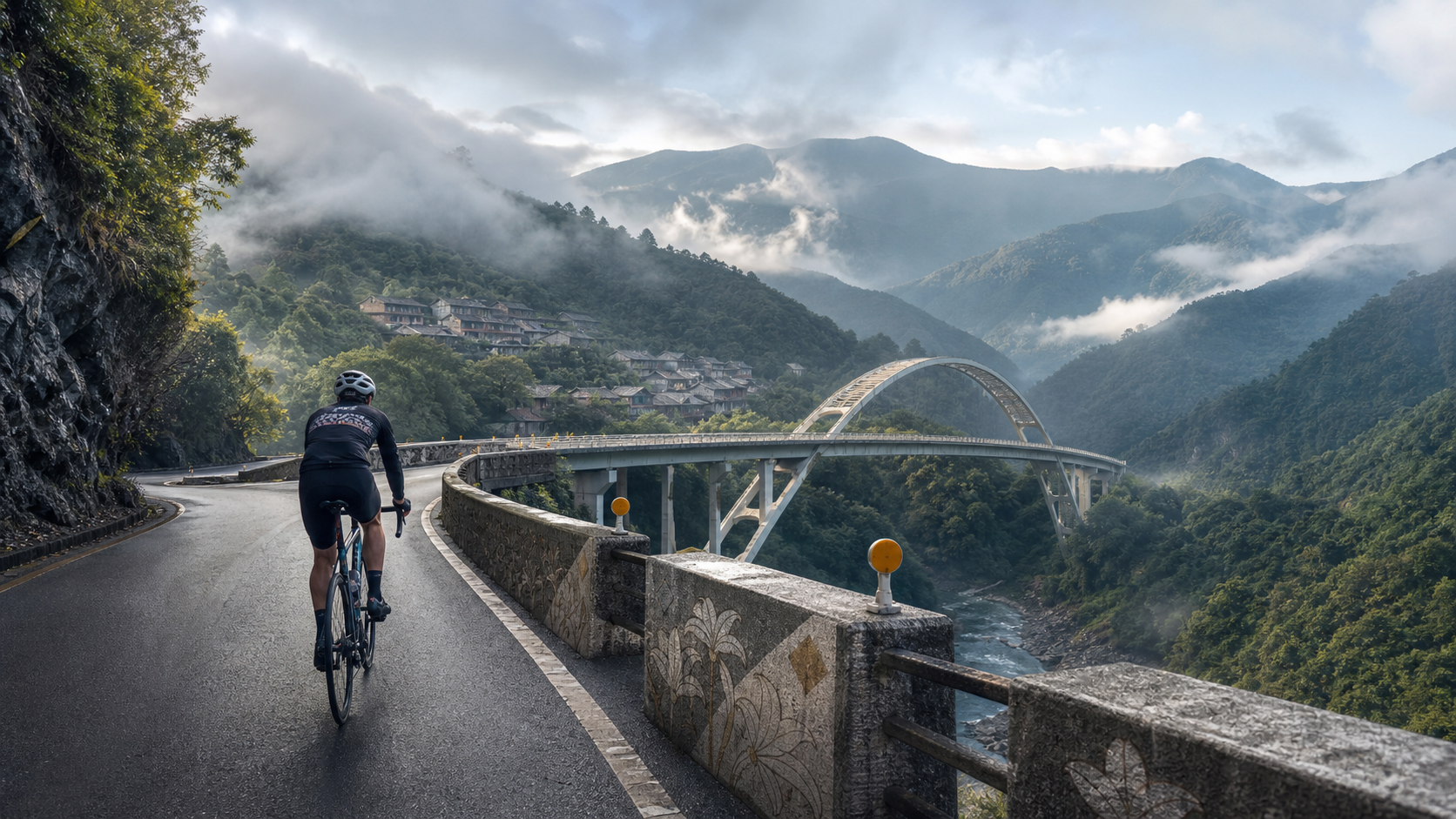
Prologue: Anticipation and Apprehension Before Departure
At dawn, I geared up on the flatlands of Sandimen Township, gazing at the layered mountain ridges in the distance. My heart was a mix of anticipation for this journey to Wutai Township and that familiar yet never-quite-erasable apprehension about the climbing challenge that lay ahead.
The Road to the Land of Clouds and Mist
Provincial Highway 24, a road that winds approximately 47.5 kilometers from the flatlands of Pingtung City all the way to Aling Village in Wutai Township, was the main artery of my journey. And the Shenshan climb to Wutai—that iconic, highly representative stretch of road that penetrates deep into the heart of Wutai Township—spans just 6.8 kilometers, yet carries within it a microcosm of the geography and history of this township, home to the highest concentration of Rukai people in all of Taiwan.
Wutai Township, with an average elevation of about 1,000 meters, is the highest township in Pingtung County. Covering a total area of roughly 279 square kilometers, it administers six villages and communities—Wutai Village, Jiamu Village, Dawu Village, Jilu Village, Aling Village, and Haocha Village—each nestled among these towering peaks. As I rode across the Ailiao River and over the Sandimen Bridge, gradually feeling the change in air that comes with rising altitude, a wave of indescribable anticipation and reverence welled up inside me—I knew I was approaching a land steeped in the profound cultural heritage of the Rukai people.
A Gaze from the Guchuan Bridge
As I rode across the Wutai Guchuan Bridge, spanning the Beinan River’s Ailiao tributary at that very moment, I deliberately slowed down, gazing at the rushing waters below and the steep, magnificent mountain terrain on both banks. This bridge bore witness, during the devastating Typhoon Morakot in 2009, to the harrowing moment when the entire transportation system connecting Wutai Township was thrown into complete isolation after the Yila Bridge was washed away. Today, the bridge has long since been repaired and rebuilt, allowing vehicles and pedestrians to safely pass once more, but those difficult years of forced isolation from the outside world must surely remain deeply etched in the collective memory of many Wutai Township residents, not easily erased.
I tried to imagine how, during those days when roads were severed and all external connections were paralyzed, the residents of Wutai Township managed to endure those arduous times with strength, facing shortages of supplies and the difficulty of outside rescue efforts. This imagining lent this seemingly ordinary bridge structure a weighty sense of respect and emotion in my heart.
The Gaze of the Migrants: The Double Displacement of the Kucapungane Tribe
Along the ride, I kept thinking about the moving yet heartbreaking story of the Kucapungane tribe’s double migration. In 1977, tribal members first relocated to New Haocha for safety reasons. Unexpectedly, Typhoon Morakot in 2009 devastated New Haocha once again, forcing the tribe into a second migration that ultimately settled them in the Rinari permanent housing site within Majia Township.
As the recognized sacred place of origin for the Rukai people, the Kucapungane tribe carries not merely a geographic place of residence, but the very root of the entire ethnic group’s cultural identity and spiritual beliefs. Though the old Haocha tribal site now stands empty, it was officially designated a national historic monument in 1991, quietly resting at an elevation of 950 to 1,050 meters—as if the tribe, in its most solemn manner, left an eternal memorial and testament to this history of double displacement.
I didn’t have the opportunity to visit the old Haocha site in person (that would require more specialized mountaineering gear and the assistance of local guides), but merely riding through this corridor of Provincial Highway 24, so intimately connected to the migration history of the Haocha tribe, already gave me a deeper, more grounded understanding of and resonance with this history.
Breathing on the Steep Slopes and the Resilience of the Rukai People
This 6.8-kilometer stretch of the Shenshan climb to Wutai, ascending 359.6 meters, has a relatively even distribution of gradients, yet it still tests a rider’s endurance, physical strength, and unwavering willpower. As I struggled to maintain my pedaling rhythm, I tried to imagine how the residents of this mountainous homeland, generation after generation, built their homes and livelihoods under such steep and rugged terrain conditions.
Traditional Rukai houses use slate as their core building material. This architectural wisdom of sourcing materials locally and adapting to the mountain terrain, passed down through centuries, can still be clearly identified in tribal settlements. Headman houses are larger in scale and adorned with exquisite wood carvings, while commoners’ houses are relatively modest. This aesthetic of social hierarchy, to some extent, reflects the profound cultural depth embedded in Rukai social structure. Along the ride, I tried to take note of traces of these traditional buildings, feeling the deep social significance and life wisdom carried within this architectural system.
The Silent Testimony of the Lilies
Passing a stretch of road with an open view, I noticed a few pure white lilies blooming by the roadside. In traditional Rukai culture, lilies carry special cultural significance closely tied to women’s moral virtue and men’s hunting achievements—a system of cultural codes that is both specific in detail and profound in meaning. I stopped my bike and quietly studied these seemingly ordinary flowers that bore such deep cultural weight, a complex and subtle emotion stirring within me.
As an outsider riding through, I cannot fully comprehend the delicate and rigorous symbolic meaning of lilies within the context of Rukai culture, but this humility in understanding and thirst for knowledge is perhaps precisely the basic disposition every traveler visiting an indigenous tribe should possess—not jumping to conclusions, but approaching with an open and respectful heart, to feel and to learn.
A Microcosm of Millet Fields and Agricultural Wisdom
Along the ride, I occasionally caught sight of millet fields and taro gardens around the tribal communities. The cultivation of these traditional crops reflects the agricultural wisdom the Rukai people have accumulated over generations, adapted to the mountain environment. Crops such as millet, taro, sweet potatoes, pigeon peas, and peanuts generally possess traits of drought tolerance and adaptability to poor mountain soils, capable of reliably supplying the daily food needs of tribal members in an environment like Wutai Township, where terrain is steep and arable land is limited.
I deliberately slowed down to carefully observe the appearance of these agricultural landscapes, trying to imagine how generations of tribal members, through repeated trial and adjustment on this rugged terrain, accumulated this agricultural wisdom that coexists harmoniously with the environment. This life philosophy rooted in the land far transcends the logic of efficiency that modern agricultural technology can offer; it is a precious cultural asset of coexistence with nature, passed down from generation to generation.
The Thrill of Arriving in Wutai Village
Finally arriving at Wutai Village, the seat of Wutai Township’s administration, I quietly looked back over this 6.8-kilometer stretch of long climbing, and that complex emotion mingling fatigue and gratitude surged through my heart once more, lingering long. This settlement, quietly resting among mountains at over a thousand meters in elevation, carries the most concentrated population of Rukai people in all of Taiwan, as well as the cultural vitality of this ethnic group that has resiliently endured through the devastation of Typhoon Morakot and the dispersal of tribal migration.
I sat by the roadside to rest for a while, gazing at the layered mountain ridges and the mist-wreathed skyline around me, a profound sense of reverence welling up that was hard to put into words—respect for the grandeur and hardship of this land, and respect for the resilient wisdom, vitality, and hope that generations of tribal members have demonstrated on this land.
Words for the Next Rider
If you’re also planning to take on the Shenshan climb to Wutai, I’d like to invite you not to treat it merely as a physical test. Slow down, take note of the traditional houses, the lilies, and the millet fields along the way, and also try to revisit in your mind the history of the Kucapungane tribe’s double migration and the profound impact Typhoon Morakot had on all of Wutai Township. Approach this land, steeped in the deep cultural heritage of the Rukai people, with respect and humility—such a riding experience will be far more profound and precious than simply chasing speed and records.
Before leaving Wutai Village, I took one last look at that ridgeline gently shrouded in mist, silently noting in my heart the many emotions and insights this journey had given me. This road taught me not just how to manage gear ratios or how to handle a moderate climbing challenge, but more importantly, how to understand, with respect, an ethnic group that has endured devastating natural disasters yet remains unyielding—and the deep, enduring bond between them and this high mountain land.
Visual Memories of Wreathed Clouds and Mist
The very name of Wutai Township is filled with poetry and imagery—“Wu” (mist) and “Tai” (platform), as if telling of the unique climatic landscape of this high mountain land, often gently enveloped in clouds and fog. The day I visited was relatively clear, but as elevation increased, I could still feel a faint, elusive moisture in the air, and occasionally thin wisps of mist drifted past distant peaks, adding a touch of hazy, mysterious beauty to the entire mountain range.
I tried to imagine what this scenery would look like if visited during a season or time of day when clouds and mist were thicker—perhaps a dreamlike, ethereal sight. Perhaps the entire Wutai Village would be shrouded in a veil of white fog, with only rooftops and partial building outlines visible, like a freehand ink-wash painting. This imagination and anticipation of misty beauty, to some extent, has become one of the key motivations driving my plans to visit this high mountain township again in the future.
A Young Tribal Member’s Sharing
During a brief stop in Wutai Village, I met a young tribal member who was tidying up his family’s courtyard. Seeing me arrive on my bike, breathless and drenched in sweat, he offered a friendly smile and chatted with me briefly. He told me that in recent years, as awareness of tourism and cultural preservation has grown in Wutai Township, more and more young tribal members have chosen to stay in the village, dedicating themselves to traditional crafts, farming, or guided tours, hoping to contribute to the sustainable development of their community.
Listening to his sharing, a wave of relief and emotion welled up inside me. Having endured the devastation of Typhoon Morakot and the dispersal caused by tribal relocation, the younger generation on this land still chooses to stay, striving in their own ways to continue and safeguard this profound cultural foundation and deep connection to the land. This persistence and passing down across generations is one of the most moving and admirable forces I encountered on this journey.
Reflections Before a Traditional Slate House
During my ride, I deliberately stopped to carefully examine a relatively well-preserved traditional slate house. The walls built from thick stacked slate slabs, weathered by years of wind and frost, still stood firmly in place. A few ornaments that appeared to be crafted through traditional techniques hung beneath the eaves, swaying gently in the breeze. I didn’t approach too closely to take photos; instead, I stood quietly at a distance, using my eyes and my heart to absorb the unique character and profound sense of history emanating from this structure.
This architectural wisdom of using local materials and adapting to the natural environment feels especially precious and worthy of protection in today’s era of modern building materials and methods. I think this is precisely what makes traditional culture most moving—it is not a static specimen displayed in a museum, but something that still lives vibrantly within the daily life of the tribe, continuously used, maintained, and passed down by its people, demonstrating vitality and resilience that transcend generations.
Highland Produce and the Resilience of Tribal Economy
Within Wutai Township, in addition to traditional crops like millet and taro, the cultivation of highland vegetables and cash crops has developed in recent years, injecting new vitality and possibilities into the tribal economy. This effort to adapt and transform toward modern economic models while continuing traditional agricultural wisdom demonstrates the flexibility and resilience of this land and its people in the face of changing times.
I didn’t have the opportunity to delve into the specific details and challenges behind this modern agricultural transformation, but through the farming landscapes I saw along the way, I could sense that this land, once severely struck by natural disaster, is gradually reclaiming its own economic autonomy and path toward sustainable development in its own way—step by step, forging its own future.
A Reminder to My Future Self
As I write this article, I’m also leaving a reminder in my heart for my future self: don’t let limitations of time or physical endurance reduce a visit to Wutai Township to a mere “check-in” cycling challenge. The weight of history and culture carried by this land far exceeds what can be fully appreciated in a single ride. It deserves multiple visits and longer stays to gradually accumulate and deepen my understanding of and emotional connection to this place.
If I ever have the chance to return to Wutai Township in the future, I would plan for more ample time—perhaps an overnight stay—to go deeper into the tribe, exchange with more local residents, and listen to more authentic stories and life experiences about this land and this people.
The Sound of the Ailiao North River and Its Echoes
On a short stretch of road before crossing the Gucheon Bridge, I deliberately stopped and walked to the bank of the Ailiao North River, listening to the sound of water striking gravel as it rushed downstream. This water sound, somewhere between surging and clear, in a way resembles the heartbeat and breath of this land itself—sometimes swift, sometimes gentle, yet always flowing ceaselessly, nourishing the tribes, fields, and rich ecosystems along its banks.
I tried to imagine how many generations of lives this river has witnessed, and how it also witnessed Typhoon Morakot in 2009, which changed the fate of all of Wutai Township. The destructive force displayed when the river swelled stands in stark, profound contrast to the relatively calm and clear appearance of the river before me now. This dual nature of natural force—both gentle and violent—is, in a sense, the most authentic and unadorned portrayal of this highland land.
Tribal Language Syllables Drifting in the Wind
During my ride, I occasionally heard the distant sound of tribal members conversing in the Rukai language. Though I couldn’t understand the specific meanings of those melodic, rhythmically distinctive syllables at all, I was deeply drawn to the unique beauty of that language. Language is often the most direct and precious vessel carrying a people’s cultural memory and worldview. Though I was merely a passerby who couldn’t understand the tribal language, I could still sense, through the rhythm and emotional expression of that speech, the profound and sincere connection this people holds for their culture and their land.
Silently, I wished that this precious linguistic heritage would continue to be preserved and sustained through tribal education and intergenerational transmission, and not gradually fade into the currents of history under the fierce impact of modernization.
A Photograph Never Taken
Along my ride, I once passed a viewpoint with an extremely open vista, where layered mountain ranges under the afternoon sun displayed a breathtakingly magnificent scene. Instinctively, I reached for my phone to capture the moment, but just before pressing the shutter, I suddenly stopped—I realized that some beautiful scenes perhaps don’t need to be captured through a camera lens, but should simply be fully experienced and treasured with one’s own eyes and heart.
And so, that photograph was ultimately never taken, yet it remains deeply etched in my memory, becoming a segment of this journey that belongs only to me—unable to be replicated or shared, yet extraordinarily precious—a private recollection that occasionally surfaces quietly in my mind during the ordinary days that follow.
Epilogue: Continuing Forward with Reverence
Leaving Wutai Township and heading back on the return journey, I carried with me a heart full of emotion and reflection as I continued riding toward the next leg of my trip. This route to Wutai via Shenshan, with its moderate-grade climbs and the profound historical and cultural weight carried along the way, taught me that every cycling challenge should never be merely a physical test, but rather an opportunity—each time—to approach with humility and reverence, and to come to know every piece of land and every people on this island that deserves to be treated with seriousness.
An Interlude About a Rainbow After Rain
As my ride was nearing its end, a brief afternoon shower suddenly drifted in from the sky. I quickly took shelter at a roadside spot and waited for the rain to ease. After the rain stopped, I looked up and saw a faint rainbow quietly arching across the layered mountains of Wutai Township. That unexpected and beautiful sight made me pause everything I was doing, quietly appreciating this fleeting yet profoundly moving natural wonder.
I recalled that in the cultural narratives of many indigenous peoples, rainbows often carry special and profound symbolic meaning—perhaps a sacred bridge connecting ancestral spirits with the human world, or an omen of good fortune and hope descending. Though I’m not certain whether Rukai traditional culture holds a similar interpretation of rainbows, the scene before me of a post-rain rainbow spanning the mountains indeed painted a particularly poetic and warm closing note to this journey filled with emotion and reflection.
A Silent Conversation with a Fellow Rider
On this journey, I was accompanied by a friend who shares the same passion for mountain cycling. After arriving in Wutai Village, we didn’t rush to talk and share our feelings with each other. Instead, each of us found a corner, sat quietly, and gazed at the mountains and clouds before us, immersed in our own thoughts.
This kind of silent companionship that needs no words to fill the space is, in a way, an especially precious and rare form of understanding in deep travel. We both understood that the weight of history and the depth of culture carried by this land cannot be fully digested or expressed in just a few words. It’s better to give each other some space and time, allowing everyone to quietly process and absorb, in their own way, the various impacts and profound insights this journey brought.
In Closing: An Ongoing Endeavor
Looking back on this cycling journey to Wutai via Shenshan, I’ve come to deeply understand that getting to know a piece of land and the rich culture of a people is never a task that can be completed in one go. It is a long-term endeavor that requires continuous investment of time and effort, accumulated steadily, and absolutely cannot be rushed. This article is merely a small fragment and a rough record of my journey of understanding Wutai Township and the profound Rukai culture. In the future, I will continue to learn and explore, carrying this humility and reverence to keep discovering the many more lands and stories on this island that deserve to be seen and understood. May every person who reads this article also embark on this road with the same humble heart, and in their own way, experience the unique grandeur and gentleness of this highland land called Wutai Township.
Related Reading
- Wutai Mountain Strategy: A Moderate 6.8 km Challenge to the Township with the Highest Rukai Population in Taiwan
- Wind and Aiyu Aroma at Gucheon Bridge: A Paiwan Mountain Trail Ride to the Edge of Wutai
- Wutai Route Strategy: An Honest Verification of a 5.7 km Moderate Climb and the Administrative District Starting Point
- The Crossroads Deep in Jianshi: From Yufeng to Yulao, a Ride Through Clouds and Mist
一定要騎一次!阿里山最深處:里佳部落!單車旅行 | 2800m爬升 | 深度部落體驗:嗨翻晚會、螢火蟲、銀河 | feat. JJSC & 廢物伙伴 | 公路車 CT Yeh
10 個月前
新竹羅平 x 天湖部落 大禹嶺級變態陡坡! 4K超高畫質 空拍 | 公路車
5 年前
里佳部落 阿里山單車深度旅遊! | 竹山/草嶺/來吉/奮起湖 | 無敵銀河絕景 全新路線探索! 驚險狀況百出! | 4K沉浸式畫質 | 公路車 | CT Yeh
3 年前
微東進 太魯閣 蘇花 單車兩日遊 ! 颱風過後路況超刺激 行程大亂 | 最狂的鹹酥雞訂單 | CT Yeh | 4K 高畫質空拍絕景!
4 年前
觀霧 變好騎了! | 北高車友爆笑大會師 | 公路車 | 單車旅遊 Taiwan Cycling Route GuanWu
6 年前
大武山後門26%歡樂陡坡!JJSC南台灣單車行Day2 / 被颱風追著跑 / 公路車 / CT Yeh
2 年前
台灣登山王之路 KOM 全程參賽4K臨空錄影 PART1 穿越峽谷地形! #東進武嶺 太魯閣 / 燕子口 / 天祥 / 西寶 PART1 (公路車 / CT Yeh)
3 年前
新竹白蘭部落! 爬陡坡還能講笑話...? 廢物伙伴の約騎 | 公路車 | CT Yeh
4 年前