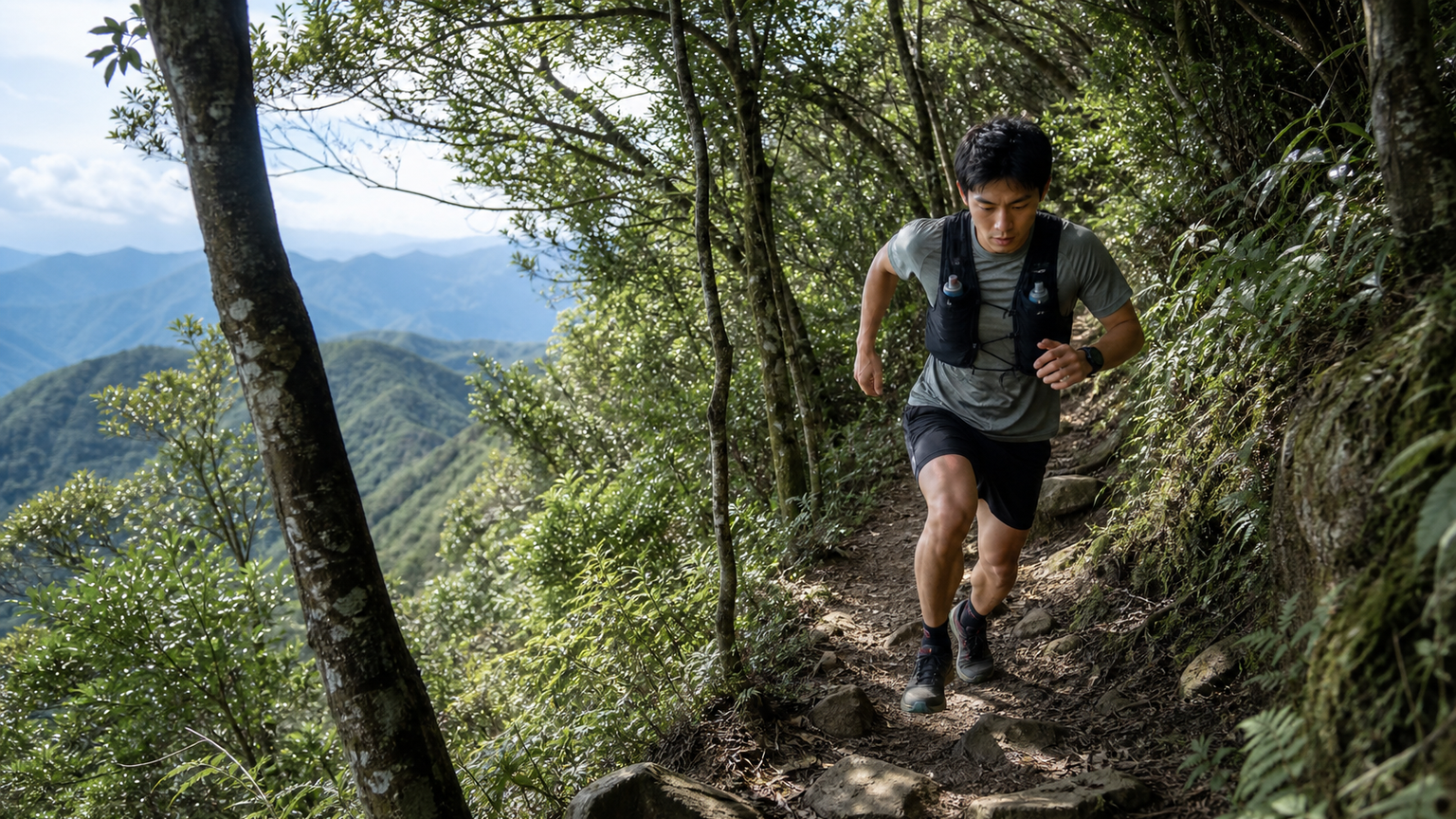
Taiwan Trail Running (越野跑) Beginner’s Guide
Trail running has grown rapidly in Taiwan in recent years. From Yangmingshan in the north, Alishan in the south, to Taroko in the east, there are stunning mountain trails waiting to be explored. Compared to road running, trail running is closer to nature, more varied, and a comprehensive challenge for both body and mind. This article introduces you to the basics of trail running in Taiwan.
1. Differences Between Trail Running and Road Running
| Comparison Item | Road Running | Trail Running |
|---|---|---|
| Surface | Asphalt or concrete | Dirt, rocks, tree roots |
| Pacing | Steady pace | Large differences between uphill and downhill |
| Technical Requirement | Low | Medium to high |
| Equipment | Running shoes are sufficient | Trail running shoes and a backpack are needed |
| Injury Risk | Repetitive strain injuries | Acute sprains, falls |
| Mental Challenge | Monotonous but predictable | Variable and requires attention |
2. Basic Trail Running Equipment
Essential Equipment
Trail Running Shoes: The most important investment
- Outsoles must have pronounced grip patterns
- A stiff rock plate to protect the soles of the feet
- Waterproof or quick-drying materials
- Recommended: Salomon Speedcross, HOKA Speedgoat, Altra Lone Peak
Trail Running Backpack (Hydration Vest):
- A capacity of 5 to 12 liters is suitable for beginners
- Must carry soft flasks or a water bladder
- Recommended brands: Salomon, Ultimate Direction, Osprey
Navigation Tools:
- Download offline maps (OsmAnd, Maps.me, Garmin Connect)
- Download Taiwan 100K maps to your phone as a backup
- It is recommended to use a GPS watch with topographic maps
Safety Equipment
| Equipment | Use | Notes |
|---|---|---|
| Headlamp | For early starts or delayed returns | Recommended to carry even when starting during the day |
| First Aid Kit | Treating minor injuries, sprains | At minimum, include an elastic bandage and antiseptic solution |
| Emergency Blanket | Emergency heat retention | Lightweight and thin, essential |
| Power Bank | Ensure communication capability | Signal is unstable in the mountains; use power-saving mode |
| Whistle | Signal for help in danger | Attach to the backpack shoulder strap |
3. Key Trail Running Techniques
Uphill Techniques
- Short, quick steps uphill: Shorten stride length, increase cadence
- Lean your upper body forward: Shift your center of gravity forward to reduce sitting back on your hips
- Use your arms to assist propulsion: Swing your arms more forcefully when going uphill
- Power hike: When the gradient exceeds 30%, use fast walking instead of running (more energy efficient)
- Heart rate control: Heart rate spikes easily on uphills; don’t push through it forcefully
Downhill Techniques (Most Critical)
Downhill running is the most difficult and dangerous part of trail running:
- Look 1.5 to 2 meters ahead: Anticipate foot placement
- Slight forward lean: Don’t lean back out of fear
- Land with your foot directly under your hip: Avoid braking landings
- Relax your legs: Keep knees slightly bent to absorb impact
- Spread your arms for balance: Similar to walking a tightrope
Beginners should take downhills slowly; safety first. Running downhill eccentrically with your knees causes significant muscle damage.
Handling Slippery Surfaces
- Reduce speed: Don’t rely on luck
- Shorten your stride: Increase ground contact frequency
- Look for rough surfaces: Moss on rocks is the most slippery; stepping on hard dirt is safer
4. Beginner-Friendly Trail Running Routes in Taiwan
Northern Taiwan
Yangmingshan Zhuzihu Loop
- Distance: Approx. 8 km
- Elevation Gain: Approx. 350 m
- Features: Floral scenery, well-established trails
- Difficulty: ★★☆☆☆
Qixing Mountain Hiking Trail
- Distance: Approx. 6 km round trip
- Elevation Gain: Approx. 480 m
- Features: Taipei City’s highest peak, excellent views
- Difficulty: ★★★☆☆
Central Taiwan
Dakeng Hiking Trail System (Taichung)
- Multiple route options (Trails 1 to 12)
- Distance: 4 to 14 km
- Difficulty: ★★ to ★★★★
Southern Taiwan
Chaishan Loop (Kaohsiung)
- Distance: Approx. 8 km
- Elevation Gain: Approx. 300 m
- Features: Formosan rock macaques, harbor sea views
- Difficulty: ★★☆☆☆
Eastern Taiwan
Taroko Zhuilu Old Trail
- Distance: Approx. 10 km
- Features: Cliffside paths, gorge scenery (mountain entry permit required)
- Difficulty: ★★★☆☆
5. Specifics of Nutrition for Trail Running
Nutrition for trail running is more complex than for road running:
- Higher hydration frequency: Climbing consumes a lot of oxygen, and mountain weather is changeable
- Higher caloric needs: Climbing burns a significant amount of extra calories
- Natural foods: You can carry natural fuel like bananas, dates, and peanut butter toast
- Emergency rations: For long-distance routes, it is recommended to carry 50% extra nutrition
6. Trail Running Safety Rules
- Don’t run alone: Go in a group of at least two
- Inform friends or family of your itinerary: Leave a route map and estimated return time
- Set a turnaround time: Establish a latest retreat time (usually 2 hours before sunset)
- Respect nature: Don’t trample plants, pack out all trash
- Mountain entry permits: Required for entering protected areas (national parks, indigenous tribe protected areas)
7. Recommended Trail Running Events in Taiwan
| Event | Location | Distance | Suitable Level |
|---|---|---|---|
| Fushoushan Trail Run | Taichung | 25/50km | Beginner to Intermediate |
| Taroko Trail Run | Hualien | 23km | Beginner to Intermediate |
| Neihu Dirt Trail Run | Taipei | 5/10km | Entry Level |
| Taiwan Mountain Trail Run | Various | Multiple distances | All levels |
Conclusion
Trail running offers you not just a physical challenge, but also a deep connection with Taiwan’s mountains and forests. Starting from simple suburban hill trails and gradually building your skills and fitness, you will discover that Taiwan’s mountains are among the most beautiful running tracks in the world.
Related Topic Reading
- Trail Running Beginner’s Guide: Transitioning from Road to Mountain Trails
- Trail Running Race Strategy: Mountain Trail Techniques, Nutrition Backpacks, and Elevation Gain Calculation
- Trail Running Shoes vs. Road Running Shoes: Outsole Grip Requirements for Taiwan’s Mountain Trails
- Complete Guide to Choosing Trail Running Shoes: From Terrain Analysis to Shoe Recommendations, Master the Science of Trail Running Shoe Selection
太平山單車員工旅遊 | 這樣玩CP值最高!| 公路車
5 年前
台灣登山王之路 KOM 全程參賽4K臨空錄影 PART1 穿越峽谷地形! #東進武嶺 太魯閣 / 燕子口 / 天祥 / 西寶 PART1 (公路車 / CT Yeh)
3 年前
單車 一日北高 ( 雙城 ) 肥宅雙人瘋狂行 紀錄片 REACTO
10 年前
爬坡ITT實境)台中 魔王 松鼠坡 首航 6:12 大肚山 大三元 科福路
8 年前
2023 夏季KOM 參賽實況 / 穿越空拍視角 / 整車都凸台 / 太魯閣峽谷x合歡山絕美大景 / 東進武嶺 / Taiwan KOM Challenge / 公路車 / CT Yeh
3 年前
梅山36彎 奮起湖 單車挑戰 下集 #公路車
6 年前
滑雪新手們慘摔學習全紀錄(請開字幕),滑雪好好玩 | Snowboard + Ski | 岩原 スキー場 | 滑雪APP使用 | GoPro Max
6 年前
半日 小台灣 極限單車路線挑戰實錄
7 年前