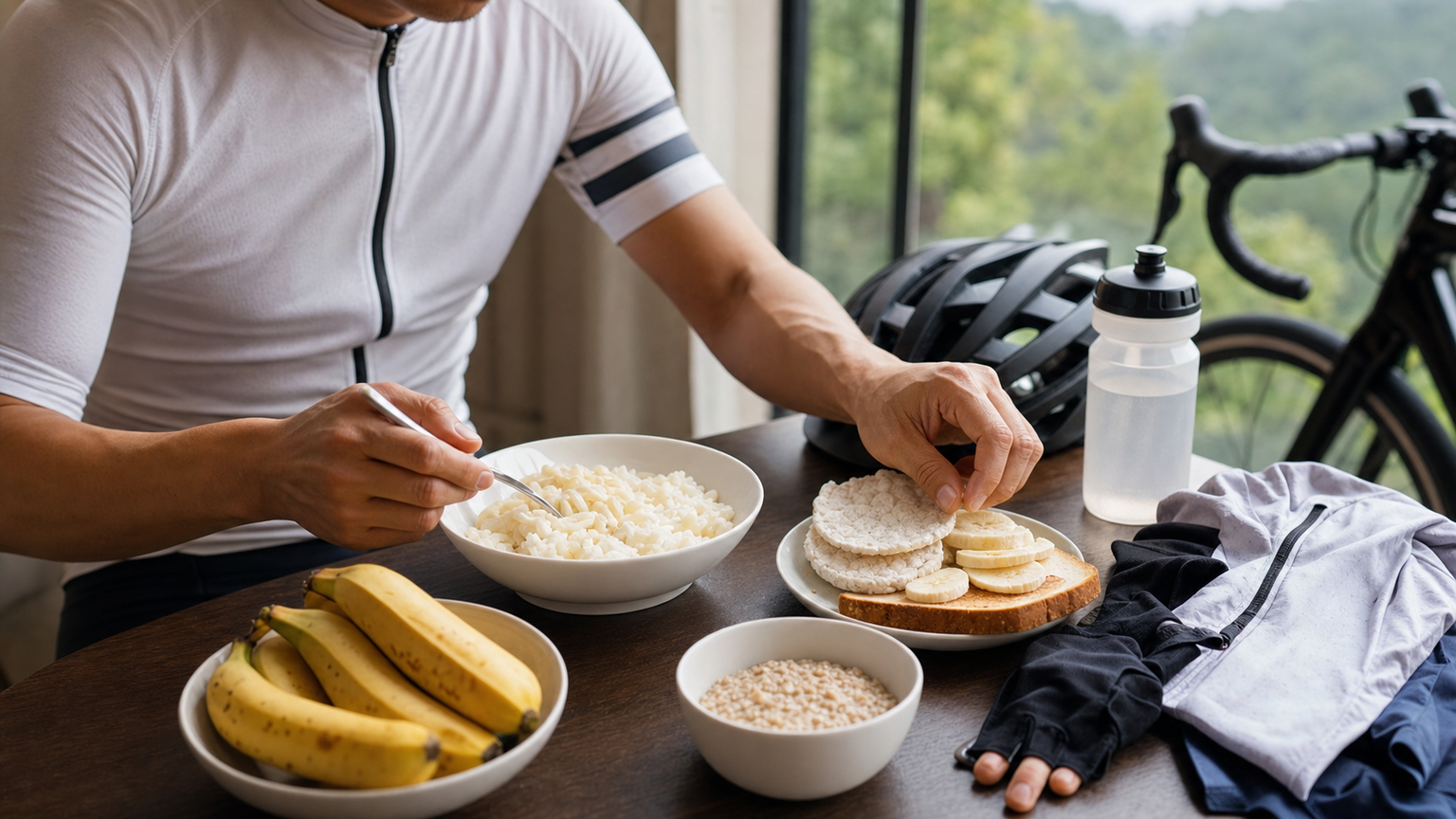
Carbohydrate Loading: How to Eat Right Before a Race
“Eat a huge plate of pasta the night before the race” — you’ve probably heard this concept, but true carbohydrate loading is not just about having a big meal. Done correctly, carbohydrate loading can increase your muscle glycogen stores by 20–40%, delivering significant performance gains in long-distance events.
Why Do You Need Carbohydrate Loading?
Glycogen: The Primary Fuel for Exercise
During moderate-to-high-intensity riding, the body relies mainly on glycogen stored in the muscles and liver for energy.
| Glycogen Source | Storage Amount | Riding Time It Can Provide (70% FTP) |
|---|---|---|
| Muscle glycogen | 300–500g | About 90 minutes |
| Liver glycogen | 75–100g | About 20–30 minutes |
| Blood glucose | About 5g | A few minutes |
Under normal conditions, muscle glycogen is about 60–70% full; carbohydrate loading can fill it to 90–100%.
The “Bonking” Phenomenon
When glycogen runs out, riders hit what is commonly called “bonking” — a sudden feeling of extreme fatigue, weak limbs, and scattered focus. The purpose of carbohydrate loading is to delay this moment as much as possible.
Race Types Where Carbohydrate Loading Applies
| Race Duration | Benefit of Carbohydrate Loading | Recommendation |
|---|---|---|
| < 60 minutes | No significant benefit | Not needed |
| 60–90 minutes | Slight benefit | Optional light implementation |
| > 90 minutes | Significant benefit | Strongly recommended |
| > 3 hours | Very important | Must be done |
Modern Carbohydrate Loading Method (3-Day Protocol)
The traditional 7-day carbohydrate loading protocol has been simplified into a more practical 3-day protocol with equivalent results.
D-3 (3 days before the race)
- Training: Easy 1-hour ride (deplete some glycogen to increase replenishment efficiency)
- Diet: Start raising the carbohydrate ratio to 65%
- Carbohydrate intake target: 8–10g/kg body weight
- Food choices: White rice, pasta, sweet potatoes, bread, bananas
D-2 (2 days before the race)
- Training: Very easy 30-minute ride with 2 x 20-second sprints mixed in
- Diet: Maintain high carbohydrate intake
- Carbohydrate intake target: 8–12g/kg body weight
- Note: Reduce high-fiber foods (whole grains, vegetables) to ease digestive load
D-1 (1 day before the race)
- Training: Rest
- Diet: Maintain high carbohydrates, reduce fat
- Dinner: The most important meal (not the legendary massive plate of pasta, but a normal-sized high-carbohydrate meal)
- Do not try new foods
Food Choices for Carbohydrate Loading
Recommended Foods (Easy to Digest, High Glycogen Conversion Rate)
| Food | Carbohydrate Content (per 100g) | Advantages |
|---|---|---|
| White rice | 28g | Most common in Taiwan, easy to digest |
| Pasta (cooked) | 25–30g | Traditional choice |
| White bread | 50g | Quick replenishment |
| Banana | 23g | Convenient to carry, contains potassium |
| Sweet potato (steamed) | 20–25g | Contains electrolytes |
| Sports drink | 6–8g/100ml | Rapid absorption |
| Energy gel | 22–25g/packet | Easy to measure |
Foods to Avoid
- High-fiber foods: Whole grains, legumes, large amounts of vegetables (may cause gastrointestinal discomfort)
- High-fat foods: Fried foods, nuts (slow digestion, affects glycogen replenishment rate)
- New foods: Untried foods carry gastrointestinal risk
- Alcohol: Interferes with glycogen synthesis and affects sleep
Race Day Eating Strategy
Breakfast (2–3 hours before the race)
Goal: Replenish liver glycogen depleted during sleep without burdening the digestive system
Recommended breakfast:
- White rice porridge + a small amount of eggs
- White toast + peanut butter + banana
- Oatmeal (not whole-grain oats) + honey
- Energy bar + sports drink (if time is short)
Portion size: 25–30% less than your usual breakfast to avoid feeling overly full
30 Minutes Before Start
- 1 packet of energy gel (with caffeine)
- Or half a banana
- 250ml of sports drink
In-Ride Fueling (Races > 90 minutes)
Principle: Consume 60–90g of carbohydrates per hour
| Time | Fueling |
|---|---|
| 30 minutes after start | Begin fueling (don’t wait until hungry) |
| Every 30–45 minutes | 1 packet of energy gel + sports drink |
| Before climbs | Fuel in advance |
| Aid stations | Bananas, salted foods, solid foods (long-distance races) |
Common Misconceptions
Misconception 1: “Binge eating before the race is carbohydrate loading”
Gorging on large amounts of food the day before the race only causes gastrointestinal discomfort and weight gain (water retention), rather than effectively increasing glycogen. The correct approach is to systematically raise the carbohydrate ratio starting from D-3.
Misconception 2: “Carbohydrate loading will make me fat”
Glycogen storage binds water (each gram of glycogen binds about 3 grams of water). A weight gain of 1–2kg is normal and indicates adequate glycogen reserves; it will naturally return to normal after the race.
Misconception 3: “Short races also need carbohydrate loading”
As mentioned earlier, races shorter than 90 minutes typically do not require carbohydrate loading. A normal diet plus an energy gel before the race is sufficient.
Personalized Carbohydrate Loading Plan
Using a 70kg rider as an example (target: 10g/kg/day):
- Daily carbohydrate target: 700g
- Meal distribution: Breakfast 200g, lunch 250g, dinner 200g, snacks 50g
- Breakfast example: 1.5 bowls of white rice (75g carbs) + porridge + 2 slices of toast (50g) = 200g (plus other foods)
Practical Application for Races in Taiwan
Taiwan’s race environment (high heat, mountainous terrain) requires special considerations for carbohydrate loading:
- Heat affects digestion: Reduce high-fat foods and keep meals light
- Electrolyte replenishment: Consume sodium and potassium alongside carbohydrates
- Aid stations on the course: Plan which aid stations to take on solid foods
Conclusion
Carbohydrate loading is a scientifically supported sports strategy, but it only works when executed correctly. Find foods that suit your digestive system and test them during training races so you can execute with confidence on actual race day.
Related Reading
- The Right Way to Carb-Load on a Bike: A Pre-Race Carbohydrate Supercompensation Guide
- Pre-Race Carbohydrate Supplementation: A Scientific Glycogen Loading Strategy
- Carb-Loading Three Days Before a Race: A Complete Plan and Practical Template
- Pre-Race Carbohydrate Loading for Ultramarathons: How to Properly Execute 48-Hour Carb Supercompensation
CT暗黑廚房) 車友必備 宇宙無敵鮮蚵湯 幫助訓練恢復 天然食補 好市多 超肥鮮蚵 破PR
7 年前
一日北高前的高裝檢 | 北高 360 | 挑戰11小時的裝備 | 一日雙塔 | 補給
6 年前
一日北高/長距離團騎 常見問題補充篇 / 組團或跟團的眉角 / 壯車友容易被瘦車友慢性拉爆 / 原來屁股痛可能是這個原因...? / 風場配速法 / 公路車 / CT Yeh
2 年前
靠單車減肥35公斤 心得分享與整理
7 年前
CT 喇低賽) 武嶺牽車 才是王道 西進牽車四小時內秘訣 攝手位置 如何判斷 防抽筋小秘訣
7 年前
一日北高常見問題大集合 | 攻略 | 路線 | 訓練 | 補給 | 自行車 單車 | 一日雙城 | 雙塔 | TWB北高360 | 屁股痛
6 年前
FTL 與 SYB 車隊專訪 西進武嶺 實用攻略分享! 2小時 如何練?!你不知道的眉角!新手準備武嶺必看 EP1 | 實力派女車友 | 精華版 | 公路車 | CTYeh
4 年前
單車 一日北高 ( 雙城 ) 肥宅雙人瘋狂行 紀錄片 REACTO
10 年前