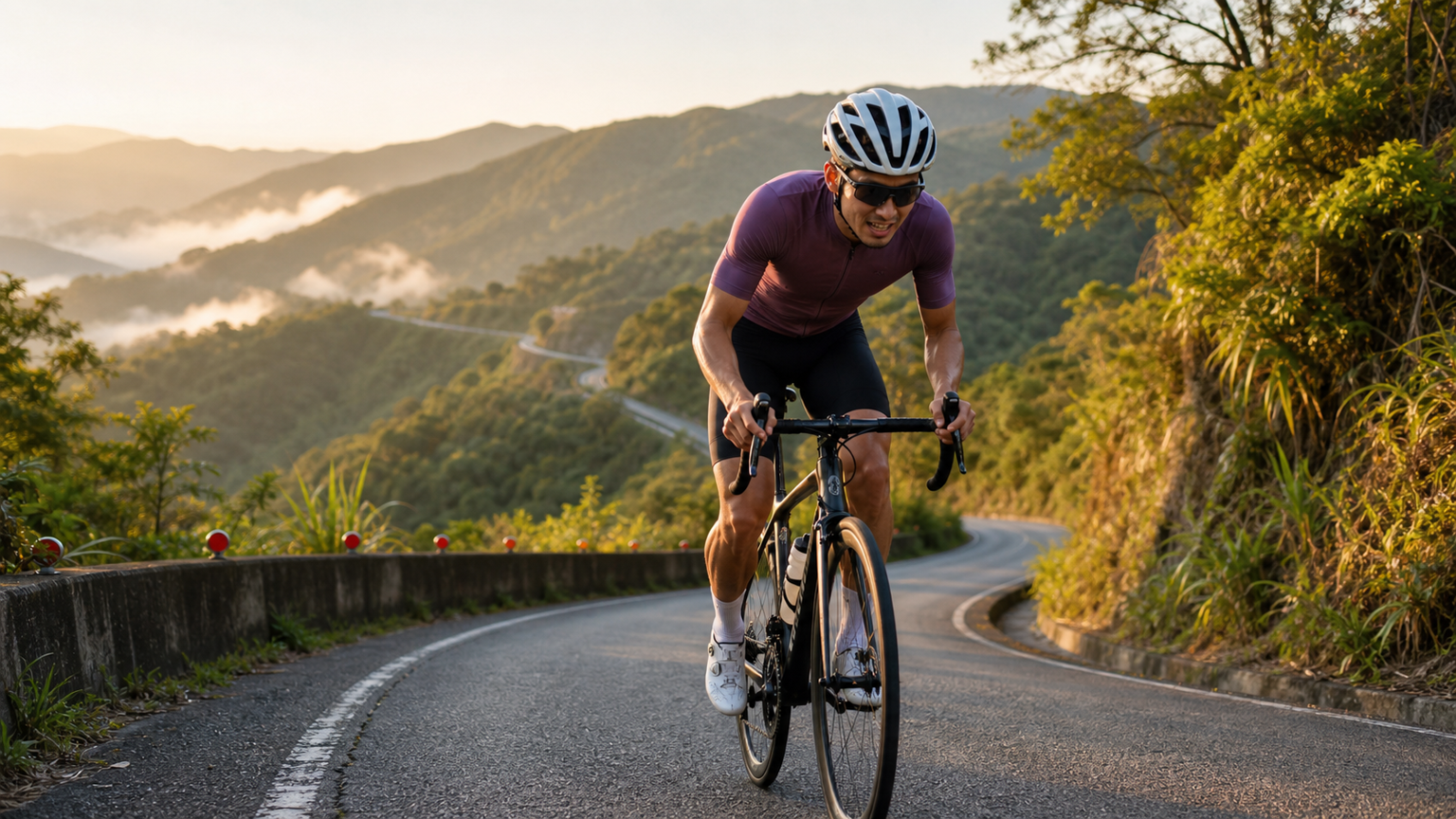
KOM (King of the Mountain) Strategy Guide: How to Claim Your First Strava KOM
The Strava KOM (King of the Mountain) is a badge every cyclist dreams of. On Taiwan’s mountain roads, the competition for KOMs is fierce, but as long as you choose the right segment and develop the right strategy, you too can claim your first KOM.
Understanding Strava’s KOM System
A KOM is the fastest recorded time on a given Strava segment. Segments are created by users and can range from a few hundred meters of short climb to long stretches of several dozen kilometers.
KOM vs QOM
- KOM (King of the Mountain): Fastest male record
- QOM (Queen of the Mountain): Fastest female record
- CR (Course Record): All-time fastest record on a specific segment
Strategy 1: Choose a Segment You Can Conquer
Newly Created Segments
Newly created segments often have little competition yet. Method:
- On routes you ride regularly, identify “unofficial climbs” among your riding buddies
- Create your own segment and become the first “default KOM”
- Note Strava’s segment rules: segments must have a certain minimum length and elevation gain
Segments with Less Competition
Don’t start by challenging popular segments near big cities (competition is extremely fierce). Selection criteria:
- Remote segments: Mountain roads in Taitung and Hualien often have less competition
- Off-the-beaten-path routes: Connector roads, less-ridden alternative routes
- Specific seasons: Segments only open during certain seasons (roads that reopen after typhoons, roads closed in winter)
Search by Weight Category
If you’re a lightweight rider (<65kg), climbing segments give you a natural advantage; if you’re heavier, KOMs on long flats or descents may suit you better.
Strategy 2: Perfect Timing for Your Attempt
Weather Conditions
| Condition | Impact on Performance |
|---|---|
| Tailwind | Can boost speed by 10–20% (especially noticeable on flats) |
| Headwind | Significantly reduces speed |
| Low temperature (15–18°C) | Optimal riding temperature |
| High temperature (>30°C) | Heart rate rises, performance drops |
| Low humidity | Favorable |
| Rain | Usually unfavorable (especially on climbs due to reduced tire grip) |
Best times for KOM attempts in Taiwan:
- Autumn (October–November): Cool weather, clear air, usually northerly winds (favorable for east-west segments)
- Early morning (6–8 AM): Avoids traffic, lowest temperatures
- Clear weather after a typhoon: High pressure, lower air density, favorable
Personal Condition
- CTL (Chronic Training Load) at a high point
- TSB (Training Stress Balance) between +10 and +25
- Adequate rest in the 2 days prior
- Sufficient sleep
- Carbohydrate loading completed
Strategy 3: Pacing Strategy
Negative Split
The most effective KOM pacing strategy is the “negative split”—riding the second half faster than the first half.
- First section (first 1/3): Start at 95% of target power to let your body adapt to the intensity
- Middle section (middle 1/3): Maintain target power
- Final section (last 1/3): If you have energy left, gradually increase power by 5–10%
Mistake to Avoid: Going Out Too Hard
“First one to sprint, last one to laugh”—starting with a sprint causes early lactate buildup, leading to a severe slowdown in the latter part, and ultimately a worse time than steady pacing.
Target Power by Segment Length
| Segment Length | Target Power (%FTP) |
|---|---|
| 1–3 minutes | 120–150% FTP |
| 3–8 minutes | 105–115% FTP |
| 8–20 minutes | 100–108% FTP |
| 20–60 minutes | 90–100% FTP |
Strategy 4: Equipment Optimization
Bike Weight
For every 100g of bike weight reduced, you can save approximately 3 seconds on a typical climb (calculated on long climbs like Wuling). Before attempting a KOM, shed unnecessary gear where possible:
- Remove spare bottle cages (if you already have a full bottle)
- Take off unnecessary tools and accessories
- Use lightweight bottles (carry only what you need)
Aerodynamics
- Wear form-fitting cycling jerseys (avoid loose clothing)
- Use an aero helmet
- For downhill or flat KOMs: consider using a TT helmet
Tires
- Climbing segments: Use lightweight wheelsets with slightly higher tire pressure
- Mixed segments: Balance aerodynamics and lightweight
Popular KOM Segments in Taiwan
Northern Taiwan
| Segment | Features | Difficulty |
|---|---|---|
| Yangde Boulevard (full length) | Taipei’s most popular climb, fierce competition | High |
| Pingjing Street to Bishan Road | Short climb, moderate competition | Medium |
| Yangjin Highway (various sections) | Multiple sub-segments to choose from | Medium-High |
Central Taiwan
| Segment | Features | Difficulty |
|---|---|---|
| Wuling (various sections) | Taiwan’s most famous, extremely fierce competition | Very High |
| Hui-Sun Forest Area | Moderately popular, scenic bonus | Medium |
| Aowanda | Less competition | Medium |
Eastern Taiwan
| Segment | Features | Difficulty |
|---|---|---|
| Taroko various sections | Relatively less competition, scenic | Medium |
| Southern Cross-Island Highway | Requires long-distance riding, low KOM competition | Low-Medium |
Recording and Analysis
After attempting a KOM, analyze your data:
- Power curve: Your maximum power over that duration
- Heart rate: Whether your heart rate hit its ceiling in the latter part of the effort
- Cadence: Whether you maintained a steady cadence or it fluctuated
- Pacing: Whether you achieved a negative split
Conclusion
Claiming a KOM requires a combination of fitness + strategy + timing. Start by choosing a segment that suits you—don’t challenge the most popular segments right away. Every attempt is a learning experience; even if you don’t take the KOM, your progress is real.
Related Reading
公路車 爬坡 破PR 紀錄 小技巧 分享
6 年前
台灣登山王之路 KOM 全程參賽4K臨空錄影 PART1 穿越峽谷地形! #東進武嶺 太魯閣 / 燕子口 / 天祥 / 西寶 PART1 (公路車 / CT Yeh)
3 年前
#KOM 夏季登山王之路 比賽實況 #東進武嶺
7 年前
富士山KOM 賽事篇 VLOG!/ 小野田出沒!/ 完整路段分析 / 武嶺要騎多快才能拿環?/ 台灣選手 第20回Mt.富士ヒルクライム 参加!/ 公路車 / CT Yeh
2 年前
2024 南庄仙山KOM 多視角賽事精華!/ 500元報名費媲美富士山登山賽!/ 公路車 / CT Yeh
1 年前
2019 夏季KOM 5小 完賽心得 準備攻略 東進武嶺 夏季登山王之路 Taiwan KOM Challenge
7 年前
大禹嶺 到 武嶺牌樓 全程前後實況錄影 | 北進武嶺 | 東進武嶺 | KOM | 訓練台 | 坡度分析 | Taiwan KOM Last 10 km HARD | 公路車
6 年前
2023 台灣KOM自行車登山王挑戰 (AI修復版) / Taiwan KOM Challenge / Live 實況直播 / 班傑明刷破大會成績全記錄
2 年前