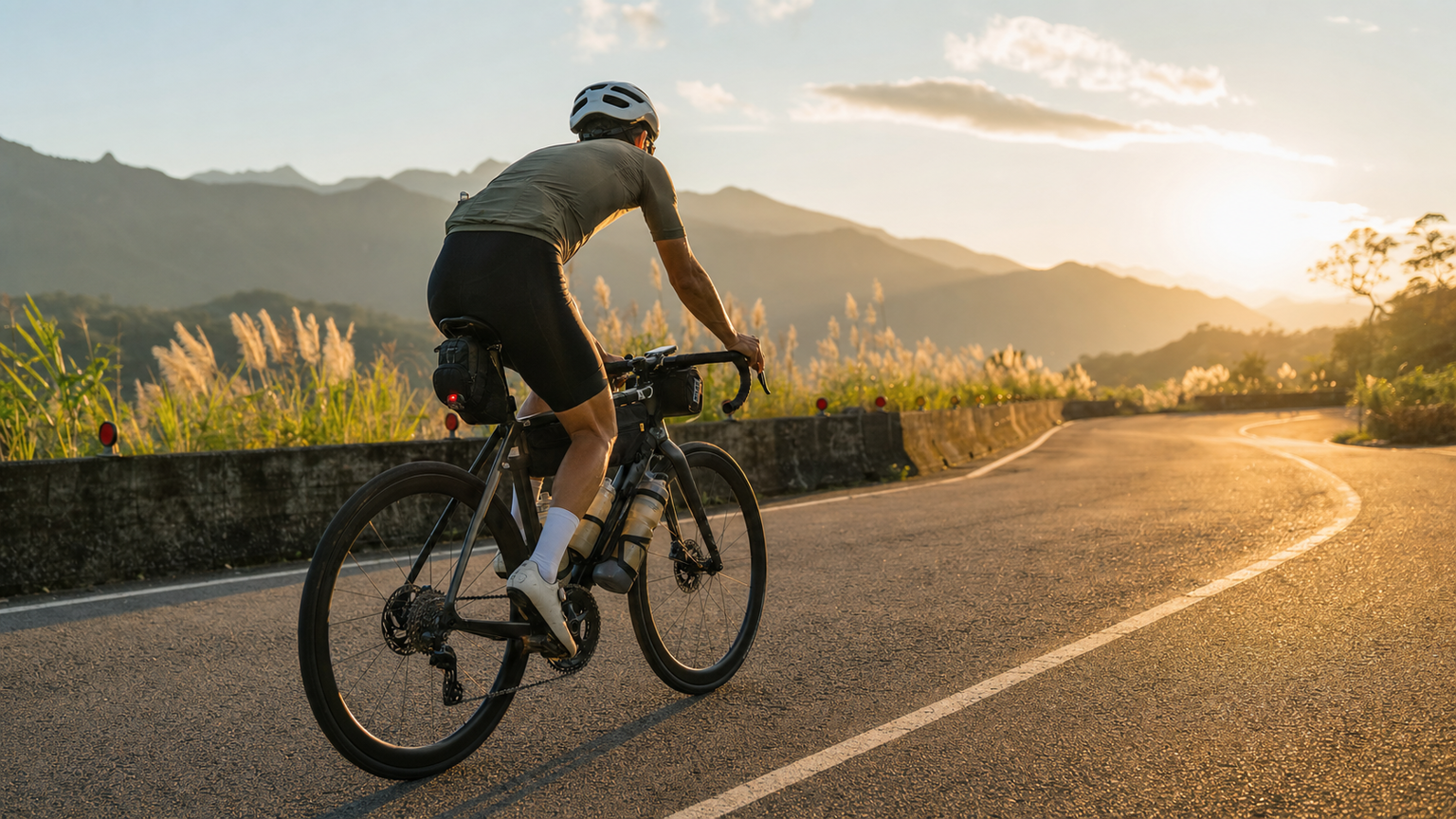
Ultra Cycling Preparation: Tackling Challenges Beyond 200km
A single-day ride exceeding 200km is a rare challenge for most people. In Taiwan, many cyclists take on ultra-long-distance routes like “One-Day Island Circumnavigation” or “Wuling to Taipingshan,” but without thorough preparation, many start regretting it after 150km. This article provides a complete preparation guide for ultra-long-distance cycling.
The Unique Challenges of Ultra Cycling
Riding beyond 200km isn’t just “a longer version of a regular ride”; it presents several challenges that ordinary long rides don’t:
- Multiple Glycogen Depletions: Requires systematic mid-ride refueling
- Central Nervous System Fatigue: Affects coordination and decision-making
- Digestive System Fatigue: Reduced tolerance for solid food after prolonged exertion
- Night Riding (common in many ultra routes): Visual, temperature, and sleepiness challenges
- Mental Breakdown: 150–180km is the psychological barrier for most cyclists
Physical Preparation (16-Week Plan)
Weekly Training Volume Targets
| Week | Weekly Hours | Longest Single Ride | Focus |
|---|---|---|---|
| 1–4 | 8–10 hours | 3–4 hours | Building aerobic base |
| 5–8 | 10–12 hours | 5–6 hours | Extend long rides, add intensity at the end |
| 9–12 | 12–14 hours | 7–8 hours | Peak endurance, simulate ultra refueling |
| 13–15 | 8–10 hours (taper) | 4–5 hours | Maintain form |
| 16 | Race week | Challenge day | Peak performance |
Key Training: Back-to-Back Long Rides
Training to ride in a fatigued state is the core of ultra-distance preparation:
- Saturday: 120–150km ride (simulate race intensity as much as possible)
- Sunday: 60–90km ride (endurance training under fatigue)
This training teaches the body to sustain output while partially fatigued and accelerates mitochondrial adaptation.
Night Riding Adaptation
If your challenge route involves night riding (such as One-Day Island Circumnavigation or 24-hour challenges):
- Perform at least 2–3 night riding training sessions
- Familiarize yourself with lighting equipment and test battery life
- Understand nighttime thermoregulation and sleepiness management
Refueling Strategy: The Core of Ultra Distance
Calorie Calculation
Using a 200km ride, 10 hours of riding time, and a 70kg body weight as an example:
- Riding expenditure: approximately 7,000–9,000 kcal
- Needs to be replenished from food (body fat can provide a portion): approximately 3,000–5,000 kcal
- Target hourly intake: 300–500 kcal
Refueling Schedule
| Time Period | Refueling Strategy |
|---|---|
| Before departure | Substantial breakfast (600–800 kcal) + caffeine |
| Hours 1–2 | Light refueling to warm up the stomach |
| Hours 2–5 | Active refueling (energy intake every 30 minutes) |
| Hours 5–8 | Focus on solid food, ensure variety |
| After hour 8 | Energy gels + caffeine to stimulate the central nervous system |
The Evolution of Food Choices
During long-distance riding, the stomach’s acceptance of food changes:
- First half: Solid foods, energy bars, fruit
- Second half: Shift to liquids (energy gels, sports drinks)
- Before the finish: Caffeinated energy gels, Coca-Cola (stimulating effect)
Recommended foods at Taiwan ultra-distance rest stops:
- Convenience stores: sweet potatoes, rice balls, sports drinks
- Aid stations: bananas, watermelon, small steamed buns
- Carry with you: energy gels, salt candies, nuts
Electrolyte Management
In rides exceeding 4 hours, electrolyte loss (especially sodium) cannot be ignored. Symptoms of sodium deficiency include: muscle cramps, nausea, and headaches.
- Sodium intake target: 500–1,000mg per hour
- Sources: Electrolyte tablets, salt candies, sodium-containing sports drinks
Equipment Preparation
Essential Equipment Checklist
Bike:
- [ ] Front and rear lights (if night riding)
- [ ] Spare inner tubes ×3–4
- [ ] Puncture repair kit (including CO2 inflator)
- [ ] Quick chain link
- [ ] Multi-tool set
- [ ] Saddle bag (for carrying food)
Personal:
- [ ] Multiple cycling jerseys (if changing is needed)
- [ ] Sunscreen (essential in Taiwan’s summer)
- [ ] Chamois cream (to prevent saddle sores)
- [ ] Portable power bank (for bike computer, phone)
- [ ] Emergency contact information
Saddle Sore Prevention Strategy
For rides over 200km, saddle sores are a more common reason for “forced withdrawal” than leg fatigue.
- Apply chamois cream before departure
- Carry chamois cream for mid-ride reapplication
- Wear high-quality cycling shorts (don’t skimp on this)
- If there are rest stops, take a brief break off the bike and readjust
Mental Strategies
The 150km Psychological Barrier
Almost all ultra-distance cyclists hit a mental breakdown around 150km. Characteristics:
- Suddenly losing interest in riding
- Starting to calculate “how much further” (then feeling discouraged)
- Leg pain suddenly feeling amplified
Coping strategies:
- Anticipate it: Tell yourself “the 150km low is normal, and it will pass”
- Short-term goals: Focus on the next rest stop, don’t calculate total distance
- Positive self-talk: “I’ve already ridden 150km, only 50km to go” (rather than “50km to go!”)
- Caffeine boost: Use caffeinated energy gels during the low period
Psychological Support in Group Riding
Finding 2–3 friends to take on the challenge together can significantly increase your success rate. Take turns leading and breaking the wind (2–5 minutes each), which is more sustainable both mentally and physically.
Recovery Plan
Recovery after completing a 200km+ ride is equally important:
- Within 24 hours: Only consume light food, don’t attempt any training
- 2–3 days: Light non-cycling activities (walking, swimming)
- After 1 week: Easy Zone 2 riding
- After 2 weeks: Gradually return to normal training
- 3–4 weeks: Full recovery, consider the next goal
Recommended Ultra-Distance Routes in Taiwan
| Route | Distance | Elevation Gain | Difficulty | Highlights |
|---|---|---|---|---|
| Taiwan Island Circumnavigation (One-Day) | Approx. 900km | — | Extreme | Ultimate challenge |
| Taipei to Taichung (Western Coastal) | Approx. 200km | Low | Moderate | Mostly flat |
| Wuling to Taipingshan | Approx. 250km | Over 8,000m | Extreme | Climbing challenge |
| Hualien to Taitung (East Coast) | Approx. 160km | Low | Moderate-Low | Scenic views |
| Sun Moon Lake Grand Loop | Approx. 200km | 3,000m | High | Traditional long ride |
Conclusion
Ultra-long-distance cycling is the challenge in cycling that comes closest to self-discovery. After completing it, you’ll find that your body is far stronger than you ever imagined. The key is systematic preparation—don’t underestimate it, but don’t fear it either.
Related Reading
- Road Bike Long-Distance Challenge Preparation: Training Methods for a 200km Round Trip in One Day
- Ultra-Distance Cycling Challenges: Breaking Physical and Mental Limits
- The Mental Challenge of Long-Distance Riding: Psychological Preparation Strategies for a 200km Day Trip
- Training Plan Before a Long Ride: How to Prepare for 200km in 8 Weeks
單車 一日北高 ( 雙城 ) 肥宅雙人瘋狂行 紀錄片 REACTO
10 年前
半日 小台灣 極限單車路線挑戰實錄
7 年前
一日北高前的高裝檢 | 北高 360 | 挑戰11小時的裝備 | 一日雙塔 | 補給
6 年前
一日北高常見問題大集合 | 攻略 | 路線 | 訓練 | 補給 | 自行車 單車 | 一日雙城 | 雙塔 | TWB北高360 | 屁股痛
6 年前
2019 夏季KOM 5小 完賽心得 準備攻略 東進武嶺 夏季登山王之路 Taiwan KOM Challenge
7 年前
2019 柯P 超越北高 第一集團實錄 (11小時實錄請參考另一部影片) 一日雙城 一日北高 NeverStop Taiwan Long Distance Cycling Challenge
7 年前
靠單車減肥35公斤 心得分享與整理
7 年前
一日北高 11小時 賽後心得分享篇 | TWB北高360 | 一日雙城 | 單車 | 公路車
6 年前