First 100K Ultramarathon Experience: A Complete Record from Registration, Preparation, to Finishing
First 100K Ultramarathon Experience: A Complete Record from Registration, Preparation, to Finishing
100 kilometers. Back in the days before I started running, that number sounded like something from another planet. Yet after three years of running and four completed marathons, I decided to sign up for my first 100K ultramarathon. This is my complete record.
Why I Chose the Ultramarathon
After finishing my fourth marathon, I faced what many runners call the “post-race emptiness.” The marathon no longer made me nervous, and I began searching for the next goal that would get my heart racing. After watching a few ultramarathon documentaries, I was deeply moved by those runners who pushed through 24 hours in the mountains, and I decided to step into the world of ultramarathons.
Choosing a Race: Ultramarathon Options in Taiwan
Ultramarathon events in Taiwan have flourished in recent years. The major races include:
| Race Name | Distance | Highlights |
|---|---|---|
| Fubon Taipei Ultramarathon | 100K | Urban course, ideal for first-timers |
| Wulai Trail Ultramarathon | 50K/100K | Mountain trail |
| Taroko Gorge Trail Challenge | 75K/115K | Canyon and mountain terrain |
| Formosa Ultramarathon | 100K/168K | Round-island road course |
I chose the Fubon Taipei Ultramarathon because the urban course offers well-stocked aid stations and abundant medical resources, making it suitable for runners attempting their first 100K.
Preparation: The Distance from Marathon to Ultramarathon
Increasing Training Volume
The biggest difference in ultramarathon preparation lies in weekly mileage and back-to-back long runs:
- Weekly mileage: Gradually increased from 60 km/week during marathon training to 90–100 km/week
- Back-to-back long runs: A 30 km long run on Saturday plus a 20 km long run on Sunday, simulating the feeling of running under accumulated fatigue
- Night running practice: If the race includes a nighttime segment, you need to train your rhythm and mental adaptation for running in the dark
Gear Preparation
The gear requirements for a 100K ultramarathon far exceed those of a marathon:
- Hydration vest (10–12L): To carry water, nutrition, and spare clothing
- Headlamp: A primary light plus a backup, with battery capacity lasting 15+ hours
- Trail running shoes (if the course includes trail sections) or road running shoes (depending on the course)
- Insulation layer: Temperatures can drop sharply at night
- First-aid kit: Elastic bandages, blister patches, painkillers, sunscreen
- Energy supplies: 15–20 energy gels plus solid food (jelly, sandwiches, dates)
Race Day: A 12-Hour Journey
Before the Start
We gathered at 5 AM, with over 500 ultramarathon runners assembled in the starting area. The atmosphere was completely different from a marathon—quieter, more composed. Most ultramarathon runners don’t rush at the start; everyone knows the road ahead is still very long.
0–30K: A Pleasant Opening
The first 30 kilometers felt easy and enjoyable. I ran slower than my marathon pace (deliberately), taking in the scenery along the way and chatting with fellow runners. This is the most fascinating part of ultramarathons—it transforms running from a competition into a journey.
30–60K: Entering the “True Ultramarathon”
After passing the 30-kilometer mark, my marathon muscle memory kicked in, but two-thirds of the 100K still lay ahead. This stretch was the most mentally grueling: you know you can still run, but you also know you’re already tired. I told myself: “Just focus on the next aid station, don’t think about the finish line.”
60–80K: The Dark Hours
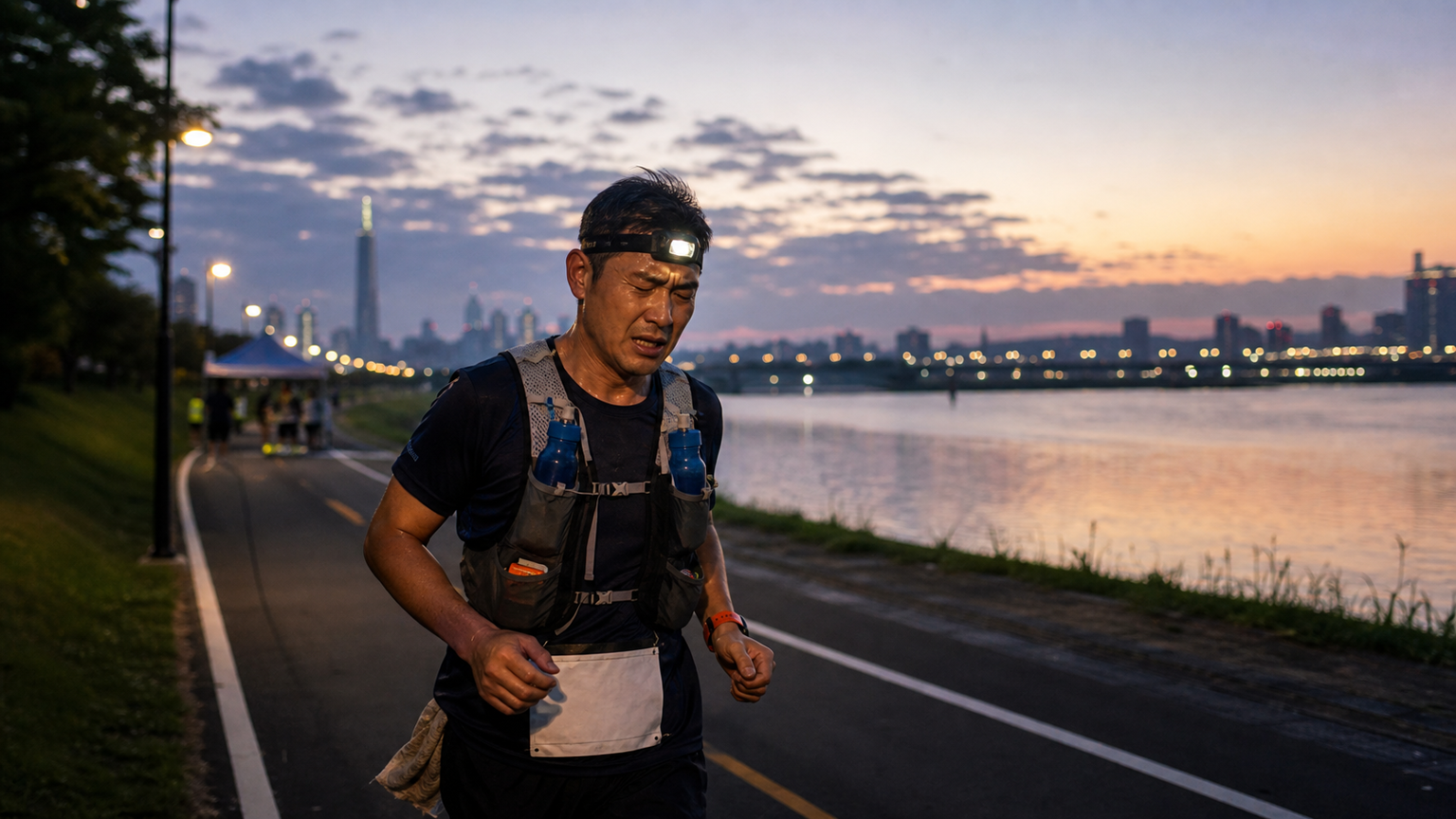
After 60 kilometers, night fell. I turned on my headlamp, and the world shrank to a small patch within the beam of light. Blisters began forming on the soles of my feet, and my thigh muscles grew slightly stiff. Every runner has their own struggle in this stretch. I found a fellow runner going the same pace, and we took turns talking to keep each other alert.
80–100K: The Power of Counting Down
After 80 kilometers, the math starts working in your favor—the thought of “only 20 kilometers left” carries more power than “still 20 kilometers to go.” My legs were heavy, but my heart felt light. In the final 2 kilometers, I gave every ounce of energy I had left to sprint, and tears streamed down my face involuntarily.
Finish time: 13 hours 22 minutes
Reflections After the Finish
The greatest takeaway from the 100K ultramarathon wasn’t the result, but a realization: the human body is far stronger than we imagine, and it’s our mental limits that are the true boundaries.
For friends who want to take on an ultramarathon:
- Complete 3–4 marathons first to confirm your baseline endurance
- Find a like-minded running partner to train with and keep each other accountable
- Don’t rush into the hardest races; progress gradually
- Remember: the finish line of an ultramarathon is never the end of the race—it’s the moment you tell yourself “I did it”
Related Reading
日本公路最高登山賽,台灣首位YT挑戰實錄,乘鞍登山賽40週年,賽前篇完整版,請到我的YT收看 #公路車 #cycling
11 個月前
Live) 備戰2019彰化經典百K 賽前攻略 (已完賽請看新影片
7 年前
半日 小台灣 極限單車路線挑戰實錄
7 年前
2024 彰化經典百K 參賽直播 / 黃亭茵集團 / 公路車 / CT Yeh
2 年前
2019 柯P 超越北高 第一集團實錄 (11小時實錄請參考另一部影片) 一日雙城 一日北高 NeverStop Taiwan Long Distance Cycling Challenge
7 年前
單車 一日北高 ( 雙城 ) 肥宅雙人瘋狂行 紀錄片 REACTO
10 年前
2026 輪霸西濱200K 挑戰VLOG / 第一集團 / 首次參加..經驗不足、膀胱不足 /死守6H內 / AI戰鬥力顯示系統 / 公路車 / CT Yeh
4 個月前
新玉門關 單車挑戰賽 多視角主集團衝刺菁華版 4K #公路車
5 年前