The Longevity Framework of Lifelong Training: How to Make Endurance Sports Carry You Into Your Eighties
The True Long-Term Winners Are Measured by “Still Being in the Game”
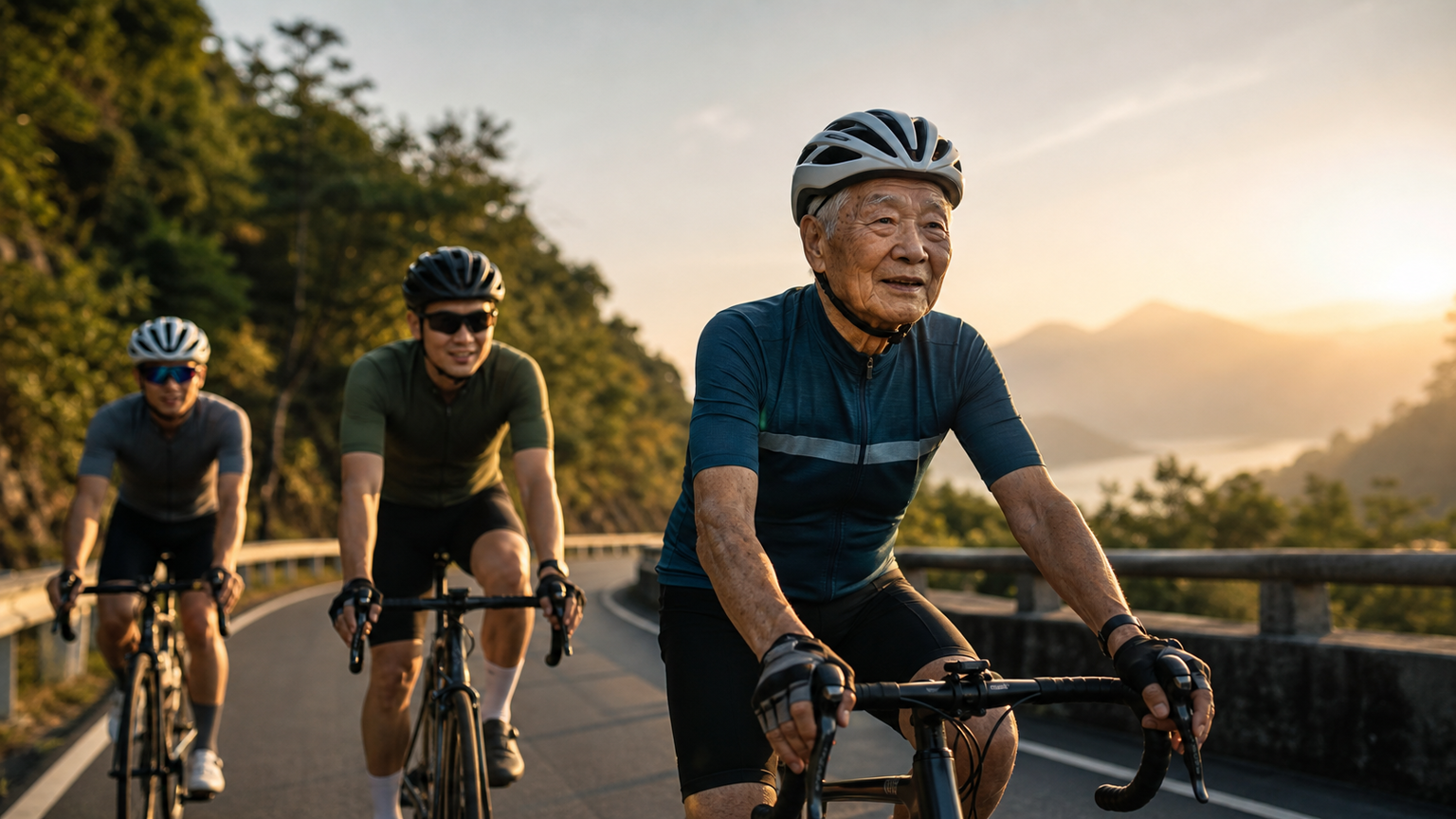
If you stretch your athletic career across a decades-long timescale, the biggest variable isn’t any given year’s PB—it’s whether you’re still in the sport at all. Those who are still cycling, running, and swimming at eighty aren’t relying on talent or a single high-volume season; they’ve designed sport as something sustainable for decades. This article isn’t about a specific training plan—it’s about the four structural pillars that let endurance sports accompany you for a lifetime.
The Four Pillars of Longevity
| Pillar | Core Question | Failure Mode |
|---|---|---|
| Injury Resilience | Can the body keep absorbing load without breaking down? | Repeated overuse injuries force you to keep interrupting your training |
| Motivation Cycles | Can passion cross the valleys without burning out? | Burnout, loss of meaning, and quitting |
| Load Flexibility | Can the plan flex with life’s stages? | Forcing a single standard until it breaks, then abandoning everything |
| Identity | Is sport a stable part of who you are? | Tying self-worth to results—when results drop, you quit |
Longevity isn’t about one pillar being exceptionally strong—it’s about all four standing. Most people don’t quit sport because their fitness fails; they quit because one of these structural pillars collapses.
Pillar One: Injury Resilience
What people who can train for a lifetime share is that they are rarely interrupted by injury for long stretches. This comes from the principles running through this series: conservative progression rather than sudden jumps, treating strength training as a lifelong injury-prevention foundation, respecting recovery, and prioritizing movement quality. Every major overuse injury is a forced offline period in your athletic career—minimizing injuries is essentially buying yourself decades of extra training years.
Pillar Two: Motivation Cycles
Across decades, passion will inevitably ebb and flow. Treat “motivation will cycle periodically” as a normal design parameter, not a failure signal: during low points, allow yourself to cut volume, switch formats (from racing to enjoyment, change disciplines, join a community), and prioritize “not stopping completely” over “maintaining high intensity.” The cost of recovering from a full stop is far higher than maintaining a low baseline.
Pillar Three: Load Flexibility
Life stages dramatically change your available resources—work, parenting, injury, aging. People who can train for a lifetime have flexible plans: high-resource periods allow ambition, while low-resource periods have a “minimum sustainable dose” that maintains the foundation without guilt. Design the plan to scale up and down, rather than setting one high standard that, if unmet, leads to total abandonment.
Pillar Four: Identity
The most underestimated longevity factor: internalizing “being an athlete” as a stable self-identity, rather than tying your self-worth to performance numbers. When sport is “who I am” rather than “how fast I can run,” the natural decline in performance (the age tax is inevitable) won’t push you out of sport. Comparing numbers with your younger self is a chronic poison for long-term motivation; comparing with “the self who keeps showing up” is what lets you go the distance.
Integrating the Four Pillars Across a Decades-Long Timescale
- Discipline in progression and recovery carries through a lifetime: The habits of conservative progression and recovery built in youth are the capital that lets you keep training in middle and old age.
- Strength training is never absent: It spans injury prevention, combating sarcopenia, and maintaining function—it’s one of the few common denominators worth keeping from youth to old age.
- Goals are redefined with age: From chasing PBs → maintaining performance → maintaining function, health, and enjoyment. When every stage has a reasonable definition of success, you won’t hit a certain age, feel “it’s meaningless,” and walk away.
- Make sustainability the primary metric: Ask one question of every training decision—can I sustain this approach for ten or twenty years? If the answer is no, no matter how effective it is, it doesn’t belong in a longevity framework.
Conclusion
The deepest reward of endurance sports isn’t in any single race—it’s in staying on the road, day after day, decade after decade, injury-free and still carrying passion. Designing a structure that keeps you in the game at eighty is far harder—and far more worthwhile—than designing a plan that makes you fastest this year.
“The athletes I’ve coached whom I respect most aren’t the fastest ones—they’re the ones in their seventies who still ride out every week, whose bodies haven’t been broken by training, and who still have light in their eyes. They didn’t win any single year; they did this thing for a lifetime. Sustainability is the highest form of talent in endurance sports.” —A veteran endurance coach who has coached across decades
Related Reading
- The Science of Athletic Longevity: How to Train for Twenty Years Instead of Burning Out in Two
- The Science of Exercise and Longevity: Evidence for Extended Lifespan, Optimal Doses, and a Lifestyle You Can Maintain for Life
- A Blueprint for Exercise and Healthy Aging: How to Combine Exercise by Age Group
- Exercise for Older Adults: A Complete Prescription for Extending Healthy Lifespan—Field Notes from a 15-Year Coach
一日北高/長距離團騎 常見問題補充篇 / 組團或跟團的眉角 / 壯車友容易被瘦車友慢性拉爆 / 原來屁股痛可能是這個原因...? / 風場配速法 / 公路車 / CT Yeh
2 年前
實景訓練台) 彰化經典百K 高強度喵團 90分鐘 跟著一起練功 2019 Indoor workout Changhua Classic 100 Taiwan
7 年前
西進武嶺 免費訓練分析服務 Intervals | 練不夠還是練過頭?你哪一種類型選手?AI模型告訴你! | 備戰神器 | 公路車 訓練 | CT Yeh
4 年前
CT 喇低賽) 武嶺牽車 才是王道 西進牽車四小時內秘訣 攝手位置 如何判斷 防抽筋小秘訣
7 年前
靠單車減肥35公斤 心得分享與整理
7 年前
福隆鐵人團練隨拍
8 年前
FTL 與 SYB 車隊專訪 西進武嶺 實用攻略分享! 2小時 如何練?!你不知道的眉角!新手準備武嶺必看 EP1 | 實力派女車友 | 精華版 | 公路車 | CTYeh
4 年前
Never Stop 西進武嶺 前後雙機 完整全程錄影 訓練台 實境
8 年前