Why Some Sports Photos Make You Want to Click, and Others Are Just “Captured”
Anyone can press the shutter on a phone, but the difference in sports photography lies in this: is it “documenting a person in motion,” or “making people feel the speed, effort, and emotion of that moment”? The gap between the two isn’t the gear—it’s the understanding of shutter speed, light, and storytelling.
Freezing vs. Flow
| Technique | Shutter Concept | Effect | Best For |
|---|---|---|---|
| Freezing the moment | High shutter speed | Freezes splashes, expressions, airborne moments | Finish-line expressions, water splashes, jumps |
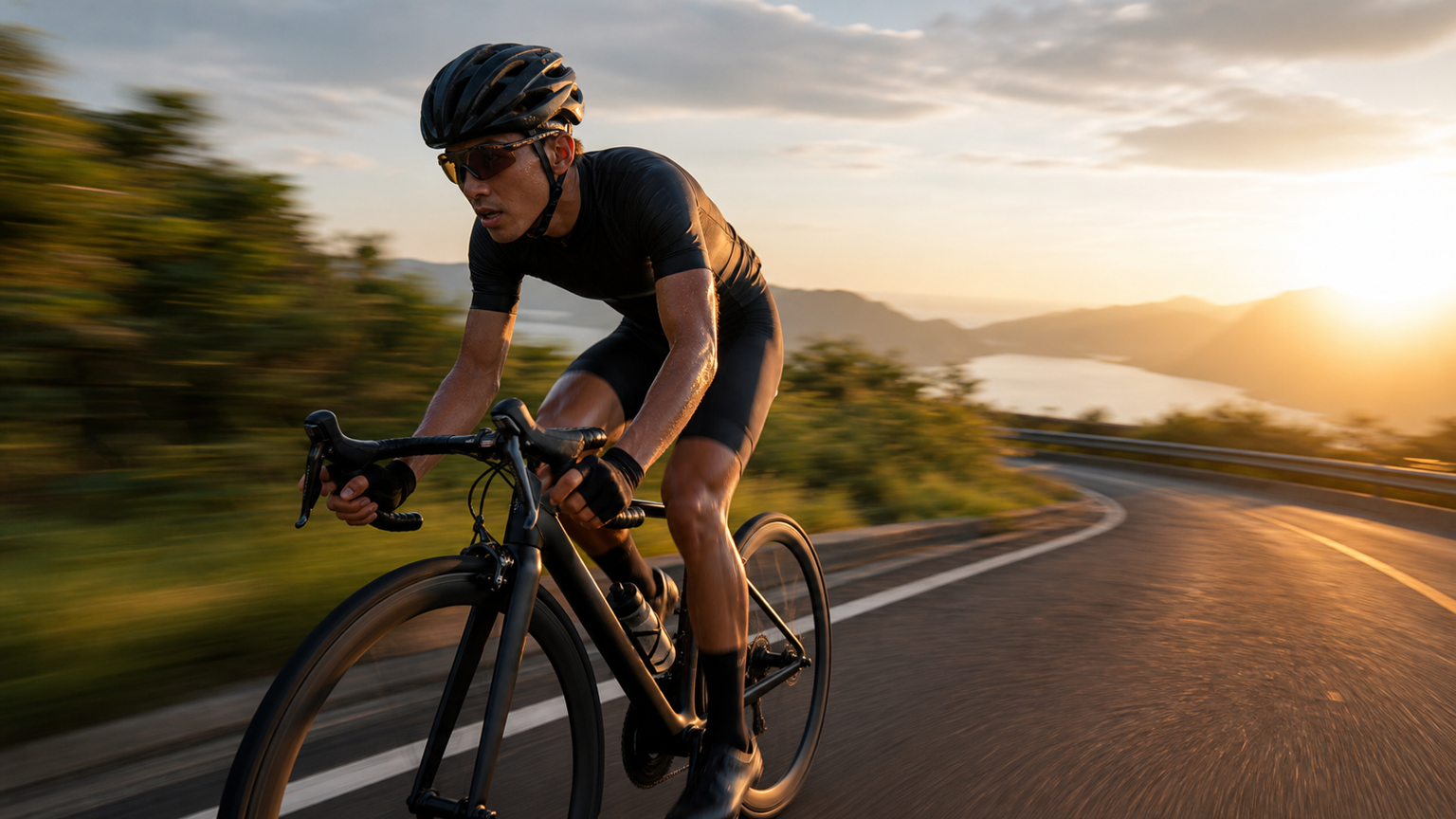
| Panning | Slower shutter + camera tracking the subject | Subject sharp, background streaked into lines | Conveying a sense of speed |
| Long-exposure light trails | Long exposure | Headlights streaked into lines | Night rides, urban nightscapes |
Panning: The Signature Technique of Sports Photography
Panning means “moving the camera horizontally with the subject and shooting at a slower shutter speed.” When it works, the subject is tack-sharp while the background is pulled into flowing lines, and the sense of speed hits you head-on. The keys are: pre-focusing on the focus zone, rotating your body smoothly with the subject, and continuing to track after pressing the shutter. The failure rate is high, but once mastered, it’s the technique with the most “dynamic storytelling.”
Light Determines the Mood
- Early morning / dusk (golden hour): Low-angle warm light, sculpted contours, the richest emotion
- Midday overhead light: Harsh contrast, lifeless expressions—avoid it or find shade
- Backlit silhouettes: Great for ridgelines and the coast (e.g., silhouettes of riders and bikes along the shoreline)
The most moving moments in sports photography often overlap with the best times for riding and running—early morning.
Composition: Leaving Room for “Where They’re Going”
Leave empty space in front of the athlete (space ahead in the direction of movement), and the frame gains the tension of “moving forward”; pack the subject in with no room ahead, and the image dies. You can also use the route itself—curves, ridgelines, bridges—as leading lines to draw the eye toward the subject.
Where the Story Comes From
A single pretty frame isn’t enough; what gets remembered is “narrative”: the tension at the start, the pained expressions on the climb, the disheveled state at the aid station, the release at the finish line. Try to shoot an event with a “beginning, development, turn, and conclusion,” rather than a hundred identical wide shots.
Practical Advice
- Safety always comes first: don’t stand in dangerous positions on the course or road, and don’t ride one-handed while distracted by shooting
- Shoot emotion and effort first, then scenery: people are the protagonists of sports photos
- Restrain your post-processing: enhancing the atmosphere is fine, but distorting it into something unreal betrays the honesty of sports photography
The most precious thing in sports photography isn’t the sharpest frame—it’s the one that, years later, still makes you remember how sore your legs were, how strong the wind blew, and why your eyes were burning at the finish line. Photos that tell a story are the ones that hold on to time.
Related Reading
- The Complete Guide to Sports Camera Settings: Tips for Capturing Cycling Motion
- Cycling Photography Tips: How to Shoot Ride Photos with a Sense of Story
- Cycling Photography Basics: Using Your Camera to Document Your Riding Story
- Cycling Photography: The Art of Capturing Light and Shadow on Mountain Roads
多機位拍片神器 DJI Action 2 拍出速度張力感 | 類空拍機視角 4陣列麥克風超強降風噪 實測! | 公路車 | CT Yeh
3 年前
CT 喇低賽) 單車 比賽總是沒照片? 攝影師的觀點大公開 姿勢就是力量! 請加速1.25倍收看
7 年前
[教學] Premiere 影片 手震 修正 教學 防抖 單眼 影像 GoPro 穩定 Video Stabilization
8 年前
#PUSHBIKE 原來這麼好玩! 小朋友 滑步車 初體驗 超可愛
6 年前
實錄) 車隊中 攝影師 是如何用感情拍片的呢? 單車 移動攝影 攝影師的視角 米粉坡 手持 DJI OSMO POCKET Ft. Team Neko
7 年前
Insta360 Ace Pro 2 適合單車拍攝嗎?/ 萊卡色彩直出有夠狂 / GoPro 13 & DJI OM 5 夜間對比 / 公路車 / CT Yeh
1 年前
DJI Osmo Action 6 / 單車運動拍攝實用技巧 公路車 CT Yeh
7 個月前
DJI Osmo Action 5 Pro 首發最強!單車運動攝影機! 一顆電池錄完KOM 西進武嶺? / 超狂夜拍效果 / 4奈米AI晶片/ 一鍵數據合成 / 公路車 / CT Yeh
1 年前