Sleep Is the Strongest Legal Performance Enhancer: A Practical Guide to Sleep Optimization for Athletes
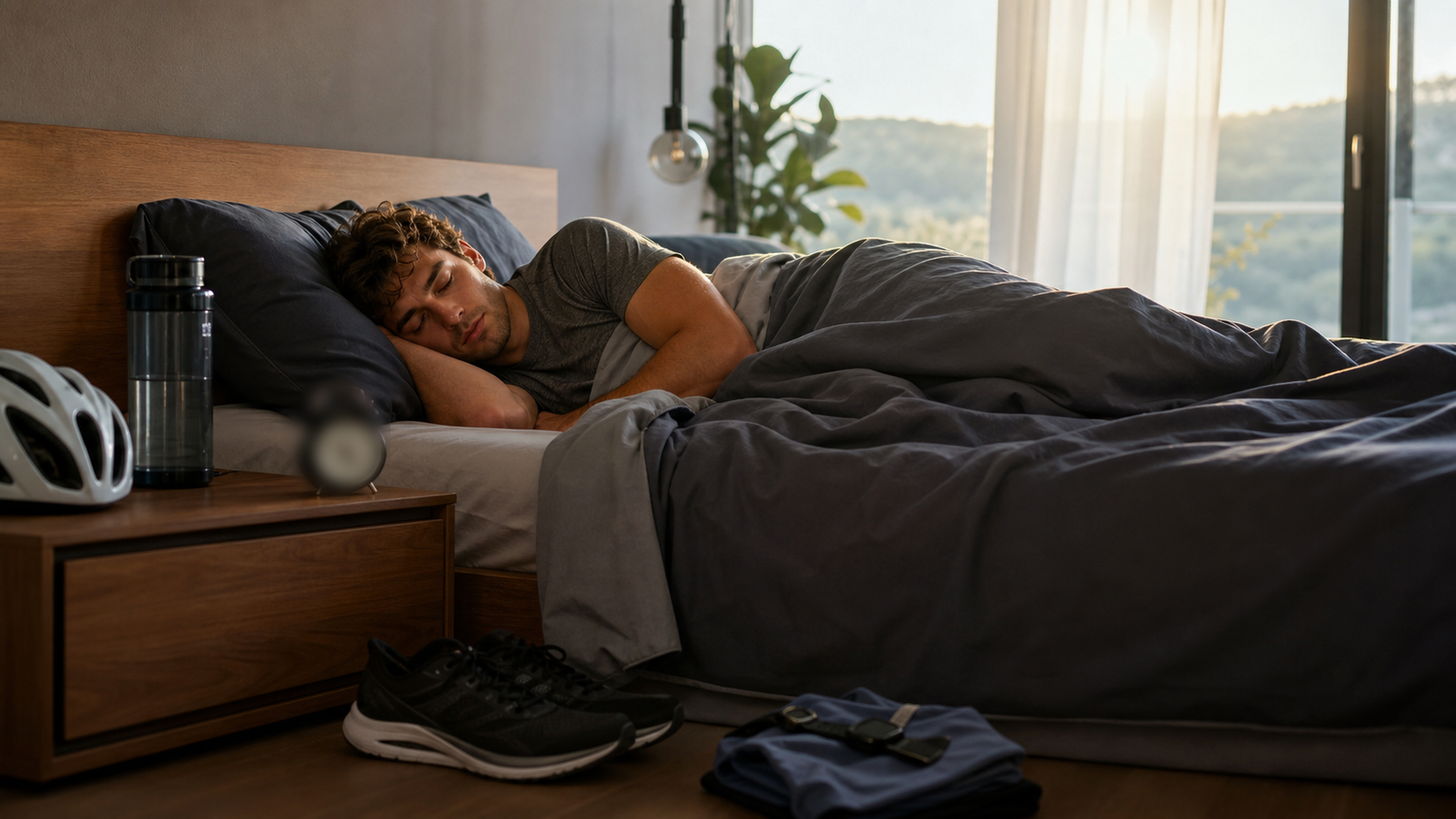
No Supplement Works Better Than a Full Night’s Sleep
The sports world spends fortunes on gels and recovery gadgets, yet often overlooks the most effective, completely free “legal performance enhancer”—sleep. Research and top athletes’ practices consistently show: insufficient sleep directly undermines performance, recovery, immunity, and increases injury risk, with an impact greater than the combined effect of most supplements.
How Sleep Supports Training
| Aspect | Mechanism |
|---|---|
| Muscle repair and adaptation | Growth hormone is mostly secreted during deep sleep |
| Neural and skill consolidation | Motor learning is “saved to memory” during sleep |
| Immunity | Chronic sleep deprivation weakens immunity, making high training loads more likely to lead to illness |
| Injury risk | Those who sleep less have reduced reaction time and proprioception, raising injury rates |
| Appetite and metabolism | Sleep deprivation disrupts hunger hormones, making nutrition harder to maintain |
Conclusion: Training provides the “stimulus,” but sleep is the factory that turns that stimulus into “progress.”
Duration: High-Volume Athletes Need More
General adults are advised to get about 7 to 9 hours, but high-volume athletes have greater recovery demands and often need to sleep at the upper end of that range or even more. The indicator of sufficiency isn’t “did I get 7 hours,” but whether “daytime energy, morning resting heart rate, and training feel” are normal.
Deep Sleep Matters More Than Total Hours
Lying in bed for 8 hours but staying in light sleep = insufficient recovery. Practical steps to protect deep sleep:
- Keep a fixed bedtime and wake-up time (even on weekends, to stabilize your circadian rhythm)
- Avoid high-intensity training before bed (elevated core body temperature makes it hard to fall asleep; don’t schedule hard sessions too late)
- Reduce bright light and blue light before bed (suppresses melatonin)
- Sleep environment: dark, cool, and quiet (blackout curtains and a moderately low temperature significantly improve deep sleep)
- Avoid caffeine and heavy alcohol before bed (alcohol helps you fall asleep but disrupts deep sleep architecture)
Napping Is an Underrated Weapon
On nights of insufficient sleep or high-volume training days, a strategic 20- to 30-minute nap can restore alertness and recovery without easily affecting nighttime sleep. Many pro athletes treat napping as part of their training plan, not as laziness.
Pre-Race Sleep Strategy
It’s common to have trouble sleeping the night before a race due to nerves, but research shows that what truly affects performance is the “accumulated sleep during the week before the race,” not the anxious final night. So the key is to “sleep well throughout the week before the race,” and stay calm about “not sleeping deeply on the final night”—don’t let anxiety make things worse.
Monitoring and Adjustment
Use morning resting heart rate, subjective energy, and training feel as feedback for “whether you’ve had enough sleep.” If these signals consistently worsen, the first thing to adjust isn’t your training intensity—it’s your sleep.
You can buy the most expensive recovery boots and the top-tier supplements, but nothing compares to a full week of deep sleep every night. Sleep is the cheapest, most effective, and most overlooked prescription in this sport—and it’s completely legal.
Related Reading
- Athlete Sleep Optimization Guide: Using Science to Double Recovery Efficiency
- The Two-Way Relationship Between Exercise and Sleep: How Training Improves Sleep Quality
- Sleep and Athletic Performance: How Much Performance Do You Lose Per Hour of Lost Sleep?
- The Science of Sleep and Recovery in Triathlon: The Fourth Discipline
CT暗黑廚房) 車友必備 宇宙無敵鮮蚵湯 幫助訓練恢復 天然食補 好市多 超肥鮮蚵 破PR
7 年前
西進武嶺 免費訓練分析服務 Intervals | 練不夠還是練過頭?你哪一種類型選手?AI模型告訴你! | 備戰神器 | 公路車 訓練 | CT Yeh
4 年前
一個測試有沒有認真練車的方法😂 #公路車
10 個月前
西進武嶺 自製新版AI配速表產生器 x 賽前攻略 抱佛腳! 沒有功率計也可以產生配速表嗎?有什麼其他眉角賽前要注意的呢? | 西進武嶺 / 東進武嶺 KOM 攻略 | 公路車 | CT Yeh
4 年前
[教學] Premiere 影片 手震 修正 教學 防抖 單眼 影像 GoPro 穩定 Video Stabilization
8 年前
#公路車 #Fitting 靠人工智慧APP 幫你調整單車
6 年前
FTL 與 SYB 車隊專訪 西進武嶺 實用攻略分享! 2小時 如何練?!你不知道的眉角!新手準備武嶺必看 EP1 | 實力派女車友 | 精華版 | 公路車 | CTYeh
4 年前
iPhone 12 Pro 夜間騎車動態錄影 效果屌打 GoPro Hero 9 | 公路車 團練
5 年前