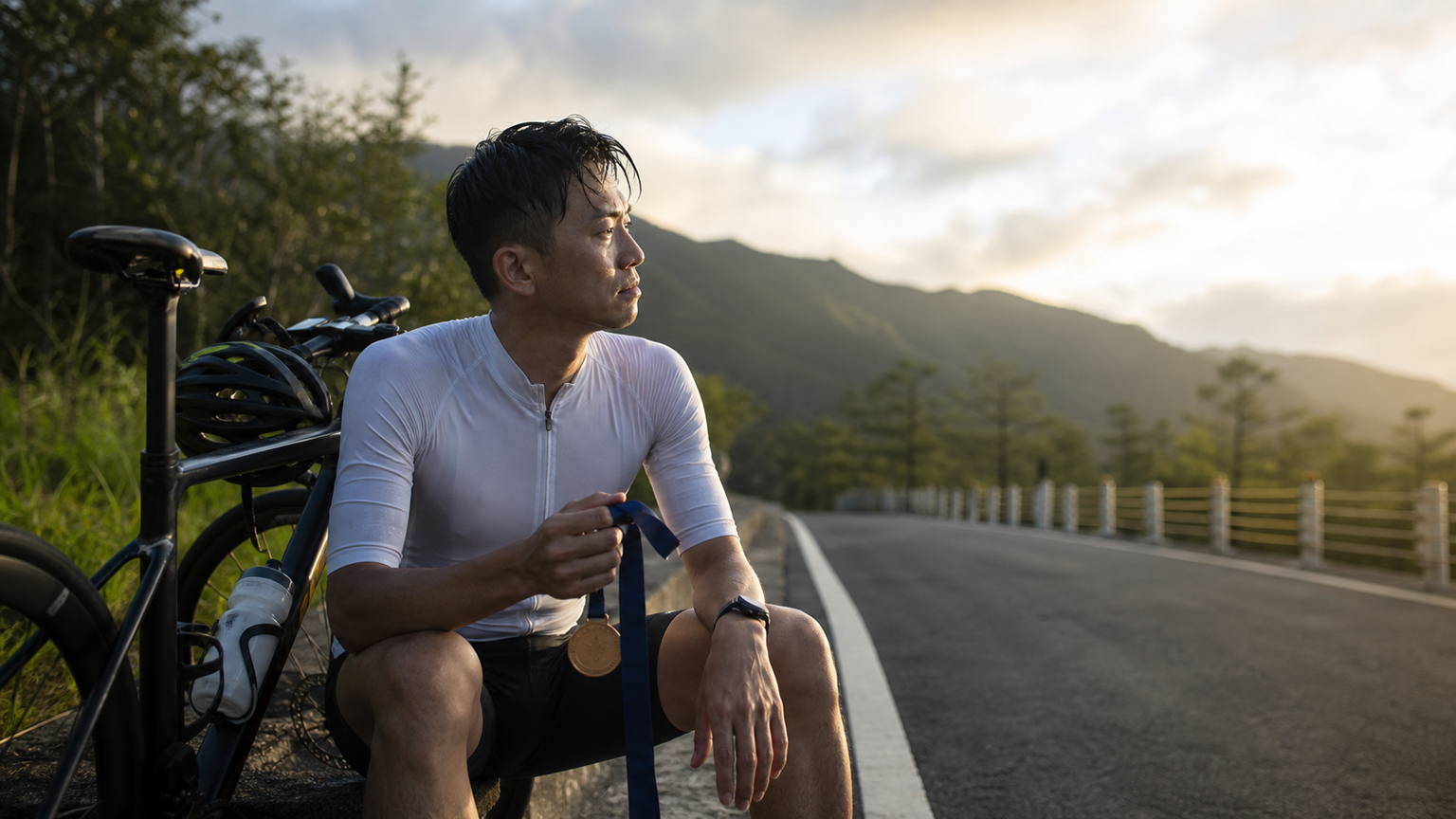
You Achieved Your Dream, and Then Felt Strangely Empty
Many people spend an entire year preparing for one big race. The moment they cross the finish line, they cry tears of joy—but a few days later, they sink into an inexplicable low, lose motivation, and even question, “What now?” This isn’t being overly sentimental; it’s the common “post-race blues / post-event blues” that athletes experience. Understanding it is the key to not being crushed by it.
Why Achieving Your Goal Leaves You Feeling Empty
| Cause | Mechanism |
|---|---|
| Goal vacuum | The core meaning of the year (that one race) suddenly disappears |
| Physiological letdown | After intense preparation ends, the mind and body suddenly have “nothing to do” |
| Loss of identity | “The me who is training” is a pillar of identity; after the race, that anchor is gone |
| Expectation gap | The imagined high vs. the mundane reality of everyday life afterward |
The core issue is this: you haven’t just lost the race—you’ve lost “a direction that gave every day meaning.”
Step 1: Normalize It
Knowing that “this is a common and normal phenomenon” is therapeutic in itself. It doesn’t mean you’re not tough enough, and it doesn’t mean you don’t love the sport. The more people understand that this is the norm, the less likely they are to think, “Is something wrong with me?” during a low point.
Step 2: Plan a “Post-Race Transition Period” in Advance
Don’t let the aftermath be a vacuum. A smart approach is to plan out “how you’ll spend the two to four weeks after the race” before the race even happens: deliberate active recovery, easy exercise with no purpose, trying a different form of sport, and reclaiming the life and relationships that training pushed aside. Treat the transition period as part of the plan, not the end of it.
Step 3: Rebuild Meaning, but Don’t Rush to Set the Next Big Goal
The gut reaction when feeling empty is “sign up for an even bigger race right away,” but that’s often avoidance—and pushing yourself again before your mind and body have recovered is a fast track to burnout and injury. The healthy sequence is: let your mind and body fully recover first, reconnect with “why you love the sport” (the joy itself, not just medals), and once your intrinsic motivation returns, then set your next direction.
Step 4: Broaden Your Identity—Don’t Stake It All on Performance
If “who I am” is entirely tied to “how fast I run or how far I ride,” you’ll collapse every time the season ends. Fold your sport into a broader sense of self (family, work, community contributions, being someone who enjoys the process), and the impact of a low will be much smaller. Sport is part of life—it shouldn’t be all of it.
Step 5: Give Back to the Community
Shifting from “chasing my own results” to “mentoring beginners, leading group rides, sharing experience” can effectively fill the goal vacuum and extend meaning from “personal achievement” to “being useful to others.” Many people rediscover their passion for sport precisely when they’re helping others.
A Reminder for Long-Time Athletes
Post-race lows become more predictable and manageable with experience. Treat it as “part of the cycle”—for every peak, there’s a valley; for every goal achieved, there’s a goal vacuum. Those who can coexist with this cycle are the ones whose athletic careers go the distance.
Finishing a race isn’t the end of the story, and neither is the emptiness. A truly mature athlete understands: medals fade, and the next goal will come, but what carries you for twenty years is that time between seasons—when you’re willing to keep loving it even without a goal.
Related Reading
- The “Lost Goal” Feeling After a Race: What Is Post-race Blues and How to Get Through It
- Post-Race Slump: Where the Letdown After a Big Goal Comes From, and When to Seek Professional Help
- Post-Race Mental Adjustment: The Emptiness After a Major Goal and Setting New Ones
- Post-Race Emotional Management: The Emptiness After Finishing and Setting Your Next Goal
摔車後補裝備: 好市多新款單車安全帽& Specialized Romin 北高整路屁股都不痛的坐墊 | 一千元居然有MIPS | CT Yeh | 公路車
4 年前
西進武嶺 免費訓練分析服務 Intervals | 練不夠還是練過頭?你哪一種類型選手?AI模型告訴你! | 備戰神器 | 公路車 訓練 | CT Yeh
4 年前
一日北高/長距離團騎 常見問題補充篇 / 組團或跟團的眉角 / 壯車友容易被瘦車友慢性拉爆 / 原來屁股痛可能是這個原因...? / 風場配速法 / 公路車 / CT Yeh
2 年前
CT 喇低賽) 單車 比賽總是沒照片? 攝影師的觀點大公開 姿勢就是力量! 請加速1.25倍收看
7 年前
西進武嶺 自製新版AI配速表產生器 x 賽前攻略 抱佛腳! 沒有功率計也可以產生配速表嗎?有什麼其他眉角賽前要注意的呢? | 西進武嶺 / 東進武嶺 KOM 攻略 | 公路車 | CT Yeh
4 年前
一日北高 11小時 賽後心得分享篇 | TWB北高360 | 一日雙城 | 單車 | 公路車
6 年前
TBA 北高360 逆風爆熱再送空汙 苦行挑戰賽全記錄 4K沈浸式臨空畫質| 公路車 | CT Yeh
3 年前
live) 超越北高 之一日北高12小時 策略
7 年前