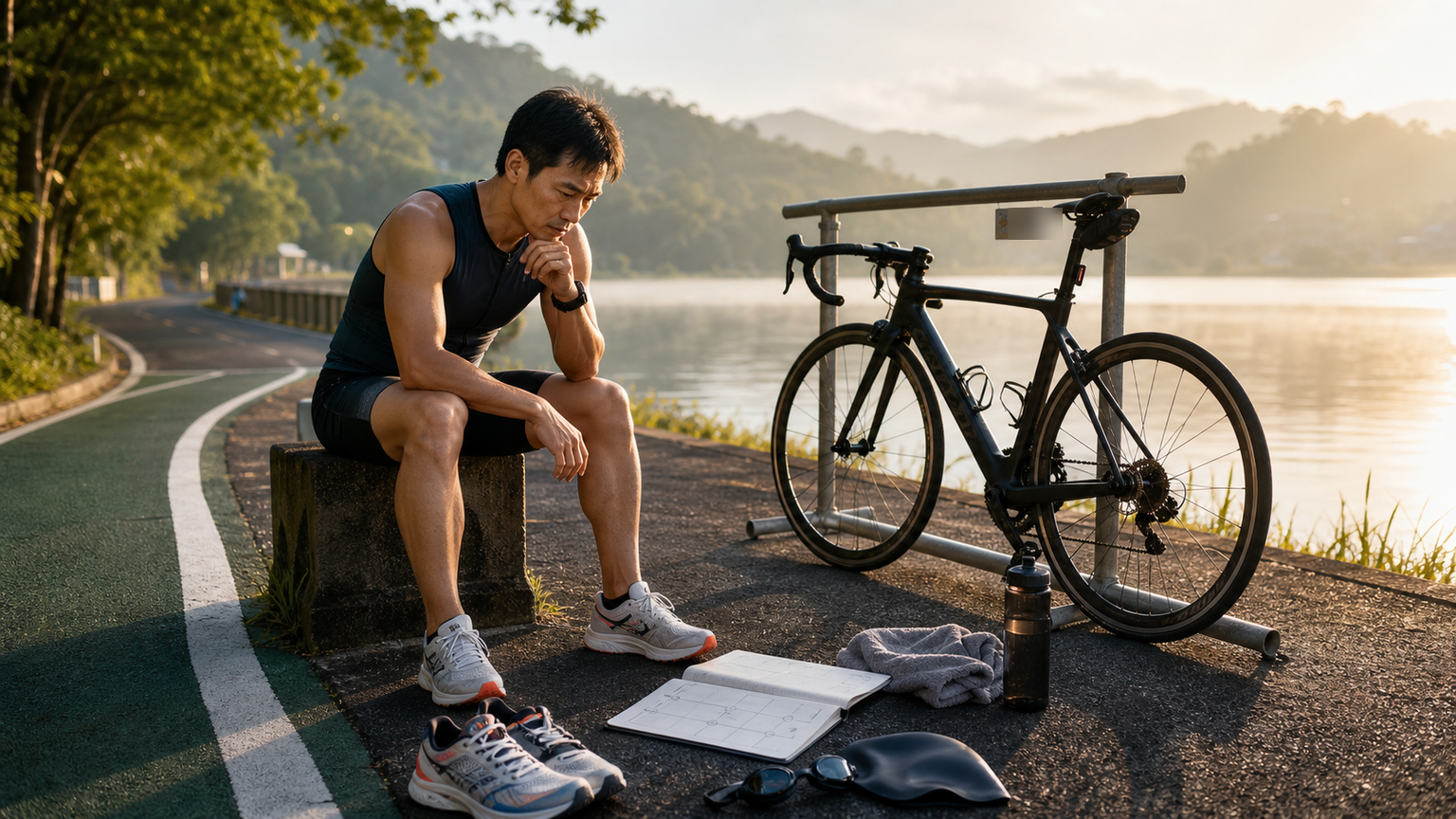
Longer Isn’t Always Greater
There’s a myth in the triathlon community: if you haven’t done an Ironman, you’re not a “real triathlete.” But race distance should be a function of recovery cost, available training hours, and life stage—not vanity.
The Real Cost of Four Race Distances
| Distance | Weekly Training Hours | Full Post-Race Recovery | Suitable For |
|---|---|---|---|
| Sprint | 5–7h | 2–4 days | Office workers, beginners |
| Olympic | 7–10h | 5–7 days | Advanced office workers |
| 70.3 | 10–14h | 10–14 days | Those with partner support |
| Ironman | 14–20h | 3–4 weeks | Those with flexible time |
Decision Tree
- Can consistently train < 8 hours per week → Sprint/Olympic
- 8–12 hours with strong family support → 70.3
- 12+ hours and can ride 5+ hours in a single session → Consider Ironman
- Have young children/high-pressure job → Do two seasons of 70.3 first, then reassess
The “Addiction Trap” of Moving Up Distances
The dopamine from moving up race distances can easily make you overlook accumulating injuries. It’s recommended to stay at each distance for at least two full seasons and achieve consistent PBs before moving up, rather than jumping a level right after your first finish.
Objective Thresholds to Pass Before Moving Up
Don’t decide to move up based on “I want to try it”—use data. Before moving to 70.3: be able to complete a continuous 3-hour ride followed by a 30-minute run, and swim 2000m continuously without stopping. Before moving to Ironman: have completed 3 70.3s with no nutrition collapse in the most recent one, be able to ride 5 hours continuously and train the next day, and maintain a steady 14h weekly volume for 8 consecutive weeks in the 12 weeks before race day without getting sick or injured. If you fail any one of these, staying at your current distance and pushing your PB for another season is more worthwhile than forcing an upgrade.
A Real Comparison of Distance and Opportunity Cost
| Distance | Weekly Family/Work Hours Sacrificed in the 12 Weeks Before Race | Races per Year | Annual Injury Risk |
|---|---|---|---|
| Sprint | 4–6h | 6–10 | Low |
| Olympic | 7–9h | 4–6 | Low–Medium |
| 70.3 | 11–14h | 2–3 | Medium |
| Ironman | 16–22h | 1 (2 at most) | Medium–High |
Show this table to your family—it matters more than any training plan. Time is borrowed from someone.
I’ve seen too many people lose their passion for the sport after finishing an Ironman, and I’ve seen people play Sprint for ten years without ever tiring of it. Race distance isn’t a medal; it’s a contract you negotiate with your life. Choose right, and you’ll keep riding; choose wrong, and this sport will become the last straw that breaks you.
Related Reading
西進武嶺 免費訓練分析服務 Intervals | 練不夠還是練過頭?你哪一種類型選手?AI模型告訴你! | 備戰神器 | 公路車 訓練 | CT Yeh
4 年前
2019 夏季KOM 5小 完賽心得 準備攻略 東進武嶺 夏季登山王之路 Taiwan KOM Challenge
7 年前
靠單車減肥35公斤 心得分享與整理
7 年前
CT 喇低賽) 武嶺牽車 才是王道 西進牽車四小時內秘訣 攝手位置 如何判斷 防抽筋小秘訣
7 年前
#公路車 #西進武嶺 配速配瓦實驗 坡度分析 四小時內攻略 建大盃 NeverStop #西進武嶺攻略
6 年前
摔車後補裝備: 好市多新款單車安全帽& Specialized Romin 北高整路屁股都不痛的坐墊 | 一千元居然有MIPS | CT Yeh | 公路車
4 年前
FTL 與 SYB 車隊專訪 西進武嶺 實用攻略分享! 2小時 如何練?!你不知道的眉角!新手準備武嶺必看 EP1 | 實力派女車友 | 精華版 | 公路車 | CTYeh
4 年前
iPhone內建一秒變長腿🤣 車友必備#cycling
2 年前