文章導覽
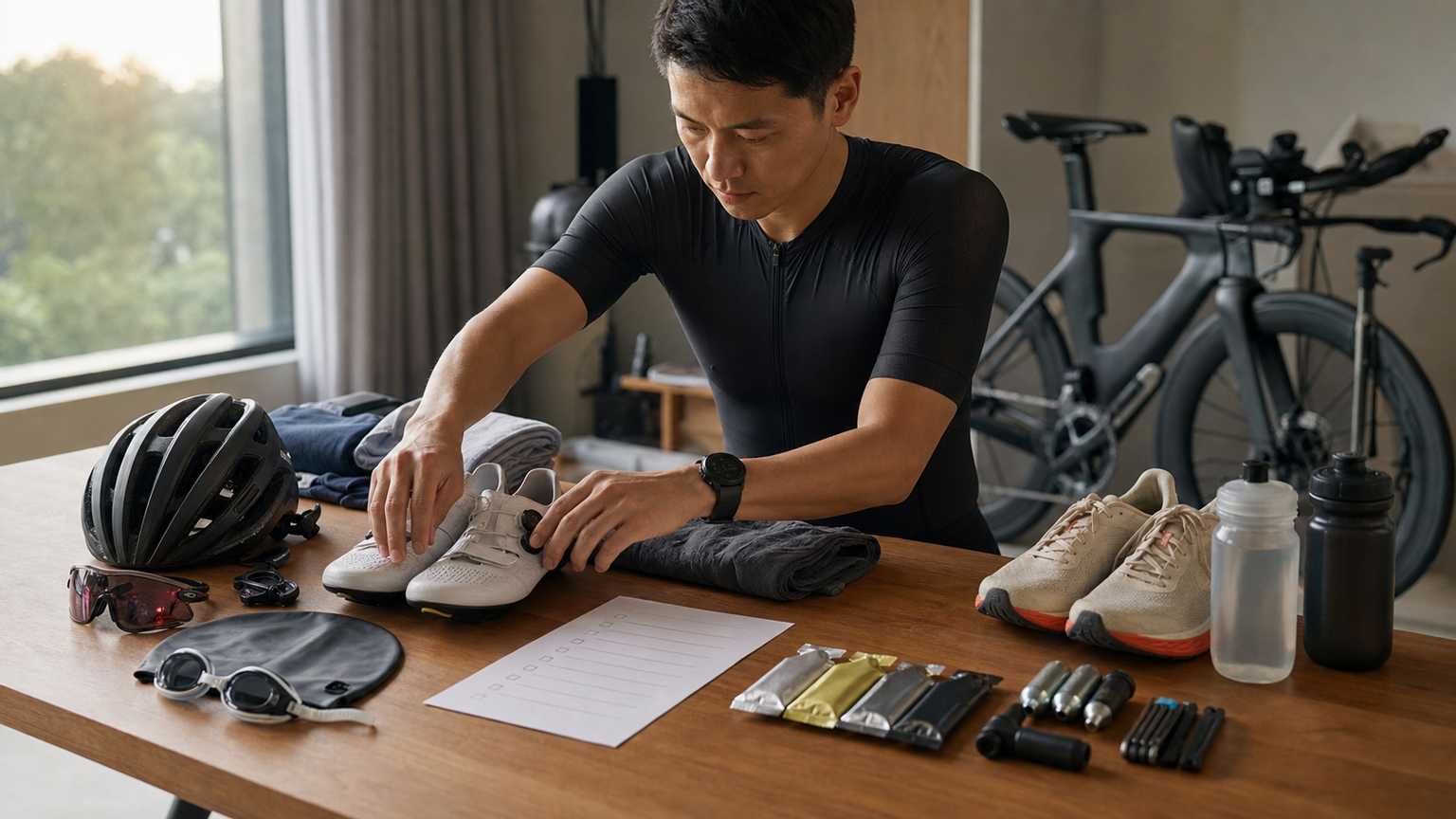
The Final Week: Reduce Uncertainty to Zero
Training is done. The task in the final week is not to get stronger, but to “avoid mistakes.” Many athletes train for eight months, only to have their entire race ruined by oversights in the week before (forgotten gear, untested nutrition, sleep breakdown).
Four Final Checklists
| Category | Key Items |
|---|---|
| Gear | Check off every item on the full triathlon list, bike inspection, spare tube & CO2 |
| Nutrition | Use products tested and tolerated during training; no last-minute changes |
| Logistics | Transportation, check-in times, transition bag process rehearsal |
| Mental | Pacing plan, dark-moment script, letting go of anxiety |
Gear Checklist Principles
Use a paper checklist, ticking off items one by one, divided into six piles: “Swim / T1 / Bike / T2 / Run / Pre-Race.” Most commonly forgotten items: spare goggles, race belt, helmet, nutrition, sunscreen.
Nutrition: Never Make a Last-Minute Change
Never try an energy brand or flavor you haven’t trained with during race week. Your gut’s reaction to something new is unpredictable; race day is not a laboratory.
Logistics Rehearsal
Confirm transition area opening and closing times, bike check-in rules, and whether you can access your bike before the race in advance. Mentally run through your race morning process to reduce on-site panic.
Sleep Strategy
It’s normal to sleep poorly the night before the race. The real key is to get sufficient sleep on the “second and third nights before the race”—deposit your sleep savings in advance.
Mental Wrap-Up
Accept that training is finalized. You cannot get stronger in the last week, only worse (through overtraining or injury). Shift your focus from “Am I strong enough?” to “Execute the plan.”
Sleep Banking and Tapering Numbers for Race Week
You cannot get stronger in the final week, only worse. Tapering principle: Reduce training volume to 40%–60% of your peak week, but retain a small amount of race-intensity short stimulation (e.g., 2–3 x 3 minutes @ race IF) to avoid feeling “flat.” Key sleep strategy insight: It’s normal to sleep poorly the night before the race due to nerves; don’t be anxious about it. What truly determines your condition is getting a full 8–9 hours of sleep on the “second and third nights before the race,” banking your sleep savings in advance.
Frequently Forgotten Items in the Six-Pile Gear Checklist
| Pile | Most Commonly Forgotten |
|---|---|
| Swim | Spare goggles, anti-fog, earplugs |
| T1 | Race belt, helmet, sunglasses |
| Bike | Spare tube, CO2, measured nutrition |
| T2 | Running shoe insoles, hat, salt tablets |
| Run | Sunscreen, energy gels |
| Pre-Race | Post-race warm clothing, cash, phone |
Common Mistake: Last-Minute Changes to Nutrition or Gear During Race Week
The cheapest and most painful source of a breakdown is trying an energy brand, flavor, or new shoes you haven’t trained with during race week. Your gut’s reaction to something new is unpredictable; race day is not a laboratory. The motto for the final week is just one line: Don’t seek to get stronger, only seek zero mistakes—completely shift your focus from “Am I strong enough?” to “Check off every item, execute the plan.”
I’ve seen athletes train flawlessly, only to break down because they forgot their race belt before the race, or stubbornly tried a new energy gel the night before. The motto for the final week is just one line: Don’t seek to get stronger, only seek zero mistakes. Steadily deliver eight months of hard work to the finish line.
Related Reading
- Sprint Triathlon Race-Week 7-Day Plan: How to Train in the Final Week Before the Race
- Triathlon Transition Bags and Logistics Management: Don’t Break Down at the Last Minute
- Pre-Race Week Preparation Strategy: Tapering, Diet, and Gear Confirmation
- Triathlon Race Day Gear Checklist and Inspection Process: One Sheet to Avoid All Disasters