A Segment-by-Segment Breakdown of a 1:12
This is a race review of a Sprint triathlon (750/20/5) by an intermediate age-group athlete I coach. Final time: 1:12:30, 5th in his age group, just 40 seconds off 3rd place—and those 40 seconds were all lost to avoidable details.
Segment Data
| Segment | Time | Plan | Actual Deviation |
|---|---|---|---|
| Swim 750m | 12:10 | 11:30 | +40" (rhythm disrupted at the start) |
| T1 | 2:05 | 1:10 | +55" (couldn’t find shoes) |
| Bike 20km | 33:00 | 32:30 | +30" (too conservative early on) |
| T2 | 1:00 | 0:50 | +10" |
| Run 5km | 24:15 | 23:30 | +45" (first 2km too fast) |
Swim: Positioning Error at the Start
He lined up on the front row despite being a mid-pack swimmer. In the first 200m he got kicked and hit, his heart rate spiked to 188, and he never settled for the rest of the swim. Lesson: be honest about your positioning—a mid-pack swimmer should start on the outside, second row.
T1: The Costly 55 Seconds
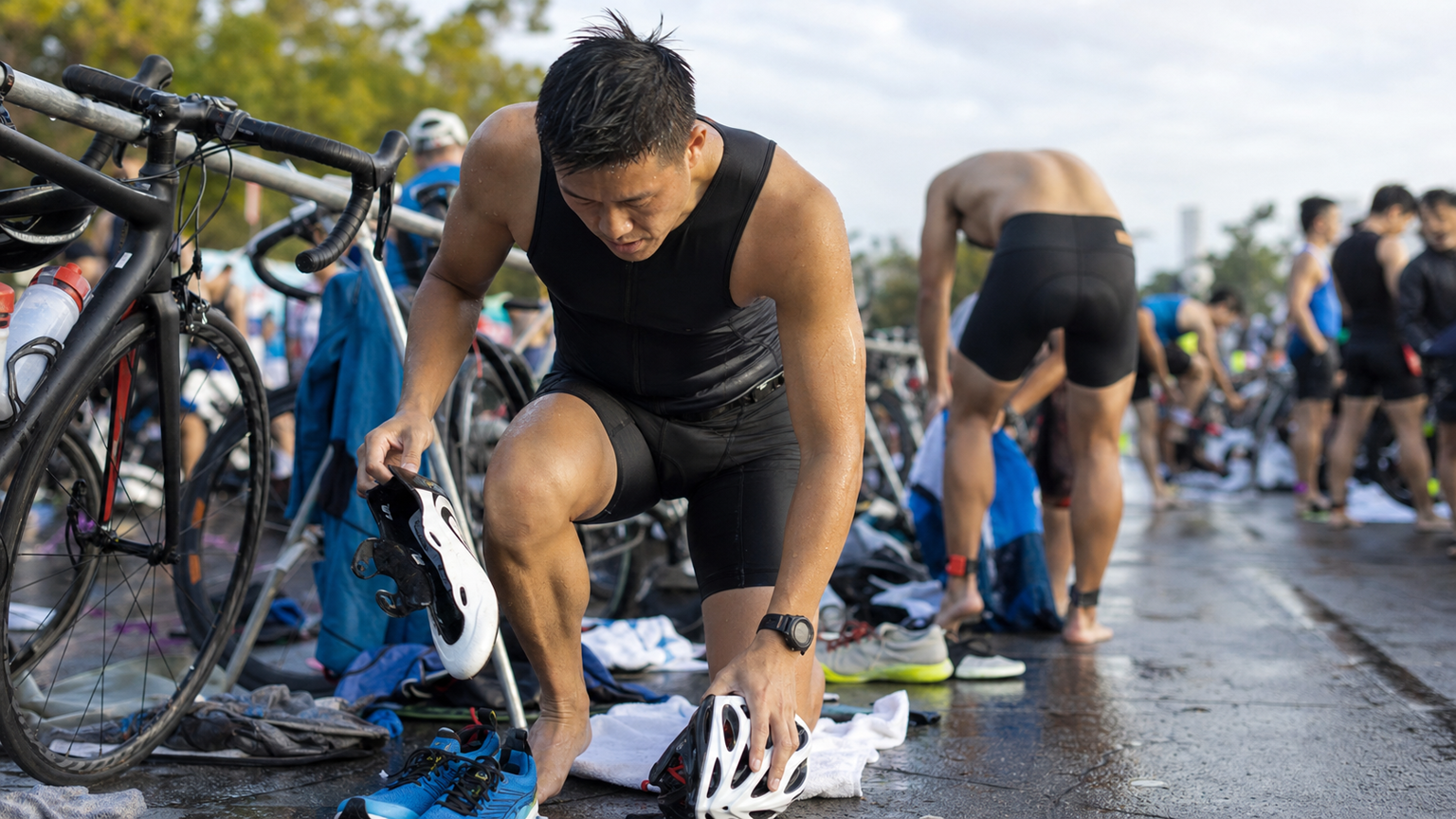
His shoes weren’t secured, the helmet strap got tangled, and just locating his gear took 55 seconds. Those 55 seconds required zero fitness—they were purely the result of not practicing T1. The cheapest and most painful time lost in the entire race.
Run: Too Fast Early, Fading Late
Adrenaline surged after dismounting, and he ran the first 2km at 4:20/km (planned 4:45). By the 4th km he had dropped to 5:30—a net loss from going out too hard and fading.
Race Review Conclusion
His fitness was actually good enough for 3rd place. Ranking of time lost: T1 (55") > run pacing (45") > swim positioning (40"). All are trainable and none require extra fitness.
Pricing Every Avoidable Time Loss
The harshest truth from this 1:12:30 review: he was only 40 seconds off 3rd place, and almost none of the time lost was due to fitness. By pricing and ranking each loss, you can pinpoint exactly what to work on next—and the answer is often not “train harder.”
Time Loss Breakdown and Classification
| Loss Item | Seconds | Nature | Requires Fitness? |
|---|---|---|---|
| T1: finding shoes/tangled strap | +55" | Unpracticed transition | No |
| First 2km of run too fast | +45" | Pacing失控 | Yes (borrowed early) |
| Swim start positioning error | +40" | Tactical decision | No |
| Bike too conservative early | +30" | Conservative pacing | No |
Common Mistake: Mistaking Excitement for Fitness, Charging Early
Adrenaline surges after dismounting and heart rate runs artificially high. The most typical mistake is treating this “false strength” as a fitness advantage, running the first 2km at 4:20/km (planned 4:45), then dropping to 5:30 by the 4th km—a net loss of 45 seconds that also wrecked the mental side of the back half. The fix is to make the first 2km “watch-paced, ignoring body signals,” forcing yourself to hold the planned number. If he had fixed all three avoidable losses in this race, his fitness would have been enough for 3rd in his age group. Triathlon never rewards the hardest trier—it rewards the one who makes the fewest mistakes.
I keep showing this race report to my athletes because it’s so typical: fitness hard-earned in training is enough to podium, only to be thrown away by unpracticed transitions and uncontrolled excitement. Triathlon’s cruelty and fairness lie in the same fact—it never rewards the hardest trier, only the one who makes the fewest mistakes.
Related Reading
西進武嶺 免費訓練分析服務 Intervals | 練不夠還是練過頭?你哪一種類型選手?AI模型告訴你! | 備戰神器 | 公路車 訓練 | CT Yeh
4 年前
2016 桐花飛舞 單車挑戰 精華片段
10 年前
Live) 備戰2019彰化經典百K 賽前攻略 (已完賽請看新影片
7 年前
#公路車 #西進武嶺 配速配瓦實驗 坡度分析 四小時內攻略 建大盃 NeverStop #西進武嶺攻略
6 年前
live) 超越北高 之一日北高12小時 策略
7 年前
西進武嶺 自製新版AI配速表產生器 x 賽前攻略 抱佛腳! 沒有功率計也可以產生配速表嗎?有什麼其他眉角賽前要注意的呢? | 西進武嶺 / 東進武嶺 KOM 攻略 | 公路車 | CT Yeh
4 年前
Bryton Rider S500 全面實測 有什麼缺點嗎?| CT Yeh | 公路車 車錶
4 年前
全段數據 2024富士山登山賽 ((銅環)) 請開字幕! /全程解說版 4K高畫質/ feat. 樂華演城旭 / 公路車 / CT Yeh / 第20回Mt.富士ヒルクライム
2 年前