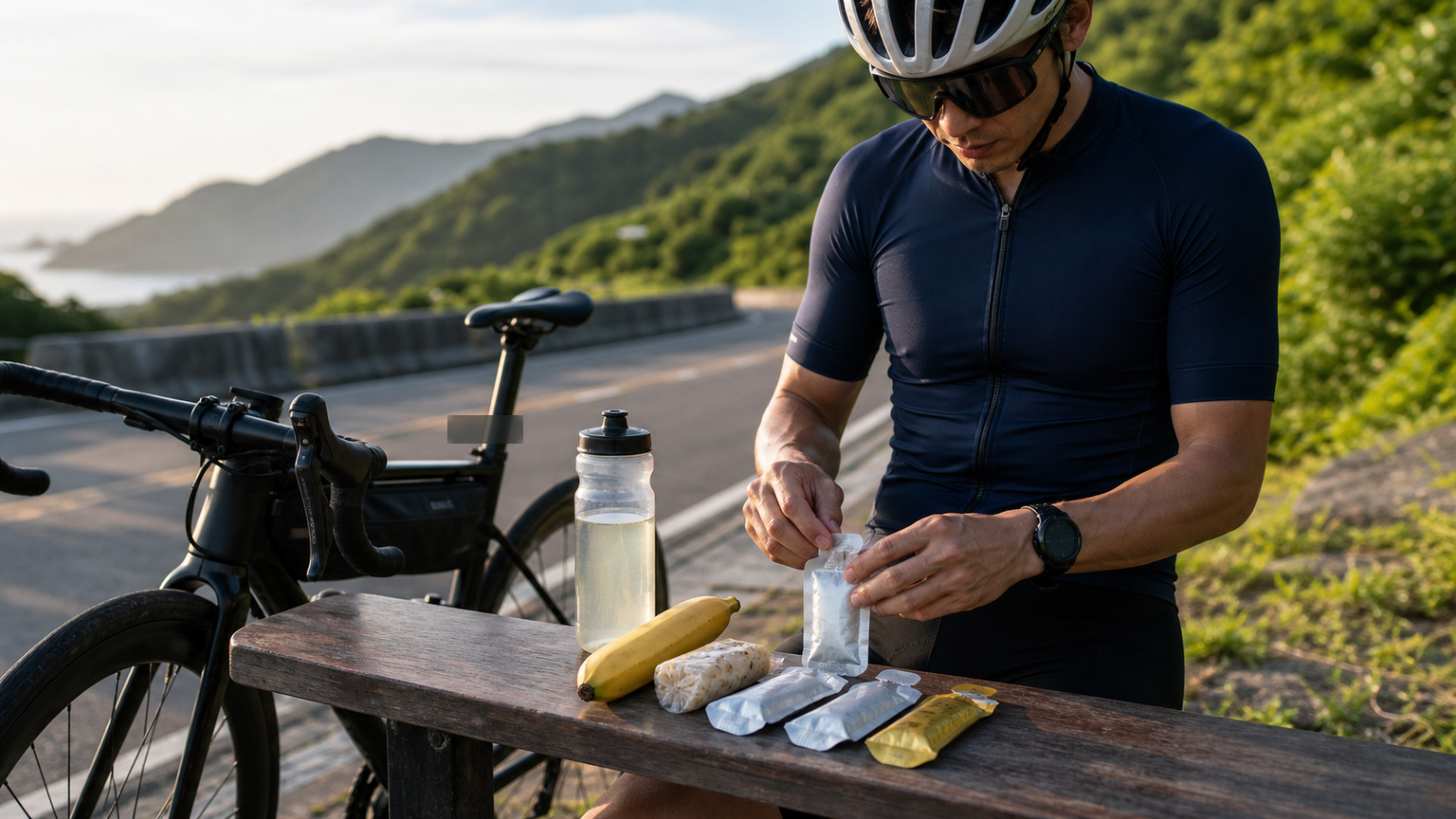
Introduction
After more than 75–90 minutes of exercise, glycogen stores begin to deplete significantly. Without exogenous carbohydrate intake, power output can drop by 10–25%. The ISSN and ACSM recommendations are clear: for endurance exercise lasting over 1 hour, you should consume 30–60g of carbs per hour; for ultra-endurance sessions exceeding 2.5 hours, you can reach up to 90g/hr using a “multi-transporter carbohydrate strategy.” This figure is still unfamiliar to many Taiwanese athletes. This article breaks down the mechanisms behind it and provides actionable plans.
Why You Need Multiple Carbohydrate Transporters
Intestinal carbohydrate absorption relies on two transporter proteins: SGLT1 (absorbs glucose + galactose) with an upper limit of about 60g/hr, and GLUT5 (absorbs fructose) with an additional 30g/hr capacity. If you only consume glucose, your intestinal absorption ceiling is 60g/hr. But if you consume glucose + fructose together (in a 2:1 ratio), both pathways work in parallel, and total absorption can reach 90g/hr. Studies also show that the rate of gastrointestinal discomfort does not increase—and may even decrease.
Most products on the market that meet the 2:1 ratio are labeled as a “maltodextrin (glucose chain) + fructose” combination. When shopping, check the ingredient list.
Timing and Frequency of Fueling
| Exercise Duration | Recommended Intake | Frequency Recommendation |
|---|---|---|
| <60 minutes | Optional or just mouth rinse | — |
| 60–90 minutes | 30–45 g/hr | Small amounts every 20–30 minutes |
| 90 minutes–2.5 hours | 45–60 g/hr | Every 20 minutes |
| >2.5 hours | 60–90 g/hr | Every 15–20 minutes |
The small-and-frequent principle: Don’t wait until you’re hungry or fatigued to fuel—by then your blood sugar is already at a low point. Set a timer on your watch and proactively fuel every 15–20 minutes.
Carbohydrate Content Reference for Fueling Foods
| Fuel | Serving Size | Carbs (g) | Notes |
|---|---|---|---|
| Energy gel (standard) | 1 packet | 22–27 | Needs water |
| Energy gel (high-carb 2:1) | 1 packet | 40–44 | No-water version |
| Sports drink | 500 mL | 30–35 | Also replenishes electrolytes |
| Banana (medium) | 1 piece | 25–27 | Rich in potassium |
| Gummy energy chews | 1 pack | 27–30 | Easy to chew |
| Saltine crackers (7-Eleven) | 4 pieces | 20 | Sodium + carbs |
| White steamed bun (small) | Half | 20–25 | Strong solid-food feel |
| Taiwanese rice crackers (small pack) | 1 pack | 20–22 | Low fiber, easy to digest |
Fueling Differences Across Three Sports
Cycling: With handlebar bags and jersey pockets, fueling is most convenient. While riding, you can briefly take your hands off the bars, making solid foods (rice balls, energy bars) suitable. Put a sports drink in the bottle cage and gels plus solid foods in your jersey pockets, alternating between them.
Running: Gastrointestinal impact is high, and tolerance for solid foods is poor. Prioritize liquid fueling (sports drinks, diluted juice) or semi-solid options (energy gels). For speed sessions, stick to liquids only; for long easy runs, you can experiment with adding gummy chews.
Swimming: Fueling is difficult; it’s usually done at the turn wall or during rest intervals. Consume 150–200 mL of sports drink at each rest stop. For long open-water sessions, wear a waist belt to carry energy gels.
Gut Training Matters Just as Much
The gut is a trainable organ. Research shows that consistently consuming carbohydrates during training for 4–8 weeks can increase the intestine’s tolerance for carbohydrate absorption, reducing bloating and nausea. If you currently feel discomfort after fueling, start at 30g per hour and increase by 10g every two weeks to gradually build “gut tolerance.”
Practical Tips
- Pre-race simulation: Practice your race-day fueling plan at least 3 times during long training sessions.
- Mix your fuel sources: Combine liquid (sports drink) + semi-solid (gel) + solid (banana/crackers) to avoid flavor fatigue from relying on a single product.
- Watch your sodium intake: For every 60–90g of carbs consumed, you should also take in 500–700 mg of sodium to avoid hyponatremia.
- Hydrate early in Taiwan’s summer: In high heat, gastric emptying slows down, and drinks with concentrations above 8% can cause discomfort. Dilute energy drinks to 6–8%.
Conclusion
In-training fueling isn’t just about “eating something”—it’s precise management of timing and dosage. Start by building the habit at 30g/hr, then gradually train your gut to absorb 60–90g/hr. This will allow you to maintain steady output in the latter half of long sessions, and it’s one of the keys to improving endurance performance.
Related Reading
- Decoding Pro Cyclists’ 120g-Per-Hour Carb Strategy: The Latest Sports Nutrition Science
- Ultramarathon Fueling Strategy: How to Eat 60–90g of Carbs Per Hour Without Blowing Up Your Stomach?
- The Science of In-Exercise Fueling: How Many Carbs Per Hour? A Complete Practical Guide from 60g to 90g
- A Practical Guide to Consuming 120g of Carbohydrates Per Hour While Riding
西進武嶺 免費訓練分析服務 Intervals | 練不夠還是練過頭?你哪一種類型選手?AI模型告訴你! | 備戰神器 | 公路車 訓練 | CT Yeh
4 年前
CT暗黑廚房) 車友必備 宇宙無敵鮮蚵湯 幫助訓練恢復 天然食補 好市多 超肥鮮蚵 破PR
7 年前
一日北高前的高裝檢 | 北高 360 | 挑戰11小時的裝備 | 一日雙塔 | 補給
6 年前
實景訓練台) 彰化經典百K 高強度喵團 90分鐘 跟著一起練功 2019 Indoor workout Changhua Classic 100 Taiwan
7 年前
Live) 備戰2019彰化經典百K 賽前攻略 (已完賽請看新影片
7 年前
靠單車減肥35公斤 心得分享與整理
7 年前
CT 喇低賽) 武嶺牽車 才是王道 西進牽車四小時內秘訣 攝手位置 如何判斷 防抽筋小秘訣
7 年前
FTL 與 SYB 車隊專訪 西進武嶺 實用攻略分享! 2小時 如何練?!你不知道的眉角!新手準備武嶺必看 EP1 | 實力派女車友 | 精華版 | 公路車 | CTYeh
4 年前