Introduction
Hydration is one of the most underestimated variables in athletic performance. ACSM research shows that dehydration equivalent to 2% of body weight can reduce aerobic performance by 5–8%, while cognitive function and decision-making speed decline simultaneously. During a Taiwanese summer, a single 2-hour morning ride can result in 1.5–2.5 liters of sweat loss; if fluid intake is insufficient, a collapse in power output during the second half is almost inevitable. However, the other extreme—hyponatremia caused by overhydration—has resulted in several deaths among marathon runners. “Drinking to thirst” is the baseline, but competitive environments demand a more systematic strategy.
Calculating Your Personal Sweat Rate
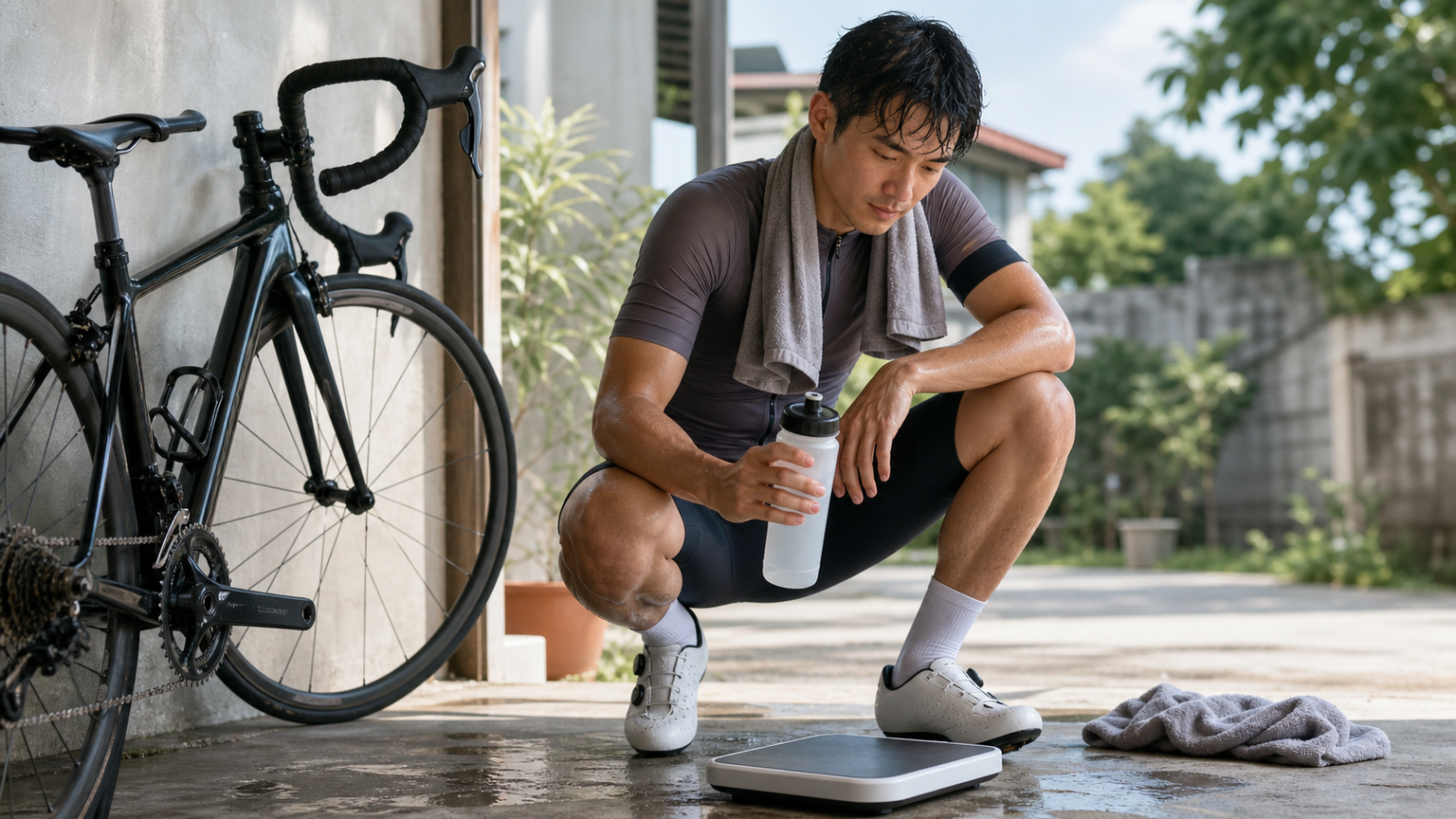
Sweat rate varies enormously from person to person, by environment, and by intensity (0.5–2.5 L/hr); only individualized measurement is accurate.
Measurement method:
- Weigh yourself before training (after urinating) (kg, accurate to 0.1 kg)
- Complete a 60-minute training session with a known volume of fluid (record fluid intake)
- Weigh yourself immediately after training (without urinating)
- Calculate: Sweat rate (L/hr) = (pre-training body weight − post-training body weight) + fluid intake (L)
| Example | Value |
|---|---|
| Pre-training body weight | 65.0 kg |
| Post-training body weight | 64.1 kg |
| Fluid intake | 0.5 L |
| Body weight difference | 0.9 kg ≈ 0.9 L |
| Sweat rate | 0.9 + 0.5 = 1.4 L/hr |
Measure separately under different environments (summer/winter, indoor/outdoor) and intensities to build a personal sweat rate database.
Hydration Strategy: Before and After Training
Before training: Ensure you are euhydrated at the start of training.
- Drink 500 mL upon waking (to replenish overnight losses)
- 2 hours before training: 400–600 mL of plain water
- Urine color target: pale yellow (similar to straw color)
After training: For every 1 kg of body weight lost, replenish with 1.25–1.5 L of fluid (the extra amount compensates for continued sweating and urination). If body weight drops more than 2% after training, actively replenish within 2–4 hours.
Fluid Intake Frequency During Training
| Training duration | Hydration recommendation | Key points |
|---|---|---|
| <30 minutes | Barely needed | Replenish after training |
| 30–60 minutes | 150–250 mL every 15–20 min | Adjust according to thirst |
| 1–2 hours | 200–300 mL every 15–20 min | Add electrolytes |
| >2 hours | 300–500 mL every 15–20 min | Must contain sodium |
Don’t wait until you’re thirsty to drink: by the time thirst appears, you are usually already 1–1.5% dehydrated. But also don’t force yourself to drink (risk of hyponatremia). The goal is to “replenish most of the losses” based on your sweat rate, allowing mild dehydration (0.5–1%), which is actually gentler on the gastrointestinal system.
Hyponatremia: The Danger of Overhydration
When the rate of water intake exceeds the kidneys’ ability to excrete fluid (approximately 800 mL/hr), and plain water dilutes blood sodium concentration, hyponatremia can occur (blood sodium <135 mmol/L). Symptoms progress from headache and nausea to confusion and seizures; severe cases can be fatal.
High-risk scenarios:
- Slow marathon runners (spending more time on the course)
- Smaller-framed women
- High heat and humidity with heavy consumption of plain water
- Overhydrating before an event
Prevention: Use sodium-containing electrolyte drinks during races; do not rely on plain water as the sole source of fluid replenishment.
Special Considerations for the Taiwanese Environment
- High heat and humidity: In Taipei summers, the apparent temperature often exceeds 38°C, and sweat rate can reach 1.5–2 times normal; fluid intake should be adjusted upward accordingly.
- Convenience store refueling: A 7-11 sports drink (600 mL) contains approximately 250 mg of sodium; mineral water contains no sodium and should not be the only fluid source for long-distance refueling.
- Winter underestimation: Sweating is less noticeable when cycling in winter, but actual sweat loss can still be substantial; do not neglect hydration just because it’s cold.
Practical Recommendations
- Measure your sweat rate once a month in your primary training environment, maintaining one version for summer and one for winter.
- Make your own electrolyte drink: 500 mL water + 0.25 teaspoon of salt (approximately 500 mg sodium) + 1 tablespoon of sugar, at a very low cost.
- Record pre- and post-training body weight differences in your training log to build a personalized hydration record.
- Never try an untested hydration frequency or beverage during a race; rehearse everything in training first.
Conclusion
Precise hydration is not about drinking as much as possible, but about a dynamic strategy based on your personal sweat rate. Spend 10 minutes weighing yourself before and after training, and you’ll have data that others can only guess at through “feel.” During Taiwan’s scorching summers, this number is often the most important safeguard for maintaining your output in the second half of a session.
Related Reading
- Hydration Strategies for Runners: Sweat Rate Calculation and Electrolyte Balance
- Hydration for Cycling: Sweat Analysis and Electrolyte Replenishment Calculations
- Calculating Fluid Needs for Road Running: Sweat Rate Testing and Per-Hour Intake Guidelines
- Summer Training Hydration Formula: Specific Milliliter Amounts Before, During, and After Training
#公路車 #Vo2Max #最大攝氧量 測驗 體驗 | 心肺測試
6 年前
西進武嶺 免費訓練分析服務 Intervals | 練不夠還是練過頭?你哪一種類型選手?AI模型告訴你! | 備戰神器 | 公路車 訓練 | CT Yeh
4 年前
CT暗黑廚房) 車友必備 宇宙無敵鮮蚵湯 幫助訓練恢復 天然食補 好市多 超肥鮮蚵 破PR
7 年前
2016/4/20 - 中社路 夜騎 半年甩肉14KG 後測
10 年前
#公路車 #Fitting 靠人工智慧APP 幫你調整單車
6 年前
洗單車神器 吹水機! 實際洗車用用看 暴力洗鍊條大法 | 公路車 | CT Yeh
4 年前
靠單車減肥35公斤 心得分享與整理
7 年前
戰略) Zwift Race 如何咬在第一集團 如何評估自己要開多少推力 (請開1.5倍速看)
7 年前