Introduction
Some say cycling is the new fishing for middle-aged men. It sounds a bit sarcastic, but I think it’s spot on.
At 35, my life was structured around work, marriage, and kids, but there was no “time that belonged only to me.” That imbalance didn’t happen overnight, but on one exhausting Tuesday evening, I suddenly felt it very clearly: if I didn’t do something, I would slowly become someone I didn’t recognize.
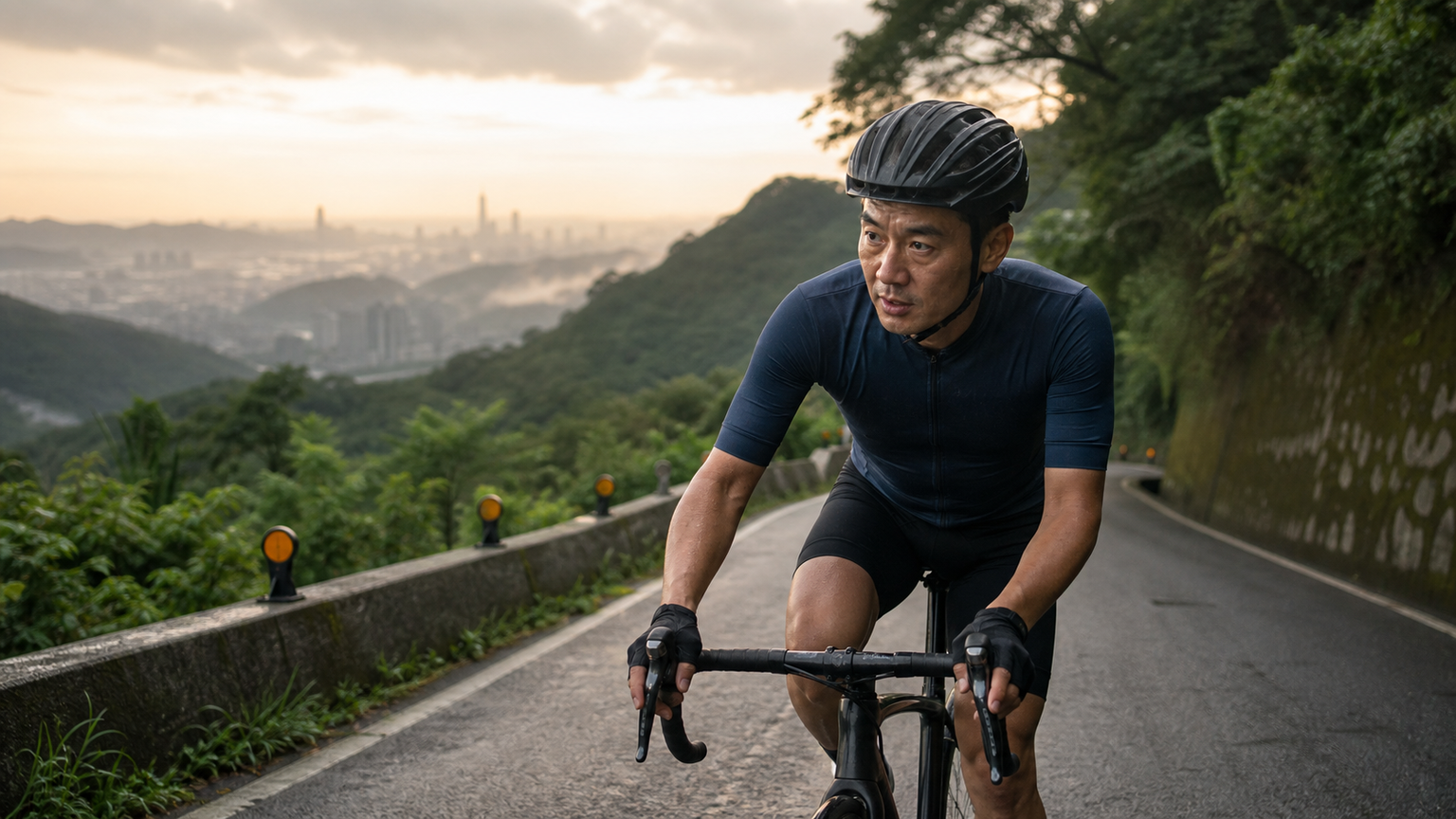
That weekend, I pulled out the aluminum-frame road bike that had been sitting in storage for two years, and rode the first truly meaningful “climb” of my life—from Taipei’s Xinyi District to Maokong, about 22 km round trip.
When I got home, I was drenched in sweat and my legs were sore, but somewhere inside, my heart felt light.
Finding the Rhythm: How to Fit Cycling into a Busy Life
Many people ask me, with work so busy and kids still young, where do I find the time to ride?
Honestly, at first, I didn’t. Time isn’t found—it’s taken. Taken from sleep, taken from the darkness of early mornings, taken from lunch breaks.
The solution I eventually landed on was “fixed time slots”: heading out at 5:30 AM every Tuesday and Thursday, riding for an hour (about 25–30 km), and being home by 7:00 AM to start work normally. Saturday mornings are long-ride days—I head out after the kids fall asleep, ride for 3–4 hours, and return before 1:00 PM.
| Ride Slot | Frequency | Distance | Impact on Daily Rhythm |
|---|---|---|---|
| Tue/Thu mornings (5:30–7:00) | 2x per week | 25–30km | Exercise done before leaving home; feel great all day |
| Saturday long ride (5:30–13:00) | 1x per week | 80–120km | Family time concentrated in the afternoon; no conflict |
| Occasional night rides | 1–2x per month | 40–60km | Stress release; doesn’t take up daytime hours |
This schedule wasn’t built overnight—it took about three months of gradual experimentation. The most crucial step was gaining my family’s understanding and support. My wife was initially puzzled, but when she saw my state after rides (calmer, less irritable, more willing to spend time with the kids), she said: “Keep riding—it’s good for everyone.”
That sentence has been one of the most important motivations for me to keep cycling.
What Cycling Has Changed in Me
Here are a few changes that actually happened:
- Noticeably better emotional management: In the past, when I hit setbacks at work, I’d bottle them up and bring them home, affecting the family atmosphere. Now, I “burn off” those emotions while riding, and I’m better equipped to handle problems when I get home.
- Improved sleep quality: Regular early-morning rides have reset my circadian rhythm—I fall asleep faster and sleep more deeply.
- Built a world that’s entirely my own: Routes on Strava, training data, and interactions with fellow riders—these are accumulations that belong purely to me, unrelated to my work role or family role. They’re the part that is “me.”
- Gave my child an example of persistence: My daughter is now five. She knows Daddy goes out cycling every week and comes back happy. I hope that when she grows up, she remembers: Dad had something he took very seriously.
What Cycling Can’t Solve
I’ll be honest: cycling isn’t a cure-all.
The problems that need communication with family—cycling can’t solve those. The dilemmas that require career decisions—cycling can’t solve those. The deep-seated anxieties—cycling at best silences them temporarily; they’re still there.
But cycling did accomplish something else: it lets me put myself in a state where I can face those problems before I actually face them. When you’re exhausted, anxious, and burned out, every problem is harder to solve. After a ride, my body’s hormonal environment makes me clearer-headed and more stable.
That difference matters far more than it sounds.
Practical Advice
- Talk about time first, then gear: Many people think “you need good equipment to ride seriously,” but finding a stable time window is far more important than upgrading your bike. That’s the foundation for making cycling sustainable.
- Make your family your supporters, not competitors: Proactively help your family understand what you’re doing, share how you feel after rides, and let them see the positive impact cycling has on you. Family understanding is the key to long-term consistency.
- Set small mileage goals; don’t plan for Wuling from day one: Overly ambitious goals will throw your life off balance. Set one achievable challenge per season (like your first ride to Taoyuan, or your first 100 km), and build a sense of accomplishment step by step.
- Accept that some weeks you won’t ride: Life has surprises—sick kids, overtime, family events. Sometimes cycling has to take a back seat. Accept that, and don’t beat yourself up over it.
Conclusion
Cycling gave me a fulcrum.
Not an escape, not compensation, but a fixed point that lets me stay balanced. Just like the bicycle itself—it can’t stand on one wheel, but as long as it keeps moving, it stays upright.
I don’t know how old I’ll be when I stop riding, but I know that as long as I can ride, I’ll keep riding. Because that one hour or three hours is when I know most clearly who I am.
Related Reading
- Cycling and Family Life: How to Get Your Whole Family Behind Your Riding Passion
- How Office Workers Can Maintain a Mid-Week Cycling Habit: Time Management Strategies
- How Cycling Changed My Life: Taiwanese Riders Share How Bikes Transformed Their Habits and Mindsets
- Balancing Work and Riding: Time Management and Training Plan Integration for Office Workers
公路車 | 塔塔加驚險員工旅遊 | 還好手腳快沒被抓交替!
5 年前
TIME 公路車 Alpe d'Huez 21 開箱實錄! 購車/Fitting/組車/心得 | 新車入艙 | 時間的主人 CT Yeh
3 年前
台北大雁西飛 約騎挑戰 feat. Doris | 公路車 | CT Yeh
3 年前
碟煞公路車 優缺點?換車一年半實際經驗分享 / 公路車 / CT Yeh
2 年前
一個測試有沒有認真練車的方法😂 #公路車
10 個月前
高雄綠園道鐵路自行車道 / 外地人能輕鬆駕馭 還是整路崩潰? / 2025 全線開通 春節實地探索一次!(附GPS連結)/ 公路車 / CT Yeh
1 年前
太平山單車員工旅遊 | 這樣玩CP值最高!| 公路車
5 年前
「悲情男車友」創作單曲 爆笑MV / 公路車 / CT Yeh / 4K劇情版
7 個月前