Introduction
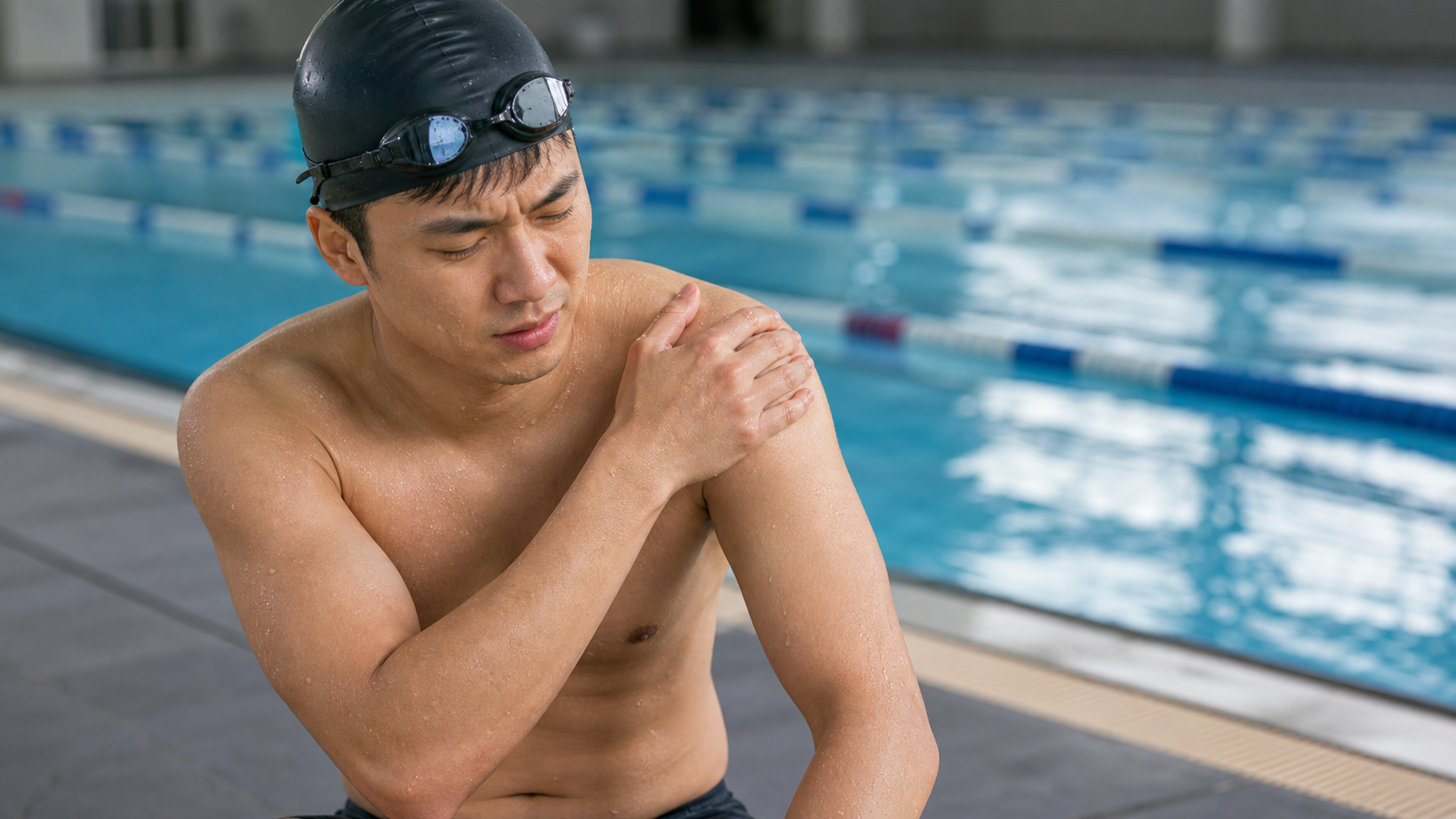
“Swimmer’s Shoulder” is the most prevalent sports injury in swimming, referring to a syndrome of shoulder pain caused by repetitive overuse from swimming motions. Taiwan has a large swimming population, from fitness swimmers to competitive athletes, and shoulder pain is the number one issue hindering consistent swimming. Understanding the causes of swimmer’s shoulder and its proper management is essential knowledge for every swimming enthusiast.
What is Swimmer’s Shoulder?
Swimmer’s shoulder is not a single diagnosis but an umbrella term encompassing several shoulder injuries:
- Rotator cuff tendinitis: The most common; the supraspinatus is most frequently affected
- Subacromial impingement: The tendon is compressed by the acromion when the arm is raised
- SLAP lesion: Damage to the cartilage at the rim of the shoulder socket; more common in competitive athletes
- Acromioclavicular joint arthritis: More common in those with high butterfly training volumes
- Long head of biceps tendinitis: A common cause of anterior shoulder pain
Why Does Swimming Easily Injure the Shoulder?
Biomechanical Analysis
Freestyle requires approximately 7–9 arm strokes per meter swum, meaning 1000 meters involves over 7000 shoulder joint rotational movements. Even if each stroke has only a minor biomechanical flaw, the cumulative effect is sufficient to cause tendon inflammation.
Main Risk Factors
| Risk Factor | Description |
|---|---|
| Sudden increase in training volume | A weekly increase exceeding 10% is most dangerous |
| Poor stroke technique | Dropped elbow (hand entering lower than the elbow) increases impingement |
| Insufficient shoulder range of motion | Those with limited internal rotation have significantly higher impingement risk |
| Muscle imbalance | Overly strong pectorals with relatively weak posterior shoulder and rotator cuff |
| Breathing posture issues | Excessive body roll during breathing places the shoulder joint at abnormal angles |
| Swimming too much butterfly | The stroke with the greatest impact on the shoulder |
Symptom Recognition
| Symptom | Possible Diagnosis |
|---|---|
| Pain when raising the arm between 60–120 degrees (painful arc) | Subacromial impingement |
| Pain when rolling onto the shoulder at night | Rotator cuff tendinitis |
| Deep anterior shoulder pain, worsened when reaching for objects | Long head of biceps tendinitis |
| Feeling of “clicking” in the shoulder with weakness | SLAP lesion (requires imaging confirmation) |
| Burning sensation in the shoulder during swimming that subsides after stopping | Early-stage tendinitis |
Prevention Strategies
Technique Adjustments (Most Fundamental)
- High elbow catch: Keep the elbow high after hand entry; push the palm outward first, then backward through the water to reduce subacromial impingement.
- Body roll control: During breathing, roll 45–60° along the longitudinal axis, not exceeding 70°, to maintain a streamlined position and reduce shoulder compensation.
- Hand entry point correction: The hand should enter directly in front of the shoulder line (not past the midline of the head), avoiding excessive internal rotation caused by “crossing the midline.”
Land-Based Strength Training
- External rotator strengthening: Band external rotation, 15 reps per set, 3 times per week (prevents rotator cuff imbalance)
- Lower trapezius activation: Prone Y-T-W exercises to strengthen scapular stability
- Core training: Propulsive force from the stroke originates from core transmission; a weak core increases shoulder compensation
Training Plan Principles
- Follow the “10% Rule”: increase weekly swimming distance by no more than 10% over the previous week
- Butterfly should not exceed 15% of total training volume
- Schedule one deload week (reduce distance by 30–40%) after every 3 weeks of swimming
Management After Injury
Acute Phase (Days 0–3 Post-Injury)
- POLICE principle: Protection, Optimal Loading, Ice, Compression, Elevation
- Pause freestyle and butterfly; may switch to kickboard drills to maintain fitness
Subacute and Recovery Phases
- Seek evaluation from sports medicine or orthopedics to determine if imaging (ultrasound or MRI) is needed
- Physical therapy: therapeutic ultrasound, manual therapy, strength training
- Return to swimming should be progressive: kicking → backstroke → slow freestyle → normal training
Practical Advice
- Perform dynamic shoulder warm-ups before every swim: 20 arm circles, cross-chest stretches, PNF shoulder mobility exercises, about 5 minutes.
- Use resistance cords for stroke simulation training: Practice stroke motions on land with resistance bands while strengthening the rotator cuff and latissimus dorsi.
- Regularly have a coach record video to review technique: It is difficult to notice your own technical flaws with the naked eye; video playback is the most effective self-assessment tool.
- Do not push through pain while swimming: Continuing high training volume with shoulder pain is the main cause of tendinitis progressing to tendon tears.
Conclusion
Swimmer’s shoulder is a preventable injury. Correct technique, balanced strength training, and a sensible training plan are the three pillars of shoulder protection. Taiwan has abundant swimming instruction resources, and it is recommended that every swimming enthusiast seek regular technical coaching so that swimming remains a long-term, sustainable health activity rather than a source of injury.
Related Reading
- The Complete Diagnosis and Treatment Guide for Swimmer’s Shoulder
- Swimming Shoulder Injuries: Causes and Prevention of Swimmer’s Shoulder
- Swimmer’s Shoulder: Identifying Rotator Cuff Syndrome and Its Causes
- Overuse Shoulder Injuries in Child Swimmers: A Complete Guide to Identification, Prevention, and Rehabilitation
抖肩舞 台灣x日本交流版 (台灣 vs 前橋) 赤城山登山賽 coincidance
8 年前
一日北高/長距離團騎 常見問題補充篇 / 組團或跟團的眉角 / 壯車友容易被瘦車友慢性拉爆 / 原來屁股痛可能是這個原因...? / 風場配速法 / 公路車 / CT Yeh
2 年前
一日北高常見問題大集合 | 攻略 | 路線 | 訓練 | 補給 | 自行車 單車 | 一日雙城 | 雙塔 | TWB北高360 | 屁股痛
6 年前
[教學] Premiere 影片 手震 修正 教學 防抖 單眼 影像 GoPro 穩定 Video Stabilization
8 年前
2026 輪霸西濱200K 挑戰VLOG / 第一集團 / 首次參加..經驗不足、膀胱不足 /死守6H內 / AI戰鬥力顯示系統 / 公路車 / CT Yeh
4 個月前
一起升級!海鷗盃LSD團練...JJSC Zone2招待 騎到手抖 / 公路車 / CT Yeh
2 天前
Insta 360 One 超級防手震技術實測
7 年前
如何把 GoPro 影片 翻轉 批次 轉正?
6 年前