Introduction
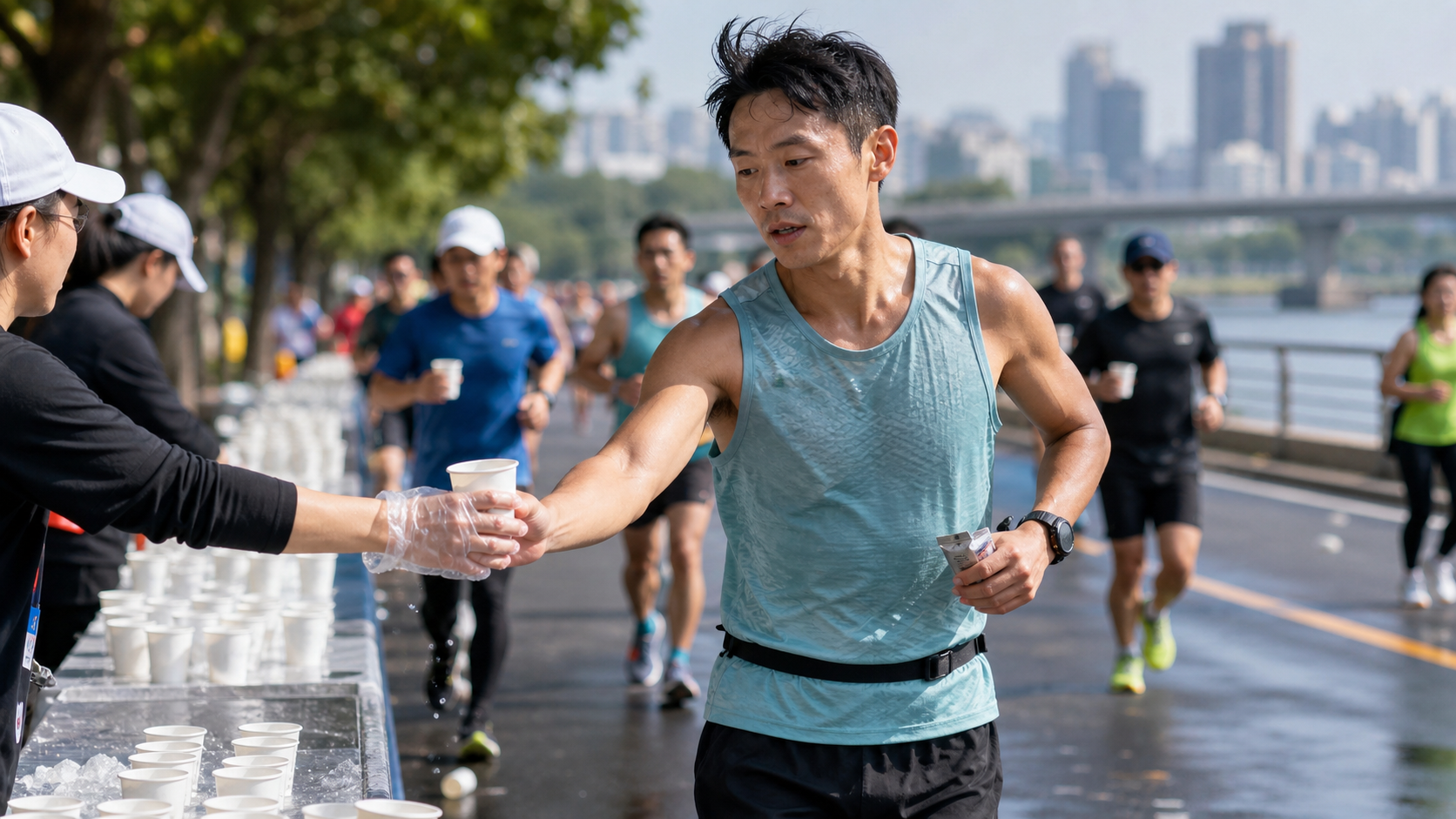
The fueling needs for a half marathon (21.0975 km) are less complex than those of a full marathon, but neglecting a fueling plan can still lead to low energy or dehydration in the later stages. Half marathon races in Taiwan typically have an aid station near the 10 km and 15 km marks (this varies slightly by race), and some races also provide a water station at 5 km.
Fueling Needs Analysis
Hydration Needs
The human body sweats approximately 600–1200 mL per hour while running (depending on temperature, humidity, and individual physiology). If you finish a half marathon in 1:45–2:10, your fluid loss will be approximately 1000–2400 mL.
Hydration Recommendations:
| Temperature | Fluid Intake per Aid Station | Notes |
|---|---|---|
| Below 15°C | 150–200 mL | No need to force yourself to finish |
| 15–24°C | 200–250 mL | Replenish at every station |
| Above 25°C | 250–300 mL | You can pour water over your head to cool down |
Energy Needs
The energy expenditure for a half marathon is approximately 1000–1400 calories (depending on body weight and pace), primarily supplied by glycogen. For most runners, if you have adequately carb-loaded before the race, energy gels are not strictly necessary, but it is still recommended to carry one as a backup.
- Runners aiming to break 2 hours: Relying solely on pre-race carb-loading is sufficient; you may take one energy gel at 15 km depending on how you feel during the race
- Runners finishing in over 2 hours: It is recommended to take one energy gel (containing 20–25g of carbohydrates) at the 10 km mark
Tips for Drinking While Running
The biggest struggles for many runners at aid stations are “choking while drinking” or “stopping for too long.” The following tips can help you fuel smoothly:
- Choose the end of the aid table: Fewer people, no need to jostle, and you don’t have to slow down significantly
- Fold the paper cup: Pinch one side of the cup into a V-shaped groove to create a small opening, making it less likely to spill when you drink
- Walk for 5–8 seconds: Slightly slowing down or even briefly walking ensures you actually get the fluid down without wasting it
- Electrolyte drink vs. water: If the aid station offers electrolyte drinks, choose them first; if you’re unsure whether the flavor will agree with you, carry salt tablets as an alternative
Pre-Race Fueling Plan
Race-day fueling preparation begins the night before:
- The night before: A high-carbohydrate dinner (rice, noodles), avoiding high-fat and high-fiber foods
- 2–3 hours before the race: A light breakfast (white toast with banana, about 400–500 calories), with adequate water intake
- 30 minutes before the race: Stop drinking large amounts of fluid to avoid gastrointestinal discomfort during the race
- Before the start: You may take a caffeinated energy gel (if you are accustomed to using them during training)
Practical Advice
- Simulate fueling during training: Set up water points along your long-run route and practice the cup-folding drinking technique so it feels familiar on race day
- Don’t try new fueling products: On race day, only use the gels and foods you have tested during training
- Carry salt tablets in hot weather: Temperatures in Taiwan from March to May tend to be high; replenishing salt when sweating heavily can help prevent cramps
- Carry a spare energy gel: Even if you don’t plan to use it, having one in your pocket provides psychological reassurance
Conclusion
Half marathon fueling may seem simple, but it is a hidden factor that affects your performance in the later stages. A clear fueling plan, combined with thorough practice during training, allows you to focus entirely on your running rhythm on race day, rather than agonizing over when to fuel and how much to drink.
Related Reading
半日 小台灣 極限單車路線挑戰實錄
7 年前
2019 夏季KOM 5小 完賽心得 準備攻略 東進武嶺 夏季登山王之路 Taiwan KOM Challenge
7 年前
CT暗黑廚房) 車友必備 宇宙無敵鮮蚵湯 幫助訓練恢復 天然食補 好市多 超肥鮮蚵 破PR
7 年前
Live) 備戰2019彰化經典百K 賽前攻略 (已完賽請看新影片
7 年前
一日北高前的高裝檢 | 北高 360 | 挑戰11小時的裝備 | 一日雙塔 | 補給
6 年前
西進武嶺 免費訓練分析服務 Intervals | 練不夠還是練過頭?你哪一種類型選手?AI模型告訴你! | 備戰神器 | 公路車 訓練 | CT Yeh
4 年前
西進武嶺 自製新版AI配速表產生器 x 賽前攻略 抱佛腳! 沒有功率計也可以產生配速表嗎?有什麼其他眉角賽前要注意的呢? | 西進武嶺 / 東進武嶺 KOM 攻略 | 公路車 | CT Yeh
4 年前
#公路車 #西進武嶺 配速配瓦實驗 坡度分析 四小時內攻略 建大盃 NeverStop #西進武嶺攻略
6 年前