Foam Rollers and Massage Balls: A Complete Comparison of Essential Recovery Tools for Runners
文章導覽
Introduction
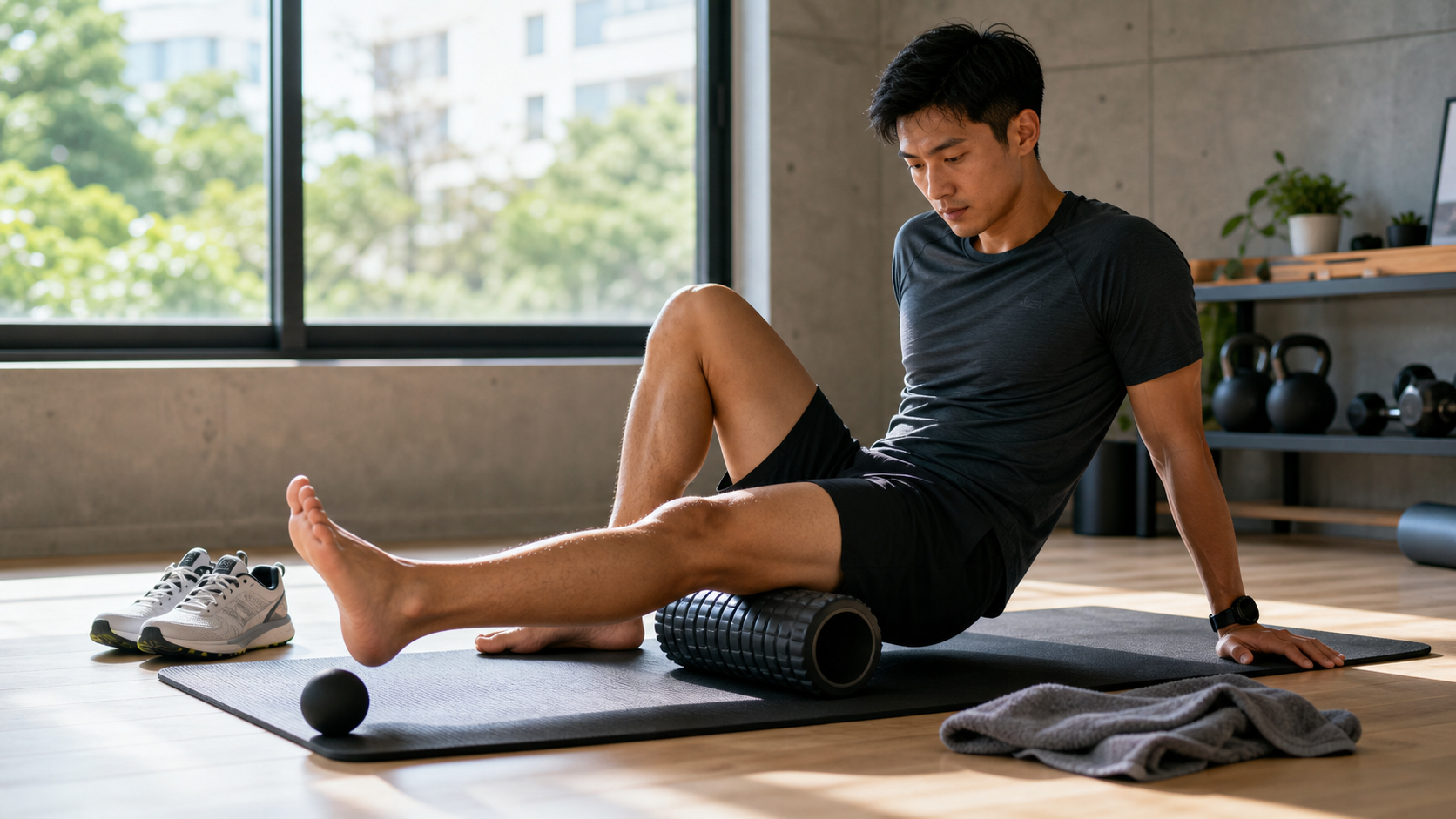
“Training is the stimulus; rest is the growth.” This saying is widely circulated in the running community, but many runners treat “rest” as simply stopping running, overlooking the importance of active recovery. Foam rollers and massage balls are the most widely used recovery tools in Taiwan’s running circles in recent years. Through self-myofascial release (SMR), they help runners recover quickly between training sessions.
The Science Behind Self-Myofascial Release
Fascia is the connective tissue network that envelops muscles throughout the body. After high-intensity running, fascia can develop adhesions, leading to muscle stiffness, restricted range of motion, and delayed onset muscle soreness (DOMS).
Research shows that regular myofascial release can:
- Reduce DOMS symptoms by 30–50%
- Improve joint range of motion (ROM) by 5–10%
- Improve post-training heart rate recovery speed
- Lower injury risk (particularly IT Band syndrome)
Foam Roller: Complete Breakdown
Types and Firmness Selection
| Type | Firmness | Suitable For | Price |
|---|---|---|---|
| Soft EVA | Low | Beginners, highly sensitive | NT$300–600 |
| Medium-density EPE | Medium | General runners | NT$400–800 |
| Hard PVC | High | Experienced, severely tight muscles | NT$600–1,200 |
| Vibration roller | Adjustable | Advanced runners | NT$1,500–3,500 |
Beginner advice: Start with medium density to avoid bruising from hard rollers when muscles are overly tight.
Six Essential Roller Areas for Runners
- IT Band: Roll along the outer thigh to prevent lateral knee pain (the most common cause of Runner’s Knee)
- Quadriceps: Front of the thigh, especially important after a full marathon
- Hamstrings (back of thigh): Apply pressure in a seated position to relieve groin tightness
- Calves: Gastrocnemius and soleus, to prevent Achilles tendinitis
- Glutes: Sit on the roller and apply pressure one side at a time to relieve lower back pain caused by tight hips
- Thoracic spine: Place the roller horizontally under the upper back to improve thoracic mobility for running posture
Recommended Brands in Taiwan
- TriggerPoint GRID (NT$1,290): The grid surface design mimics deep finger massage; the most common mid-tier choice among Taiwanese runners
- Decathlon Corength (NT$490): Excellent value for money, solid material, suitable for beginners using it daily
- Hyperice Vyper 3 (NT$4,990): Vibration roller with 3 vibration intensities; highly effective for recovery after long runs
Massage Ball: In-Depth Analysis
Complementarity with the Roller
Massage balls are suited for small, localized tight spots (trigger points) that rollers cannot reach deeply:
- Plantar fascia: Stand and step on the massage ball to prevent plantar fasciitis
- Deep calf muscles: Soleus, tibialis posterior
- Gluteus medius: Deep hip muscle that affects running stability
- Rhomboids in the shoulders: Neck and shoulder tightness after long runs
Types of Massage Balls
Hard massage balls (e.g., lacrosse balls):
- The most common entry-level choice; hard material with concentrated pressure
- Taiwanese runners often buy lacrosse balls directly as a substitute (NT$150)
- Suitable for areas requiring deep stimulation such as the soles and glutes
Peanut rollers:
- Two connected balls designed for use along both sides of the spine
- Does not press directly on the spine; more targeted for paraspinal muscles than a roller
Vibration massage balls (e.g., Hyperice Hypersphere):
- The most advanced option; vibration frequency amplifies the massage effect
- Priced at NT$2,990–3,500 in Taiwan
Usage Frequency and Timing Recommendations
| Timing | Tool | Duration | Purpose |
|---|---|---|---|
| Pre-run warm-up | Soft roller (light pressure) | 5–10 minutes | Increase mobility, boost blood flow |
| After long runs (within 1 hour) | Medium-firmness roller | 10–15 minutes | Accelerate lactate metabolism |
| Day after training | Massage ball | 5–10 minutes per area | Address trigger points |
| Non-running days | Full recovery routine | 20–30 minutes | Deep recovery |
Important note: Myofascial release is not about “the more pain, the better.” When applying pressure to trigger points, discomfort should stay below 7/10 (10 being unbearable). If it exceeds that, stop immediately.
Complete Recovery Tool Checklist
Basic setup (NT$1,000–2,000):
- Medium-density roller (Decathlon, NT$490)
- Hard massage ball / lacrosse ball (NT$150)
- Peanut roller (NT$350)
Advanced setup (NT$3,000–6,000):
- TriggerPoint GRID roller (NT$1,290)
- Hyperice Hypersphere vibration ball (NT$2,990)
- Massage gun (e.g., Theragun Mini, NT$3,490)
Practical Advice
- Building a habit matters more than using high-end tools: 10 minutes of basic myofascial release every day is more effective than a luxurious recovery session once a week
- Pay attention to the calves: Taiwanese runners most often neglect calf release, and calf tightness is a primary precursor to Achilles tendinitis and plantar fasciitis
- Do not use on acutely injured areas: Rollers are prohibited on new sprains or tears; the acute phase calls for ice and medical attention
Conclusion
Foam rollers and massage balls are indispensable tools in a runner’s training kit. From basic models costing a few hundred dollars to high-tech vibration products, there is a suitable option for every budget. The most important thing is to build a habit of regular use, making recovery part of your training, so you can keep accumulating mileage while staying healthy and progressing steadily.
Related Reading
- Post-Run Massage: Sports Massage vs. Self-Myofascial Release with a Foam Roller
- Comparing Recovery Tools for Road Running: When to Use Foam Rollers, Massage Guns, and Compression Socks
- Myofascial Release After Running: The Correct Order for Using Rollers, Balls, and Stretching
- Sports Medicine: Analyzing the Latest Research and Practical Strategies on Half-Marathon, Foam Rollers, and Massage Gun Self-Release (Myofascial Release): Trigger Point Release and the Mechanical Mechanisms of Muscle Adhesion Elimination — 2026 Latest Sports Medicine Perspectives