Introduction
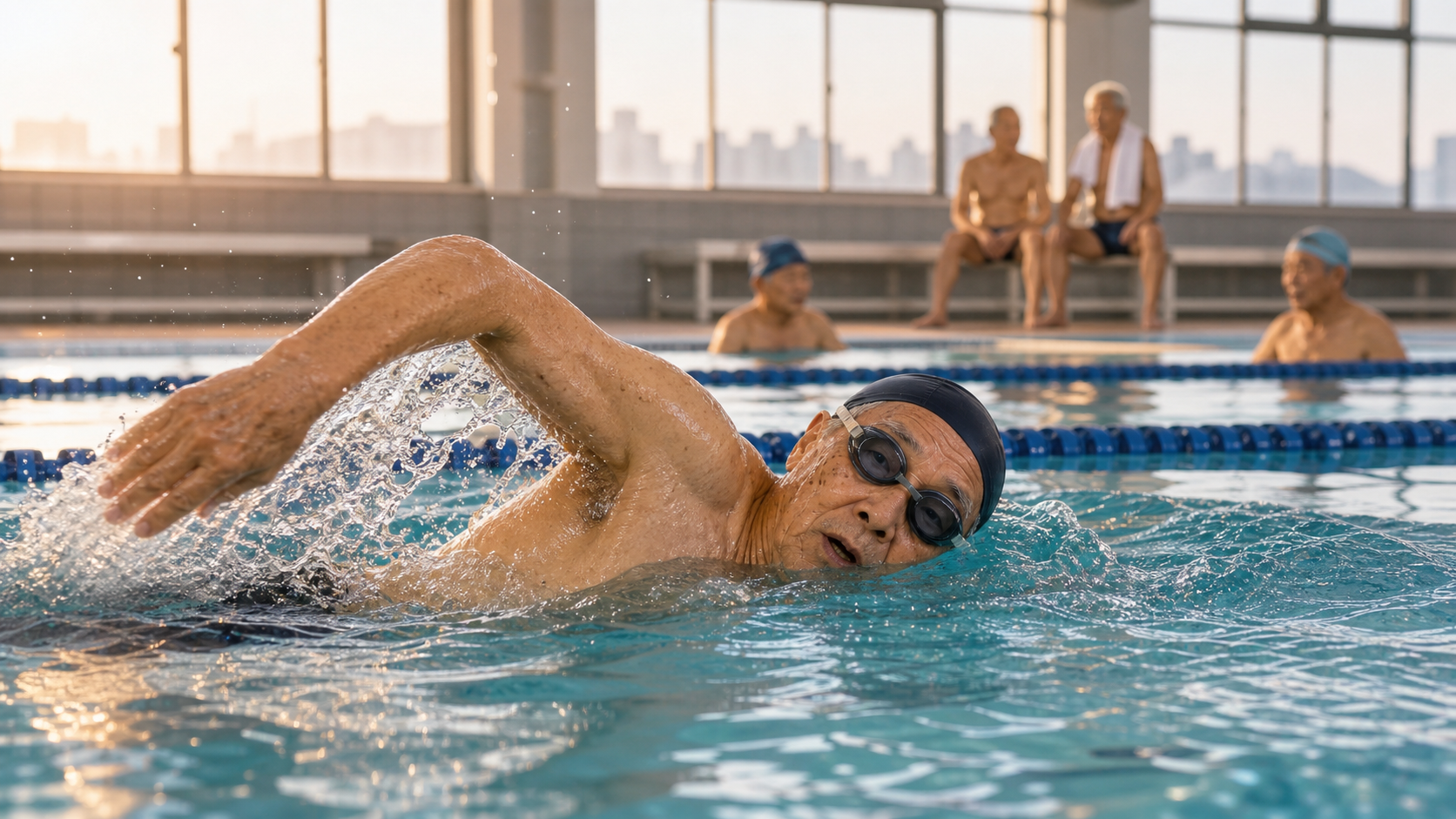
Walk into the morning session of any public swimming pool in Taiwan, and you’ll likely encounter a group of people who leave a lasting impression: seniors in their seventies and eighties, swimming laps at a steady pace with composed expressions, their movements more powerful and fluid than many younger swimmers. Some have been swimming for thirty years; others only started learning after retirement. But nearly all share the same conviction: swimming is the most important habit for maintaining their health and vitality.
As Taiwan’s society ages rapidly, senior health issues have gained increasing attention. Among the many exercise options, swimming has become the preferred choice of both the medical community and seniors alike, thanks to its low-impact nature, high safety, and full-body benefits. And at the poolside, a unique aquatic culture belonging to Taiwan’s seniors has quietly taken shape.
The Physical Benefits of Swimming for Seniors
The buoyancy of water reduces body weight by approximately 90%, meaning the impact on joints is far lower than with land-based exercise. For seniors with arthritis, osteoporosis, or past injuries, swimming is arguably the safest aerobic exercise option.
| Benefit Category | Specific Effect | Corresponding Common Senior Issue |
|---|---|---|
| Cardiopulmonary Function | Strengthens heart efficiency, lowers resting heart rate | Prevents cardiovascular disease |
| Muscle Strength | Water resistance training maintains full-body muscle groups | Combats sarcopenia |
| Joint Flexibility | Warm water relaxes joints, increases range of motion | Improves arthritis symptoms |
| Balance | Movement in water trains proprioception | Prevents falls |
| Cognitive Function | Regular aerobic exercise stimulates cerebral blood flow | Delays risk of dementia |
| Sleep Quality | Regular exercise improves sleep depth | Improves geriatric insomnia |
According to a survey by Taiwan’s Health Promotion Administration, seniors who swim regularly (3 or more times per week) have a hospitalization rate approximately 30% lower than their sedentary peers of the same age. This figure powerfully explains why more and more doctors are advising seniors to “get in the water.”
The Pool Culture of Taiwan’s Seniors
Taiwan’s senior swimming culture has a unique social dimension—it’s not just exercise, but an extension of community life.
Morning swimming starts the day
Many senior swimmers are dedicated “morning swim troops,” arriving at the pool promptly at 5:30 or 6:00 AM, with their designated lanes, familiar neighbors, and even their usual swimming spots. The locker-room chats after swimming and the soy milk or breakfast by the pool become an important social rhythm in their lives.
Mentorship passed down in the water
At Taiwan’s pools, it’s common to see veteran swimmers teaching newcomers. Many seniors in their seventies and eighties have swum for decades, accumulating rich technique and body awareness. They enjoy sharing their knowledge, and through this, they build special bonds with younger swimmers. This informal mentorship culture is the warmest aspect of pool life.
The rise of water aerobics
Beyond traditional swimming, aqua aerobics is growing increasingly popular among Taiwan’s seniors. Performing aerobic movements in waist-deep water provides resistance training benefits without stressing the knees. Public pools in Taipei City, Hsinchu City, Taichung City, and elsewhere offer senior water fitness classes, with some seniors attending three to four times a week.
The growth of senior swimming clubs
Every county and city in Taiwan has senior swimming clubs. Organizations such as Taipei’s “Senior Swimming Association” and Kaohsiung’s “Silver Swimming Club” regularly host friendly competitions and social events. The oldest participants often exceed 90 years of age, and their impressive performances in the water frequently become heartwarming stories in local news.
Practical Advice
Things to note before starting senior swimming:
- Consult your doctor first: Seniors with heart disease, diabetes, or recent surgery must seek medical advice before entering the water
- Choose a warm pool: A water temperature of 28–32°C is most suitable for seniors; water that is too cold can trigger muscle cramps or strain the heart
- Start with water walking: Seniors who can’t swim can begin by practicing walking in the shallow end to acclimate to the aquatic environment before learning formal strokes
- Side stroke and breaststroke are most friendly: These two strokes place less stress on the cervical spine and knees, making them suitable for beginner seniors
- Never swim alone: Swim with a companion or in an environment with lifeguards on duty
- Hydrate before and after swimming: Sweating is less noticeable during water exercise, making it easy to neglect fluid intake—seniors should drink water proactively
Resources in Taiwan:
- Check official public pool websites in each county and city for senior programs
- The Taiwan Senior Swimming Promotion Association provides relevant information and event details
- The Health Promotion Administration’s “Active Aging” program lists senior swimming resources across the country
Conclusion
Those silver-haired figures gliding through the lanes in the early morning are among Taiwan’s most beautiful sporting sights. They prove through their actions that age is never a barrier to getting in the water. Swimming gives them healthy bodies, fulfilling social connections, and a reason to feel energized every morning. For many of Taiwan’s seniors, swimming is more than exercise—it’s an attitude toward life, a reminder that every day is worth living to the fullest.
Related Reading
[防寒衣體驗] 鐵人魂 三鐵 防寒衣試穿會 於松運 深水游泳池 鯨魚池
8 年前
抖肩舞 台灣x日本交流版 (台灣 vs 前橋) 赤城山登山賽 coincidance
8 年前
白沙屯媽祖進香在家走!UREVO 坡度自調走步機 / 可連接訓練遊戲APP MyWhoosh / 邊看直播邊走起來 / CT Yeh
11 個月前
嘉義大埔、阿婆灣挑戰賽,美到以為在日本!ft. 環騎5 Cool 西拉雅188 / 公路車 / CT Yeh
7 個月前
CT暗黑廚房) 車友必備 宇宙無敵鮮蚵湯 幫助訓練恢復 天然食補 好市多 超肥鮮蚵 破PR
7 年前
水金九不厭五分 10度寒流冷到不願停!feat. 卡卡 / 公路車 / CT Yeh
6 個月前
山港 環東台北160K 自行車約騎活動
9 年前
實景訓練台) 彰化經典百K 高強度喵團 90分鐘 跟著一起練功 2019 Indoor workout Changhua Classic 100 Taiwan
7 年前