Introduction
“Hitting the Wall” is a marathon runner’s worst nightmare—around the 30–35 km mark, muscle glycogen is depleted, pace drops sharply, and the legs feel as if they are filled with lead. Many runners believe hitting the wall is an unavoidable fate, but in fact, a proper fueling strategy can significantly delay or even completely prevent it. The key lies in understanding the body’s energy metabolism and replenishing at the right moments.
Energy Metabolism Basics: Why Do You Need Fueling?
During a marathon, the body primarily uses two fuel sources:
- Glycogen (sugar): Stored in muscles and the liver, about 1600–2000 kcal, and is the main fuel for high-intensity exercise
- Fat: Nearly unlimited in storage, but burns less efficiently and can only be used in large amounts at low intensity
When pacing at a Sub-4 level, the body uses about 60–70% glycogen, which means that without replenishment, glycogen will be depleted after 2.5–3 hours. The purpose of fueling is to continuously “top up” external sugar during the race, slowing down the rate of glycogen depletion.
Hydration Timing and Amount
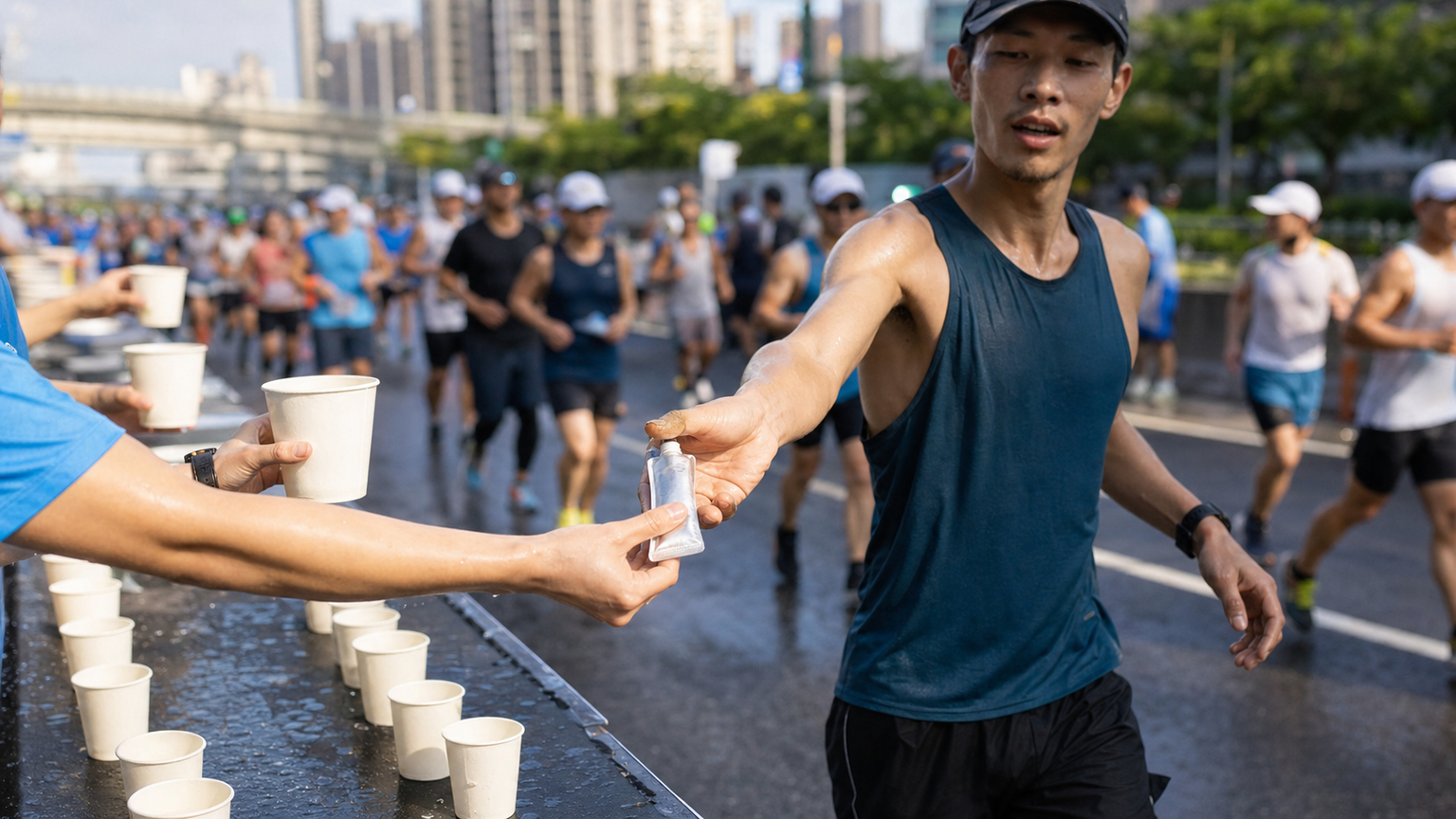
Hydration is the aspect most often mishandled on the course. Dehydration affects blood circulation efficiency, increases heart rate, and slows pace; but overhydration can lead to hyponatremia, which can be life-threatening in severe cases.
| Temperature | Recommended Fluid per Hour | Aid Station Strategy |
|---|---|---|
| Below 15°C | About 400–500ml/hr | Replenish every other station |
| 15–20°C | About 500–700ml/hr | Half to one cup at each station |
| 20–25°C | About 700–900ml/hr | One cup at each station |
| Above 25°C | About 900–1200ml/hr | One cup of water plus electrolyte drink at each station |
Hydration tips:
- Drinking while running can easily cause choking; slow down slightly or stop for 3–5 seconds to finish drinking
- Pinching the paper cup into a “∪” shape makes it easier to drink without spilling
- If sponges or cold water are available on site, use them to pour over your head to cool down (do not drink)
Energy Gel Usage Strategy
Energy gels are the most commonly used fuel among modern marathon runners, with each packet containing about 20–25 grams of carbohydrates (80–100 kcal). The correct usage strategy:
Timing:
- First gel: At the 40–45 minute mark (about 7–9K)—start replenishing before glycogen is depleted for maximum efficiency
- Subsequent gels: One every 40–45 minutes, about 4–5 gels total (depending on race duration)
- Last gel: About 10–12K from the finish line, take the final one
Pairing with water:
- After each gel, you must drink 150–200ml of water (about half a cup) to help the sugar absorb quickly
- Do not take it with sports drinks simultaneously; the double sugar load may cause gastrointestinal discomfort
Selection principles:
- Be sure to test the brand you use during training; never try it for the first time on race day
- Pay attention to caffeine content; gels with caffeine are recommended for the latter half of the race, as taking them too early may cause stomach discomfort
Electrolyte Replenishment
Marathon events in Taiwan are mostly held in autumn and winter, but even in cool weather, runners still sweat heavily and lose electrolytes (sodium, potassium, magnesium), leading to muscle cramps and accelerated fatigue.
The importance of sodium: Sodium is the electrolyte lost most in sweat, with about 500–1000mg of sodium per hour of sweating. Here are replenishment recommendations:
- Carry salt tabs, taking one every 1–1.5 hours with water
- Choose sports drinks containing electrolytes rather than plain water
- If the race provides plum powder or salty foods, consume them in moderation
Timing for Solid Foods During the Race
A hallmark of local Taiwanese races is the abundant solid food offerings, such as bananas, candies, braised eggs, and pineapple. These foods are suitable for:
- The 20–30K segment: The body’s craving for real food increases; the potassium and natural sugars in bananas are helpful during this stretch
- After 30K: Consume in small amounts; do not force yourself to eat, to avoid overburdening the stomach
- Avoid throughout: High-fiber foods (such as raw vegetables), fried foods, and dairy products
Practical Tips
- Create a “fueling plan chart”: Mark the timing and content of each replenishment by mileage, and do not rely on in-the-moment decisions on race day
- Carry your own fuel in a small waist pack or vest; do not rely entirely on what the race provides
- Aid stations are usually on the right side; move to the right early to avoid cutting across the road abruptly
- Do not toss empty cups into the middle of the road after drinking; set them down at the roadside or throw them into a trash bin
Conclusion
Fueling strategy may seem trivial, but it is one of the most critical factors in maintaining pace in the latter half of a marathon. By building fueling habits during training, testing different brands of energy gels, and executing your plan on race day, you can make “hitting the wall” someone else’s story rather than your race-day memory.
Related Reading
- Marathon Aid Station Strategy: The Art of Allocating Water, Sports Drinks, and Energy Gels
- The Impact of Marathon Fueling Strategy on Finish Time: The Rhythm of Energy Gel Intake After 30km
- Marathon Fueling Strategy: Fluid and Energy Intake During the Race
- Marathon Aid Station Food Choices: How to Refuel Without Stopping
CT暗黑廚房) 車友必備 宇宙無敵鮮蚵湯 幫助訓練恢復 天然食補 好市多 超肥鮮蚵 破PR
7 年前
#公路車 #西進武嶺 配速配瓦實驗 坡度分析 四小時內攻略 建大盃 NeverStop #西進武嶺攻略
6 年前
水金九不厭五分 10度寒流冷到不願停!feat. 卡卡 / 公路車 / CT Yeh
6 個月前
西進武嶺 免費訓練分析服務 Intervals | 練不夠還是練過頭?你哪一種類型選手?AI模型告訴你! | 備戰神器 | 公路車 訓練 | CT Yeh
4 年前
半日 小台灣 極限單車路線挑戰實錄
7 年前
一日北高前的高裝檢 | 北高 360 | 挑戰11小時的裝備 | 一日雙塔 | 補給
6 年前
#公路車 #Vo2Max #最大攝氧量 測驗 體驗 | 心肺測試
6 年前
西進武嶺 自製新版AI配速表產生器 x 賽前攻略 抱佛腳! 沒有功率計也可以產生配速表嗎?有什麼其他眉角賽前要注意的呢? | 西進武嶺 / 東進武嶺 KOM 攻略 | 公路車 | CT Yeh
4 年前