Introduction
The moment you cross the finish line, the race is officially over, but your body’s work has just begun. The microscopic damage a marathon inflicts on the body is far greater than most people imagine—research shows that after completing a full marathon, runners experience widespread micro-tears in muscle fibers, inflammatory responses peak, and some runners’ immune systems are even temporarily suppressed. How you actively recover within the 48 hours after the race will directly impact your training capacity over the next 1–2 weeks, or even the next month.
Immediately After Finishing (0–30 Minutes)
Staying Warm and Cooling Down
After finishing, your core body temperature drops rapidly, and combined with sweat-soaked clothing, this can easily trigger hypothermia. Immediate steps:
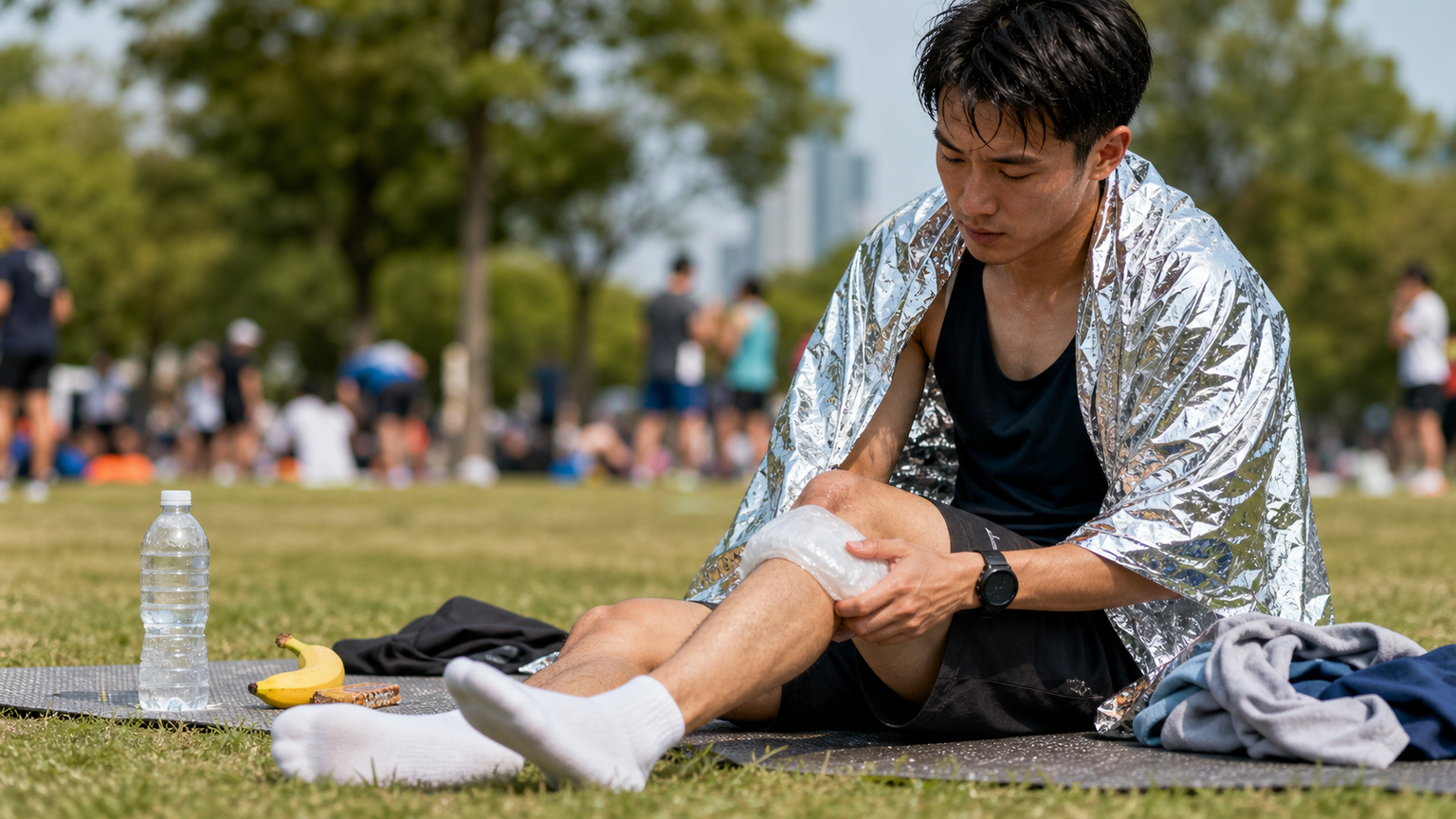
- Change into dry, warm clothing and wrap yourself in the foil emergency blanket provided at the event
- Do not sit or lie down immediately; walk slowly for 10–15 minutes to let your circulation gradually settle (suddenly stopping may cause fainting)
- If you feel dizzy or nauseous, immediately notify the medical station staff
Immediate Refueling
| Timing | Refueling Content | Purpose |
|---|---|---|
| 0–15 minutes after finishing | Sugary drinks (sports drinks, bananas) | Replenish blood sugar |
| 15–30 minutes after finishing | Protein-containing foods (milk, yogurt, eggs) | Initiate muscle repair |
| 1–2 hours after finishing | A full meal (balanced carbohydrates + protein) | Comprehensive replenishment |
Research shows that consuming 20–30 grams of protein within 30 minutes after finishing can significantly accelerate muscle protein synthesis (MPS)—this is the golden window for recovery.
Day 1 After the Race (0–24 Hours)
Active Cold Therapy
Cold therapy can reduce inflammatory responses and alleviate muscle swelling. Common methods:
- Cold water foot soak/bath (10–15°C, 10–15 minutes): If a cold bath isn’t feasible, a foot soak is already quite effective
- Local ice pack application: Apply a 15-minute cold compress to particularly sore areas (knees, calves)
- Full-body ice baths are not recommended for extended periods: Research shows that excessive cold therapy may interfere with protein synthesis signaling
Light Activity
You don’t need to stay in bed all day on the first day after the race; light activity helps promote blood circulation:
- Short walks: 20–30 minutes of easy walking; don’t force a slow jog
- Swimming or water walking: Water’s buoyancy reduces joint strain while promoting circulation
- Light stretching: Avoid deep stretching, as over-stretching damaged muscles may worsen micro-tears
The Critical Role of Sleep
Growth hormone (HGH) is primarily secreted during deep sleep and is the most important hormone for muscle repair. Recommendations for the first night after the race:
- Avoid caffeine, especially after 3 PM
- If leg pain interferes with falling asleep, place a pillow under the knees to slightly elevate the calves
- Aim for 8–9 hours of sleep
Day 2 After the Race (24–48 Hours)
This is the period many runners find most painful—Delayed Onset Muscle Soreness (DOMS) peaks 24–48 hours after exercise. Difficulty with stairs and struggling to squat are all normal phenomena.
Active Recovery Activities
At this point, you should actually increase your activity level rather than continue resting in bed:
- Easy cycling or using an elliptical machine: 30–40 minutes, keeping your heart rate at 50–60% of maximum heart rate, promoting blood circulation without adding muscle strain
- Water walking or swimming: The best low-impact aerobic recovery activity
- Hot baths or hot springs: From day 2 onward, you can switch to heat therapy to relax muscles and promote blood flow
Massage and Muscle Relaxation
- Foam Roller: Gently roll the quadriceps, iliotibial band, and calves; avoid excessive pressure
- Sports massage: If you’ve booked a professional sports massage therapist, 24–48 hours after the race is a good window, but be sure to tell the therapist this is a post-marathon recovery massage
- Avoid deep tissue massage: Damaged muscle fibers are sensitive to intense pressure, and excessive pressing may actually increase damage
Nutrition Strategy: A Complete 48-Hour Plan
Key nutritional points for post-race recovery:
- Carbohydrates: 6–8 grams per kilogram of body weight daily, to continuously replenish muscle glycogen
- Protein: 1.8–2.2 grams per kilogram of body weight daily, distributed across three meals
- Omega-3 fatty acids: Salmon, walnuts, flaxseed—these have anti-inflammatory effects
- Curcumin and ginger: These have natural anti-inflammatory effects and can be added to your diet or taken as supplements
- Avoid alcohol: Alcohol interferes with protein synthesis and worsens dehydration; celebrate in moderation after the race
When Can You Resume Running?
General rule for returning to running: allow 1 easy recovery day for each race kilometer (full marathon = 42 days before intensity training), but easy short runs can resume sooner:
- After a half marathon: Easy running can resume after 7–10 days, with normal training returning after 2 weeks
- After a full marathon: Easy running can resume after 10–14 days, with intensity training only appropriate after 4–6 weeks
Practical Advice
- Record your subjective fatigue level (1–10) for 48 hours after the race; if it exceeds 7, postpone resuming running
- The cold snaps following winter marathons in Taiwan are often overlooked; pay attention to post-race warmth, as you’re especially susceptible to colds during the period of temporary immune suppression
- If you experience persistent joint swelling and pain (as opposed to muscle soreness), blood in your urine, or severe plantar pain after the race, seek medical attention rather than attempting self-recovery
Conclusion
Crossing the finish line is the end of the race, not the end of recovery. Treat the 48 hours of post-race recovery as part of your training plan, and you’ll return to the track faster, meeting your next challenge with a stronger body.
Related Reading
CT暗黑廚房) 車友必備 宇宙無敵鮮蚵湯 幫助訓練恢復 天然食補 好市多 超肥鮮蚵 破PR
7 年前
摔車後補裝備: 好市多新款單車安全帽& Specialized Romin 北高整路屁股都不痛的坐墊 | 一千元居然有MIPS | CT Yeh | 公路車
4 年前
Live) 備戰2019彰化經典百K 賽前攻略 (已完賽請看新影片
7 年前
FTL 與 SYB 車隊專訪 西進武嶺 實用攻略分享! 2小時 如何練?!你不知道的眉角!新手準備武嶺必看 EP1 | 實力派女車友 | 精華版 | 公路車 | CTYeh
4 年前
一日北高/長距離團騎 常見問題補充篇 / 組團或跟團的眉角 / 壯車友容易被瘦車友慢性拉爆 / 原來屁股痛可能是這個原因...? / 風場配速法 / 公路車 / CT Yeh
2 年前
一日北高前的高裝檢 | 北高 360 | 挑戰11小時的裝備 | 一日雙塔 | 補給
6 年前
2019 夏季KOM 5小 完賽心得 準備攻略 東進武嶺 夏季登山王之路 Taiwan KOM Challenge
7 年前
西進武嶺 免費訓練分析服務 Intervals | 練不夠還是練過頭?你哪一種類型選手?AI模型告訴你! | 備戰神器 | 公路車 訓練 | CT Yeh
4 年前