Introduction
Every summer, public swimming pools across Taiwan draw large crowds. Yet while enjoying a refreshing swim, many people actually know very little about the safety of pool water quality. “The pool water is disinfected, so it should be safe, right?” — this common assumption is only half true. Chlorine disinfection is indeed an important measure to prevent the spread of infectious disease, but disinfection by-products from chlorination, improper water quality management, and swimmers’ own hygiene habits together determine the real health risk of a given pool.
Understanding Taiwan’s pool water quality standards, learning to identify water quality problems, and developing correct swimming hygiene habits are basic knowledge every swimming enthusiast should have.
Regulatory Water Quality Standards for Public Pools in Taiwan
Competent Authority and Legal Basis
The hygiene management of public swimming pools in Taiwan is mainly based on the “Swimming Pool Hygiene Standards” announced by the Ministry of Health and Welfare, with health bureaus in each county/city responsible for inspection. Operators found in violation can be fined under the “Regulations Governing Hygiene Management to Be Implemented by Persons in Charge of Public Places.”
Main Water Quality Testing Items
| Test Item | Acceptable Standard | Description |
|---|---|---|
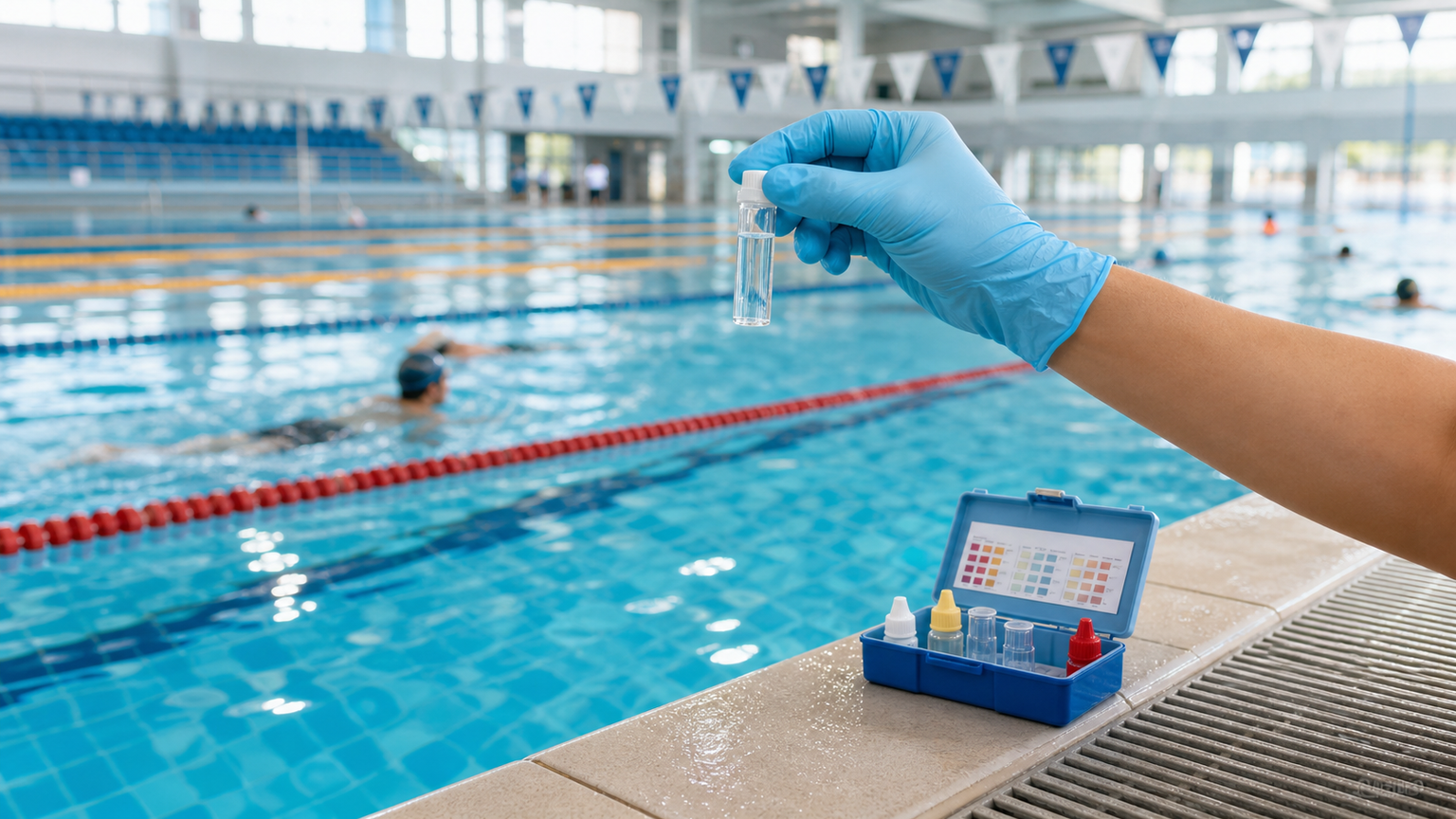
| Free residual chlorine | 0.5-1.0 mg/L | Too low means insufficient disinfecting power; too high irritates skin and eyes |
| pH value | 7.2-7.8 | Too low is corrosive; too high reduces disinfection efficiency |
| Coliform bacteria | Must not be detected | Indicator organism for fecal-oral transmission |
| Turbidity | ≤ 2 NTU | Affects visibility (being able to see the deepest part of the pool floor from the surface) |
| Total Dissolved Solids (TDS) | Reference value | Reflects the overall water quality load |
Health bureaus in each county/city usually increase inspection frequency in summer. Pools that fail to meet standards must make improvements within a set deadline, and serious violations can result in forced closure. The public can check published inspection results on the websites of the county/city health bureaus.
Common Water Quality Issues and Health Risks
Bacteria and Pathogenic Microorganisms
Public pools are shared water bodies used by many people. If disinfection management is inadequate, they can become a medium for spreading pathogenic microorganisms:
- E. coli and other intestinal bacteria: Mainly from fecal contamination by swimmers (leaking diapers on infants, or unclean swimmers entering the water), which can cause gastroenteritis and intestinal infections
- Pseudomonas aeruginosa: Commonly found in pools, it is the main pathogen behind swimmer’s ear (otitis externa) and can also cause folliculitis
- Cryptosporidium: Has a certain resistance to chlorine and is a common cause of pool-associated diarrhea outbreaks, requiring particular attention in children’s pools
- Norovirus: Although chlorine is effective against it, high contamination loads can still cause clustered outbreaks of gastroenteritis
Chemical Health Considerations
- Disinfection by-products (DBPs): By-products generated when chlorine reacts with organic matter in the pool (sweat, hair, skincare product residue), including trihalomethanes (THMs) and haloacetic acids (HAAs). Studies on long-term exposure to high concentrations suggest there may be a small health risk, but for the average recreational swimmer, actual exposure levels are far below harmful concentrations.
- Trichloramine: The respiratory irritant mentioned earlier, present at higher concentrations in poorly ventilated indoor pools.
How to Identify a Pool with Good Water Quality
Visual Assessment
- Water color: Clear and transparent, with a light blue tint (from light refraction through chlorophyll), allowing you to clearly see the deepest part of the pool floor
- Foam: The pool surface should have no persistent white foam (foam indicates a high level of organic matter such as sweat and skincare product residue)
- Surface cleanliness: No floating oil, hair, or debris on the surface
Smell Assessment
A well-managed pool should have only a faint chlorine smell. If entering the pool area causes a pungent smell, stinging eyes, or throat discomfort, it indicates an excessive trichloramine concentration — a sign of an overloaded water system or poor ventilation, not an indicator of “thorough disinfection.”
Facility Management Indicators
- Changing rooms and restrooms are clean and tidy, showering facilities are provided, and showering before entering the water is required
- A water quality inspection certificate is clearly displayed (many counties/cities require posting recent inspection results)
- The venue has regular cleaning and disinfection records
- Adequate number of lifeguards and complete equipment
Swimmers’ Own Hygiene Responsibilities
The water quality of a public pool is not solely the operator’s responsibility — every swimmer’s hygiene habits directly affect it:
Before Entering the Water
- Shower thoroughly before entering (at least 60 seconds): This is the key step for removing sweat, skincare products, and sunscreen from the body, and can significantly reduce the amount of organic matter introduced into the pool
- Change into swimwear (not clothing you’ve just been wearing): Wear clean swimwear before entering the pool
- Use the restroom before entering the water: Never urinate in the pool (even a small amount is a major source of trichloramine)
- Do not bring food or drinks into the pool
- Do not enter the pool if you have gastroenteritis or diarrhea symptoms: People infected with Cryptosporidium can remain infectious for up to 2 weeks after full recovery
Special Reminder: Infant and Toddler Swimming
- Use swim-specific leak-proof diapers (swim diapers) and change them regularly
- Avoid placing an infant/toddler pool right next to an adult pool (high risk of cross-contamination)
- If an infant or toddler develops diarrhea after swimming, seek medical attention and stop swimming for at least 2 weeks
Special Situations in Taiwan: Hot Spring Pools and Natural Waters
Hot Spring Pools
Taiwan is rich in hot spring resources, and the water quality management of hot spring pools (hot spring baths) differs from that of ordinary pools. Minerals such as sulfur and bicarbonate in hot spring water may affect the effectiveness of disinfectants, and the high temperature (above 40°C) environment is suitable for the growth of certain bacteria (such as Legionella). Choose hot spring operators that have a regular water-change mechanism, and those with open wounds or weakened immune function should avoid entering.
Beaches, Streams, and Other Natural Waters
Natural bodies of water are not subject to artificial disinfection management, and the types and concentrations of bacteria present are more complex. Precautions:
- Avoid swimming at river mouths or bays within 24-48 hours after rain (especially heavy rain), as surface runoff brings in large amounts of pollutants
- Avoid swimming in waters near wastewater discharge outlets
- Rinse your entire body thoroughly after swimming, and do not touch your eyes or mouth with your hands
Practical Recommendations
- Make use of public information: County/city health bureaus regularly publish pool inspection results — choose pools that consistently pass inspection.
- Observe crowd levels and water-change frequency: Pools are under the heaviest water quality load on crowded holidays; if possible, choose to swim during off-peak weekday hours for relatively better water quality.
- Eye discomfort after swimming: If your eyes become red or painful after swimming, rinse with clean water and monitor the situation; if there is no improvement after 24 hours, see a doctor to check for conjunctivitis.
- Avoid public pools if you have any open wound: An open wound is both an entry point for infection and a potential source of pathogens.
Conclusion
The health and safety of public pools depends on the joint efforts of operators, the competent authorities, and every swimmer. Understanding water quality standards, learning to judge a pool’s hygiene condition, and developing basic hygiene etiquette such as showering before entering the water and not urinating in the pool are the most basic respect you can show for your own health and that of other swimmers. Choosing a good pool and being a considerate swimmer are what truly make swimming a boost to a healthy life.
Related Reading
- Guide to Using Taiwan’s Public Swimming Pools: Etiquette, Hygiene, and Selection Tips
- Pool Water Quality Management: Effects of Chlorine Concentration on Skin, Eyes, and Hair, and Protective Strategies
- Pool Etiquette Guide: The Correct Way to Use Taiwan’s Public Swimming Pools
- Safety Guidelines for Open Water Swimming: An Overview of Legal Swimming Waters in Taiwan
2023桃園團體繞圈賽 / 海鷗繞圈賽 | 全程空拍數據版 | 公路車 | CT Yeh
2 年前
一日北高常見問題大集合 | 攻略 | 路線 | 訓練 | 補給 | 自行車 單車 | 一日雙城 | 雙塔 | TWB北高360 | 屁股痛
6 年前
Live) 備戰2019彰化經典百K 賽前攻略 (已完賽請看新影片
7 年前
備戰 戀戀197 賽前關門點分析 西濱團練 #公路車 4K高畫質
6 年前
半日 小台灣 極限單車路線挑戰實錄
7 年前
live) 超越北高 之一日北高12小時 策略
7 年前
自助洗車場 洗單車 50元有找 清鍊條大法 居然還有小小兵
7 年前
彰化 139縣道 單車 穩定測試
10 年前