Cycling and Work Stress Relief: The Science Behind How Taiwanese Office Workers Decompress on Two Wheels
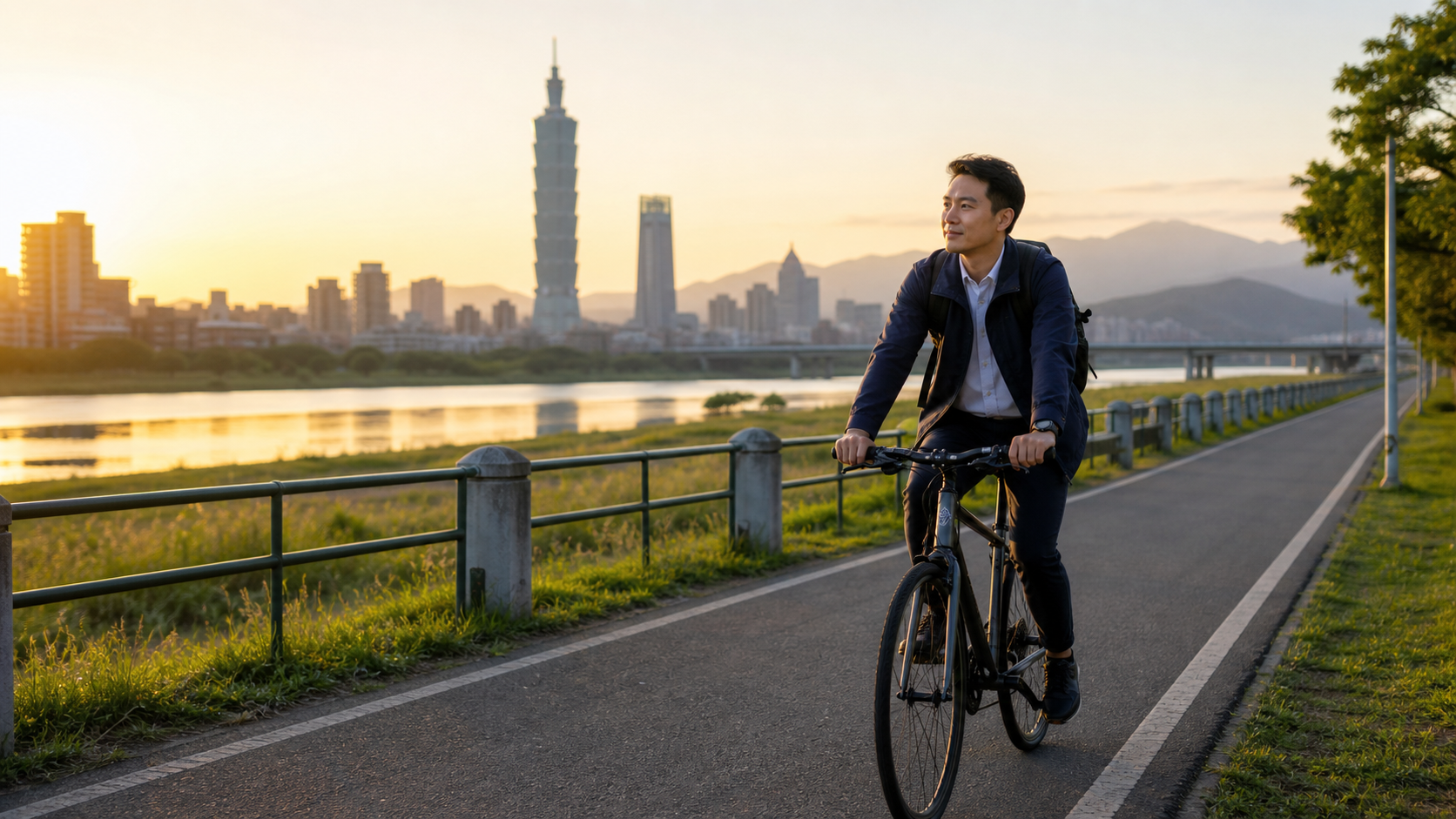
Introduction
Taiwan has one of the longest working hours in Asia, and workplace stress, commuting fatigue, and digital overload have become part of daily life for many. According to surveys, more than 60% of Taiwanese office workers report experiencing high levels of work-related stress, and mental health issues are affecting a growing number of people in the workforce.
Against this backdrop, cycling is becoming an increasingly popular outlet. But is “cycling to decompress” a scientifically backed claim, or just another trend? The answer is the former—and the mechanisms behind it are more interesting than you might think.
The Neuroscience of Exercise and Stress Relief
When you step on the pedals, a series of changes begins in your body’s stress response system:
Clearing Cortisol
The stress hormone cortisol can become chronically elevated under prolonged high-pressure conditions, impairing memory, immunity, and emotional stability. Moderate-intensity aerobic exercise (such as cycling) can significantly lower baseline cortisol levels within hours after the workout, with effects lasting longer than any “stress-relief supplement.”
Activating the Brain’s Reward System
While cycling, the brain releases dopamine (motivation and pleasure), serotonin (mood stability), and endorphins (natural pain relief and euphoria). The combination of these three neurotransmitters is the neurochemical explanation for why people say they “feel especially good after a ride.”
Recovery of the Prefrontal Cortex
Prolonged mental work (documents, meetings, decision-making) depletes the cognitive resources of the prefrontal cortex, causing “decision fatigue.” Outdoor cycling—especially in natural environments—activates different neural circuits, giving the prefrontal cortex genuine rest. This is why problems that seemed unsolvable often suddenly have answers after a ride.
Barriers to Cycling for Stress Relief Among Taiwanese Office Workers
Although the benefits of cycling are clear, Taiwanese workers face several unique obstacles:
| Barrier | Common Complaint | Solution |
|---|---|---|
| Lack of time | “I get off work at 8 PM, when would I have time?” | Commute by bike, 30 minutes at lunch |
| Safety concerns | “Taiwan’s roads are too dangerous” | Use bike lanes, ride in the morning |
| Equipment cost | “Bikes are too expensive” | YouBike + entry-level used bikes |
| Weather issues | “Taiwan’s summers are too hot” | Ride 6–7 AM, indoor Zwift |
| Social pressure | “Riding with friends and comparing speed is stressful” | Find a community with a slow-riding culture |
Three Cycling Stress-Relief Modes for Busy Office Workers
Mode 1: Commuter Riding (Most Practical)
Riding 15–30 minutes to and from work each day may be short in distance, but consistency is the key to stress relief. Research shows that 20 minutes of daily riding is more effective at improving baseline stress levels than one long ride per week.
The bike lane systems in Taipei, Taichung, Tainan, and other cities are already quite mature. Even if you live in an area without bike lanes, road conditions between 6–7 AM are usually safe enough for a commuter ride.
Mode 2: Weekend Long Rides (Most Decompressing)
Schedule a 2–4 hour long ride on the weekend to let your brain fully switch out of work-logic mode. Choosing a route that requires a certain level of focus (such as mountain roads or unfamiliar routes) accelerates the “mental clearing” effect, because when you have to concentrate on the ride itself, work worries have no room to cut in.
Mode 3: Indoor Trainers (Most Flexible)
On rainy days or late nights after overtime, Zwift or video-based training trainers offer an option that isn’t limited by weather or time. A 30–45 minute indoor ride is enough to trigger significant neurochemical changes.
The Key Mindset for Cycling to Decompress: The Destination Doesn’t Matter
People with high workplace stress have a common trap: bringing training goals into a stress-relief ride. “Today I need to average 120W” and “Today I need to completely zone out” are two entirely different ways of riding.
Research shows that enjoyment-oriented riding (rather than performance-oriented riding) has a more significant effect on lowering cortisol. In other words, riding slowly, taking in the scenery, and stopping at your favorite coffee shop—this “inefficient” way of riding is actually the most efficient when it comes to stress relief.
Practical Tips
- Create an “after-work ride” ritual: Change into your cycling kit, put on earphones (with low-volume ambient sound), turn off Slack notifications, and use this fixed routine to tell your brain “work time is over.”
- Find a “decompression route”: Look for a fixed route near your home with good scenery, smooth road conditions, and minimal decision-making required, as your default choice for daily stress relief. A familiar route actually helps you relax because you don’t need to worry about road conditions.
- Set a “no work talk” rule: If you ride with colleagues or friends, agree not to discuss work while riding, making cycling time a true mental vacation.
Conclusion
In Taiwan, where workplace stress remains high, cycling is not just a hobby—it’s a tool for maintaining mental health. It doesn’t require expensive course fees or carefully planned vacations; all it takes is a bike, a stretch of road, and the courage to allow yourself to temporarily escape the screen. The next time you feel overwhelmed by stress, try not to open your browser for answers first. Instead, go out for a twenty-minute ride and come back—you’ll be surprised to find that many problems solve themselves along the way.
Related Reading
- The Benefits of Cycling for Mental Health: Depression, Anxiety, and Cycling Therapy
- Cycling and Mental Health: Scientific Research on Cycling for Depression and Anxiety
- Cycling and High Blood Pressure: The Blood Pressure-Lowering Effects of Appropriate Cycling Intensity
- Cycling Therapy: Research on Cycling as an Adjunctive Treatment for Depression and PTSD
太平山單車員工旅遊 | 這樣玩CP值最高!| 公路車
5 年前
高雄綠園道鐵路自行車道 / 外地人能輕鬆駕馭 還是整路崩潰? / 2025 全線開通 春節實地探索一次!(附GPS連結)/ 公路車 / CT Yeh
1 年前
2026 車錶排行榜!誰是最多車友正在使用?練家子最愛哪款?🏆 (2萬名車友數據) / 公路車 / CT Yeh
5 個月前
2023自行車展!與環台賽選手一同表演賽 / 全自動AI Fitting?/ TIME新車發表/神秘充電桌等 精華分享 VLOG | CT Yeh | 公路車
3 年前
靠單車減肥35公斤 心得分享與整理
7 年前
#公路車 #Fitting 靠人工智慧APP 幫你調整單車
6 年前
JJSC南台灣單車走春三日行 DAY 1 / 強度 x 美食 x 節慶體驗 / 公路車 CT Yeh
5 個月前
碟煞公路車 銑面器 !? 原來銑完差這麼多! 降低蹭碟機率! | TIME 公路車 保養小記錄 | CT Yeh
3 年前