Introduction
Swimming is an aerobic sport with high energy expenditure, and the body’s thermoregulation mechanisms in water make calorie demands higher than land-based exercise of equivalent intensity. For young athletes still in rapid growth phases, “eating right” is just as important as “swimming right.” However, many Taiwanese families with teenage swimmers still rely on rough concepts such as “eat more protein” or “don’t eat too much” when it comes to sports nutrition. This article provides a more systematic nutritional strategy for young swimmers.
Basic Calorie Requirements for Growing Swimmers
Compared with same-age peers, swimmers training more than 10 hours per week have significantly higher calorie needs:
| Age/Gender | General Youth (No Exercise) | Swimmer (Light Training) | Swimmer (High-Intensity Training) |
|---|---|---|---|
| Girls 10–12 | 1,600–1,800 kcal | 2,000–2,200 kcal | 2,400–2,700 kcal |
| Boys 10–12 | 1,800–2,000 kcal | 2,200–2,500 kcal | 2,700–3,000 kcal |
| Girls 13–15 | 1,800–2,000 kcal | 2,200–2,500 kcal | 2,600–3,000 kcal |
| Boys 13–15 | 2,000–2,400 kcal | 2,600–3,000 kcal | 3,200–3,800 kcal |
The figures above are estimated ranges; actual needs vary by body type, training intensity, and growth rate.
Relative Energy Deficiency in Sport (RED-S) Warning: If young athletes have chronically insufficient calorie intake, symptoms such as stunted growth, persistent fatigue, stagnant performance, or menstrual irregularities in females may appear. Immediate evaluation by a sports dietitian should be sought.
Distribution Strategy for the Three Macronutrients
Carbohydrates: The Primary Energy Source
Carbohydrates should account for 50–60% of a swimmer’s total calories. Rice, noodles, and root vegetables common in Taiwanese food culture are excellent carbohydrate sources.
Carbohydrate choices before training (1.5–2 hours prior):
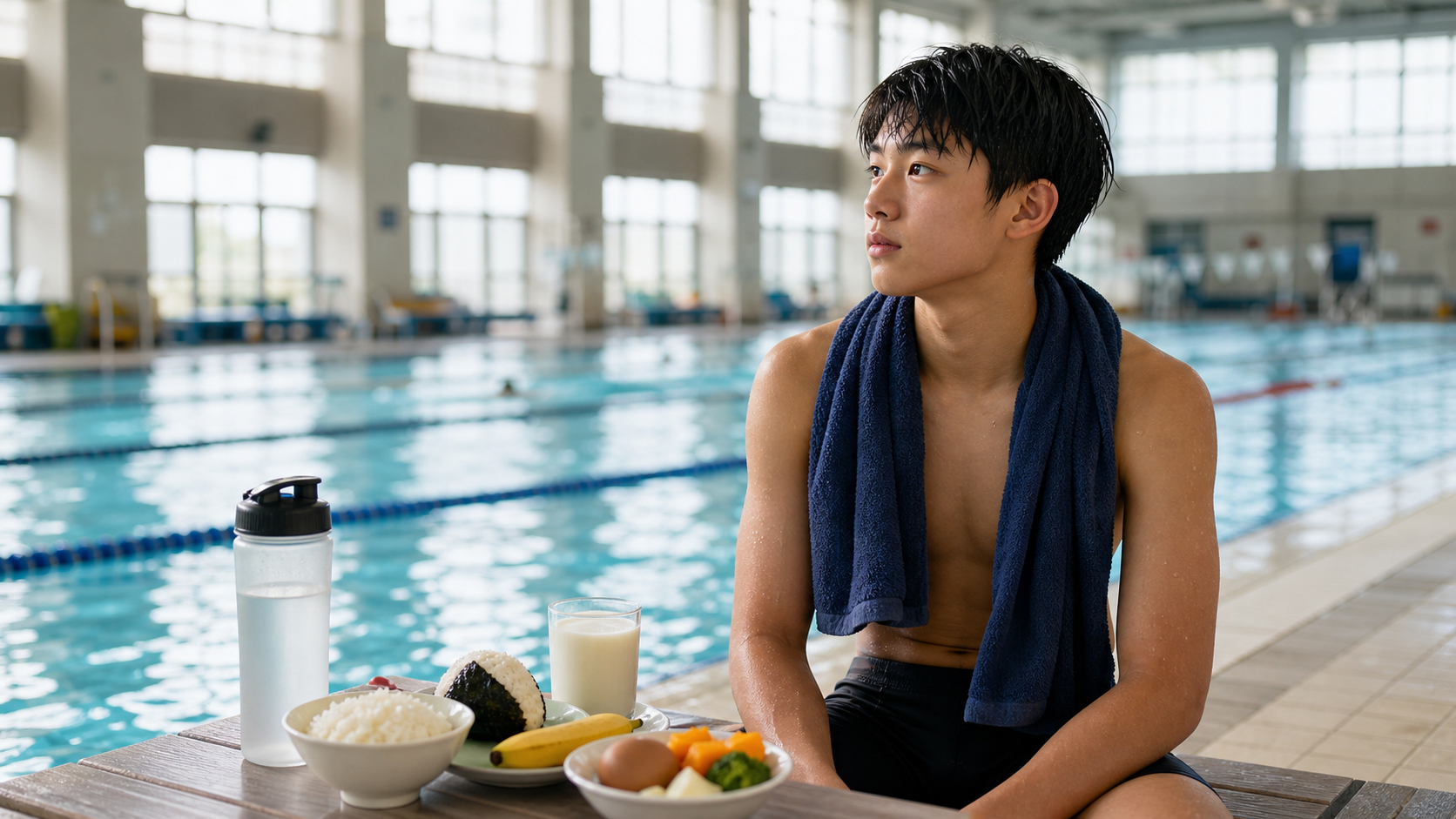
- White rice + steamed egg (easy to digest)
- Whole wheat toast + peanut butter
- Banana + low-fat milk
- Avoid fried and high-fat foods (they slow digestion and may cause discomfort in the water)
Carbohydrate replenishment after training (within 30 minutes):
- A 4:1 (carbohydrate:protein) ratio is most effective for glycogen resynthesis
- Sweet potato + eggs, or sports drink + milk, are both convenient options
Protein: The Foundation of Growth and Repair
Protein requirements for teenage swimmers are 1.4–1.7 g per kilogram of body weight per day (higher than the 1.2–1.6 g for adult athletes).
Quality protein sources commonly available in Taiwan:
- Tofu, dried tofu (plant-based, economical)
- Eggs (complete amino acid profile)
- Chicken breast, fish (low-fat, high-protein)
- Low-fat milk, yogurt (contain calcium, especially suitable during growth)
- Edamame (a plant-based option rich in essential amino acids)
Fat: An Essential Nutrient for Growth That Cannot Be Overlooked
Many parents mistakenly believe that young athletes should minimize fat intake, but fat is indispensable for hormone synthesis (including growth hormone), brain development, and absorption of fat-soluble vitamins. It is recommended to account for 25–30% of total calories, with an emphasis on unsaturated fats.
Key Micronutrients: Special Attention During Growth
| Micronutrient | Why It Matters | Good Sources in the Taiwanese Diet |
|---|---|---|
| Calcium | Bone development, muscle contraction | Low-fat milk, black sesame, tofu, dried small fish |
| Iron | Aerobic metabolism, prevention of iron-deficiency anemia | Pork liver, beef, dark leafy greens (consuming with vitamin C enhances absorption) |
| Zinc | Growth hormone synthesis, immune function | Oysters, beef, pumpkin seeds |
| Vitamin D | Calcium absorption, bone health | Sun exposure (indoor swimmers are especially prone to deficiency), salmon, egg yolk |
| B vitamins | Energy metabolism | Whole grains, lean meat, nuts |
Teenagers who train in indoor swimming pools in Taiwan have a higher rate of vitamin D deficiency due to insufficient sun exposure; regular monitoring of blood vitamin D levels is recommended.
Hydration: You Can Dehydrate in the Water Too
Many teenagers (and parents) do not realize that swimming can also cause dehydration. The aquatic environment reduces awareness of sweating, and athletes often reach mild dehydration (1–2% body weight loss) without realizing it.
Recommended hydration strategy:
- 2 hours before training: drink 400–600 ml of water
- During training (every 20 minutes): 100–150 ml of water or electrolyte drink
- After training: replenish 1,200–1,500 ml of fluid for every 1 kg of body weight lost
Practical Recommendations
Key daily meal planning points for parents:
- Breakfast must be substantial (25–30% of daily calories), especially important on training days.
- Provide a snack containing carbohydrates and protein within 30 minutes after training (such as milk + rice ball).
- If the child has poor appetite after training, consider offering a more substantial main meal before swimming.
- Avoid having athletes restrict their diet “for body shape”—the risks of calorie restriction during adolescence far outweigh those in adulthood.
Daily habits for athletes:
- Carry a water bottle at all times and drink at least 200 ml before and after each training session.
- Do not delay eating more than 45 minutes after training—make the most of the golden recovery window.
- Eat dark-colored vegetables at least three times a week to supplement iron and antioxidants.
Conclusion
The nutritional needs of teenage swimmers have the dual characteristics of “high energy expenditure of athletes” and “special needs during growth,” which means general dietary advice is often insufficient to meet their requirements. If Taiwan’s youth swimming development system can incorporate sports nutrition education into a structured curriculum, equipping coaches, parents, and athletes alike with foundational nutritional knowledge, it would be a high-return-on-investment intervention strategy for improving overall performance.
Related Reading
- Special Nutritional Needs of Adolescent Swimmers: Dietary Strategies During Growth
- Nutritional Needs of Adolescent Swimmers: Calories and Micronutrients During Growth
- Dietary Strategies for Swimmers: Weight Management and Carbohydrate Loading Plans Within the Season
- Nutrition for Young Athletes: Calculating Calories for Growth Needs and Training Demands
CT暗黑廚房) 車友必備 宇宙無敵鮮蚵湯 幫助訓練恢復 天然食補 好市多 超肥鮮蚵 破PR
7 年前
靠單車減肥35公斤 心得分享與整理
7 年前
16/02/16 - 夜訪中社路 緩慢進步中
10 年前
一日北高/長距離團騎 常見問題補充篇 / 組團或跟團的眉角 / 壯車友容易被瘦車友慢性拉爆 / 原來屁股痛可能是這個原因...? / 風場配速法 / 公路車 / CT Yeh
2 年前
單車 一日北高 ( 雙城 ) 肥宅雙人瘋狂行 紀錄片 REACTO
10 年前
滑雪新手們慘摔學習全紀錄(請開字幕),滑雪好好玩 | Snowboard + Ski | 岩原 スキー場 | 滑雪APP使用 | GoPro Max
6 年前
一日北高常見問題大集合 | 攻略 | 路線 | 訓練 | 補給 | 自行車 單車 | 一日雙城 | 雙塔 | TWB北高360 | 屁股痛
6 年前
4K 東眼山 x 水蜜桃冰沙 百人單車約騎! 操完再吃冰 多爽快
7 年前